Most of the glass in a house can be ordinary glass. Some of it has to be tempered or laminated safety glass, because people walk into it, lean on it or stand behind it wet. The 2024 BC Building Code names those places. Here is the list, and where we go further on our Burnaby builds.
Most of the glass in a house can be ordinary glass. A bedroom window at waist height, a kitchen window over the sink, a skylight: none of these are places where a person is likely to fall into the glass.
Some glass is different. People walk toward it, push on it, lean on it, or stand behind it with wet feet on a slippery floor. For those places the 2024 BC Building Code requires safety glazing: glass made to the CAN/CGSB-12.1 standard, which in practice means tempered or laminated glass.
This post lists the places the code names, explains the two types, and covers where we use safety glass on our Burnaby builds even when the code does not ask.
Tempered and laminated: what the difference is
When ordinary glass breaks, it breaks into long, sharp pieces. That is what causes serious cuts when a person walks through a glass door.
Tempered glass is heated and cooled quickly during manufacturing. That makes it stronger, and when it does break, it breaks into small pieces with blunt edges. Most shower doors and patio doors are tempered.
Laminated glass is two or more layers of glass bonded to a plastic layer between them. When it breaks, the glass cracks but the pieces stay stuck to the plastic, so the panel stays in place. That is useful where a broken panel should still keep a person from falling, as in a railing or overhead glass.
Both types count as safety glazing when they are made to CAN/CGSB-12.1. The code also accepts wired glass made to CAN/CGSB-12.11-M in some places, though we rarely use it in houses.
One more point matters for the build schedule. Tempered glass cannot be cut or drilled after it is tempered. Every hole for a shower door hinge or a railing clamp is made at the factory, from site measurements. If the tile or the framing changes after the glass is ordered, the glass has to be remade.
Where the code requires safety glass in a house
Section 9.6 of the code sets the rules for glass in doors, windows, skylights, shower and tub enclosures, and glass panels and partitions. These are the places that apply to a custom home.
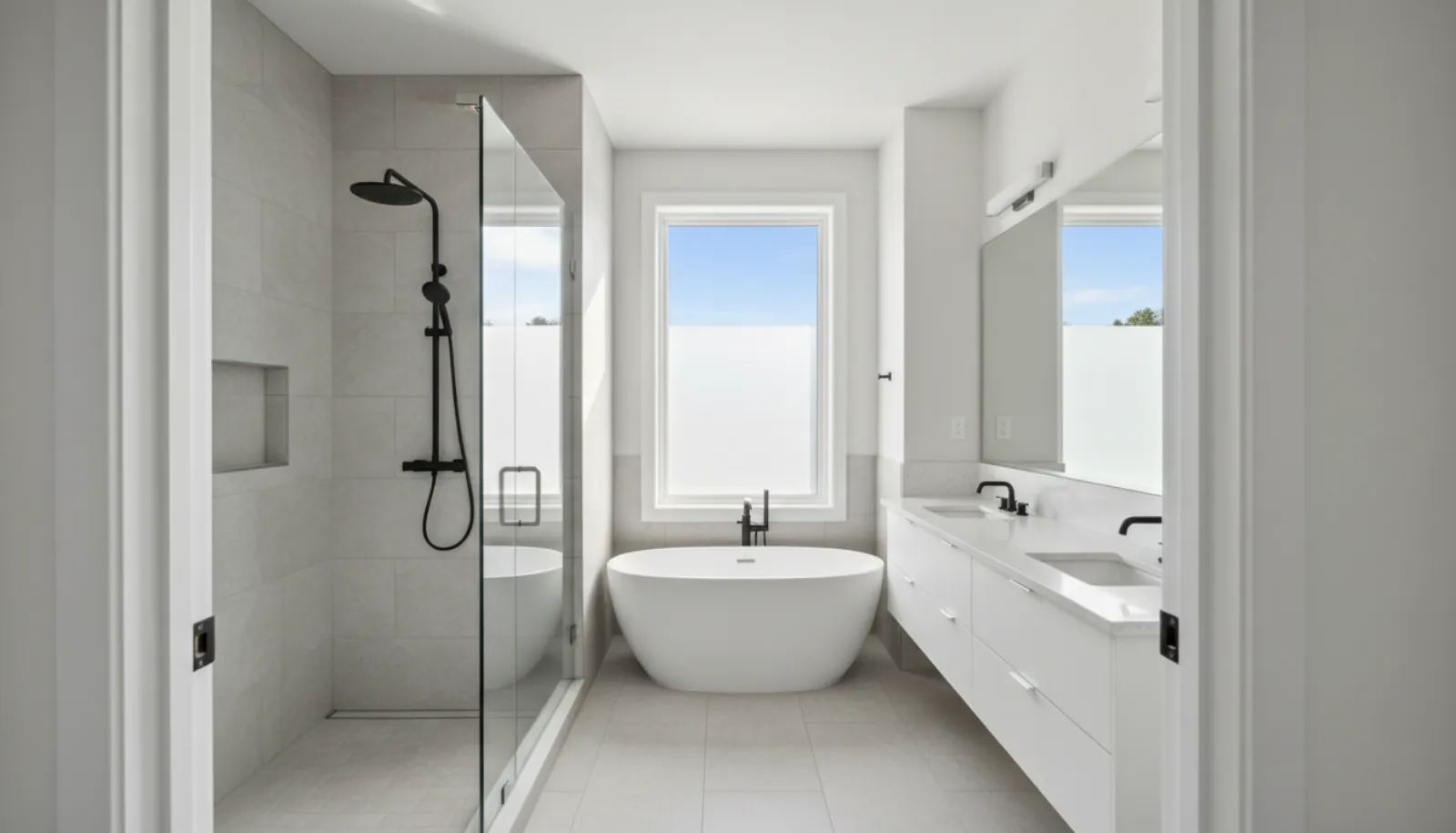
Shower and bathtub enclosures. Sentence 9.6.1.4(6) requires shower and tub glass to meet Class A of CAN/CGSB-12.1. This covers frameless shower doors, fixed glass panels, and glass screens on a tub. Our post on bathroom and ensuite layout covers how those enclosures fit into the room.
Sliding doors, storm doors and wide sidelights at an entrance. Sentence 9.6.1.4(1) requires safety glass in sliding glass doors and storm doors within or at every entrance to a dwelling unit, and in glass sidelights wider than 500 mm that could be mistaken for a door. Our post on patio doors covers the door types.
Glass in entrance doors. Sentence 9.6.1.4(2) requires safety glass in an entrance door where the glass area is more than 0.5 m² and the glass comes lower than 900 mm from the bottom of the door. A front door with a full-height glass panel falls under this rule. A door with a small window at eye level does not.
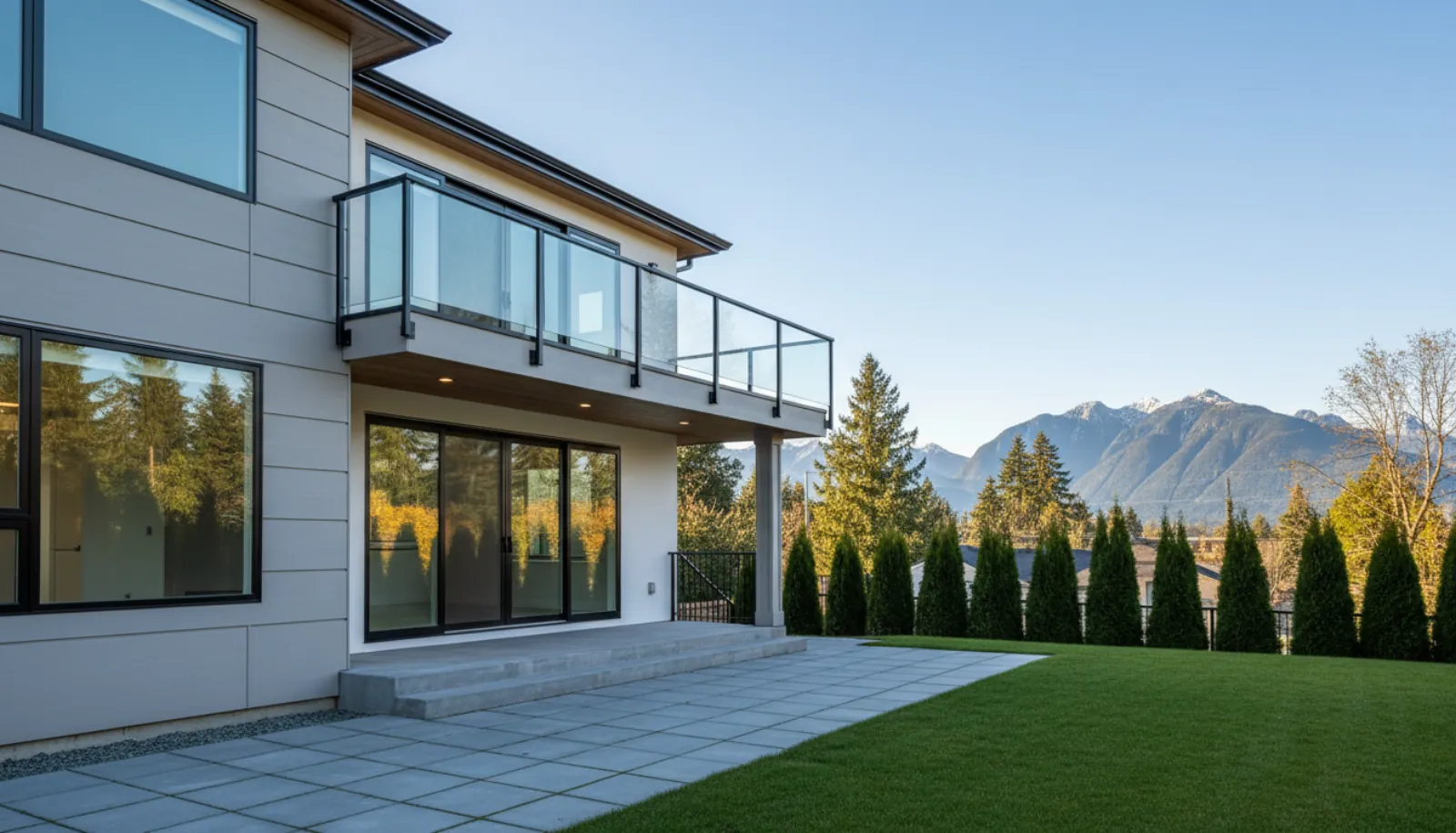
Glass in railings. Article 9.8.8.7 requires laminated or tempered safety glass in guards. Our post on railings and guards covers the heights and loads.
Glass beside stairs and landings. Sentence 9.8.8.1(7) says that in a house, glass over a stair, ramp or landing that comes lower than 900 mm above the treads or landing must be protected by a guard, or be fixed glass designed to carry the lateral loads of a balcony guard. A tall window at a stair landing often falls under this rule. The glass then becomes part of the guard, and the window maker designs it for that load.
Glass that looks like a way out. Sentence 9.6.1.4(3) says transparent panels that could be mistaken for a way out must be protected by barriers or railings. In a house, this applies to a large fixed glass panel at floor level beside a door, where a person could walk into it thinking it is open.
Mirrored closet doors
Sentence 9.6.1.2(2) allows mirrored glass doors only at the entrance to clothes closets, and they must meet CAN/CGSB-82.6-M. The code's note says that standard covers reach-in closets and does not allow these doors on walk-in closets. If an owner wants a mirror on a walk-in closet, we put a mirror on a solid door or on a wall inside. Our post on walk-in closet design covers that room.
Where we use safety glass beyond the code
The code list covers the places where people most often hit glass. On our builds we add a few more, because we know how the house will be used:
- Windows beside a bathtub. A window low on the wall next to a tub sits where a person stands up or steps out on a wet surface. We order those windows with tempered glass.
- Low windows at floor level. Floor-to-ceiling windows in a living room or a play area sit where children run and fall. Tempered or laminated glass in the lower pane reduces the risk.
- Glass near a stair bottom. A glass panel at the bottom of a stair, even one outside the 9.8.8.1(7) rule, is where a person who trips will land.
- Interior glass partitions. A glass wall into a home office, a wine room or a gym is a glass panel in a walkway. We use tempered or laminated glass and add a frosted band at eye level so the glass is easy to see.
- Overhead glass. For skylights and glass canopies, laminated glass keeps broken glass from falling. Our post on skylights covers roof glazing.
We ask one question for every pane: if someone falls into this glass, what happens? If the answer is a bad cut, it gets safety glass.
Icon Projects Team
Shower glass: the details that decide whether it works
Shower glass is the safety glass owners touch every day, and most of the problems we see with it come from the framing and tile behind it.
Blocking for the hinges. A frameless shower door is heavy. Its hinges and any fixed panel clamps screw into the wall, so we install solid blocking in the framing at each hinge and clamp location before the walls are closed. The glass supplier gives us those heights from the door size.
Level and plumb tile. The glass is cut to fit the finished tile. A wall that leans or a curb that slopes the wrong way leaves gaps the seals cannot close. We check the walls and the curb before the glass is measured.
Where the water goes. The door should swing out of the shower, and the fixed panel should sit where the shower head does not spray straight at the gap. On a curbless shower, the floor slope and the drain location decide where the glass can stand. Our post on tile and waterproofing covers the layer under the tile.
Cleaning. Clear glass shows water spots. A factory-applied coating on the glass helps water run off, and a squeegee after each shower keeps it clear.
Glass, energy and the window order
Safety glass sits inside the same window or door unit as the rest of the glazing. Most windows on our houses are double or triple glazed, and either pane can be tempered or laminated. The window maker builds the unit to meet both the safety rule and the energy performance the house needs under the BC Energy Step Code. Our post on triple and double glazing covers the energy side.
Laminated glass also cuts outside noise, because the plastic layer damps sound. On a house beside a busy road or under a flight path, laminated glass in the bedroom windows can help. Our post on acoustic design covers the rest of that work.
Because tempered glass cannot be changed on site, we mark every safety glass location on the window schedule before the order goes in. The supplier confirms each one on the shop drawings, and we check the units against the schedule when they arrive.
How we plan glass on a Burnaby build
- Mark each code location on the drawings. Showers, tubs, sliders, entry doors, sidelights, railings and stair glass.
- Add our own locations. Glass beside tubs, at floor level, near stairs and in interior partitions.
- Choose tempered or laminated per pane. Laminated where the panel should stay in place after breaking or where sound matters.
- Measure for the shower glass after tile. Shower glass is made from site measurements once the tile is done, because tempered glass cannot be cut later.
- Check the delivery. Each unit is checked against the window schedule before it goes in.
Glass decisions sit inside the window order and the bathroom design, both of which are set months before the glass arrives. Our custom homes service page shows how we plan those orders on builds in Burnaby, Vancouver and across the Lower Mainland.
Frequently asked questions
- Does a glass shower door have to be safety glass in BC?
- Yes. Sentence 9.6.1.4(6) of the 2024 BC Building Code requires glazing used for a shower or bathtub enclosure to meet Class A of CAN/CGSB-12.1, Safety Glazing. That applies to doors, fixed panels and glass screens on a tub.
- What is the difference between tempered and laminated glass?
- Tempered glass is heat-treated so that it breaks into small pieces with blunt edges. Laminated glass is two or more layers bonded to a plastic interlayer, so when it cracks, the pieces stay stuck to the layer. Both count as safety glazing under CAN/CGSB-12.1 when made to that standard.
- Do patio sliding doors need tempered glass?
- Sentence 9.6.1.4(1) requires safety glass in sliding doors within or at every entrance to a dwelling unit, along with storm doors and sidelights over 500 mm wide that could be mistaken for doors. We confirm safety glass on every slider order and check it when the doors arrive.
- When does the glass in a front door need to be safety glass?
- Sentence 9.6.1.4(2) requires safety glass or wired glass in an entrance door when the glass area is more than 0.5 m² and the glass reaches lower than 900 mm from the bottom of the door. A small glass panel high in the door may be ordinary glass.
- Do glass railings need special glass?
- Yes. Article 9.8.8.7 requires glass in guards to be laminated or tempered safety glass to CAN/CGSB-12.1, or wired safety glass to CAN/CGSB-12.11-M. The railing system also has to carry the guard loads in Table 9.8.8.2.
- Can we use mirrored sliding doors on a walk-in closet?
- No. Sentence 9.6.1.2(2) allows mirrored glass doors only at the entrance to clothes closets and requires them to meet CAN/CGSB-82.6-M. The code's note says that standard covers reach-in closets and does not allow these doors on walk-in closets.
- Is safety glass required in windows near a stair?
- In a house, Sentence 9.8.8.1(7) says glazing over a stair, ramp or landing that comes lower than 900 mm above the treads or landing must be protected by a guard, or be fixed glass designed for the lateral loads of a balcony guard. The window itself becomes part of the protection, so it is designed and ordered for that load.