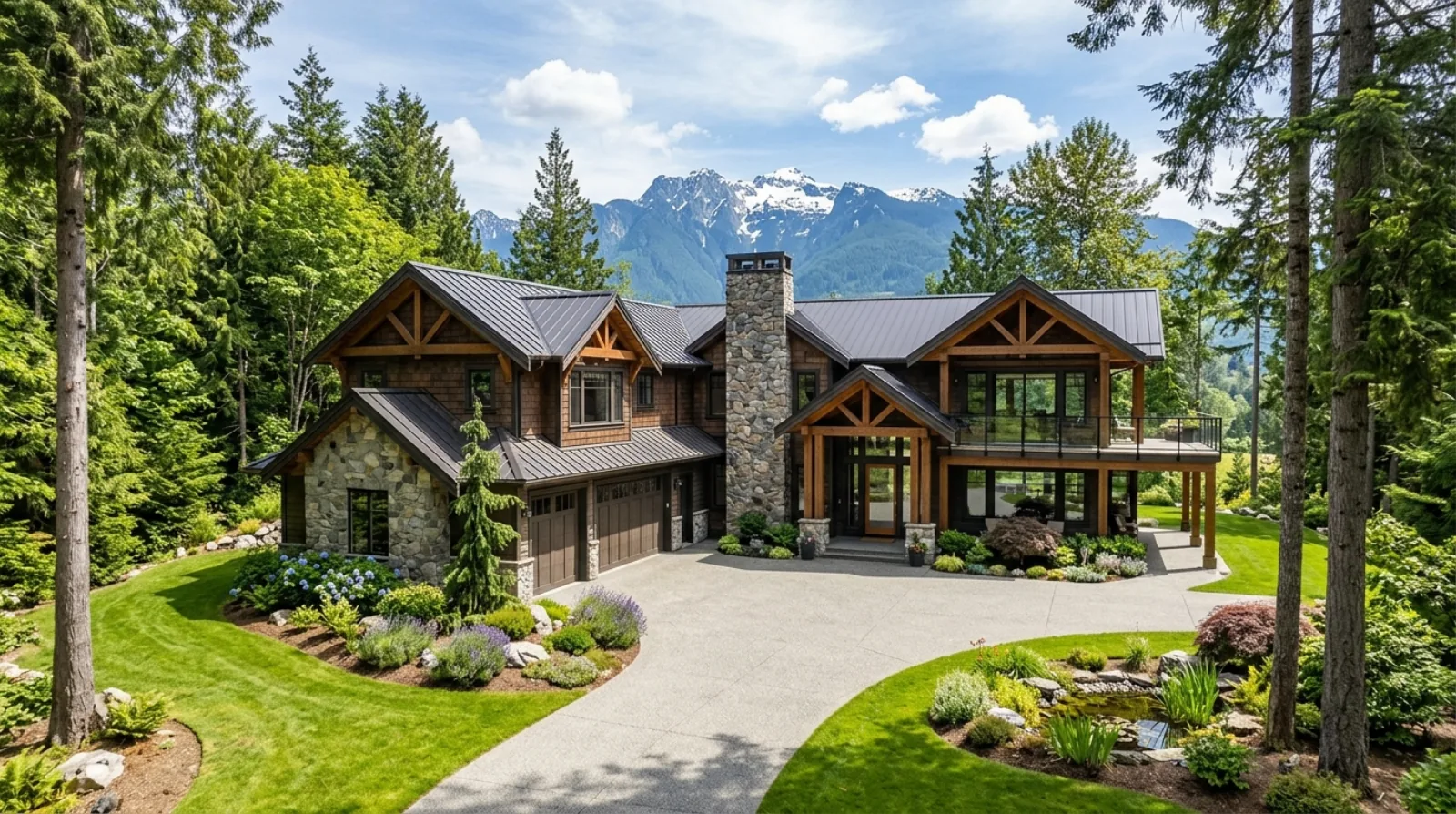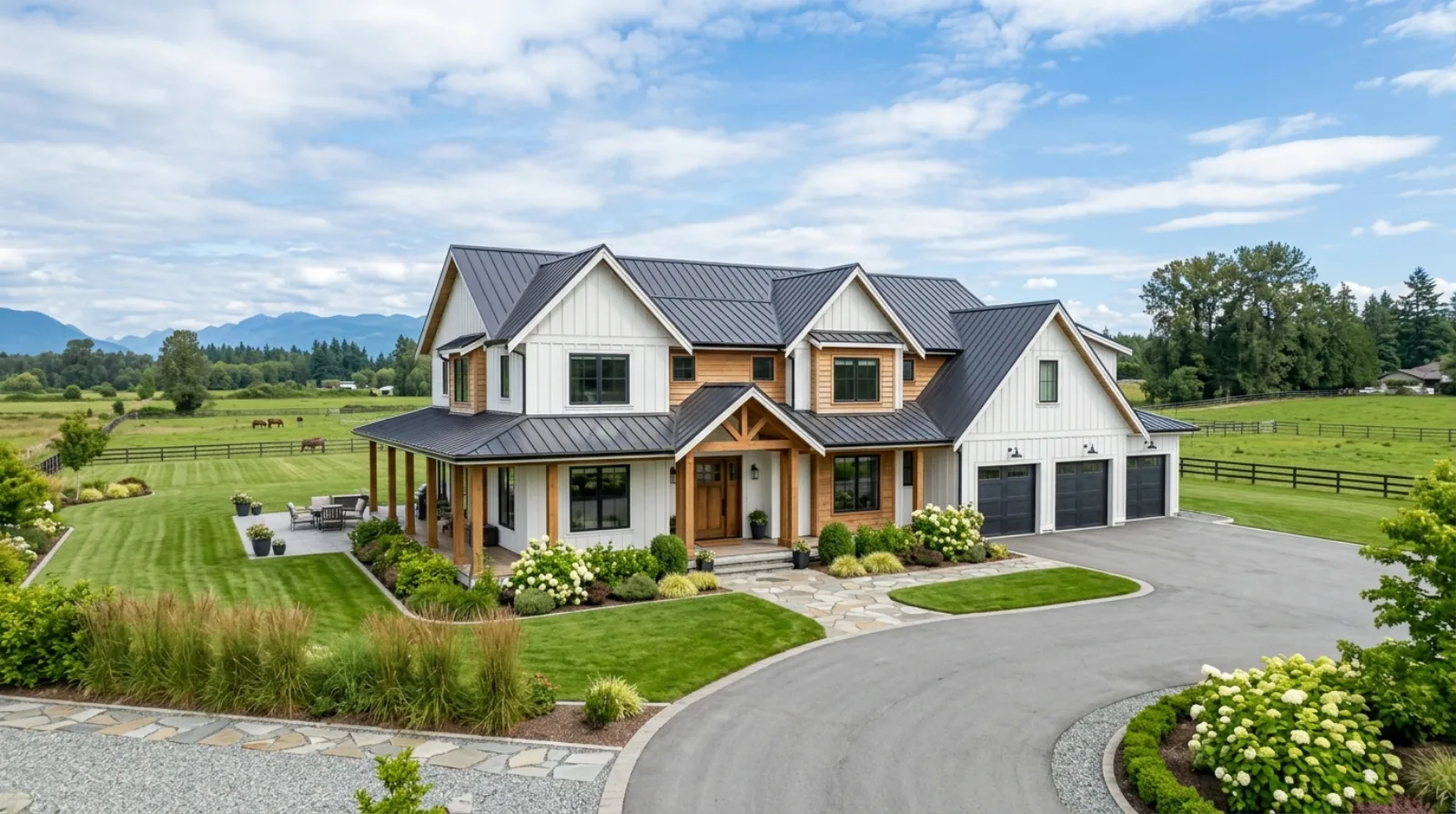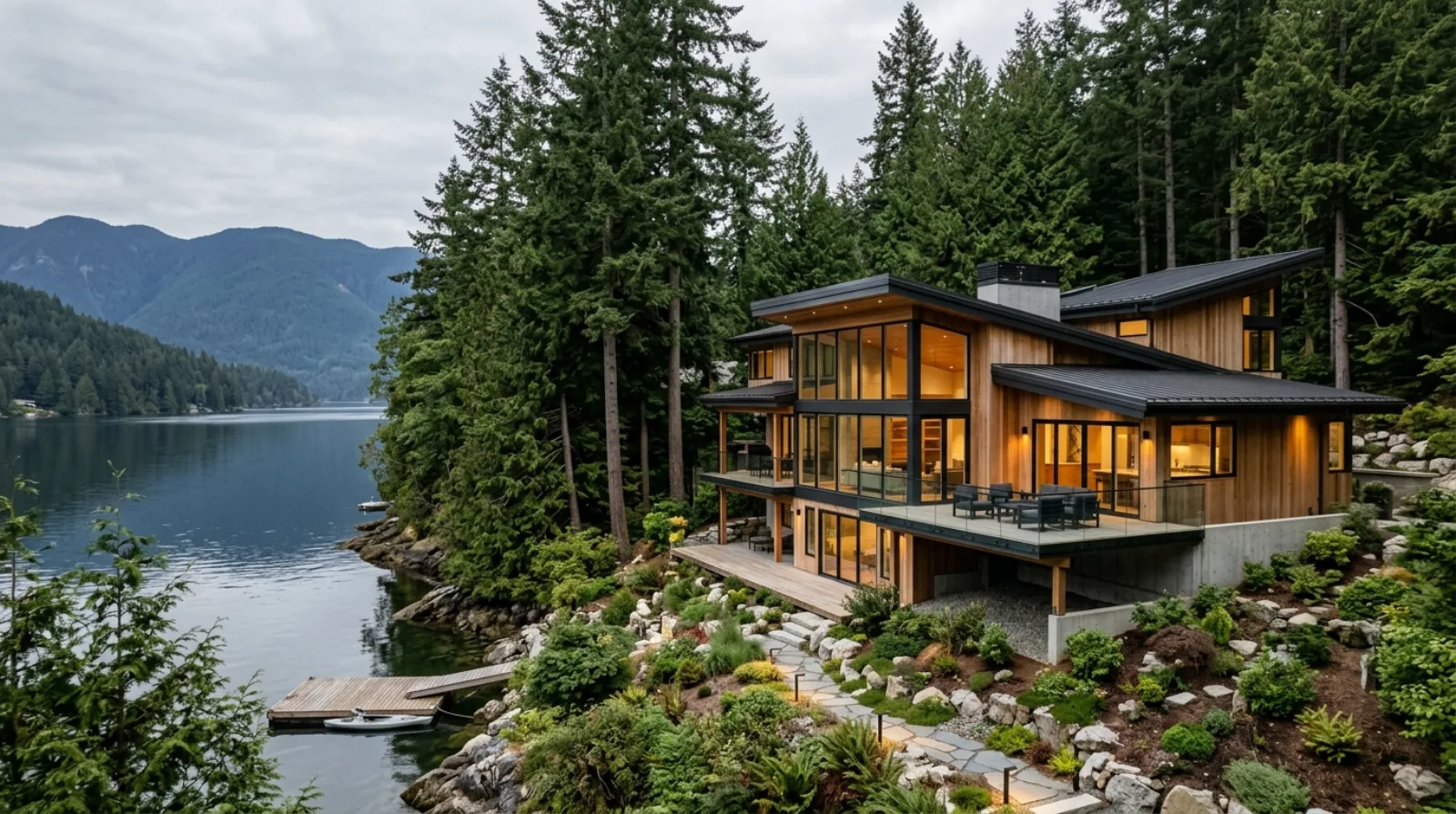
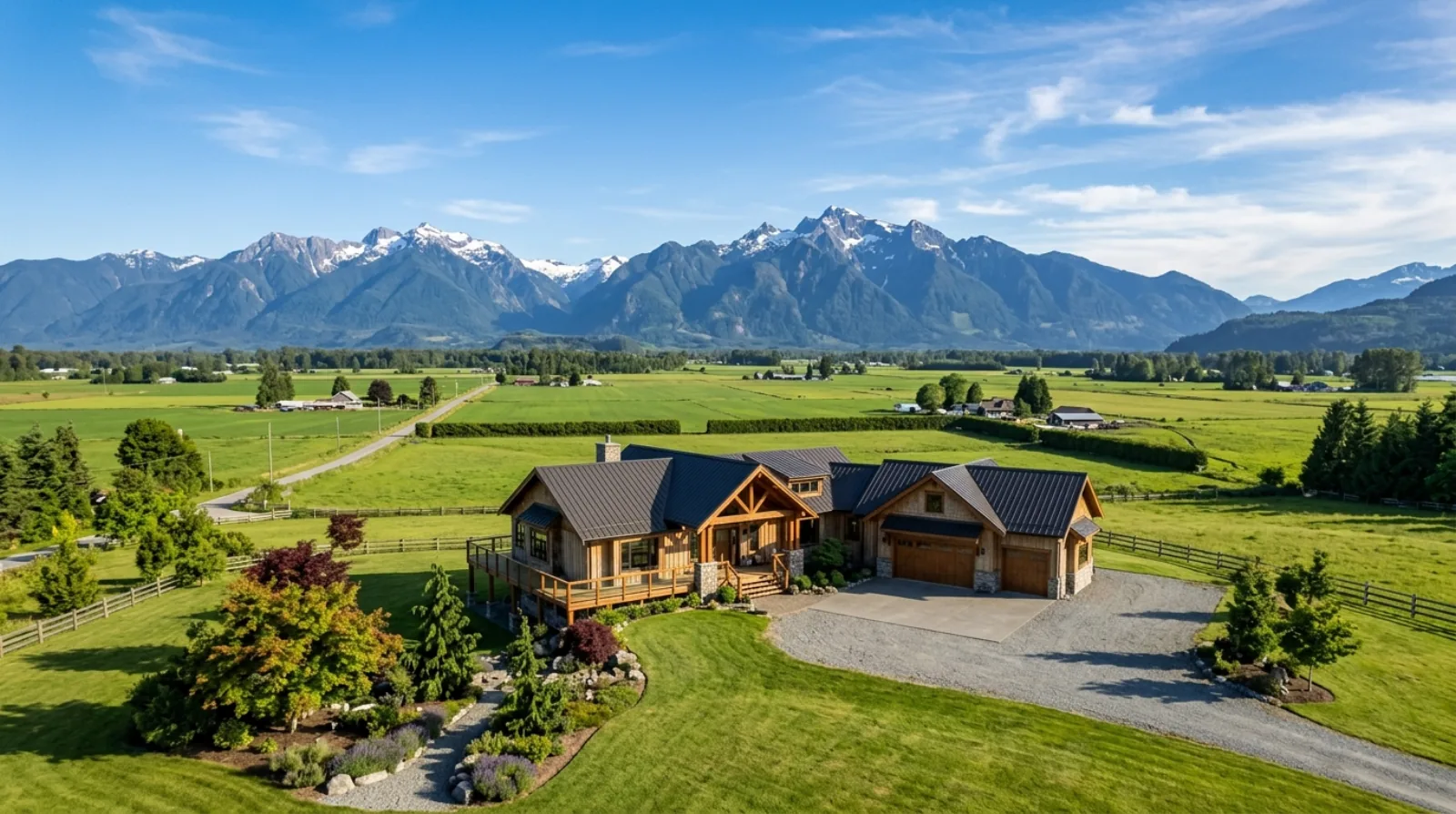
Chilliwack ranges from valley farmland to hillside above it. Here is what changes about the ALR, floodplain soil, wells and septic, and slope when you build here.
Most people who call us about Chilliwack come for the valley. The wide farmland, the mountains all around, and the room to build a real home with land. That is a good reason to build out in the eastern Fraser Valley, and the setting is a big part of the appeal.
But Chilliwack is really two kinds of ground, and the difference matters before you design anything. There is the valley floor, flat and open, much of it former floodplain with soft soil and a high water table, and some of it inside the Agricultural Land Reserve. And there is the hillside above it, places like Promontory, where the land climbs onto firmer ground and the build turns on slope, geotech and drainage. A lot on the flats and a lot on the hill are two different projects, even in the same city.
This guide zooms into Chilliwack specifically: valley versus hillside, floodplain and soil, the ALR and rural servicing, and what stays the same as any BC build. Because so much of the valley sits in flood-affected ground, read our Fraser Valley floodplain building guide alongside this one, it covers the flood construction level detail that applies here too.
Why build a custom home in Chilliwack instead of Burnaby or Vancouver?
People choose Chilliwack for land and value in space. Compared with the tight, mostly built-out lots of Burnaby and Vancouver, Chilliwack offers larger parcels, real acreage, mountain views, and an open valley setting well east of the city. For a family that wants room, a quieter pace, and a home with land around it, that trade can be worth the longer drive.
The catch is that valley land comes with valley conditions. Floodplain rules can set how high the main floor has to be. Soft soil affects the foundation. Farmland protection through the ALR can limit what you build. On acreage you are on a well and septic. And up on the hillside, slope and geotech take over. None of that stops a great build. It only surprises the buyer who assumes flat valley land is the simplest thing to build on.
The two Chilliwack builds: valley and hillside
Chilliwack is not one lot. The way you design, foundation and permit a build changes depending on whether you are on the flats or on the hill.
- The valley flats, wide and level, much of it former floodplain. Flat to build on in one sense, but the ground can be soft and wet, and mapped flood areas can set a minimum floor level. Some of this land is farmland inside the ALR.
- Promontory and the hillside areas, climbing above the valley on firmer ground. Slope drives the foundation, retaining and drainage here, more like our hillside work elsewhere in the region. Views come with the grade.
- Rural acreage across the area, larger parcels for land and space, often on a well and septic, and sometimes inside the ALR.
In Chilliwack the first question is which Chilliwack. A valley-flat lot and a Promontory hillside lot are two different builds, and pretending they are the same is how a design gets sent back.
Icon Projects Team
Floodplain and soil on the valley floor
The valley floor is where Chilliwack differs most from an inner-suburb build. Parts of the valley sit in mapped floodplain areas, and where a lot does, the city can set a flood construction level, a minimum finished floor level the house has to meet. That raises the main floor and changes the whole ground-floor approach. It is not something you add later, so you confirm the flood mapping and the required level before you design.
The soil is the second thing. Much of the valley is former floodplain with a high water table and soft or fine-grained ground that can hold water and settle. That affects the foundation, so a geotechnical report is worth doing even on flat valley ground. On soft soil the foundation design depends on what the ground can actually carry, and the report is what tells you. Our Fraser Valley floodplain building guide covers the flood level and soft-soil detail in depth, and it applies directly to the Chilliwack valley.
Drainage matters on flat ground too. Level land drains slowly, and with a high water table the water has nowhere easy to go, so surface grading and foundation drainage under BC Building Code 9.14 still get real attention. Our landscaping and site drainage post covers how the finished grade ties back to the foundation.
The ALR and rural servicing
Some Chilliwack farmland sits inside the Agricultural Land Reserve, provincial farmland protection that can limit house size, siting and secondary buildings. On any rural lot the ALR status is one of the first things to confirm, because building outside those rules is not something you can undo. We check it with the city and the Agricultural Land Commission before design.
On rural acreage without city water or sewer, you build on a private well and an on-site septic system. The well comes first, because you need water and its flow and quality confirmed. The septic depends on the soil, and on wet valley ground the septic approach can be more involved, so a soil test comes before the house design. The septic field needs its own space with setbacks, which together with the flood level shapes where and how big the house can be. You plan the water, the septic and the house together.
The Promontory hillside: a different build
Up on Promontory and the other hillside areas, the ground changes. Instead of floodplain rules and soft soil, you are dealing with slope on firmer ground, and the build turns on geotech, retaining and drainage. A geotechnical engineer logs the soil, the groundwater, the slope stability and the depth to rock, and that report tells your structural engineer how to build. We cover what that report tells you in our piece on geotechnical reports for slope lots, and because these are hillside builds, foundations on hillside lots applies directly. Water still runs downhill through the lot, so drainage gets the same care as any slope.
How Chilliwack's permits behave
Chilliwack writes its own zoning bylaw, sets its own height limits, and runs its own permit desk, and they do not match Burnaby or Vancouver. In flood areas the flood construction level adds a layer, on rural lots the ALR adds a provincial layer, and on the hillside the slope and geotech reviews add work on top of the building permit. So the first rule for a Chilliwack build is simple: confirm what applies to that specific lot, in writing.
The honest order of operations for a Chilliwack lot is:
- Confirm the lot's current zoning and the specific height, setback and lot-coverage rules with the City of Chilliwack, in writing.
- On the valley floor, confirm the flood mapping and any flood construction level.
- On rural land, confirm the ALR status and whether the lot needs a well and septic.
- Get a soil or geotechnical report: for bearing on soft valley soil, or for slope stability on the hillside.
- Only then commit a floor plan.
Our lot evaluation checklist covers the questions to answer before you buy, whether you are on the flats or the hill.
What stays the same as a Burnaby build
For all the differences, a custom home in Chilliwack answers to the same provincial rules as one in Burnaby. It follows the BC Energy Step Code, so the build needs an energy model and a blower-door airtightness test. Confirm the local step requirement at the permit desk rather than assuming it matches another city. It sits in the same rainfall region where the BC Building Code requires a rainscreen behind the cladding. And it is covered by the same 2-5-10 home warranty: one year on materials and labour, five years on the building envelope, ten years on structure. On floodplain ground and soft valley soil, that envelope and structural coverage is exactly why the foundation work is not the place to cut corners.
So a Chilliwack build is not a different rulebook. It is the same rulebook applied to two different kinds of ground.
Frequently asked questions
- Is my Chilliwack lot in a floodplain, and what does that change?
- Parts of the Chilliwack valley sit in mapped floodplain areas, which can set a minimum finished floor level, called a flood construction level, for the house. That raises the main floor and changes the foundation approach. Icon Projects confirms the flood mapping and the required level with the City of Chilliwack before design, because the flood construction level shapes the whole ground floor and cannot be added in later.
- Do Chilliwack valley lots have soft or wet soil?
- Much of the Chilliwack valley is former floodplain with a high water table and soft or fine-grained soil that can hold water and settle. That affects the foundation, so a geotechnical report is worth doing even on flat valley ground. Icon Projects gets the soil logged early, because on soft valley soil the foundation design depends on what the ground can actually carry.
- Do I need a well and septic system on Chilliwack acreage?
- Rural Chilliwack acreage without city water or sewer is built on a private well and an approved on-site septic system. The septic design depends on the soil, so a soil test comes first, and on wet valley ground the septic approach can be more involved. Icon Projects confirms water and septic early, because they decide where the house can sit and how big it can be.
- How does a Promontory hillside lot differ from a valley lot in Chilliwack?
- A Promontory hillside lot sits on slope and firmer ground above the valley, so the build turns on geotech, retaining and drainage rather than floodplain rules. A valley-flat lot turns on flood levels, soft soil and, on acreage, well and septic. Icon Projects treats the two as different builds, because the ground and the rules are different on each.
- Is farmland inside Chilliwack's Agricultural Land Reserve buildable?
- Some Chilliwack valley farmland sits inside the Agricultural Land Reserve, provincial protection that can limit house size, siting, and secondary buildings on the property. It is a first-priority item to confirm on any rural Chilliwack lot, because the ALR status shapes what the design can even propose. Icon Projects checks ALR status with the city and the Agricultural Land Commission before design begins.
- What order should a Chilliwack lot go through before design starts?
- Confirm the zoning, height, setback and lot-coverage rules with the City of Chilliwack in writing, then confirm flood mapping on the valley floor, then confirm ALR status and well or septic needs on rural land, then commission a soil or geotechnical report for bearing or slope stability. Only after those steps should a floor plan be committed. Icon Projects follows this order on every Chilliwack lot to avoid a design that has to be reworked.
- Does a Chilliwack custom home follow the same energy code as a Burnaby build?
- Yes. A Chilliwack custom home follows the same BC Energy Step Code as a Burnaby build, so it needs an energy model and a blower-door airtightness test, and the specific step requirement should be confirmed at the local permit desk rather than assumed. It also sits in the same rainfall region requiring a rainscreen behind the cladding, and it carries the same 2-5-10 home warranty: one year on materials and labour, five years on the envelope, ten years on structure.
- Why does drainage matter on flat Chilliwack valley land?
- Level land drains slowly, and Chilliwack's valley floor has a high water table with nowhere easy for surface water to go. Surface grading and foundation drainage under BC Building Code Section 9.14 still need real attention even on flat ground, because a lot that looks easy to build on can still hold water against the foundation without a deliberate drainage plan.