Langley means larger lots, rural acreage and farmland rules. Here is what changes about the ALR, wells and septic, heritage character and drainage when you build here.
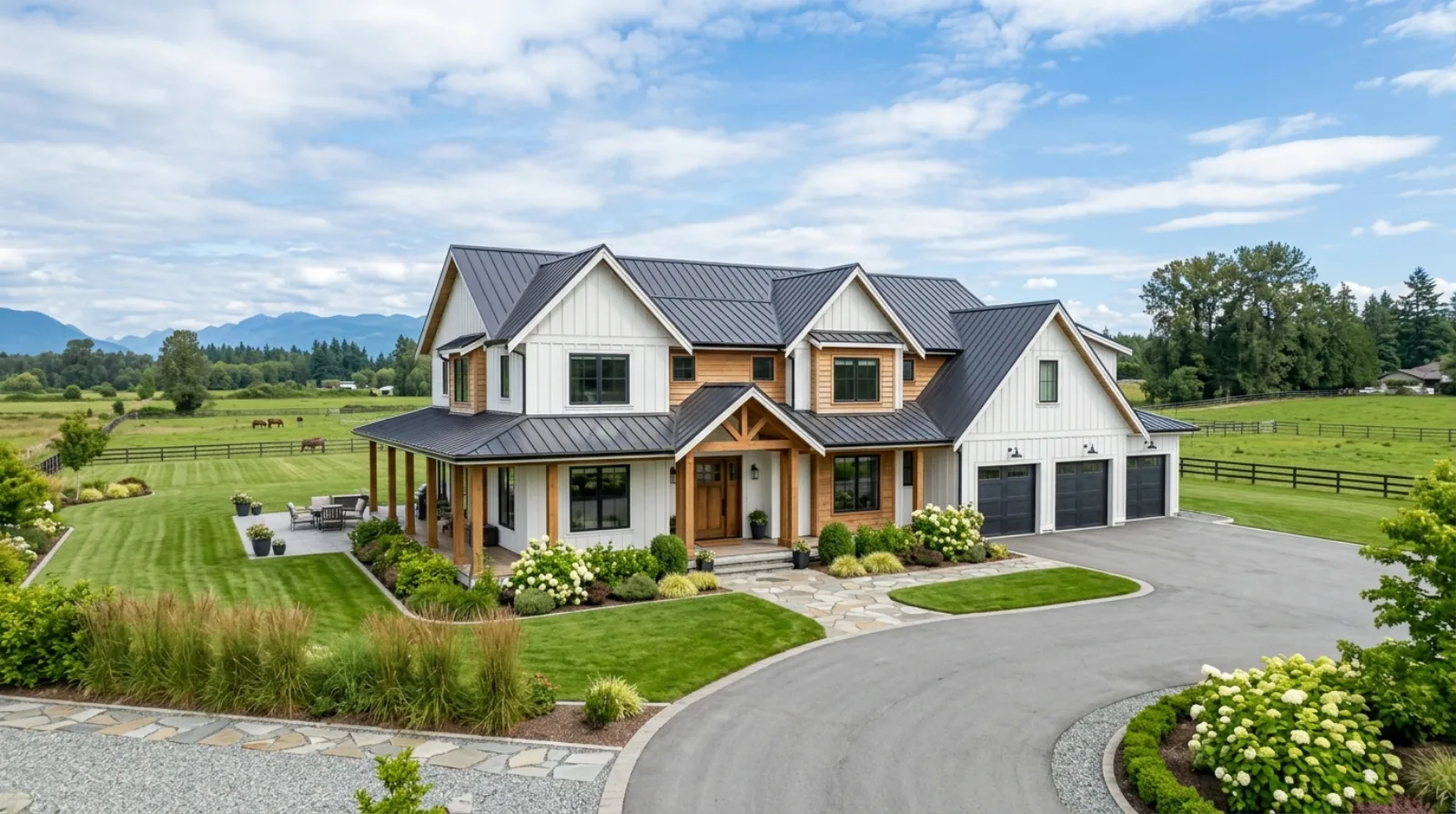
Most people who call us about Langley come for the same thing: more land. Bigger lots than the inner suburbs, real acreage in places, and room for a shop, a garden or animals. That is a good reason to build in Langley, and the land is a big part of why people love it out there.
But Langley is really two places, and the difference matters before you design anything. There is the City of Langley, which is smaller and more built-up, with city water and sewer and mostly standard urban lots. And there is the Township of Langley, which is much larger and wraps around the City, and includes rural acreage, farmland and a lot of land inside the Agricultural Land Reserve. A build in the City behaves like a normal suburban project. A build on Township acreage can involve provincial farmland rules, a private well and a septic system before you ever talk floor plans.
This guide zooms into Langley specifically: Township versus City, the ALR question, wells and septic on acreage, the heritage character around Fort Langley, and why a flat lot still needs a drainage plan. If you are weighing the wider Fraser Valley, our Fraser Valley building guide sits alongside this one.
Why build a custom home in Langley instead of Burnaby or Vancouver?
People choose Langley for space. Compared with the tight, mostly built-out lots of Burnaby and Vancouver, Langley offers larger parcels, true acreage in the Township, and a more rural, open feel while still being within reach of the region. For a family that wants land, a big shop, or room to spread out, that trade can be worth the longer drive.
The catch is that rural land comes with rural rules. Farmland protection through the ALR can limit what and where you build. Acreage without city services means a well and a septic system, which the soil has to support. And the flat valley land that is easy to build on also drains slowly, so water management is its own conversation. None of that stops a great build. It only surprises the buyer who assumes a rural lot works like a serviced city lot.
Township versus City: two different builds
Langley is not one market. The way you service, permit and design a build changes depending on which Langley you are in.
- City of Langley, the smaller, more urban municipality. City water and sewer, mostly standard lots, and a build process closer to a typical suburban project. This is the simpler side to build on when it comes to servicing.
- Township of Langley, the much larger municipality that surrounds the City. It ranges from suburban neighbourhoods with full services to true rural acreage and farmland. On the rural side you are often on a well and septic, and often inside the ALR, which changes the whole conversation.
- Fort Langley and the heritage areas, the historic village and its surroundings. A modern custom home near a heritage streetscape has to sit politely next to older character, which shapes massing, materials and roofline.
- Rural acreage across the Township, larger parcels for shops, gardens or animals. These are the lots where the ALR, wells and septic matter most.
In Langley the first question is not the floor plan, it is the land. Is it in the ALR, does it have city services, and what does the soil say. Answer those three and the design gets a lot easier.
Icon Projects Team
The ALR: the rule that catches rural buyers
The Agricultural Land Reserve is provincial farmland protection, and a lot of the Township of Langley sits inside it. When a lot is in the ALR, the province and the Agricultural Land Commission have a say in what you can build, how big the house can be, where it sits, and what other buildings are allowed. Those rules exist to protect farmland, and they are not something a builder can design around after the fact.
So on any rural Langley lot, the ALR status is one of the first things to confirm, before you commit to a design. It is far cheaper to know the rules going in than to draw a plan the province will not allow. We check a lot's ALR status with the Township and the Land Commission early, because building outside those rules is not a mistake you can undo.
Wells and septic on acreage
On rural Langley acreage without city water or sewer, you are on a private well and an on-site septic system. Both shape the build.
The well comes first. You need water, and you need to know the flow and the quality before you count on the lot. A well test tells you whether the water is enough for a house and whether it needs treatment.
Septic depends on the soil. An on-site septic system has to match what the ground can absorb, so a soil or perc test comes before the house design. The results decide the type and size of the septic field, and the field needs its own space on the lot with setbacks from the house, the well and the property lines. That footprint can shape where the house is allowed to sit.
Because the well, the septic field and the house all compete for space on a rural lot, you plan them together, not one after another. Getting the water and septic sorted early is what tells you how big a house the lot can actually support.
Flat does not mean drainage is free
Langley land is flatter than the North Shore, and that makes it easier in some ways. But flat ground drains slowly, and parts of the Fraser Valley have a high water table and clay soils that hold water. Without a real grading and drainage plan, water can sit against the foundation or pool in the yard after a wet stretch.
So a flat Langley lot still gets a proper drainage strategy: foundation drainage under BC Building Code 9.14, surface grading that moves water away from the house, and a plan for where the water goes on a lot that does not shed it quickly on its own. Our landscaping and site drainage post covers how the finished grade ties back to the foundation. On acreage this also has to work around the septic field, so drainage and septic get planned together.
How Langley's permits behave
The City of Langley and the Township of Langley each write their own zoning and run their own permit desk, so they do not match each other, and neither matches Burnaby or Vancouver. On rural Township lots the ALR adds a provincial layer on top of the local rules. So the first rule for a Langley build is simple: confirm which Langley you are in and what applies to that specific lot, in writing.
The honest order of operations for a rural Langley lot is:
- Confirm the lot's ALR status with the Township and the Agricultural Land Commission.
- Confirm whether the lot has city services or needs a well and septic.
- Test the well flow and quality, and get a soil test for the septic design.
- Confirm the local zoning, setback and lot-coverage rules in writing.
- Only then commit a floor plan.
For a serviced City of Langley lot the servicing steps drop out, and the process looks more like a standard suburban build. Our lot evaluation checklist covers the questions to answer before you buy, whichever Langley you are in.
What stays the same as a Burnaby build
For all the rural differences, a custom home in Langley answers to the same provincial rules as one in Burnaby. It follows the BC Energy Step Code, so the build needs an energy model and a blower-door airtightness test. Confirm the local step requirement at the permit desk rather than assuming it matches another city. It sits in the same rainfall region where the BC Building Code requires a rainscreen behind the cladding. And it is covered by the same 2-5-10 home warranty: one year on materials and labour, five years on the building envelope, ten years on structure.
So a Langley build is not a different rulebook. It is the same rulebook, plus the extra layer of farmland rules and rural servicing on the acreage side.
Frequently asked questions
- Is my Langley lot in the Agricultural Land Reserve, and does it matter?
- Much of the Township of Langley sits in the Agricultural Land Reserve, which is provincial farmland protection that can limit house size, siting and secondary buildings. It matters a lot, because it changes what you are allowed to build. Icon Projects checks a lot's ALR status with the Agricultural Land Commission and the Township before design, since building outside those rules is not an option you can undo later.
- Do I need a well and septic system for a Langley acreage build?
- On rural Langley acreage that has no city water or sewer, yes, you usually need a private well and an approved on-site septic system. The septic design depends on the soil, so a perc or soil test comes before the house design. Icon Projects sorts out water quality, well flow and septic approval early, because these decide where the house can sit and what size it can be.
- How does building in the City of Langley differ from the Township?
- The City of Langley is smaller and more built-up, with city water and sewer and mostly standard urban lots, so it behaves more like a typical suburban build. The Township is much larger and includes rural acreage, farmland and the ALR, where wells, septic and provincial farmland rules come into play. Icon Projects treats the two as different builds, because the servicing and the rules are different.
- Does a flat Langley lot still need a drainage plan?
- Yes. Flatter ground drains slowly, and parts of the Fraser Valley have a high water table and clay soils that hold water. Without a real grading and drainage plan, water can sit against the foundation or pool in the yard. Icon Projects designs surface grading and foundation drainage for flat lots the same way it does for slopes, because standing water is a problem on any lot.
- What is the difference between building in the City of Langley versus rural Township acreage?
- The City of Langley is the smaller, more built-up municipality with city water and sewer and mostly standard urban lots, so a build there behaves like a typical suburban project. Rural Township of Langley acreage often has no city services, meaning a well and septic system, and can sit inside the Agricultural Land Reserve, which brings provincial farmland rules into the design conversation from the start.
- What has to happen before house design begins on rural Langley acreage?
- The honest order is to confirm the lot's Agricultural Land Reserve status with the Township and the Agricultural Land Commission, confirm whether the lot has city services or needs a well and septic, test the well flow and quality and get a soil test for the septic design, and confirm local zoning, setback and lot-coverage rules in writing. Only after those steps should a floor plan be committed.
- Why does a Fort Langley heritage location affect a custom home design?
- A modern custom home built near Fort Langley's historic village and surrounding heritage areas has to sit politely next to older character homes, which shapes the massing, materials, and roofline of the new design. This heritage-character consideration sits alongside the ALR and rural-servicing questions as part of confirming what a specific Langley lot allows before design work begins.
- How does a well and septic system shape where a house can sit on a Langley acreage lot?
- The well needs confirmed water flow and quality, and the septic field's size and type depend on a soil or perc test, with the field requiring its own space and setbacks from the house, the well, and the property lines. Because the well, the septic field, and the house all compete for space on the same lot, they are planned together rather than one after another, and that combined footprint decides how large a house the property can support.