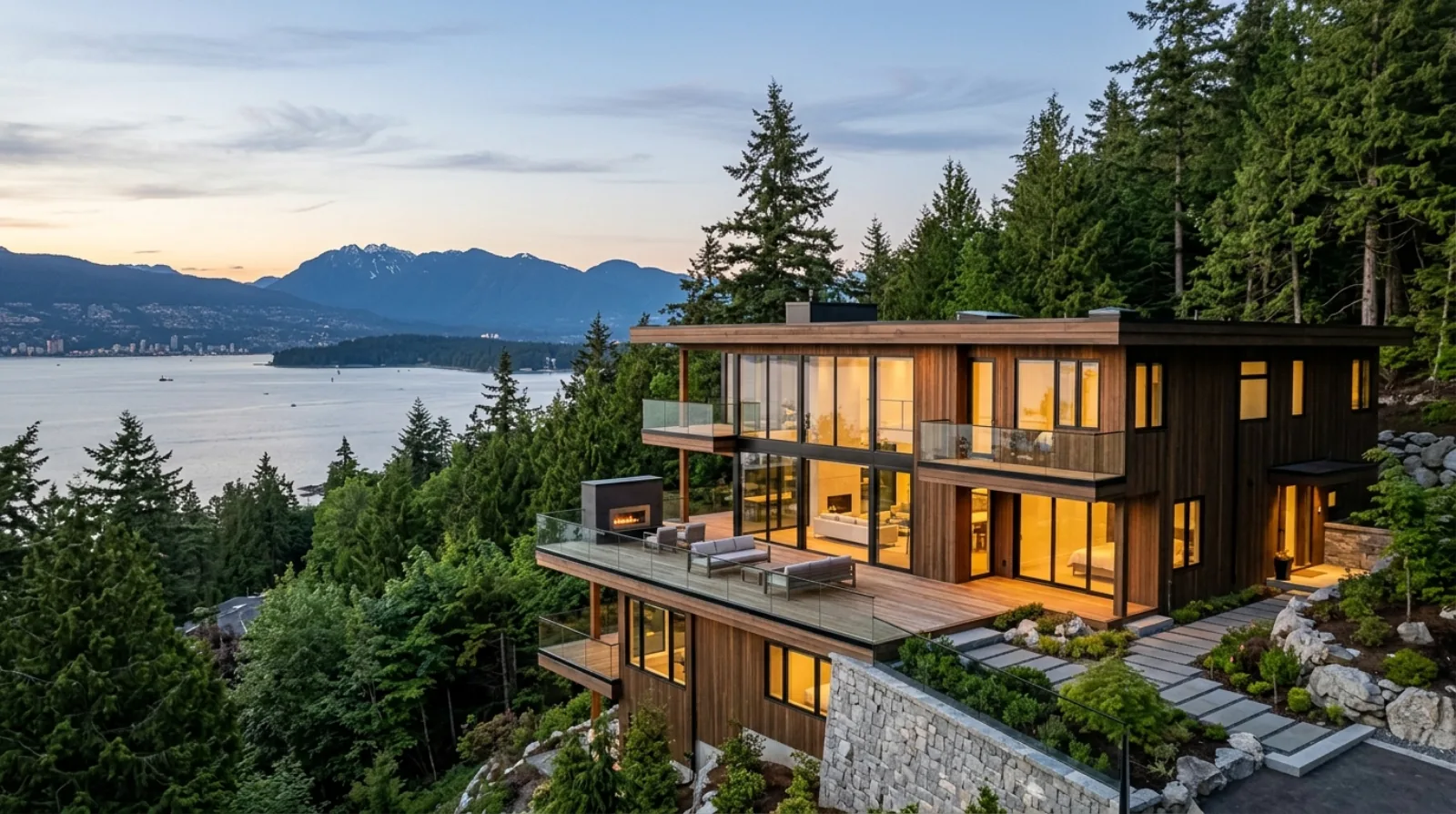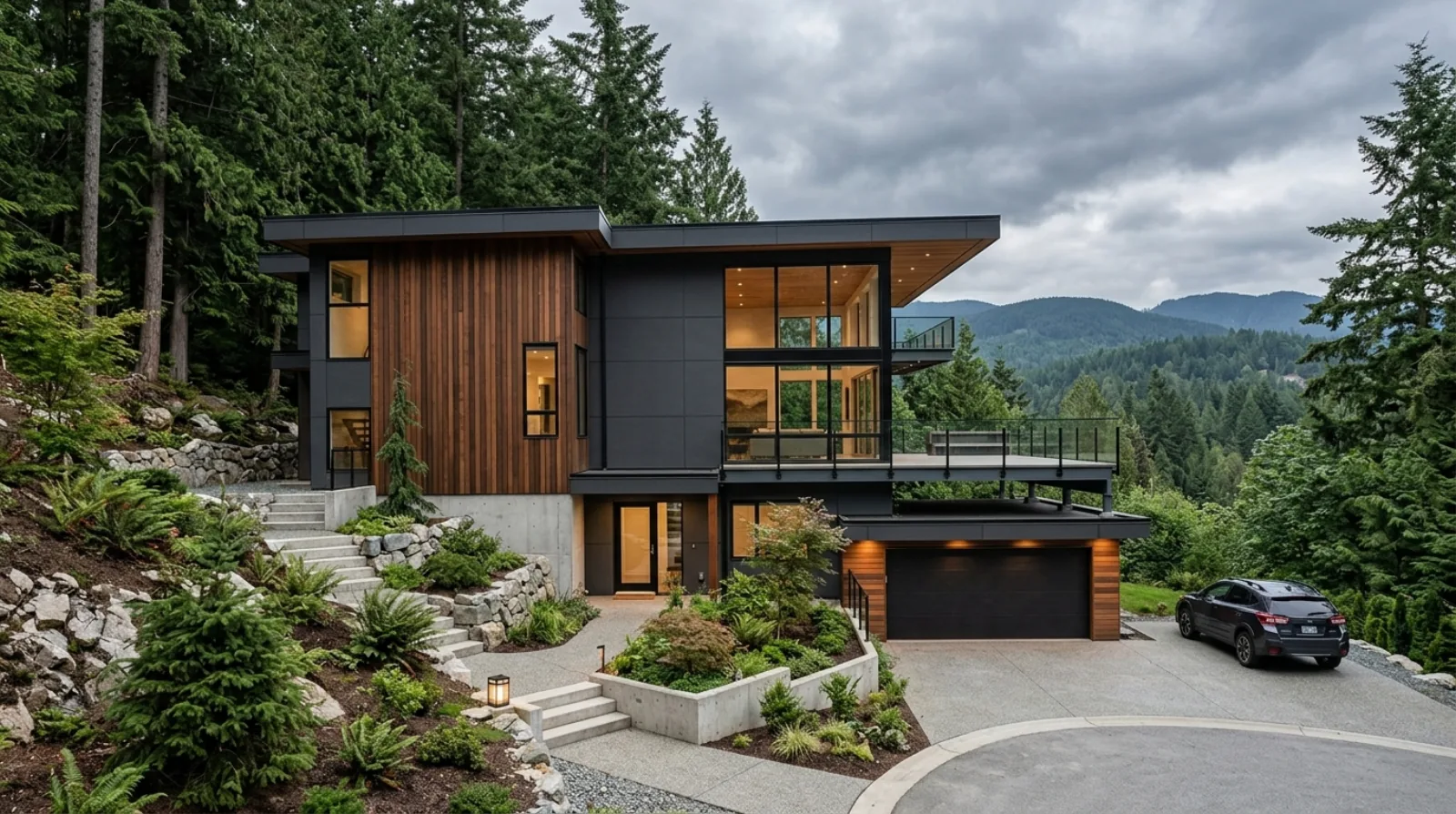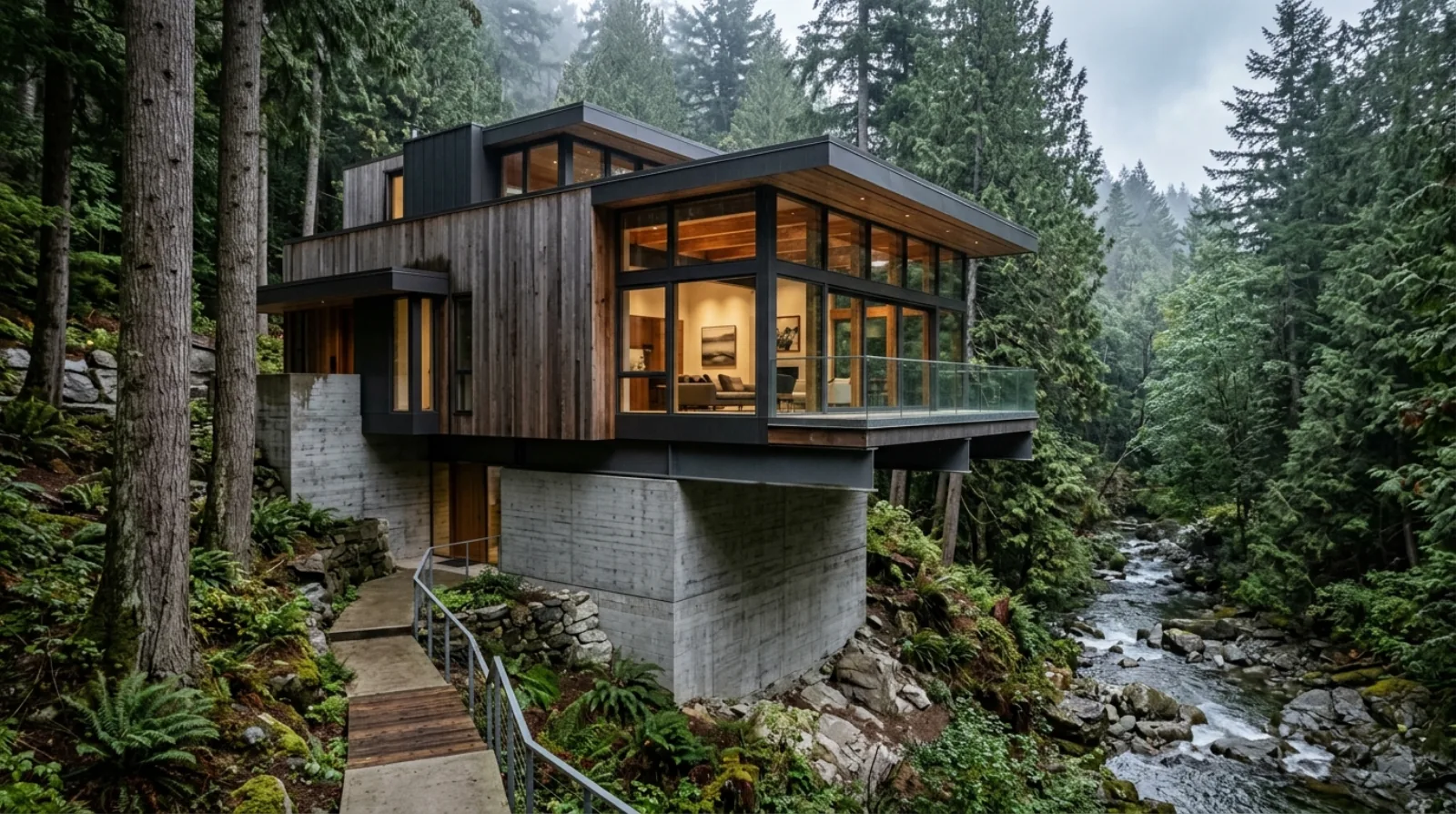
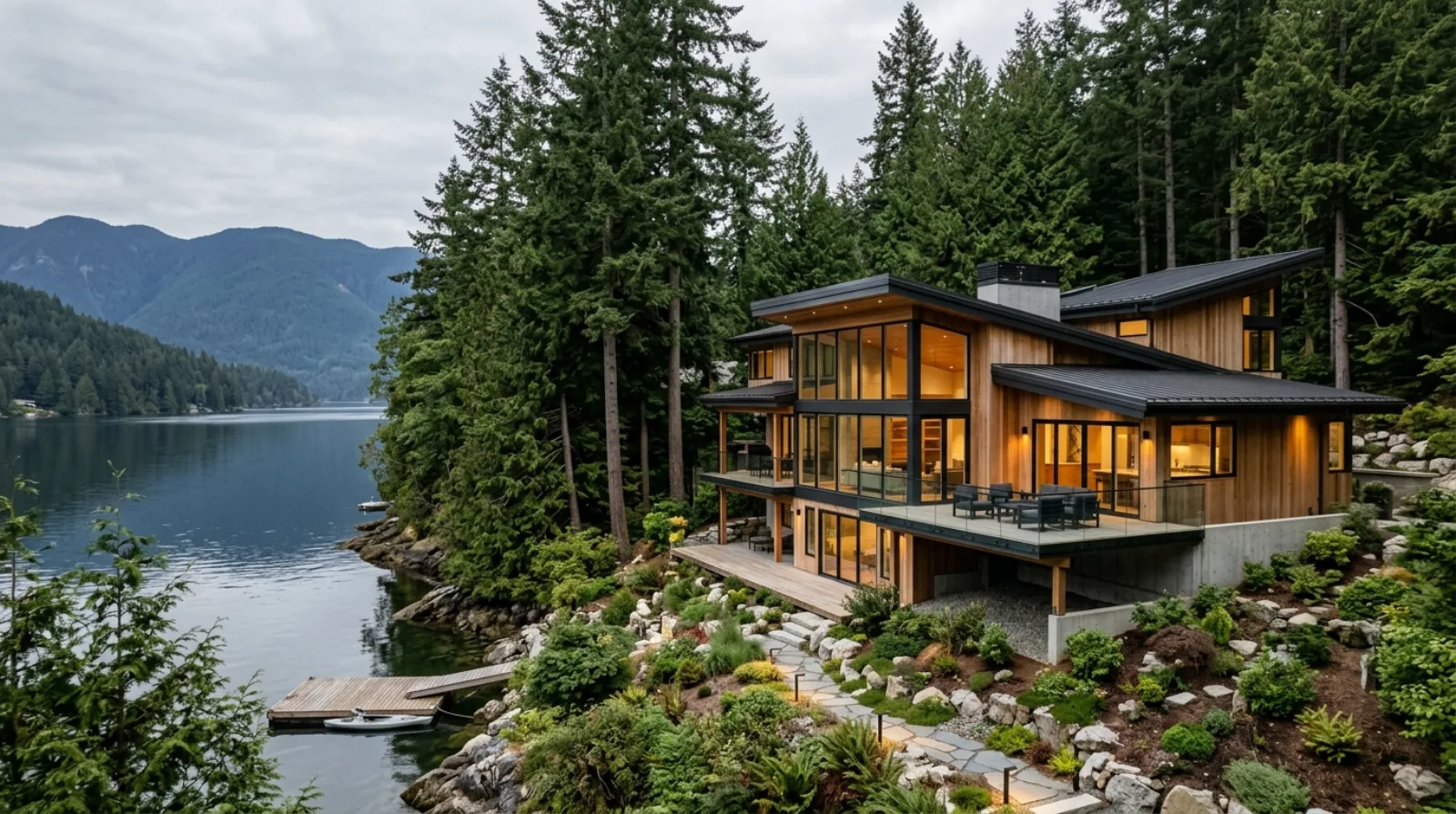
Port Moody sits at the head of the inlet, so water and slope shape the build. Here is what changes about drainage, trees and the permit when you build here.
Most people who call us about Port Moody are comparing it to Coquitlam next door. The drive is similar, the land price is often in the same range, and on a listing the lots can look alike. On site they behave differently, and the reason is the inlet.
Port Moody sits at the head of Burrard Inlet. Much of the city slopes down toward that water, and much of it is treed. So the first thing our crew does on a Port Moody lot is not read the floor plan. It is read the fall of the land and figure out where the water goes. A lot that looks flat from the road often drops toward the inlet at the back, and the ground can be soft where water has been sitting.
This guide zooms into Port Moody specifically: the areas we build in, what the slope and the water do to the design, how the permit behaves, and what stays the same as any BC build. If you are still deciding between Port Moody, Coquitlam and Port Coquitlam, start with our Tri-Cities custom home guide, then come back here for the Port Moody detail.
Why build a custom home in Port Moody instead of Burnaby?
People choose Port Moody for the setting. Compared with the tighter, mostly built-out streets of Burnaby, Port Moody still offers treed lots, water views, and a smaller, quieter feel around the inlet and the village. For a family that wants a more natural setting and a bit more room without leaving the region, that trade can be worth the slightly longer drive.
The catch is that the setting is also the challenge. The land slopes toward the water. The trees are protected. Rain and groundwater run downhill through your lot, and near creeks and the shoreline there can be extra rules. None of that stops a good build. It only surprises the buyer who treats a Port Moody inlet-side lot like a flat Burnaby teardown and expects the same simple foundation and drainage.
The Port Moody areas we build in
Port Moody is not one lot. The way you design, foundation and permit a build changes depending on where in the city you are.
- Heritage Mountain, the hillside neighbourhood above the inlet. Larger lots, views toward the water, and grade that falls across the lot toward the inlet. Many builds here are hillside builds with stepped foundations, retaining work, a graded driveway and careful drainage. This is the part of Port Moody most like our slope work in Coquitlam and on the North Shore.
- Pleasantside, the older shoreline-side area toward the eastern end of the inlet. Closer to the water, flatter on the whole, with a quiet established character. The slope is gentler, but lots can still fall toward the water and need a real drainage plan.
- Ioco and the older village edges, established streets with mature trees and a mix of lot sizes. Character matters here, and treed lots carry the usual tree-retention conversation.
Port Moody slopes toward the inlet, so the water is part of the lot, not an afterthought. Plan the drainage with the foundation and the build stays dry the first big storm.
Icon Projects Team
Slope, water and trees: what drives the build
The biggest difference between a Port Moody build and a flat Burnaby build is that the land tilts toward the inlet. On Heritage Mountain especially you are working with real slope, and slope drives the foundation type, the retaining walls, the driveway grade, the drainage, and how the city measures your allowable height.
You do not guess at any of this. You put a geotechnical engineer on the lot early to log the soil, the depth to any hard layer, the groundwater and the slope stability. That report tells your structural engineer whether you are pouring conventional footings, stepping the foundation down the hill, or going to deeper systems. We walk through what that report tells you, and what a missing one costs, in our piece on geotechnical reports for slope lots. The engineering is the same discipline whether the slope is in Burnaby or above the inlet.
Water is the second thing, and on an inlet-side lot it may be the most important. When you build on ground that slopes toward the water, you manage rain that falls on your roof and water that travels across and under your lot from the higher ground above you. In the wet coastal climate that is a constant load through the fall and winter. A proper drainage strategy usually layers foundation drainage under BC Building Code 9.14, surface grading that pulls water away from the house, and often interceptor drains or swales uphill to catch flow before it reaches the foundation. Our landscaping and site drainage post covers how the finished grade ties back to the foundation system.
Trees are the third surprise. Port Moody is treed, and the city protects many trees on private lots. Protected trees trigger a permit and a retention or replacement plan, plus tree-protection fencing during construction. The buildable area on a treed lot can be smaller than the lot lines suggest, because you design around root protection zones. Sort the tree conversation out at design, not at excavation.
Creeks, the shoreline and riparian setbacks
Some Port Moody lots sit near creeks or close to the inlet shoreline. Where that is the case, the provincial Riparian Areas Protection Regulation can set a protected setback measured from the top of the bank, and the city can apply its own environmental protections too. That setback can move where the house is allowed to sit on the lot. It is far cheaper to design around a riparian setback from the start than to redesign after a permit review flags it, so this is a question to answer early, before you commit a plan.
How Port Moody's permits behave
Every city in the region writes its own zoning bylaw, sets its own height limits, and runs its own permit desk, and they do not match each other. Port Moody's numbers, its grade definition and its review process are its own. So the first rule for a Port Moody build is simple: do not assume a Burnaby or Coquitlam figure you already know carries over.
What does carry over is the method. On a sloped lot your allowable height is measured against a defined grade, and on a hill the difference between natural grade and the grade after you cut and fill can decide whether a design fits. A BC Land Surveyor establishes that baseline before design locks. Where a lot is steep or near a creek, the city may run additional review on top of the building permit, which can shape placement and height.
The honest order of operations for Port Moody is:
- Confirm the lot's current zoning and the specific height, setback and lot-coverage rules with the City of Port Moody, in writing.
- Confirm whether the lot sits near a creek or shoreline that triggers a riparian setback.
- Get a surveyed natural-grade plan and a geotechnical report before the design is final.
- Sort out the tree retention or removal plan early, because it shapes the buildable area.
- Only then commit a floor plan.
That sequence is the same one we use for any teardown. Our lot evaluation checklist covers the questions to answer before you buy, and because much of Port Moody is hillside, read foundations on hillside lots alongside this guide.
What stays the same as a Burnaby build
For all the differences, a custom home in Port Moody answers to the same provincial rules as one in Burnaby. It follows the BC Energy Step Code, so the build needs an energy model and a blower-door airtightness test. Confirm Port Moody's current step requirement at the permit desk rather than assuming it matches another city. It sits in the coastal rainfall zone where the BC Building Code requires a rainscreen behind the cladding, which matters even more on a wet inlet-side slope. And it is covered by the same 2-5-10 home warranty: one year on materials and labour, five years on the building envelope, ten years on structure. That envelope and structural coverage is exactly why the foundation and drainage work is not the place to cut corners.
So a Port Moody build is not a different rulebook. It is the same rulebook applied to a wetter, more sloped lot.
Frequently asked questions
- Do I need a geotechnical report for a Port Moody lot?
- On sloped lots, and much of Heritage Mountain is sloped, a geotechnical report is effectively always needed and the city will expect it. It confirms bearing, groundwater and slope stability before you design a foundation. Even on flatter Pleasantside or Ioco lots it is worth doing because it confirms the soil can carry the house, which is why Icon Projects gets the report before anyone talks design details.
- How does drainage toward the inlet affect a Port Moody build?
- Because much of Port Moody slopes toward the inlet, water travels across and under your lot on its way down, so a real drainage strategy is not optional. That means code-compliant foundation drainage, surface grading away from the house, and often interceptor drains uphill. Icon Projects designs the drainage with the foundation, not after it, so water is managed before it reaches the building.
- Are there creek or riparian rules on Port Moody lots?
- Some Port Moody lots sit near creeks or the shoreline, where the provincial Riparian Areas Protection Regulation can set a protected setback from the top of the bank. That setback can shape where the house sits. Icon Projects confirms whether a lot is affected early, because it is far cheaper to design around a riparian setback than to redesign after a permit review flags it.
- What areas of Port Moody are best for a custom home build?
- Heritage Mountain gives you larger lots and views but the most slope-and-drainage engineering. Pleasantside and the Ioco area sit closer to the shoreline, flatter on the whole, with an older and quieter character. Icon Projects matches the area to how much hillside work you want in the plan, since an inlet-side slope lot and a flatter shoreline lot build differently.
- Why does Port Moody require more drainage planning than a flat Burnaby lot?
- Port Moody sits at the head of Burrard Inlet, and much of the city slopes down toward the water, so a build there manages both rain falling directly on the lot and water travelling downhill from higher ground. That is a constant load through the wet coastal fall and winter, not an occasional event, which is why Icon Projects designs the drainage system alongside the foundation rather than adding it afterward.
- What is the correct order of steps before designing a Port Moody custom home?
- Confirm the lot's current zoning and its height, setback and lot-coverage rules with the City of Port Moody in writing, then confirm whether the lot sits near a creek or shoreline that triggers a riparian setback. Get a surveyed natural-grade plan and a geotechnical report before the design is final, sort out tree retention early, and only then commit a floor plan.
- Why do Port Moody lots look flatter than they behave on site?
- A lot can appear level from the street and still drop close to a full storey toward the inlet at the rear, with soft ground where water has been sitting through the winter. Icon Projects reads the fall of the land and checks for standing water on every Port Moody lot before design starts, rather than relying on how the property photographs or reads on a listing.
- Does a Port Moody custom home follow different provincial rules than a Burnaby home?
- No. A Port Moody custom home follows the same BC Energy Step Code, the same rainscreen requirement in the province's coastal rainfall zone, and the same 2-5-10 home warranty as a Burnaby build: one year on materials and labour, five years on the building envelope, ten years on structure. What differs in Port Moody is the local layer, slope, inlet drainage and riparian setbacks, not the underlying provincial rulebook.