Sub-Market
Building a Custom Home in the Tri-Cities vs Burnaby
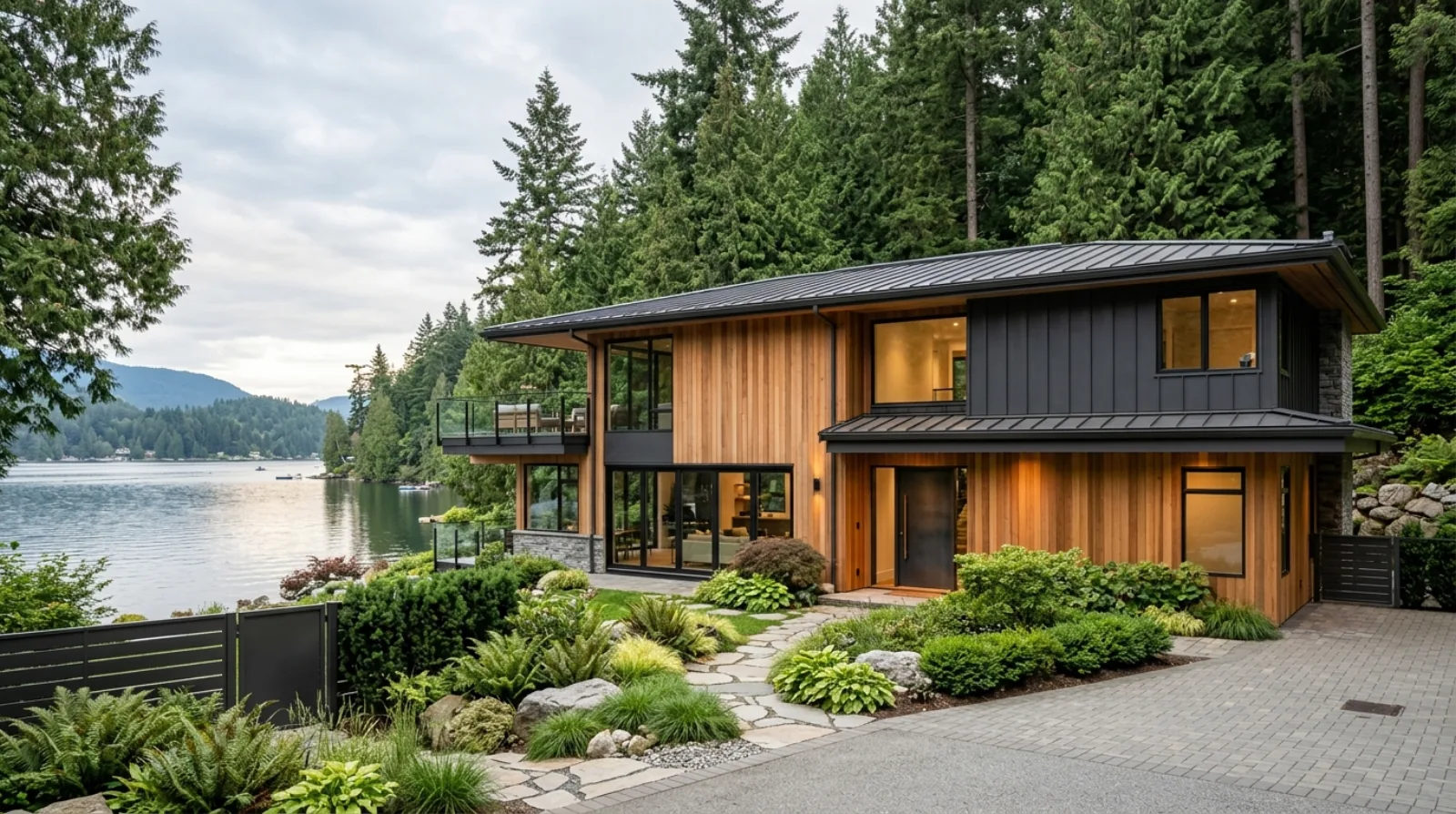
Coquitlam, Port Coquitlam and Port Moody build differently than Burnaby, steeper hillside neighbourhoods, more geotechnical work, and three separate permit desks. Here's what changes when you cross the line.
What's actually different about building a custom home in the Tri-Cities versus Burnaby?
The short answer: more slope, more geotechnical work, and three separate permit processes instead of one. The building code is the same, the 2024 BC Building Code applies in Coquitlam, Port Coquitlam and Port Moody exactly as it does in Burnaby. What changes is the ground you're building on and the desk you submit to. A flat lot in Edmonds and a flat lot in central Port Coquitlam build almost identically. But a lot more of the desirable Tri-Cities land sits on a hillside, and hillside changes the whole front half of a project before a single wall goes up.
We build primarily in Burnaby, with regular work in Coquitlam, Port Moody and North Vancouver. So we tend to explain the Tri-Cities to clients the way we'd explain a neighbour's house, same bones as ours, laid out a little differently. This guide walks the differences that actually matter when you're deciding where to build.
The view lots are on slopes, and slope is a different sport
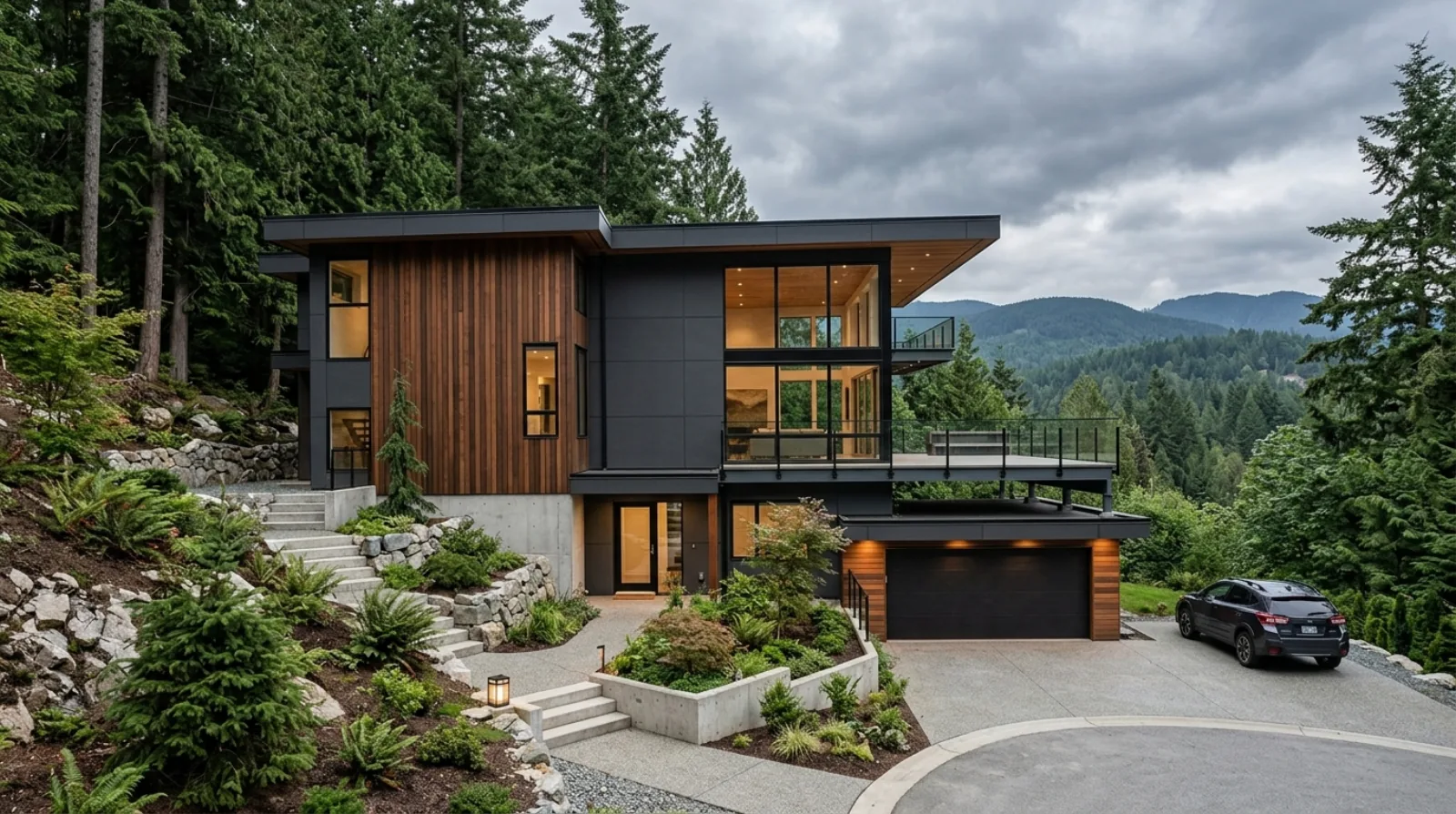
If you're drawn to the Tri-Cities, there's a good chance you're drawn to elevation. Westwood Plateau in Coquitlam, Burke Mountain to the north, Heritage Mountain in Port Moody, the neighbourhoods people picture when they imagine building here are the ones with the views, and views come from height, and height comes from slope.
Burnaby has its own hillside pockets, of course. Capitol Hill and the Burnaby Heights escarpment are genuine slopes, and we've written a full technical guide to building on Burnaby's hillside lots. But across the Tri-Cities, sloped lots aren't the exception, in the plateau and mountain neighbourhoods they're closer to the rule. That shifts the kind of work that dominates the early months.
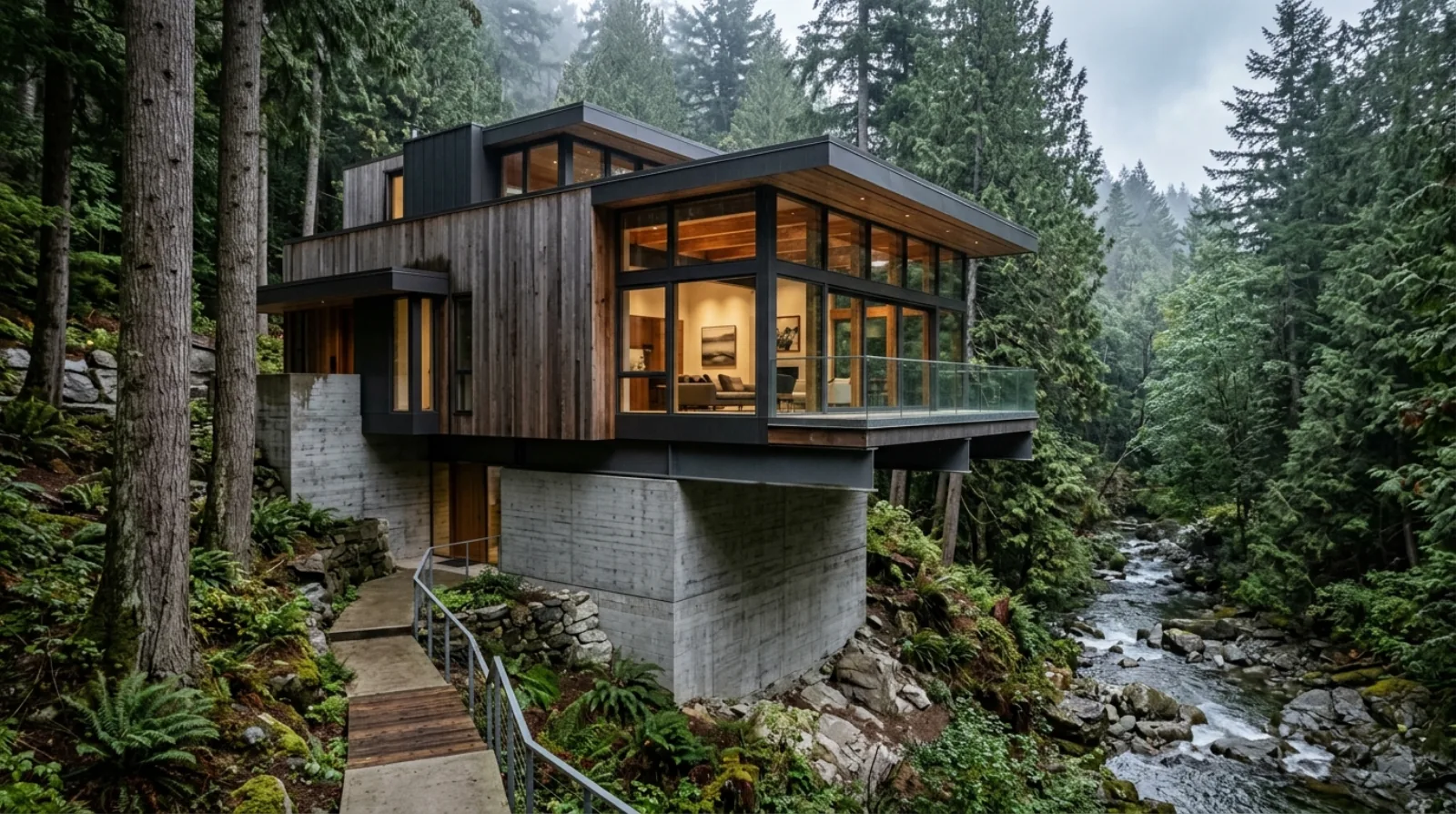
On a slope, the first specialist through the door usually isn't an architect. It's a geotechnical engineer. They assess soil stability, drainage, and whether the lot needs retaining structures or a deeper, engineered foundation. We've laid out why these reports matter and what they cover in detail, the same principles apply across municipal lines, but in the Tri-Cities you're far more likely to need one.
A few realities that come with hillside ground:
- Drainage is engineered, not assumed. The Lower Mainland is a high-rainfall coastal climate, annual rainfall well over 1,000 mm. The code expects foundation drainage (drain tile and crushed stone under 9.14) on any home, but on a slope where water runs toward your house, getting it right is the difference between a dry basement and a recurring claim.
- Foundations get bigger and deeper. Stepped footings, taller foundation walls, and sometimes engineered retaining walls that are structural parts of the build, not landscaping. Our write-up on foundations on hillside lots covers the mechanics.
- Site prep takes longer. Excavation, shoring, and earthworks on a grade eat weeks that a flat lot never sees.
A view lot doesn't cost more because of the view. It costs more because of everything holding the house up underneath it.
Icon Projects Team
Height is measured from natural grade, and that bites harder on a slope
Here's a rule that catches people who've done their homework in Burnaby and assumed it carries over. In Burnaby, building height is measured against the arithmetic mean of natural, undisturbed grade, certified by a BC Land Surveyor, not the grade you finish the lot at. We've written about how that height calculation works on slope lots, because it routinely takes a storey off a design someone had already fallen in love with.
The Tri-Cities measure height too, and each municipality writes its own zoning bylaw, Coquitlam, Port Coquitlam and Port Moody don't share one. The principle of measuring against existing topography is common, but the exact method, the maximum heights, and how a sloped lot is treated vary by city and by zone. You cannot port a Burnaby assumption across the boundary. The single most useful thing you can do early is pull the actual zoning bylaw for your specific lot and confirm how that city defines and measures height. On a steep lot, that one definition decides how much house you actually get.
SSMUH landed differently in each city
The Province's small-scale multi-unit housing rules, the legislation that requires municipalities to allow more units on lots that used to be single-family, reshaped what's permitted on a standard lot across BC, including Burnaby and all three Tri-Cities. Every affected municipality had to update its zoning to comply.
But "comply" left room for local choices, and the three Tri-Cities cities made different ones, on parking, on lot-size thresholds, on which zones the changes touch, and on how the design rules read. The result is that a standard residential lot in Coquitlam doesn't necessarily allow the same thing as a comparable lot in Port Moody.
For a custom-home owner this matters even if you only want one house. The base zoning under your lot has changed, and what's now permitted next door affects setbacks, privacy, and the character of the street you're buying into. We keep our blog focused on custom homes rather than density projects, so we won't go deep on multi-unit specifics here, but if you're evaluating a lot, confirm its current zoning rather than the zoning it had two years ago. The ground rules moved.
Three permit desks, not one
This is the difference people underestimate most. Burnaby is one municipality with one process, and once you learn it, you've learned it. Burnaby's permit file is fully digital end to end, with Engineering pre-approval required before you can even submit. We've mapped how to work with Burnaby's planning department and the realistic permit timeline because it's the desk we know best.
The Tri-Cities are three separate cities. Coquitlam, Port Coquitlam and Port Moody each run their own building department, their own submission portal or counter, their own review queue, and their own quirks. What's true at one counter is not automatically true at the next. A builder who's fluent in Burnaby still has to learn each Tri-Cities process, including which department reviews what, what has to be approved before you submit, and how long the queue actually runs in that city this year.
Two things to do before you commit:
- Talk to the specific city's building department early. Ask about pre-application requirements, current review timelines, and anything unusual about your lot's zone. Cities update their processes; don't rely on what a neighbour did three years ago, and don't rely on what worked in Burnaby.
- Budget time for the learning curve if your team is Burnaby-centric. A first project in a new municipality always carries a little process tax. It's worth knowing that going in rather than discovering it mid-permit.
Trees, character, and what you're really buying
The Tri-Cities lots people want tend to be older, larger, and treed, mature lots in the plateau and mountain neighbourhoods often come with significant standing timber. Tree protection is a live consideration in all of these municipalities, the same way Burnaby's tree bylaw protects trees over a set trunk diameter under a development application. Each Tri-Cities city has its own tree bylaw with its own protected-size thresholds and replacement requirements, and on a treed lot those rules can shape where the house can even sit. Confirm the local bylaw before you plan the footprint.
The character of the lots is part of the appeal and part of the work. A wooded, sloped Heritage Mountain lot gives you privacy and a view no infill lot in Metrotown can match. It also gives you a geotechnical report, a tree plan, an engineered foundation, and a longer runway to occupancy. None of that is a reason not to build there. It's a reason to walk in with the right expectations, which, honestly, is the whole job of a builder before the first nail. Good up-front planning is what keeps a view lot from turning into a surprise.
Frequently asked questions
Is it harder to build a custom home in the Tri-Cities than in Burnaby?
Not harder, but different, and more variable. The building code is identical. The differences come from terrain (more of the good Tri-Cities lots are on slopes, which adds geotechnical and foundation work) and from process (three separate municipal permit desks instead of Burnaby's single one). A flat Tri-Cities lot builds much like a flat Burnaby lot.
Do I always need a geotechnical report for a Tri-Cities lot?
Not always, a flat, stable lot may not require one. But the hillside neighbourhoods that draw most custom-home buyers to the area, like Westwood Plateau, Burke Mountain and Heritage Mountain, frequently do. The municipality or your designer will flag it early, and on any sloped or questionable lot it's money well spent before you commit to a design.
Are Coquitlam, Port Coquitlam and Port Moody the same to build in?
No. They're three independent municipalities with separate building departments, zoning bylaws, tree bylaws and permit processes. They adopted the Province's small-scale multi-unit housing rules with different local choices, too. Always confirm the specifics for the exact city and lot you're looking at rather than assuming the Tri-Cities act as one.
Does Burnaby's height-from-natural-grade rule apply in the Tri-Cities?
The principle of measuring height against existing topography is common, but each city writes its own bylaw with its own method and limits. Don't carry a Burnaby assumption across the line. On a sloped lot, pull the specific city's zoning definition early, it decides how much house the lot will actually give you.
The map looks like one region. The ground says otherwise. If you're weighing a Tri-Cities view lot against a flatter Burnaby teardown, the smartest hour you'll spend is the one with a surveyor and the lot's actual zoning in front of you, long before you've drawn a floor plan around a view.
Related on the Journal