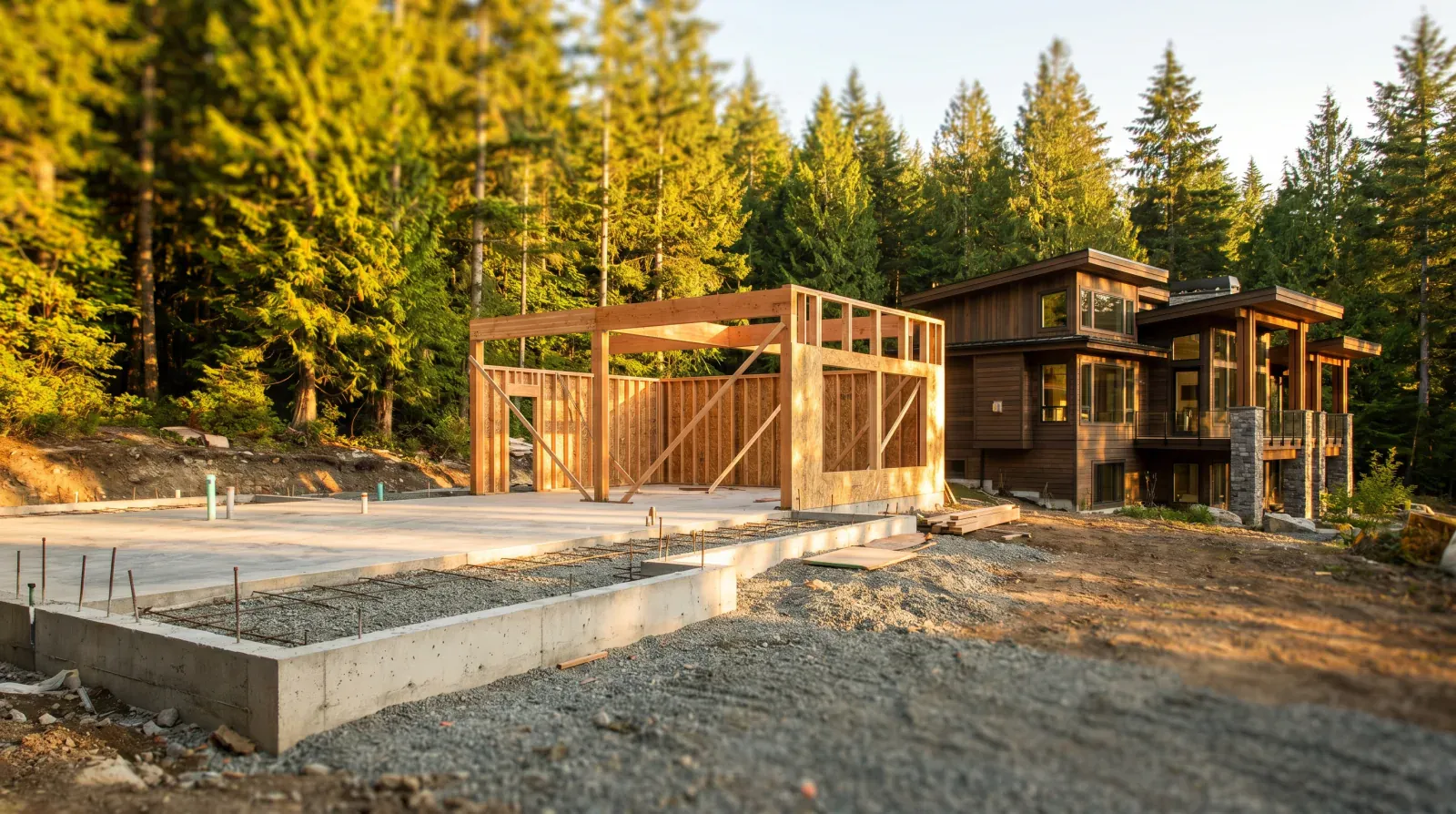
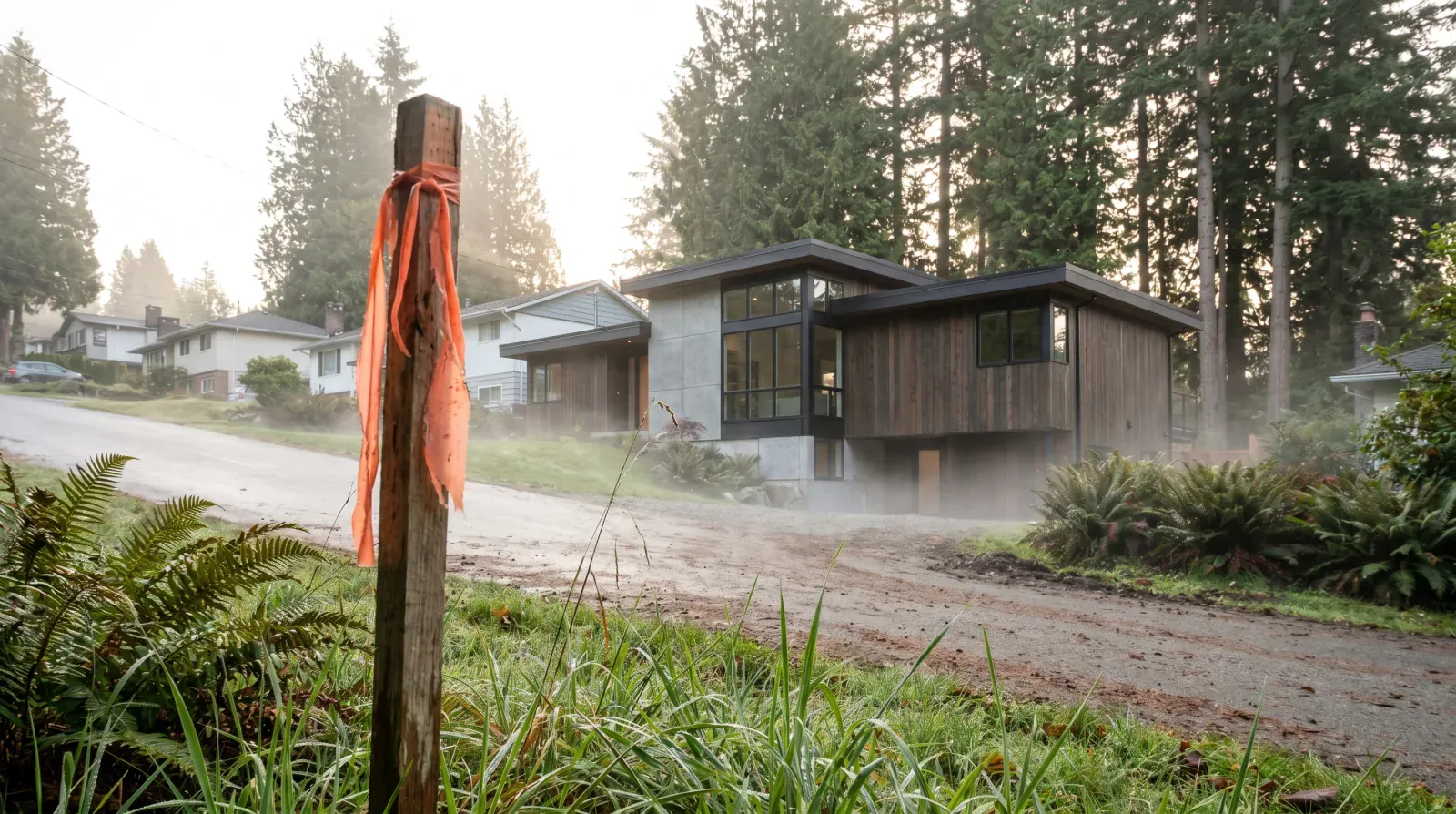
What we walk a Burnaby teardown lot for before subjects come off, the constraints that don't show up in MLS photos but reshape what you can actually build.
Most teardown disappointments start the same way. A Burnaby buyer sees a tired post-war bungalow on a generous lot, runs the numbers in their head, removes subjects, and only discovers after closing that the back third of the lot is in a streamside protection zone, or that the driveway encroaches three feet onto the neighbour's title, or that the panhandle access strip is narrower than the City requires for new construction. None of those facts were hidden. They just weren't asked.
Before subjects come off, walk the lot the way a builder would. Here's the field checklist we run when a client asks us to look at a Burnaby property ahead of a custom home build.
Walk the lot before the listing
Pictures lie about slope. A photographer with a 24 mm lens makes a hillside look gentle. The first thing we do on a site visit is stand at the back property line and look forward to the street, then stand on the street and look back. If the difference between front and rear elevation is more than about a metre, you have a sloped lot, and that fact is going to drive every foundation, drainage, and access decision from here forward. Capitol Hill, Buckingham Heights, Cariboo Heights, and parts of Government Road in Burnaby are full of lots where the rear-to-front grade change is six or eight metres. That's a daylight basement opportunity, or a retaining-wall problem.
While walking, look for moss on hardscape, standing water, blocked surface drains, and the direction of the natural runoff. Coastal soils in Burnaby and North Vancouver are often saturated for half the year. Drainage you can see is drainage you can plan for.
Trees and the bylaw
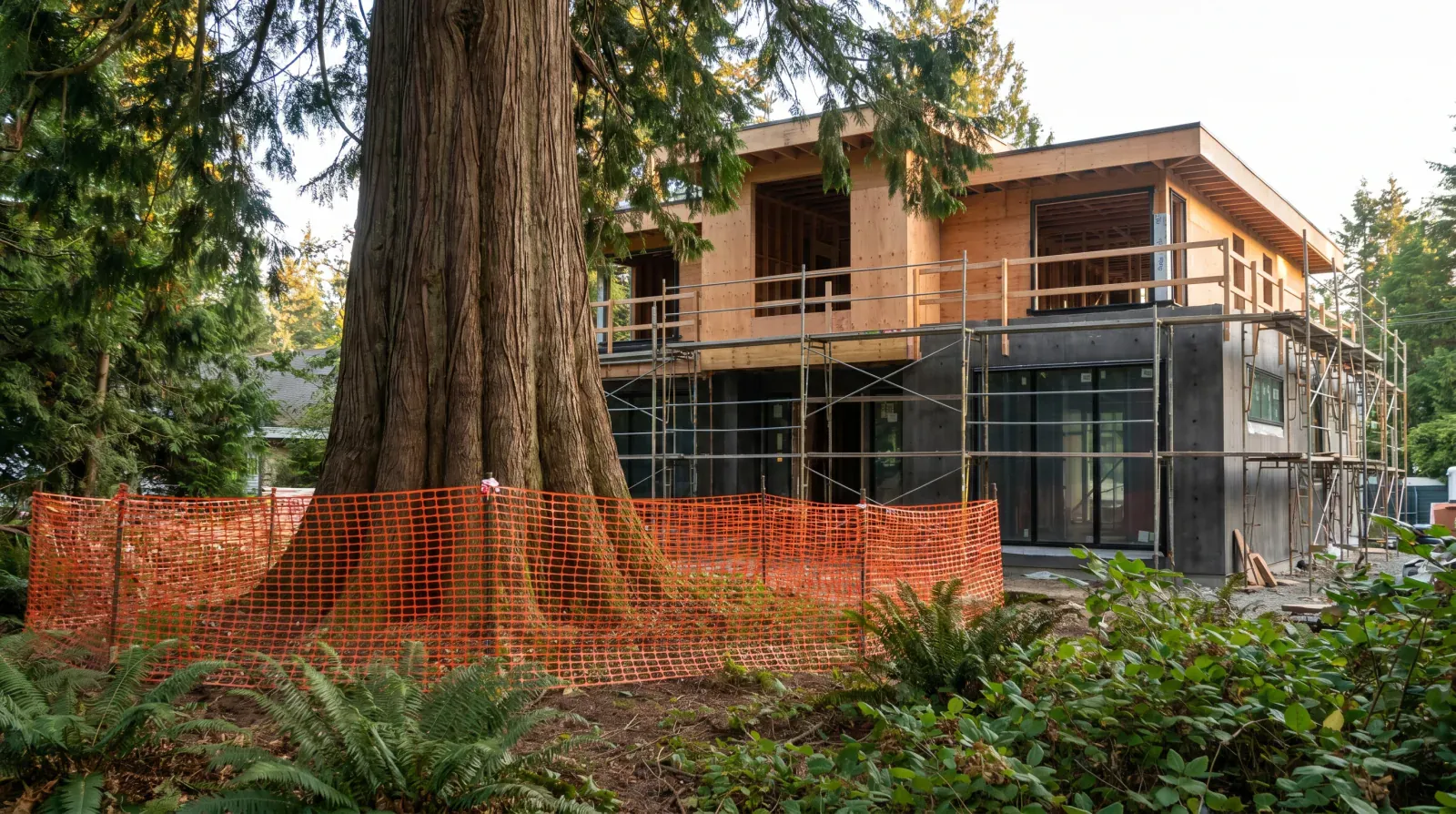
Burnaby's Tree Bylaw protects significant trees on private property. Removing a tree to enable a build requires a permit, and in many cases a tree-protection plan signed by a certified arborist. Mature western red cedars, Douglas firs, and Garry oaks come with rules about root protection zones that can carve usable footprint out of an otherwise generous lot.
Before you waive subjects, count the significant trees and identify their species and approximate diameter at breast height (DBH). Even a quick walk-through tells you whether the lot has two trees worth a conversation or fifteen. We've covered the bylaw mechanics in detail in our deeper post on the Burnaby tree bylaw and custom homes.
Easements, encroachments, rights-of-way
Pull the title document and read it. Statutory rights-of-way for utilities, drainage easements at the rear, and historic encroachments, driveways, eaves, fences, are all on title. A drainage easement crossing the buildable area can shift the footprint by metres. A statutory right-of-way for a sewer line can preclude a foundation entirely.
The Land Title and Survey Authority of BC is the source of truth. Your realtor can pull a copy. Read every charge.
Streamside setbacks and watercourse rules
Burnaby has watercourses you can see and watercourses you can't. The Brunette River and its tributaries cross the city. Many are piped under streets but still trigger setback rules. The provincial Riparian Areas Protection Regulation applies, alongside Burnaby's own watercourse protection provisions in the Streamside Protection and Enhancement Bylaw.
A lot in Big Bend or near Deer Lake may have a setback requirement that takes 10 metres of depth out of the buildable envelope. The City's online maps will show you the streams. If you see a blue line within 30 metres of any property edge, get a qualified environmental professional onto the lot before you close.
Servicing, old infrastructure, panhandle quirks
Old Burnaby Heights and Brentwood lots often still have clay sewer laterals from the 1950s. Replacement is the owner's responsibility from the property line to the house. Storm drainage on older lots may be combined or absent entirely. The municipal water service may be a 19 mm copper line that won't support modern fixture counts.
Panhandle and flag lots add their own constraint: the access strip must meet minimum width for fire access. We've seen Burnaby flag lots where a previously legal 3-metre access strip is now too narrow for a new build under current rules. Confirm width and fire-access compliance before you offer.
Overhead vs underground utilities matter too. Burnaby is gradually undergrounding service drops in some neighbourhoods. An overhead service from a back-lane pole limits your roof articulation in ways the design team will fight against later.
Neighbourhood character signals
Walk the block. Are recent rebuilds modest 2,400 sq ft homes, or 5,200 sq ft to-the-bylaw-line builds? What's the predominant siding, cedar, fiber cement, brick? Are basements finished as suites? The neighbourhood sets the upper bound on resale, and it tells you what your neighbours have already proven the City will permit.
Check the City's online permit map. Recent demolition permits and new building permits within a block radius give you the cleanest possible read on what's getting approved. If three neighbours have built modern 4,500 sq ft homes in the last two years, you have a roadmap. If no one has rebuilt in eight years, ask why.
Zoning, what the lot will actually permit you to build
MLS listings include the zoning code. Most buyers don't read it. The zoning code is where you find the usable buildable envelope.
For a standard RS1 lot in Burnaby Heights or Brentwood, the key numbers are: lot coverage (the percentage of the lot area you can cover with building), FSR (floor space ratio, how much total floor area relative to lot size), maximum height (typically 9.0 to 9.5 metres to the peak for single-family in most RS zones), and setbacks (minimum distances from front, rear, and side property lines). These numbers set a hard ceiling on the home you can build.
The online City of Burnaby Zoning Bylaw gives you the numbers for each zone. The City's interactive map shows which zone applies to any parcel. Before any offer, confirm: at the proposed zone, with this lot size and the applicable setbacks and lot coverage, what is the maximum buildable gross floor area? That number, not the MLS listing or the agent's ballpark, is the correct starting point for design conversations.
Also confirm whether the lot has been through any covenant, rezoning, or subdivision process that modified the standard zone conditions. Older properties in Burnaby sometimes have lot-line adjustments, heritage covenants, or density bonusing conditions attached to the title that the zoning map won't show. These are on the title document.
The permit history
The City of Burnaby's online permit map shows every building permit issued for a property. Pull it up before you offer.
What you're looking for:
- Was there a permit for the current structure? If not, there may be unpermitted work that will have to be disclosed or remediated at sale.
- Are there any open or expired permits that haven't been closed out? An expired permit can prevent a new permit application from being accepted until it's resolved.
- Were there any permits for the foundation, electrical, or plumbing systems that later generations of work may have layered on top of?
Older Burnaby Heights homes often have multiple generations of additions, a 1948 bungalow with a 1970s addition, a carport permit from 1983, a basement suite from the 1990s. Each generation may or may not be permitted, and the combination may or may not comply with current setbacks. You don't need to resolve all of this before you buy, but you need to know what's there.
The owner-builder question
If you're considering owner-builder authorization, the BC Housing Owner Builder authorization process requires you to qualify for each property individually. The application is non-trivial, and the home you build under it cannot be sold for 12 months after occupancy without specific exemption. For most Burnaby teardowns, working with a licensed builder is faster and removes the warranty and lien risk entirely.
This decision is not about cost. It's about who carries the risk of construction defects for the next decade. The 2-5-10 Year Home Warranty on a builder-built home protects you in ways an owner-builder home doesn't.
What we do on a pre-purchase site visit
When a Burnaby buyer asks us to look at a property before subjects come off, we walk the lot, pull the title, check the City's online overlays, photograph the obvious constraints, and write a one-page memo. The memo says: here's what this lot will permit, here's what the foundation strategy looks like, here's what the City will care about, here's what the timeline looks like. It takes us a half-day. It costs the buyer nothing.
Buyers in Burnaby, Vancouver, North Vancouver, and Coquitlam who do this never regret it. Buyers who skip it sometimes do.
If you're looking at a property and want a builder's read before you close, reach out and send us the listing. We'll tell you what we see, including, sometimes, that you should keep looking. The first lot you find is rarely the right one. For more on how this fits into the bigger picture, the planning checklist covers what comes after the lot is yours.
Related on the Journal
- The renovate, add, or rebuild decision guide, and specifically, the lot and zoning test sub-guide.
- Our whole-home renovation service in Burnaby, when the existing house is worth keeping instead of tearing down.
- When you need a geotechnical report
- The Burnaby tree bylaw on existing lots
- Foundations on Burnaby's hillside lots
Frequently asked questions
- How do you tell if a Burnaby teardown lot is sloped before buying it?
- By walking it in person rather than trusting listing photos, since a wide-angle lens can make a hillside look gentle. Standing at the back property line looking toward the street, then standing on the street looking back, reveals whether the front-to-rear elevation differs by more than about a metre. Neighbourhoods like Capitol Hill, Buckingham Heights, Cariboo Heights, and parts of Government Road often have lots where the grade change is six to eight metres, which drives foundation, drainage, and access decisions.
- How does the Burnaby Tree Bylaw affect a teardown lot before you buy it?
- The bylaw protects significant trees on private property, and removing one to enable a build requires a permit and often a tree-protection plan signed by a certified arborist. Mature western red cedars, Douglas firs, and Garry oaks carry root protection zone rules that can remove usable footprint from an otherwise generous lot, so counting the significant trees and noting their species and approximate trunk diameter before waiving subjects is worth the half hour it takes.
- Why should you pull the title before buying a Burnaby teardown lot?
- Because statutory rights-of-way for utilities, drainage easements at the rear, and historic encroachments like driveways, eaves, or fences crossing a property line are all recorded on title, not visible from the street. A drainage easement crossing the buildable area can shift the footprint by metres, and a statutory right-of-way for a sewer line can preclude a foundation entirely. The Land Title and Survey Authority of BC is the source document, and a realtor can pull a copy.
- Do streamside setback rules apply to Burnaby lots that don't look near water?
- They can. Burnaby has watercourses that are piped underground but still trigger setback rules under the provincial Riparian Areas Protection Regulation and the City's own Streamside Protection and Enhancement Bylaw. A lot in Big Bend or near Deer Lake may lose 10 metres of buildable depth to a setback, and a blue line within 30 metres of any property edge on the City's online maps is a signal to get a qualified environmental professional onto the lot before closing.
- What old infrastructure issues show up on older Burnaby teardown lots?
- Older Burnaby Heights and Brentwood lots often still have clay sewer laterals from the 1950s, and replacement from the property line to the house is the owner's responsibility. Storm drainage on older lots may be combined or absent, and the municipal water service can be a 19-millimetre copper line too small for modern fixture counts. Panhandle and flag lots add their own constraint, since the access strip has to meet current minimum width for fire access.
- What zoning numbers determine how much house you can build on a Burnaby teardown lot?
- Lot coverage, the percentage of the lot area the building can cover, FSR, the total floor area allowed relative to lot size, maximum height, typically 9.0 to 9.5 metres to the peak for single-family in most RS zones, and setbacks, the minimum distances from front, rear, and side property lines. The Burnaby Zoning Bylaw and the City's interactive zoning map give the numbers for each zone, and confirming the maximum buildable gross floor area before any offer is the correct starting point, not the MLS listing or an agent's estimate.
- Why does the permit history matter when evaluating a Burnaby teardown?
- Because the City of Burnaby's online permit map shows every building permit issued for a property, and it reveals whether the current structure was ever permitted, whether any permits are open or expired, and whether foundation, electrical, or plumbing systems have unpermitted work layered on top. Older Burnaby Heights homes often carry several generations of additions that may or may not comply with current setbacks, and knowing what's there before buying avoids surprises during the permit application.
- Is owner-builder authorization a good option for a Burnaby teardown project?
- For most Burnaby teardowns, working with a licensed builder is faster and removes the warranty and lien risk that comes with owner-builder status. The BC Housing Owner Builder authorization process requires qualifying for each property individually, and a home built under it cannot be sold for 12 months after occupancy without a specific exemption. The 2-5-10 Year Home Warranty on a builder-built home protects an owner in ways an owner-builder home does not, since it shifts who carries construction-defect risk for the next decade.