Systems
Designing a BC custom home for wildfire smoke: filters, fans and a clean air room
Smoke from wildfires in BC and beyond reaches the Lower Mainland in some summers. A new house can be designed to keep it out and filter what gets in: an airtight envelope, a ducted system with a MERV 13 filter, an HRV you can control, cooling so the windows stay shut, and a clean air room. Here is how we plan for it.
Smoke from wildfires, in BC and farther away, reaches the Lower Mainland in some summers. On those days the advice is the same every time: stay inside, keep the windows closed, filter the air.
That advice works best in a house designed for it. A new home can keep most of the smoke out and filter the rest, if the envelope, the heating and cooling, and the ventilation are planned with smoke in mind. This post covers what public health guidance recommends, and how we build those recommendations into our Burnaby custom homes.
What the public health guidance says
Two sources set out the basics.
The Intact Centre on Climate Adaptation at the University of Waterloo publishes a home guide to wildfire smoke. It advises:
- keeping windows and doors closed as much as possible during smoke,
- running a forced-air system's fan on "on" or recirculation mode, so it filters indoor air continuously,
- installing a high-efficiency HVAC filter, such as MERV 13 or higher, if compatible with the system,
- in homes without a forced-air system, using a portable air cleaner with a HEPA filter in the room where household members spend the most time,
- identifying a clean air room at home before smoke arrives.
The BC Centre for Disease Control wildfire smoke page advises using a portable HEPA air cleaner, or a do-it-yourself air cleaner, to filter the air in one area of the home, and keeping that cleaner air space cool with air conditioners, heat pumps, fans and shades. It notes that overheating can cause serious health problems.
Each of these is easier to do in a house that was designed for it.
The envelope: keep the smoke out
Smoke gets into a house three ways: through open windows and doors, through the ventilation system, and through leaks in the walls, floors and roof.
A new Burnaby home closes the third path more than an older house can. Burnaby requires new homes to meet Step 3 of the BC Energy Step Code, which for our climate requires airtightness level AL-1: 2.5 air changes per hour at 50 Pa or better, measured with a blower door test. Our post on the blower door test explains how that is measured.
A tighter house lets in less outdoor air through cracks, so the filters inside have less smoke to deal with. It also means that when the windows are shut, they stay the main control over what comes in.
Filtration: a ducted system with room for a good filter
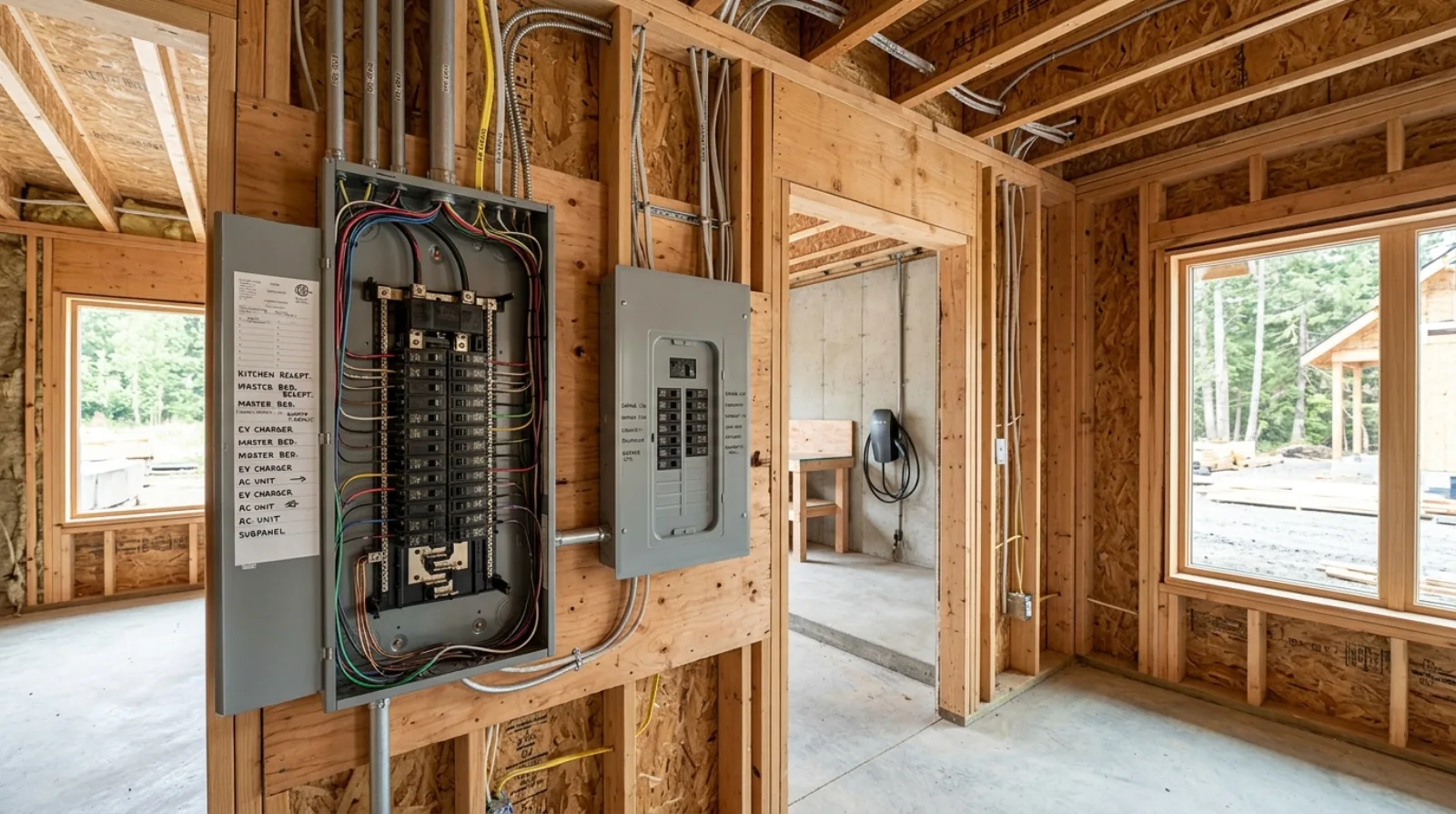
A house with ducted heating and cooling has a fan that can move all of its air through a filter, many times a day. That makes it an effective whole-house filter, if the filter is good enough and the system can push air through it.
A MERV 13 filter is rated to catch fine particles, the size range that smoke falls in. It also resists airflow more than a basic filter. A thin, 1-inch MERV 13 filter on a system not designed for it can restrict the airflow the fan needs. So we plan the filter at design:
- A deep media filter cabinet, which holds a thicker filter with more surface area. More surface area means less resistance to airflow at the same rating.
- Fan and duct sizing that allows for the filter's resistance, set by the HVAC designer.
- Easy access to the filter, so owners change it often during smoke season. A filter loaded with smoke particles clogs faster.
- A fan setting the owner can switch to continuous, on a thermostat they understand.
On houses with radiant floor heating and no ducts, there is no central fan to filter the air. Those houses rely more on portable air cleaners, or on a small ducted system added for cooling and filtration. Our post on radiant and forced air heat covers that choice.
On a smoky summer day, the best air in the neighbourhood should be inside your house. That is a design decision we make before framing.
Icon Projects Team
The HRV: fresh air, with care on smoky days
Every new house we build has mechanical ventilation, usually a heat recovery ventilator, or HRV, which brings in outdoor air and exhausts stale air all day. In clean weather that is exactly what you want. On a smoky day, the HRV's intake is a path for smoke into the house.
How to run an HRV during smoke depends on the model and its filters. We plan for it:
- The best intake filter the unit accepts. Some HRVs take high-efficiency filters on the fresh air side. We choose a unit and filter with smoke in mind.
- A reachable control. A wall control in a living space, where the owner can find it on a smoky morning.
- Written instructions from the HVAC designer for how to run the HRV during smoke, and how to return it to normal afterwards.
- A clear intake location, away from places where smoke or exhaust collects.
Our post on heat pumps and HRVs covers how the HRV works with the rest of the system.
Cooling: so the windows can stay shut
Smoke events in the Lower Mainland happen in summer, often during hot weather. A house with no cooling gets hot with the windows shut, and owners open them for relief, which lets the smoke in. The BCCDC's advice to keep the cleaner air space cool is the reason cooling belongs in a smoke plan.
On our all-electric builds, the heat pump that heats the house in winter can cool it in summer. Where the house uses radiant heat, a ducted or ductless heat pump for cooling also gives a way to filter the air. Shading, overhangs and window choices reduce how much heat the house gains in the first place. Our post on window placement and passive solar covers that design work.
A clean air room
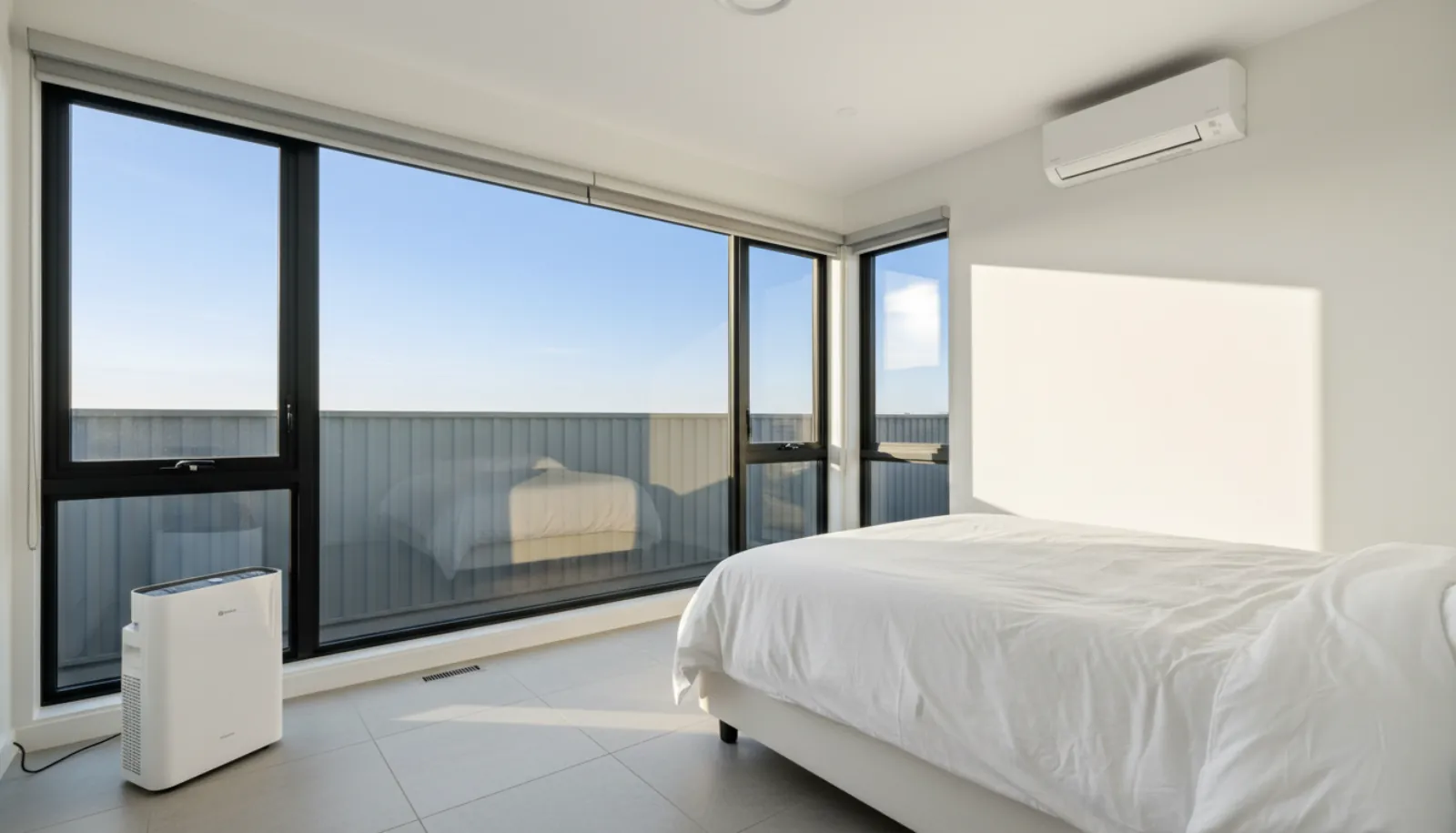
Public health guidance recommends choosing one room as a clean air room before smoke season. In a new house, we can plan for it:
- A room with a door that closes, often the primary bedroom or a den.
- A dedicated outlet in a convenient spot for a portable HEPA air cleaner, sized for the room.
- Cooling to that room, from the main system or its own unit.
- Window coverings that block sun on the west and south.
A portable HEPA cleaner in a closed room adds a second layer of filtration on top of the central system. For anyone with asthma, heart or lung disease, or for young children and older adults, that second layer matters most.
Knowing when to act
Owners need to know when smoke has arrived and when it has cleared. Two tools help:
- Air quality alerts. The Intact Centre guide suggests signing up for Air Quality Health Index alerts through Environment Canada's WeatherCAN app. An alert is the signal to close the windows, switch the fan to continuous and set the HRV to its smoke setting.
- An indoor air monitor. A small monitor that reads fine particles shows whether the filtration is working, and when the indoor air has recovered after the windows open again. Some smart thermostats and HRV controls include one. Where they do not, a stand-alone unit on a shelf works.
Suites and shared systems
On a house with a secondary suite, each unit often has its own ventilation and sometimes its own heating. A smoke plan has to cover both. We give the suite its own clean air room plan and its own instructions, and where the suite shares a system with the main house, we make sure the controls for smoke settings are reachable by whoever lives there. Our guide to secondary suites in Burnaby covers how the two units are separated.
Living with it: owner habits
The design does most of the work, and a few habits finish it:
- Keep spare MERV 13 filters on hand before summer, and change the filter when smoke clears.
- Avoid adding indoor smoke during smoke events: frying, candles and smoking all add particles. The Intact Centre guide lists these.
- Use the range hood while cooking, and vacuum only with a HEPA vacuum. Our post on range hoods and makeup air covers kitchen air.
- Follow the HRV instructions, and return it to normal when the air clears.
How we plan for smoke season on a Burnaby build
- Build airtight to Step 3 or better, and test it.
- Choose a ducted system where possible, with a deep MERV 13 filter cabinet and a fan sized for it.
- Pick the HRV and its filters with smoke in mind, with a control the owner can reach.
- Add cooling so the windows can stay shut.
- Plan a clean air room with an outlet for a portable HEPA cleaner.
- Hand over instructions for smoke days.
Our custom homes service page shows how we build in Burnaby, Langley and across the Lower Mainland.
Frequently asked questions
- What filter should a home use during wildfire smoke?
- The Intact Centre on Climate Adaptation at the University of Waterloo advises a high-efficiency HVAC filter, such as MERV 13 or higher, if it is compatible with your system, and running the forced-air system's fan on 'on' or recirculation mode to filter indoor air continuously. In a new house we size the filter cabinet so a MERV 13 filter fits without straining the fan.
- What if the house has no ducted system?
- The same guide advises a portable air cleaner with a HEPA filter in the room where household members spend the most time. The BC Centre for Disease Control also advises using a portable HEPA air cleaner, or a do-it-yourself air cleaner, to filter the air in one area of the home.
- What is a clean air room?
- A clean air room is one room in the home, often a bedroom or den, set up to have the cleanest air during smoke events: windows and doors closed, a portable HEPA air cleaner running, and a way to keep it cool. Public health guidance recommends setting one up before smoke season.
- Should the HRV run during wildfire smoke?
- It depends on the HRV and its filters. An HRV brings in outdoor air, so on smoky days it can bring smoke in unless its intake filter is rated to catch fine particles. We set up each HRV with the best filter the unit accepts, a control the owner can reach, and written instructions from the HVAC designer for how to run it during smoke.
- Does an airtight house help with smoke?
- Yes. Smoke enters a house through gaps in the envelope as well as through windows and ventilation. A new Burnaby home must meet Step 3 of the Energy Step Code, which requires airtightness of 2.5 air changes per hour at 50 Pa or better, so far less outdoor air leaks in than in an older house.
- Why does cooling matter during smoke events?
- During smoke, windows stay closed, and in summer that can make a house hot. The BC Centre for Disease Control advises keeping a cleaner air space cool with air conditioning, heat pumps, fans or shades, and notes that overheating can cause serious health problems. A heat pump that cools lets the house stay closed and comfortable.