A change order is how a build stays honest when something changes mid-project. Here is why they happen, how a good builder documents them, and how to keep them rare.
A homeowner told us once that they were nervous about change orders because a friend's build had been, in their words, "all change orders." When we asked what that actually looked like, the real story came out. The friend's builder made changes on the fly, agreed things verbally, and then handed over a pile of paperwork at the end that nobody had seen coming.
That is not how change orders are supposed to work on a custom home build. That is a documentation failure wearing the change order name. A change order done right is the opposite of a surprise. It is the thing that stops surprises.
Let us walk through what a change order actually is, why they happen, and how the right habits keep them rare and clean.
What a change order is
A change order is a written record of a change to the agreed scope of work after the construction contract is signed.
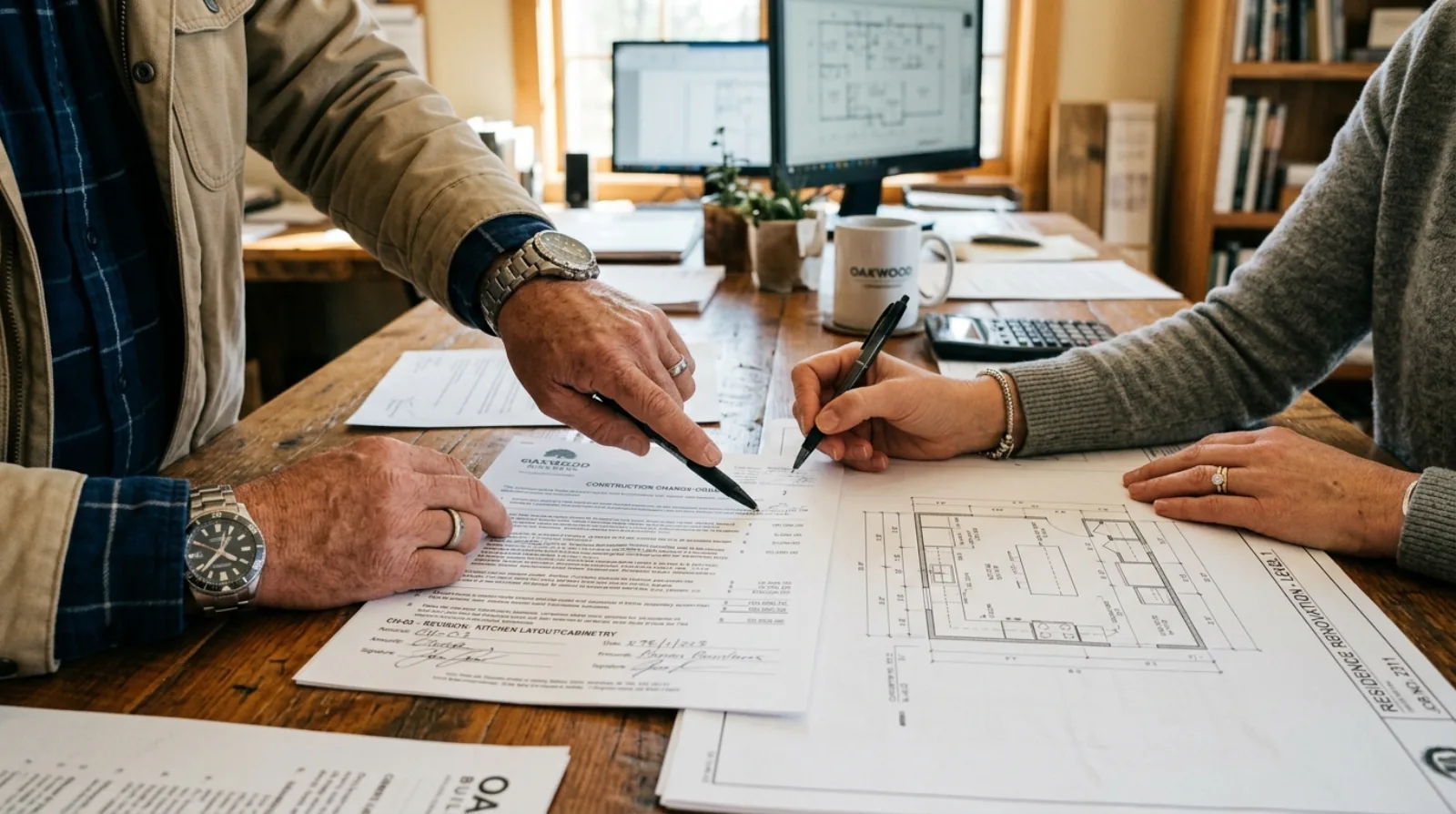
When you sign a build contract, you and the builder agree on a defined scope: this house, these plans, these selections, this work. A change order is what you use when something needs to be different from that agreement. It writes down what is changing, why it is changing, and what it means for the work and the schedule, and the homeowner approves it before anyone starts.
That is the whole idea. It keeps the builder and the owner pointed at the same version of the truth. Without change orders, a build drifts. Little decisions get made in the hallway, nobody records them, and by the end no one is sure what was agreed. The change order is the fix for that.
Cost is part of any change conversation, but the number itself is a private matter between you and your builder, worked out directly. What is not private, and what every homeowner deserves, is a clear, written, agreed-in-advance process for how change is handled.
Why change orders happen
Change orders are not a sign that something went wrong. On a custom home, they happen for honest reasons.
You change your mind once you can see it. Drawings are flat. Once the space is framed and you can stand in it, a room can feel smaller or larger than you pictured. Owners often decide to shift a wall, enlarge a window, or rethink a finish once the house is real in front of them. That is a legitimate change, and a change order records it.
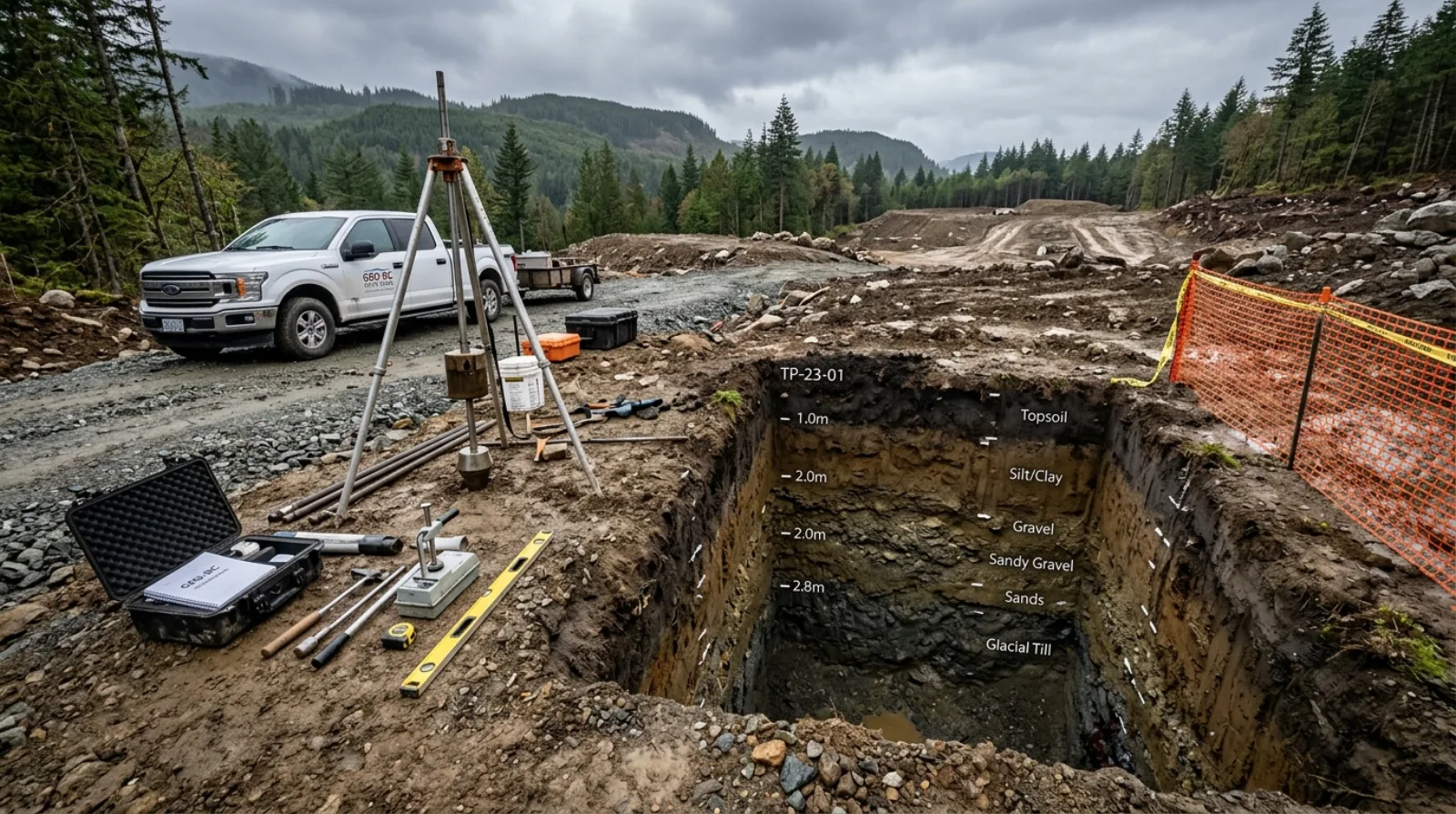
The site hands you a surprise. Even with good pre-design work, the ground can reveal something that could not be fully known until the dig began. A soil condition, an old buried structure, water where it was not expected. Our posts on soil testing before you design and geotechnical reports exist precisely to shrink these surprises, but no investigation removes every one.
A product is no longer available. You specified a tile, a fixture, an appliance, and by the time it is needed the item is discontinued or badly delayed. Choosing a substitute is a change, and it should be recorded as one.
The drawings needed a clarification. Sometimes construction reveals a spot where the plans were not fully resolved, and a decision has to be made on site. Writing it down keeps that decision from becoming a dispute later.
Each of these is normal. The question is never whether changes will come up. It is how they are handled when they do.
What good documentation looks like
Here is the difference between a change order that protects you and one that ambushes you.
A good builder writes the change down before doing the work. The change order states what is changing, the reason, the effect on the schedule, and it carries the homeowner's approval. The work does not start until you have signed off. Nothing proceeds on a verbal "yeah, go ahead" that no one can reconstruct three months later.
The failure mode is the opposite: the builder does the work first and explains it afterward. That is how a homeowner ends up feeling nickel-and-dimed and blindsided at the same time. When work is done before it is approved, the owner has lost the ability to say no, and the paperwork becomes a bill instead of a decision.
So when you are choosing a builder, ask directly how they handle changes. A clear answer, written change orders, approved before the work, no exceptions, tells you a lot about how the whole project will run. Our 12 questions to ask before signing a builder contract covers this among the questions that separate a careful builder from a casual one.
A change order is not the builder charging for a mistake. It is the builder refusing to do work you did not agree to. The paperwork is on your side.
Icon Projects Team
How to keep change orders rare
You cannot remove every change from a custom home, and you should not want to, because the freedom to change is part of what makes it custom. But you can make the avoidable ones far less common, and the way you do that is by moving decisions earlier.
Most avoidable change orders trace back to decisions left open when the build started. The house went to site with the finishes half-chosen, the layout not fully settled, or the lot not fully investigated. Then those open questions came due during construction, one at a time, each as its own change.
The fix is pre-construction. Before the crew starts, the goal is to close as many decisions as possible:
Lock your selections. Finishes, fixtures, appliances, the details that are easy to leave for later. Deciding them up front, when there is time to think, means fewer scrambles mid-build. Posts like our guides on kitchen design and the features worth investing in help you make those calls early.
Settle the layout. Use the design phase to work the plan until it truly fits how you live, so you are not moving walls after they are framed. Our custom home design timeline walks through how that phase is meant to run.
Investigate the site properly. Survey, soil, trees, water, all done during pre-design, so the ground has fewer surprises left to hand you.
This is the reason we put real weight on a formal pre-construction services agreement. It is a dedicated phase for closing decisions before the build, and it is the single biggest lever on how few change orders you end up with.
What a homeowner should take away
Do not fear change orders. Fear a builder who does not use them properly. The change order is the honest record that keeps a build aligned, and a builder who writes them clearly and gets your approval first is protecting you, not squeezing you.
At the same time, remember that most avoidable changes are decided long before construction, in the quiet planning stage where there is time to get it right. The more you settle up front, the smoother the build runs, and the fewer times the paperwork has to catch up with a decision made on the fly.
The cost of any given change is yours to work out privately with your builder. The process around change should never be a mystery. Ask how it works before you sign, and hold your builder to it once you do.
Frequently asked questions
- What is a change order on a custom home?
- A change order is a written record of a change to the agreed scope of work after the construction contract is signed. It describes what is changing, why, and what it means for the schedule and the work, and it is approved by the homeowner before the work is done. It keeps the builder and the owner aligned when something differs from the original plan. Icon Projects documents every change in writing and gets sign-off before the work proceeds, so nothing is a surprise later.
- Why do change orders happen during a build?
- Change orders happen for a few honest reasons. The homeowner decides to change something after seeing the space take shape. The site turns up a condition that could not be fully known until work began, like a soil or structural surprise. A specified product becomes unavailable and a substitute is needed. Or the drawings needed a clarification once construction started. Icon Projects treats each of these as a documented change rather than an informal verbal adjustment, so the record stays clear.
- How does a good builder document a change order?
- A good builder writes the change down before doing the work: what is changing, the reason, the effect on the schedule, and the homeowner's approval. Nothing proceeds on a verbal agreement alone, and the work is never done first and explained afterward. This protects both sides and keeps a clean paper trail through the build. Icon Projects uses written change orders with owner sign-off as a standard part of how a project is run.
- How can I minimize change orders on my custom home?
- The best way to keep change orders rare is to make more decisions before construction starts. Lock your finishes and fixtures, settle the layout, and investigate the site properly during pre-design so surprises are caught early. Most avoidable change orders trace back to open decisions that were carried into the build. Icon Projects uses a pre-construction phase to close those decisions early, which keeps changes during construction to a minimum.
- Should a change order be approved before or after the work is done?
- Before. A change order that protects a homeowner is written and signed off before anyone lifts a tool, stating what is changing, the reason, and the effect on the schedule. A builder who does the work first and explains it afterward has taken away the homeowner's ability to say no, which turns the paperwork into a bill instead of a decision. Icon Projects treats sign-off before work starts as a non-negotiable part of how a change order is handled.
- Does seeing the framed space change what homeowners decide to build?
- Yes, and it is one of the most common honest reasons a change order happens. Drawings are flat, so once a space is framed and a homeowner can stand inside it, a room can feel smaller or larger than expected. Deciding to shift a wall, enlarge a window, or rethink a finish after seeing the real space is a legitimate change, and a change order is what records that decision in writing.
- What questions should I ask a builder about how they handle change orders?
- Ask directly how changes get documented, whether you sign off before or after work happens, and whether verbal agreements are ever treated as final. A builder who gives a clear answer, written change orders, approval required before work starts, no exceptions, is telling you how the whole project will be run. This is one of the questions covered in Icon Projects' guide on what to ask before signing a builder contract.
- Is cost discussed as part of a change order?
- Cost is part of any change conversation, but the specific number is worked out privately between the homeowner and the builder rather than published. What should never be private is the process itself: a clear, written, agreed-in-advance system for how a change gets documented and approved. Icon Projects treats that process as something every homeowner is owed, separate from the private budget conversation.