The honest 14-to-22-month arc of a Burnaby custom home, from signed design contract to keys in hand, phase by phase, with the places time actually gets lost.
How long does a custom home in Burnaby take, start to finish?
A custom home in Burnaby in 2026 typically takes 14 to 22 months from signed design contract to keys, broken roughly into 4 to 7 months of design and consultant coordination, 4 to 9 months of permit (including Engineering pre-application and the new digital intake at the My Permits Portal), and 10 to 14 months of construction depending on size, complexity and weather. The variance comes almost entirely from the lot, the design changes mid-stream, and how clean the permit submission is the day it lands at City Hall.
The version of this question I hear most often, usually around the third meeting, is some variation of "so when can we actually move in?" The fair answer is that the calendar is mostly set by decisions made before the foundation is poured. The honest answer is fourteen to twenty-two months if the lot cooperates and the design holds. The dishonest answer is "twelve months." Anyone who tells you that hasn't built a custom home in Burnaby in 2026.
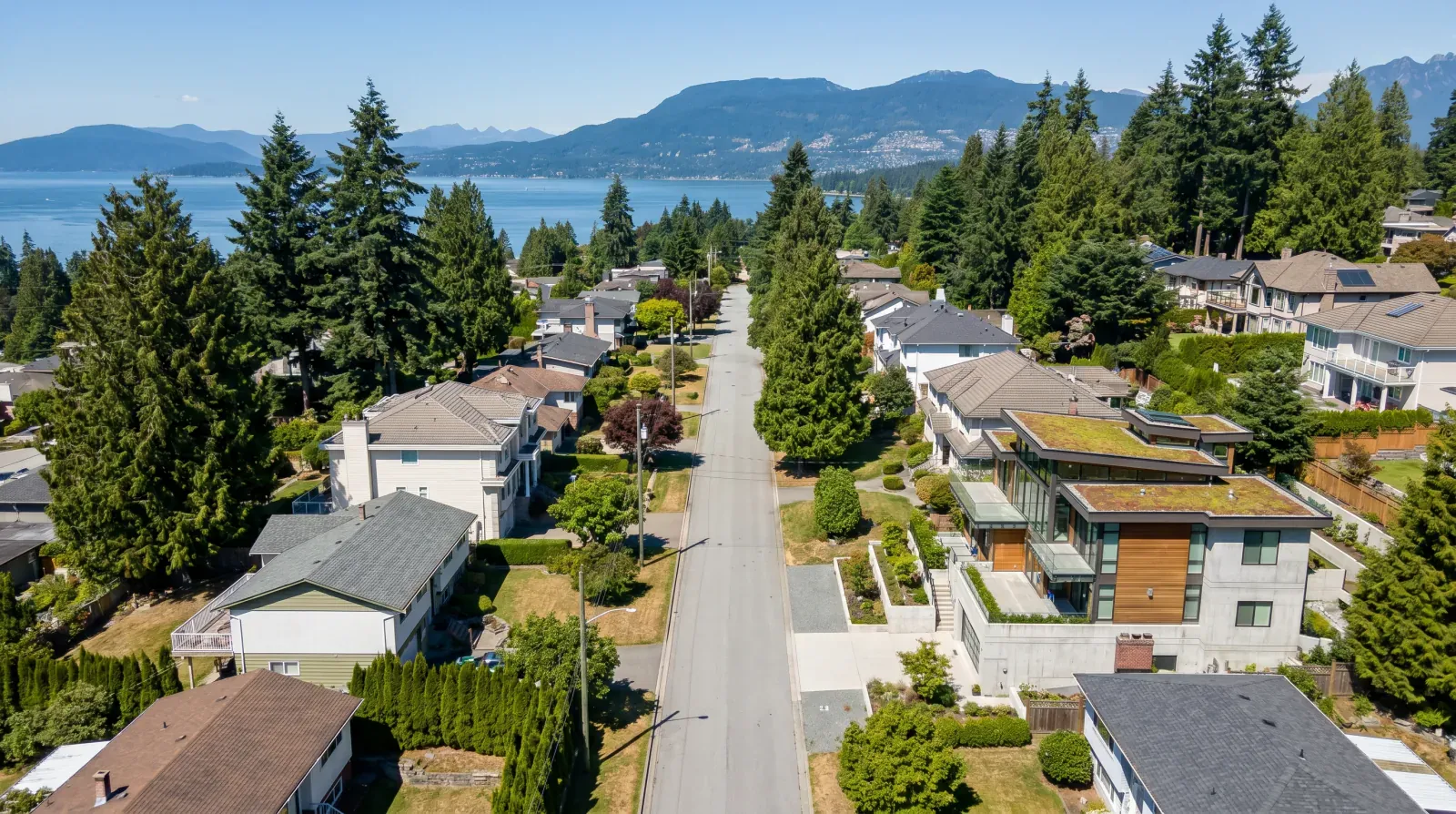
This is the full arc as we actually run it, written from the perspective of someone who lives inside the Burnaby permit system every week. We work primarily on Burnaby lots, Capitol Hill, Burnaby Heights, Brentwood, Deer Lake, Big Bend, Government Road, Edmonds, with regular projects in Vancouver, Coquitlam and North Vancouver. The phase durations below are the ones we plan to and the ones we hit, with the standard caveat that no two lots in this city build the same.
This piece is the full design-through-keys story. For the deep-dive on just the permit window, Engineering pre-app, eCheck, plan check, comment rounds, pre-issuance, see the Burnaby custom home permit timeline in 2026. The two pieces are meant to be read together.
Phase 1, Schematic design, weeks 1 through 8
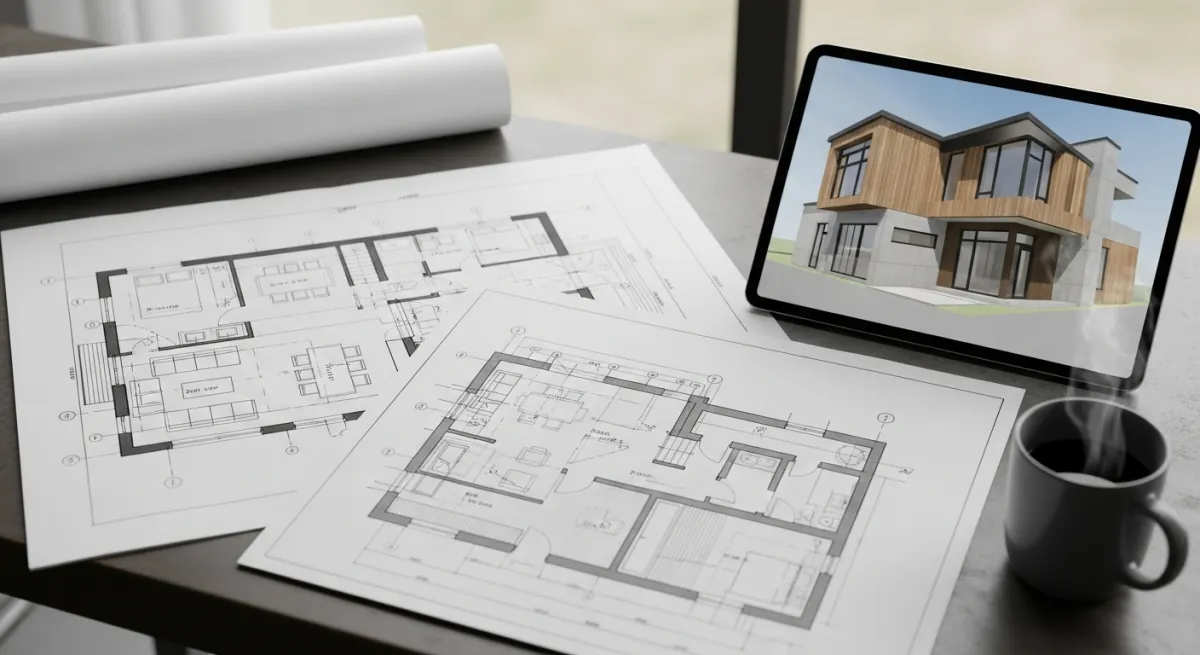
Schematic is where the program for the home gets translated into rough floor plans, massing studies, and a siting strategy that respects the lot. On a typical Burnaby project this is six to eight weeks. We've done it in four when the brief is unusually clear; we've watched it stretch past twelve when the owner is still working out what they actually want.
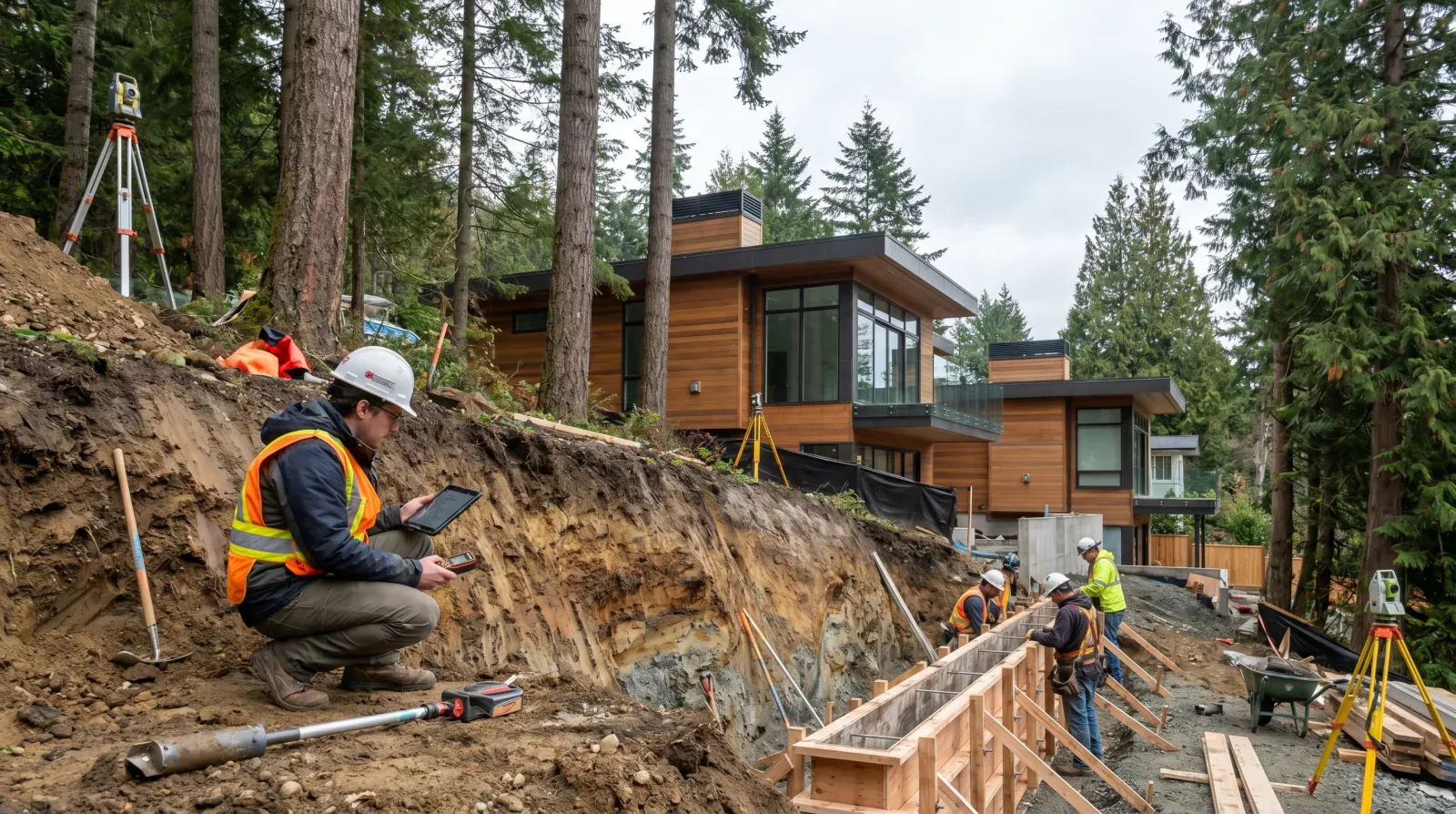
Three things drive Phase 1 length more than anything else. The first is the brief. Owners who arrive with a sharp program, number of bedrooms, single or two-storey, primary suite location, whether the parents are moving in, garage configuration, get through schematic faster than owners who are still circling. The second is the lot. A flat infill lot in Big Bend or south Brentwood has fewer hard constraints than a sloped Capitol Hill view lot where geotech, tree retention, view cones and grade all push the building footprint into a particular envelope. The third is consultant timing. The survey, the arborist report, the geotechnical (where applicable) should all be ordered in week one. Owners who wait to commission them until schematic is "almost done" then watch schematic redo itself when the reports land.
The Phase 1 deliverable is a signed-off schematic package, site plan, floor plans, key sections, exterior massing, that the rest of the design phases build from. This is the right moment to be uncomfortable about the plan. Once we leave schematic, changes get more expensive every week.
Phase 2, Design development, weeks 9 through 20
Design development is where schematic gets made real. Wall thicknesses get finalised against the structural strategy. Mechanical and electrical layouts come in. The energy advisor runs the first pre-construction model against the BC Energy Step Code Step 3 baseline that Burnaby requires for all new Part 9 residential. Window schedules get committed. Interior layouts get tested against real furniture and real cabinetry, not blocky placeholders.
This is also where the long-lead items get specified. Windows for a properly-detailed Step 3 home, and certainly for a Step 5 build, can run fourteen to twenty weeks from order to delivery, sometimes longer. Custom millwork is similar. Certain stone slabs need to be selected in person at the supplier's yard. Phase 2 is when the procurement spreadsheet stops being theoretical and starts being a real document with order dates against the construction schedule.
Realistic duration: eight to twelve weeks. Faster than that is usually a sign that decisions are being deferred. Slower than that is usually a sign that the brief is still moving.
The other Phase 2 work that happens out of sight is the Engineering pre-application package. Since Burnaby's 2023 process overhaul, the Engineering Department reviews driveway, servicing, grading and frontage works before the building permit even gets submitted. We typically pull the Engineering pre-app together during late DD so it can submit right at the start of construction document development.
Phase 3, Construction documents, weeks 21 through 30
Construction documents are the legal description of the house. Every wall section. Every connection detail. Every fixture and finish schedule. Structural drawings stamped by a P.Eng. Energy compliance package signed by a certified Energy Advisor. Plumbing and mechanical drawings with full load calculations. This is the package that goes to the City of Burnaby for building permit and to the contractor for pricing.
On a standard Burnaby single-family custom home, construction document development is eight to ten weeks. Two things stretch it. The first is coordination: the architectural set has to match the structural set, which has to match the energy model, which has to match the mechanical layout. Orphaned dimensions and mismatched assemblies are the most common cause of comment letters when the package lands at the City. The second is the Burnaby-specific paperwork: Tree Bylaw declarations for every tree above 20 cm trunk diameter on the lot, geotechnical sign-off for any slope or fill condition, the construction and demolition waste diversion plan if there's a teardown.
If you're on a hillside or fill lot, this is where the geotech earns its fee. The recommendations from the geotechnical report, bearing capacity, drainage strategy, retaining walls, slope stability measures, have to be drawn into the foundation and site work documents, not left as a separate report appended to the package.
Phase 4, Permit submission, intake, and the plan-check window
Burnaby's digital intake means the submission is two-stage. First the Engineering pre-application, submitted through My Permits Portal with the topographical survey, the proposed driveway drawing and the applicable fees. The City quotes approximately fifteen business days for engineering review. A clean file comes back in twelve. A file with a driveway problem or a frontage works trigger sits closer to twenty-five.
Once Engineering signs off, the full building permit package submits through the same portal. As of January 1, 2026 paper applications are no longer accepted, and as of March 31, 2026 every permit is issued in digital format. A clean single-family file typically gets first comments in eight to sixteen weeks. Most files go through two rounds of comments before approval; some go through three. Pre-issuance, Schedule F, agent authorization, demolition and waste plan, electrical checklist, final fees, adds one to three weeks at the end.
Realistic total permit window: four to nine months from Engineering pre-app submission to issued permit, depending on lot complexity, the number of comment rounds, and how fast the design team responds.
The owners who get a Burnaby permit in five months didn't push harder. They prepared better. The single biggest predictor of permit length is the quality of the package the day it lands.
Icon Projects Team
A complete phase-by-phase walk through the permit window itself sits in the 2026 permit timeline post. It's the right read alongside this one if you're trying to model the permit risk on your specific lot.
Phase 5, Pre-construction, weeks during permit
Pre-construction work happens during the permit window, not after it. This is where the build contract gets finalised, long-lead items get ordered, the trade stack gets confirmed, the demolition and site clearance get scheduled, and the construction schedule gets built out week by week.
Two pieces of pre-construction work matter more than the others. The first is window procurement. Specified Step Code windows in the fourteen-to-twenty-week lead range need to be ordered weeks before permit issues, with a deposit and a clear release condition tied to the permit. The second is the mortgage and insurance package. New construction lending in BC requires the 2-5-10 warranty paperwork to be issued by the warranty provider on the home before draws can start. That paperwork takes its own week or two to assemble, and lenders won't move without it.
Pre-construction also includes the BC Hydro service application if the existing service needs to be upgraded, the gas service coordination with FortisBC, and the demolition permit submission if the existing house is coming down. Each of these has its own queue.
Phase 6, Construction, ten to fourteen months
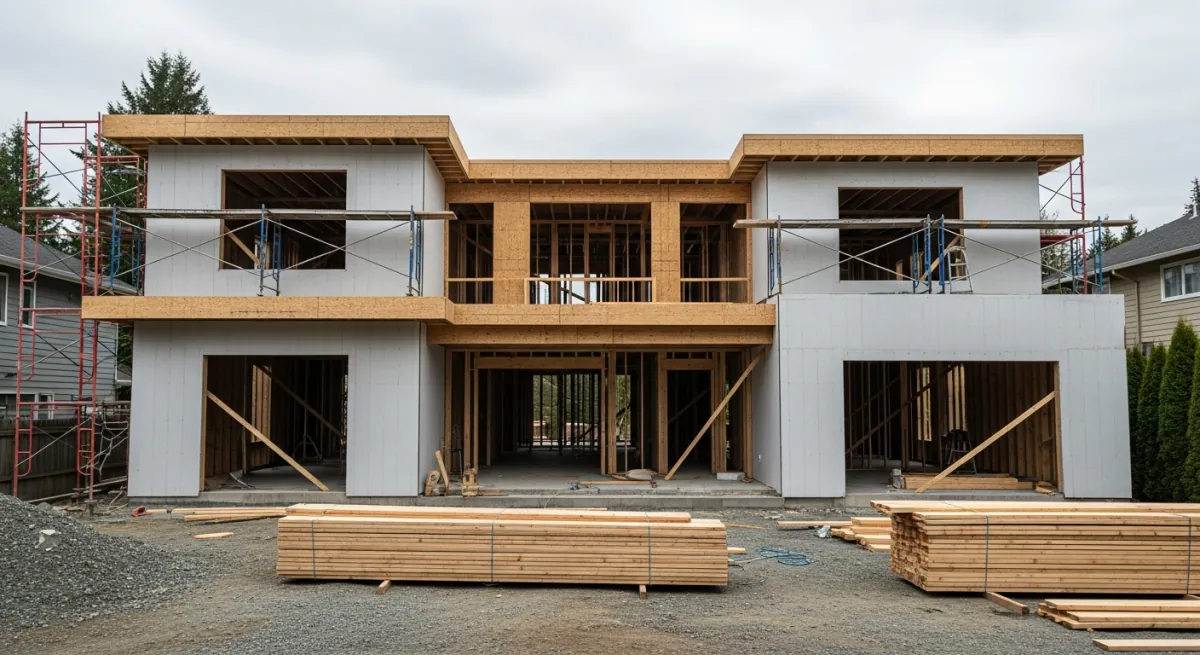
This is the visible part. Excavation and shoring, foundation, framing, mechanical and electrical rough-in, exterior envelope, insulation and drywall, finish carpentry, cabinetry, stone and tile and flooring, painting, fixtures, exterior finishes and landscape. Roughly:
- Site work and excavation: 2 to 6 weeks (longer on hillside lots with shoring)
- Foundation: 3 to 5 weeks
- Framing and roofing: 8 to 12 weeks
- Mechanical, electrical, plumbing rough-in: 6 to 8 weeks (overlapping with framing tail)
- Exterior envelope, windows and roofing weather-tight: 8 to 12 weeks (paced against window delivery)
- Insulation, drywall and finish painting prep: 6 to 8 weeks
- Cabinetry, finish carpentry, tile and stone: 10 to 14 weeks
- Final fixtures, paint, landscape, deficiencies: 6 to 10 weeks
A 3,500 square-foot single-family build runs at the lower end of the range. A 5,500-plus square-foot home with a finished basement, complex hillside conditions and high-spec finishes runs at the higher end. The BC Building Code 2024 adaptable-dwelling-unit and cooling provisions affect a few sequencing decisions but don't materially shift the calendar.
The places where time gets lost during construction are predictable. Windows arriving short or damaged and waiting on replacements. Cabinetry shop drawings revised after the appliance package changes. Tile or stone selections that drift past their order window. Inspections scheduled around the City's calendar rather than yours. The fix for each of these is the same: lock the spec early, order earlier than you think, and treat the procurement schedule as the master calendar.
Phase 7, Substantial completion, occupancy and keys
Substantial completion is the moment the City inspector signs off on occupancy. It's also the moment the warranty clock starts: two years on materials and labour, five years on the building envelope, ten years on the structural shell. The certificate of occupancy is digital under Burnaby's 2026 permit rules; the document arrives in the same portal the application went through.
The four to eight weeks between substantial completion and keys is mostly the deficiency list, the small items the inspector flagged, the touch-up paint, the door swings that need a final tune, the cabinet hinges that need adjusting after the wood has settled into the heating season. We hand over a documented deficiency-tracking sheet and close it out before final invoicing.
Realistic timeline from substantial completion to keys: two to six weeks, depending on the length of the deficiency list and how aggressively the trades close them out.
Putting it together, the honest calendar
For a single-family custom home on a non-pathological Burnaby lot in 2026:
- Schematic design: 6 to 8 weeks
- Design development: 8 to 12 weeks
- Construction documents: 8 to 10 weeks
- Engineering pre-app review: 3 to 5 weeks (overlaps with construction documents)
- Building permit intake to issued permit: 4 to 7 months (often overlapping with the last stages of pre-construction)
- Construction to substantial completion: 10 to 14 months
- Substantial completion to keys: 2 to 6 weeks
Total signed-contract-to-keys: roughly 14 to 22 months for most projects. Faster than 14 is rare and usually means a smaller, simpler home on a flat lot with clear decisions and no permit redesigns. Slower than 22 is also rare and usually traces to mid-stream design changes, extensive comment rounds, or a lot condition that wasn't caught until partway through construction.
The variance is real, but it's not magic. The four biggest predictors of where in the band a project lands are: the quality of the lot evaluation before the design starts (what we walk a Burnaby teardown lot for), the clarity of the brief at schematic, the cleanness of the permit submission, and the discipline of the procurement schedule once construction starts.
Where time gets lost, the five honest causes
In rough order of frequency, the places we see time disappear on Burnaby custom homes:
- Mid-stream design changes after construction documents are well underway. Every "small" change cascades into structural review, energy model update, drawing revision and resubmission.
- Lot-condition surprises that should have been caught earlier, unmapped easements, unexpected fill, protected trees in unfortunate locations, neighbour drainage that crosses the property line.
- Window or millwork lead times that weren't ordered against the schedule. Materials drive the calendar in 2026, not the other way around.
- Permit comment rounds that get answered incompletely, triggering a third or fourth round.
- Inspection scheduling drift, especially around the holiday season and the long summer construction queue.
None of these is mysterious. All of them are preventable. None of them is prevented by hurrying.
Where we fit
We design and build custom homes end to end as a Burnaby custom home builder. Most of our clients come to us at the schematic stage and stay with us through keys, so we live inside this calendar every week of the year. If you're early in the conversation on a Burnaby lot and want a realistic read on what the next eighteen months looks like for your specific site, that's a conversation we're happy to have at the kitchen table.
Plan against the long version of the calendar, not the short one. Order materials against the schedule, not against the move-in date. Get the lot fundamentals right before schematic. The home that arrives on time is almost always the home where the boring decisions got made early.
Related on the Journal
- The Burnaby Custom Home Permit Timeline in 2026
- Building a Custom Home in Burnaby: What 2026 Actually Changes
- A Lot Evaluation Checklist Before You Buy a Burnaby Teardown
Frequently asked questions
- How long does a custom home take in Burnaby, start to finish?
- A custom home in Burnaby in 2026 typically takes 14 to 22 months from signed design contract to keys. That breaks down into roughly 4 to 7 months of design and consultant coordination, 4 to 9 months of permit review including the Engineering pre-application, and 10 to 14 months of construction depending on the home's size, complexity, and weather during the build.
- What happens during the schematic design phase of a Burnaby custom home?
- Schematic design translates the owner's program into rough floor plans, massing studies, and a siting strategy that respects the lot. It typically takes six to eight weeks. The phase length depends most on how clear the owner's brief is, how constrained the lot is, and whether the survey, arborist, and geotechnical reports were ordered early enough to avoid a redesign.
- Why do window lead times affect the Burnaby custom home schedule?
- Specified Step Code windows can run fourteen to twenty weeks from order to delivery in 2026, which means materials often drive the construction calendar rather than the other way around. Windows need to be ordered during pre-construction, weeks before permit issuance, with a deposit and a release condition tied to the permit, or the exterior envelope phase of construction stalls waiting on delivery.
- How long does the Burnaby permit window take within the overall design timeline?
- The realistic total permit window is four to nine months, running from Engineering pre-application submission through plan check, typically two rounds of comments, and pre-issuance conditions to an issued permit. This runs partly in parallel with the tail end of construction document development and pre-construction work like window ordering and mortgage paperwork.
- What's the most common cause of schedule delays on a Burnaby custom home?
- Mid-stream design changes made after construction documents are already well underway. Even a small change cascades into structural review, an energy-model update, a drawing revision, and a resubmission to the City. Lot-condition surprises that should have surfaced during due diligence, like unmapped easements or unexpected fill, are the second most common cause.
- How long does construction itself take on a Burnaby custom home?
- Construction typically runs ten to fourteen months, covering site work and excavation, foundation, framing and roofing, mechanical and electrical rough-in, the exterior envelope, insulation and drywall, and finish trades through to final fixtures and landscaping. A 3,500 square-foot build runs toward the shorter end; a 5,500-plus square-foot home with a finished basement and hillside conditions runs toward the longer end.
- What happens between substantial completion and getting the keys?
- Substantial completion is when the City inspector signs off on occupancy and the warranty clock starts. The gap to keys, typically two to six weeks, is mostly the deficiency list: touch-up paint, door swings needing adjustment, and cabinet hinges settling after the first heating season. A documented deficiency-tracking sheet gets closed out before final invoicing.
- Can a Burnaby custom home be completed faster than 14 months?
- It's rare, and it usually means a smaller, simpler home on a flat lot with clear decisions made early and no permit redesigns along the way. Timelines slower than 22 months typically trace back to mid-stream design changes, extensive comment rounds during permit review, or a lot condition that wasn't caught until partway through construction.