A decision framework for Burnaby owners weighing a commissioned custom home against a finished spec, and how the city's lot diversity changes the math depending on slope, trees, view and family layout.
Custom home or spec home in Burnaby, which one fits?
A spec home is usually the right call for a buyer on a flat, unconstrained Burnaby lot, Big Bend, parts of south Brentwood, parts of Edmonds, where the floor plan is conventional, the move-in date is fixed, and the lot doesn't have slope, trees, view cones or zoning quirks driving design decisions. A custom home is usually the right call the moment any of those constraints exists. Most Burnaby lots have at least one, which is why most Burnaby owners end up building rather than buying.
The cleanest way to think about this question is to ignore the marketing framing of both sides and look at the lot. If your lot does most of the design work for you, flat, mid-block, generic frontage, no protected trees, no slope, no view to protect, no streamside setback, no multigenerational layout requirements, then a spec home that gets the volumes roughly right is a reasonable purchase. If your lot is doing anything unusual, a spec home is almost always working against the lot rather than with it, and you end up paying for a home that fits a generic plan applied to a specific site.
This piece is a working builder's framework for that decision, lot type by lot type, written for owners who are sitting at the start of the process trying to figure out which side of the line they're on. We work custom homes in Burnaby every week, Capitol Hill, Burnaby Heights, Brentwood, Deer Lake, Big Bend, Government Road, Edmonds, Cariboo, and the lot conversation is the one we'd have first.
What "custom" and "spec" actually mean in Burnaby in 2026
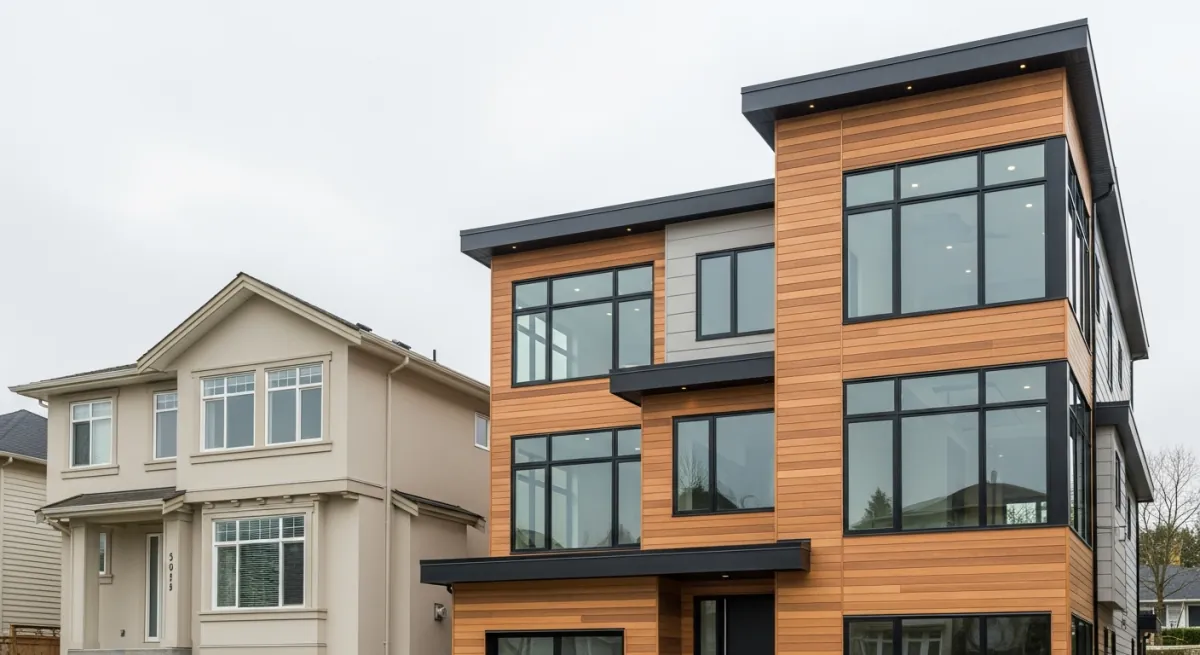
A spec home is a home built on speculation by a developer or builder, designed against a general buyer profile, and sold on the open market once it's finished or substantially complete. The buyer commits late in the process; the finishes, the layout, and most of the design decisions are already locked in. The trade-off is certainty, the home exists, the move-in date is real, the surprises are smaller.
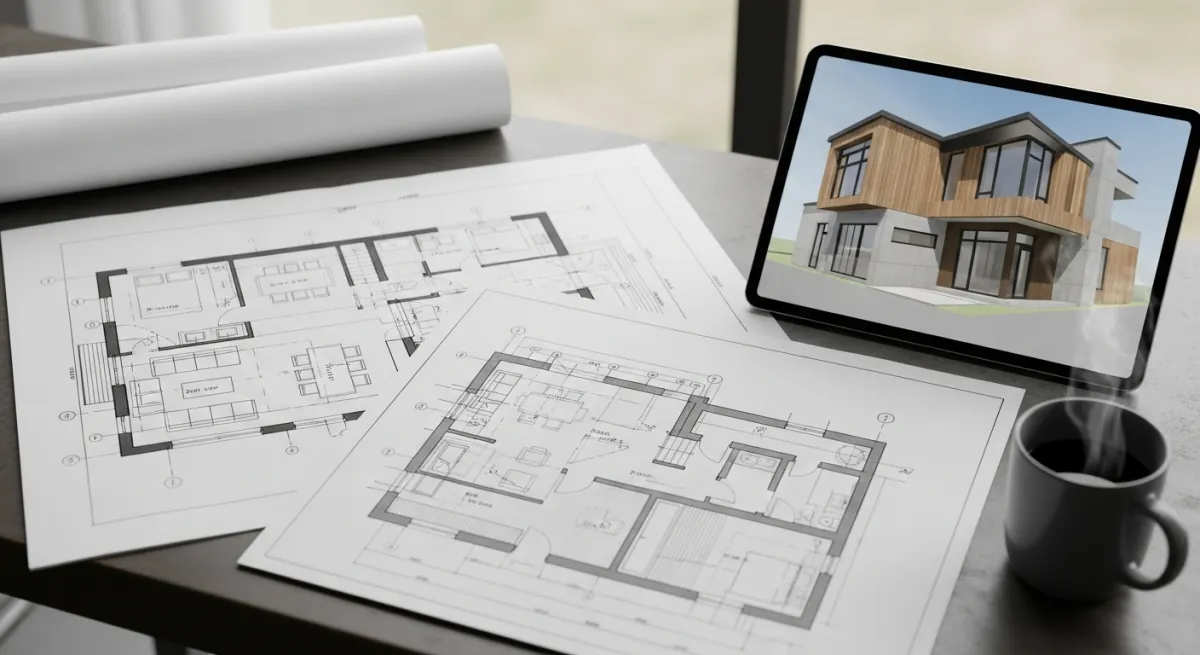
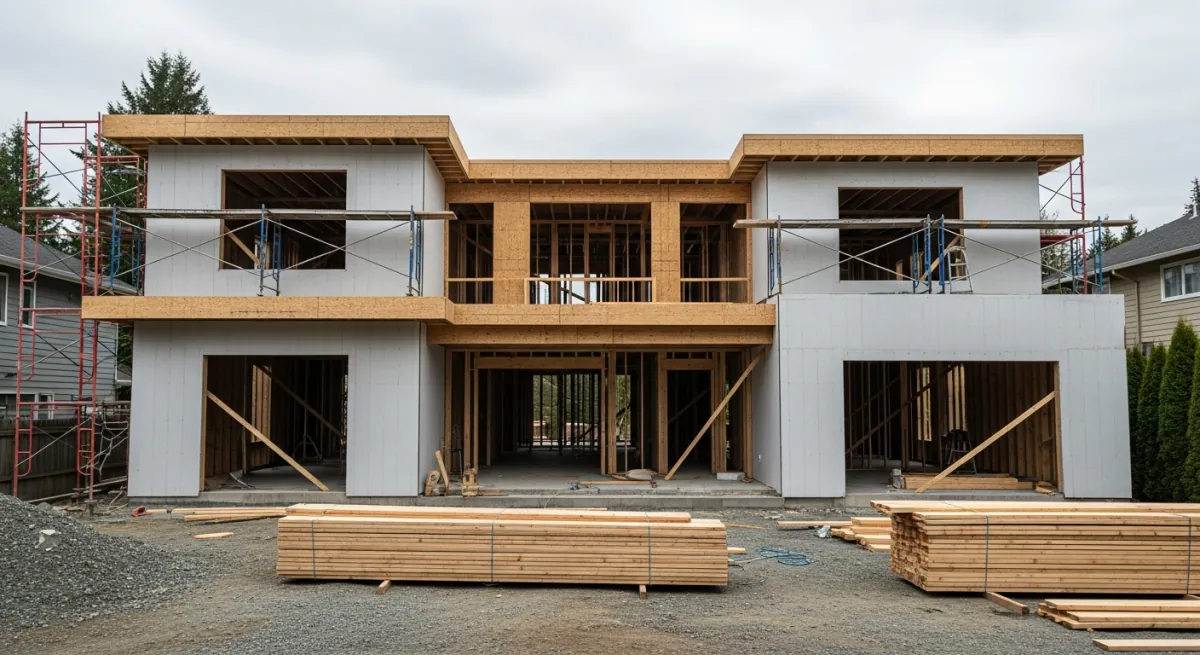
A custom home is commissioned by the owner before design begins, designed around the specific lot and the specific household, and built under a contract that names the owner. The trade-off is time, fourteen to twenty-two months from signed design contract to keys, as the Burnaby design timeline post breaks down phase by phase, but the home is genuinely the owner's.
Both kinds of home, when sold or first occupied in BC, are required to carry 2-5-10 home warranty insurance under the Homeowner Protection Act. The warranty floor is the same. The lived experience is not.
Two things have changed about this trade-off in 2026 that owners often miss. The first is that Burnaby permits are now digital-only at intake, which has compressed some of the early permit variance for both spec and custom. The second is that the BC Energy Step Code minimum is now Step 3 plus EL-4 of the Zero Carbon Step Code for all new Part 9 residential. That's the same floor for spec and custom; the difference is what each builds above it.
The short version of how the two compare:
| Factor | Spec home | Custom home |
|---|---|---|
| Who decides the design | Built against a general buyer profile, most decisions locked in before you commit | Commissioned by the owner before design begins, built around the lot and the household |
| When you commit | Late, once the home is finished or substantially complete | At the start, under a contract that names the owner |
| Timeline | The move-in date is real and the surprises are smaller | Fourteen to twenty-two months from signed design contract to keys |
| Lot fit | Works on a flat, mid-block lot with no slope, protected trees, or view to protect | Draws the footprint around slope, protected trees, and view cones |
| Household layout | Suits three or four bedrooms and conventional single-family use | Handles multigenerational wings, a main-floor primary suite, or a sound-separated office |
| 2-5-10 home warranty | Required under the Homeowner Protection Act | Required under the Homeowner Protection Act, the same floor |
| Energy Step Code | Step 3 plus Zero Carbon EL-4 for new Part 9 homes | The same floor, the difference is what gets built above it |
| Relationship with the builder | A transaction | A fourteen to twenty-two month working relationship |
When a spec home is the right call
There's a clean case for buying spec, and it doesn't get said often enough by people in our industry. If your lot is generic and your priorities are speed, certainty and a defined budget conversation, a well-built spec home on a flat lot is a perfectly good purchase. The right scenarios:
- Move-in date is the hard constraint and you don't have eighteen months to wait.
- The lot is flat, mid-block, no protected trees, no slope, no view to protect, no streamside or watercourse setback, no easement complications.
- The layout you actually need is conventional, three or four bedrooms, single-family use, no multigenerational layering, no home office requirement that breaks the standard floor plan, no specialty spaces.
- You're comfortable with the spec builder's level of finish without wanting to redirect material choices mid-stream.
- You don't want a relationship with a builder. You want a transaction.
That last bullet matters more than people admit. A custom build is a 14-to-22-month working relationship with a builder. Some owners find that energising. Some find it exhausting. There is no wrong answer to that personal question, and the right home for the wrong personality is still the wrong home.
When custom is the right call
The moment any meaningful constraint shows up on the lot, the math flips. A spec home built against a generic plan on a constrained lot is the worst of both worlds, you pay for design that doesn't fit the site, and the awkwardness lives with you for the next thirty years. The Burnaby-specific triggers we'd treat as custom-leaning:
Slope, fill or grade changes
Capitol Hill, Burnaby Heights, parts of Buckingham Heights, Cariboo Heights, much of the lower mountain. Hillside lots demand foundation strategies that read the geotechnical report against the actual building footprint, see foundations on Burnaby hillside lots, and they reward designs that step down or around the grade rather than fighting it. A spec home designed for a flat lot and dropped onto a sloped one almost always ends up with awkward stair runs, a basement that's half-buried on one side, and a driveway grade that doesn't work in winter.
Mature trees on the lot
The Burnaby Tree Bylaw makes any tree 20 cm or larger in trunk diameter on a development-application property a Protected Tree. Most central Burnaby lots have several over that threshold. Working around them is design work, not a generic plan. A custom home draws the footprint around the trees you're keeping. A spec home tends to take the trees down and pay the replacement cost, which means losing thirty-year canopy from your lot that no replacement planting will replace inside your time horizon.
View lots
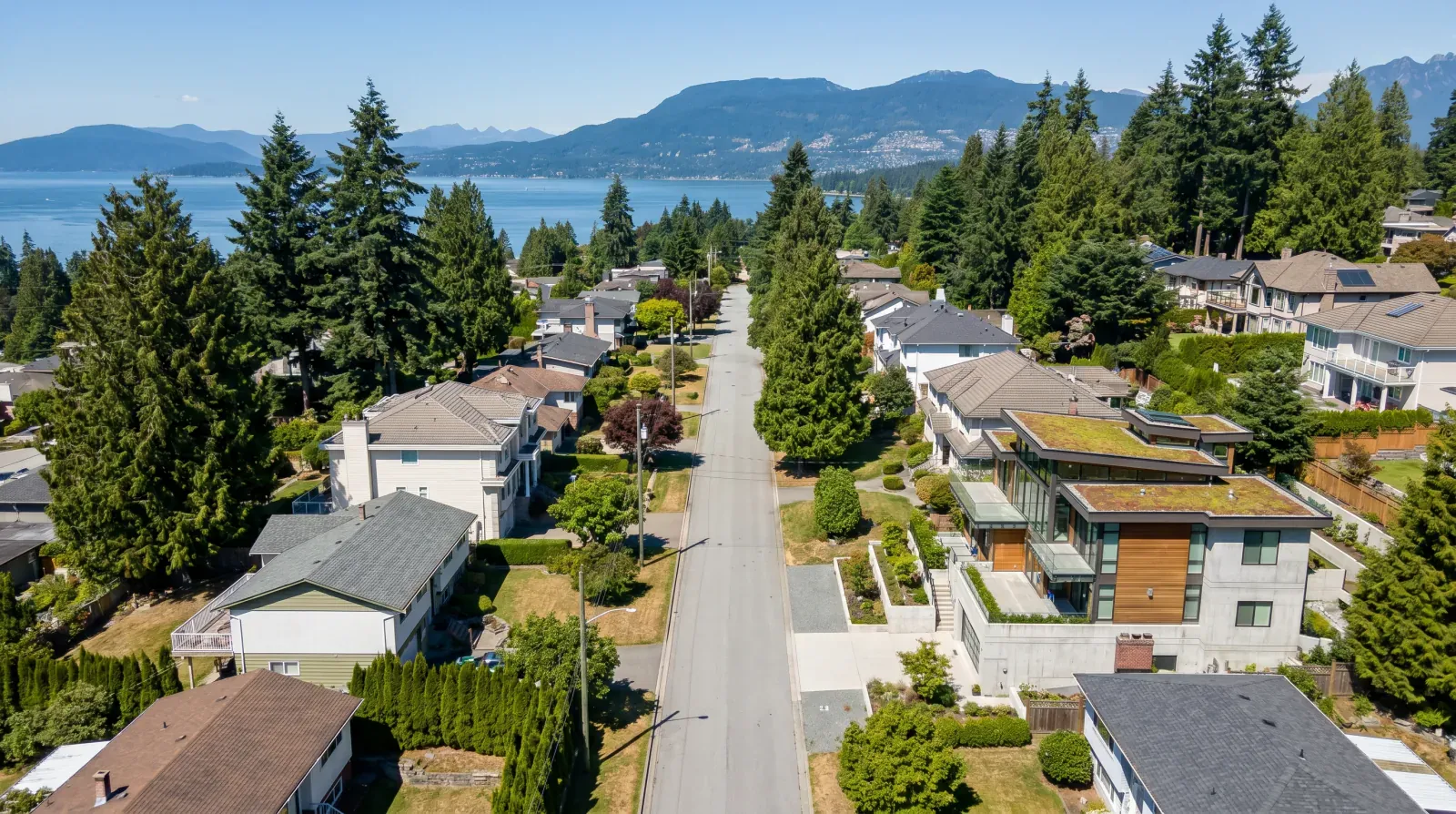
If your lot has a real view, north to the mountains and inlet from Capitol Hill, south to the Fraser from the upper Heights, west toward downtown from the right Brentwood positioning, every window placement decision matters. View cones, neighbouring house heights, the angle of the primary suite to the view, the deck orientation. Generic plans get those decisions wrong because they were never designed to get them right.
Multigenerational or non-standard layouts
A primary suite on the main floor for ageing parents. A separate ground-level entry for a multigen wing. A guest suite that's actually private from the main living area. A home office that needs sound separation. A garage layout that fits two SUVs plus a workshop. None of these is impossible in a spec home, but spec homes are designed against a profile, and the profile is almost never yours.
Burnaby's small-scale multi-unit zoning
BC's Small-Scale Multi-Unit Housing legislation requires Burnaby to permit three to four units on most former single-family and duplex lots. We don't build multiplex projects through this site, but the relevance here is that SSMUH eligibility can change what your lot is actually worth as a custom-home site versus a denser redevelopment. If you're not sure where your lot sits, a five-minute pass through our Burnaby lot eligibility tool gives a quick read on the zoning yields before you commit to a strategy.
The Burnaby lot-type cheat sheet
A short read on how the math tends to land by neighbourhood type:
- Big Bend, flat south Edmonds, parts of south Brentwood: spec is a reasonable option on most lots; custom wins if the household layout is non-standard.
- Brentwood and Metrotown infill teardown: depends entirely on whether the existing lot has trees worth keeping and whether the new home wants to make use of urban view exposure. Most cases end up custom.
- Burnaby Heights, Capitol Hill: almost always custom. Slope, view, mature trees, neighbouring scale, and the specific street character all push toward designs that fit the lot rather than designs imported from somewhere else. The Capitol Hill and Burnaby Heights hillside post walks through what we've learned designing in those streets.
- Deer Lake: streamside protection zones, mature canopy, and tighter setbacks. Custom every time.
- Government Road, Cariboo Heights: larger lots, often sloped, often with view potential. Spec rarely makes sense; the lots are too valuable and too specific for generic design.
- Edmonds, North Burnaby Heights edges: mixed. Some flat lots that work as spec, plenty of constrained lots that don't.
How to read your own lot in a single weekend
Before you commit to either path, three pieces of information will tell you which side of the line your lot sits on. None of them requires hiring anyone.
The first is the survey. Pull the existing topographical survey or get one ordered. Look at the grade change across the lot. More than two metres of grade across the building envelope and you're in custom territory.
The second is the tree inventory. Walk the lot with a tape measure and check every tree's trunk diameter at 1.4 metres above ground. Anything over 20 cm is protected under the Burnaby Tree Bylaw. Count the protected trees and locate them on a rough site plan. If protected trees fall inside the buildable area on a generic floor plan, you're in custom territory.
The third is the household requirements. Write down the actual program, bedrooms, who lives where, who works from home, what the garage needs to hold, what the kitchen needs to do, whether anyone is ageing in place, whether you host. If two or more of those requirements don't fit a conventional three or four-bedroom plan, you're in custom territory.
The lot evaluation post we wrote on what to check before buying a Burnaby teardown goes further on the constraints that don't show up in MLS photos. It's worth a read either way; the same constraints that affect a teardown decision affect a custom-vs-spec decision.
If the lot is doing the design work for you, buying spec is fine. If the lot is asking design questions only you can answer, you have to build.
Icon Projects Team
Two failure modes worth avoiding
A short list of the patterns we've watched go wrong.
The custom home that should have been spec. A household with conventional requirements, a flat lot, and limited tolerance for an eighteen-month process commissions a custom home anyway because they want "something special." Six months in, the design decisions start to feel like overhead. By month twelve, the conversation has worn thin. The home gets built, but the relationship is tired and the owners aren't sure the extra months were worth it.
The spec home that should have been custom. A household with real layout requirements or a constrained lot buys a finished spec because the timing was right. Within two years, they're renovating the main floor to undo decisions that the spec builder couldn't have known to make differently. The renovation costs more than the time savings of buying spec.
Both failures have the same cause: the decision was made against personal preference rather than against the lot.
The honest conversation
There's no universal answer to this question. It depends on the lot, the household, the timeline, and the appetite for an eighteen-month working relationship with a builder. What we'd push every Burnaby owner to do, before committing either way, is two things.
First, get the survey, the tree inventory and a rough geotechnical read on the lot. The lot tells you most of the answer.
Second, talk to one custom builder and walk one spec home. Not as a buying decision yet, as an information-gathering exercise. The conversation on one side and the walkthrough on the other will tell you which side feels like the right fit.
We're happy to be the custom-side conversation. Our custom homes service page lays out how we work, and a kitchen-table meeting is the right first step on any specific lot. If the answer at the end is "spec is right for us this time," that's a fair answer too. The wrong answer is committing to either path without looking at the lot first.
This piece stays focused on the lot-by-lot decision for a Burnaby buyer. For the wider financial and process comparison, including pre-sale contracts and what the 2-5-10 warranty actually covers on each path, see custom home vs spec home vs pre-sale: what's actually different.
Related on the Journal
- Custom Home Design Timeline in Burnaby, Start to Finish
- A Lot Evaluation Checklist Before You Buy a Burnaby Teardown
- Capitol Hill and Burnaby Heights Hillside Custom Homes
Frequently asked questions
- What's the main difference between a custom home and a spec home in Burnaby?
- A spec home is built on speculation by a developer or builder against a general buyer profile and sold once finished or substantially complete, with the buyer committing late and most design decisions already locked in. A custom home is commissioned by the owner before design begins, built around the specific lot and household under a contract that names the owner, typically taking 14 to 22 months from signed design contract to keys.
- When is buying a spec home the right call in Burnaby?
- Spec makes sense when the lot is flat, mid-block, with no protected trees, no slope, and no view to protect, and when the buyer's priorities are speed, certainty, and a defined budget. It also suits a household whose layout needs are conventional, three or four bedrooms with no multigenerational or specialty space requirements, and who don't want an extended working relationship with a builder.
- Why do most Burnaby lots end up favouring a custom build over spec?
- Because most central Burnaby lots have at least one constraint that a generic plan handles poorly: slope, mature protected trees, a real view, or a non-standard household layout. The Burnaby Tree Bylaw alone protects any tree 20 cm or larger in trunk diameter on a development-application property, and most central lots have several over that threshold, which pushes design toward a plan built around the specific site.
- Do spec homes and custom homes carry the same warranty coverage in BC?
- Yes. Both are required to carry 2-5-10 home warranty insurance under the Homeowner Protection Act when sold or first occupied. The warranty floor, two years on materials and labour, five years on the building envelope, ten years on structural defects, is identical either way. What differs is the lived design experience, not the warranty coverage.
- How does slope affect the custom-versus-spec decision on a Burnaby lot?
- Hillside lots in areas like Capitol Hill, Burnaby Heights, and Buckingham Heights demand a foundation strategy that responds to the actual geotechnical report and building footprint. A spec home designed for a flat lot and placed on a sloped one tends to produce awkward stair runs, a half-buried basement on one side, and a driveway grade that doesn't work well in winter, which pushes sloped lots firmly toward custom.
- Which Burnaby neighbourhoods tend to favour spec homes, and which favour custom?
- Big Bend, flat south Edmonds, and parts of south Brentwood are reasonable spec territory when the household layout is standard. Burnaby Heights, Capitol Hill, and Deer Lake are almost always custom, driven by slope, view, mature trees, and streamside protection zones. Government Road and Cariboo Heights lean custom too, since the lots tend to be larger, often sloped, and too specific for a generic plan.
- What information can a Burnaby owner gather in a weekend to decide between custom and spec?
- Three things: the topographical survey, to check grade change across the lot, since more than two metres of change usually points toward custom; a tree inventory, measuring trunk diameter at 1.4 metres to identify anything protected under the Burnaby Tree Bylaw; and a written list of the household's actual program, since two or more requirements that don't fit a conventional three or four-bedroom plan also point toward custom.
- What's the most common mistake owners make when choosing between custom and spec?
- Deciding based on personal preference rather than what the lot and household actually need. A household with conventional requirements on a flat lot but limited tolerance for a long process sometimes commissions a custom home anyway and finds the design decisions wear thin by month twelve. A household with real layout requirements sometimes buys spec for the timing and ends up renovating within two years to undo decisions a spec builder had no way to make differently.