A Burnaby-specific evaluation framework, the credentials that matter, the local questions that separate competent builders from excellent ones, and the verifications every owner should run before signing.
How to choose a custom home builder in Burnaby
To choose a custom home builder in Burnaby, verify the builder's BC Housing licence and 2-5-10 warranty coverage on the public registry, confirm they hold or are working toward the CHBA Master Residential Builder designation, ask for three completed Burnaby homes you can walk in person, and probe specifically for experience with Burnaby's digital permit intake, the Tree Bylaw, and the hillside or view conditions on your lot. Independent verification takes about an hour and matters more than any pitch deck.
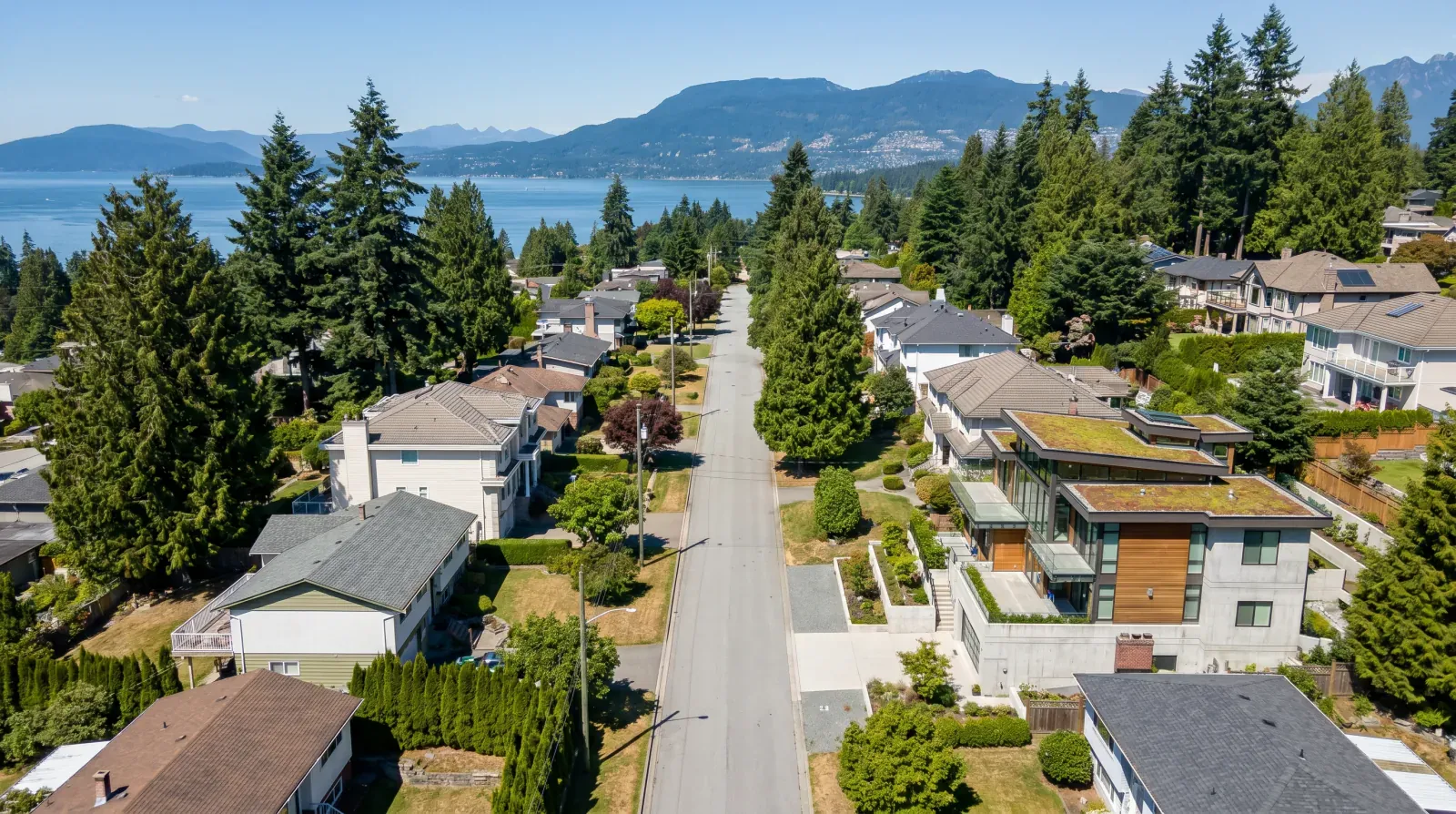
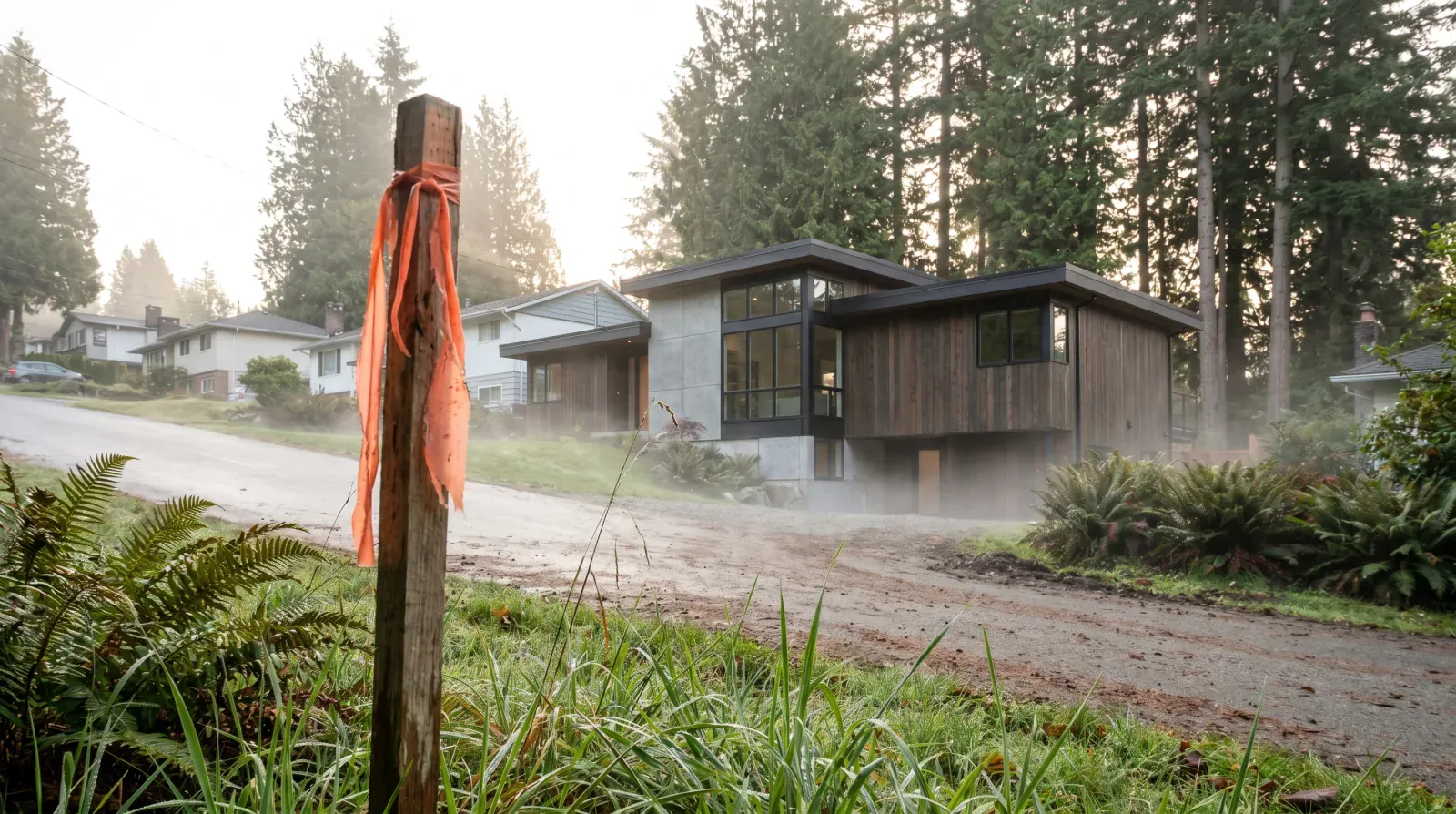
Walk a finished custom home in Burnaby Heights on a Saturday morning and you can usually tell within a block whether the builder knew what they were doing. The street parking still has a clean curb cut. The driveway grade meets the garage slab without a hump. The protected fir on the south property line is still there. The eaves throw water onto a real drainage plane, not onto the neighbour's fence. None of that is in the marketing photos. All of it is the actual job.
Burnaby is a particular place to build. The Engineering pre-application gate is its own animal. The Tree Bylaw catches more lots than owners expect. As of January 1, 2026 the City accepts building permit applications exclusively through its digital My Permits Portal, and as of March 31, 2026 every permit is issued digitally. None of that is hard if your builder has done it before. All of it is painful if they haven't.
This is the framework we'd use if we were on the other side of the table, hiring a builder for building a custom home in Burnaby of our own. We're Icon Projects, we've spent the last decade building custom homes across Capitol Hill, Burnaby Heights, Brentwood, Deer Lake, Big Bend and the lots in between. Take the hour.
Start with the regulatory floor, there is no negotiation here
Every residential builder building a new home in BC is required to be licensed by BC Housing under the Homeowner Protection Act, and every new home is required to carry mandatory 2-5-10 home warranty insurance. Two years on materials and labour. Five years on the building envelope, including water penetration. Ten years on structural defects in load-bearing parts of the home.
That's not a marketing claim. It's the law, and the registry is public. The first call with any prospective Burnaby builder should produce three pieces of information without hesitation:
- Their active licence number
- The warranty insurance provider that has accepted (or will accept) your project
- A direct answer when you say "I'll verify that on the BC Housing registry tonight"
If a builder gets squirrelly on any of those, the interview is over. Genuinely competent builders treat this question the way a doctor treats the question of whether they're licensed, with a flat answer and a registry number. Anything else is a tell.
The relevant registry is the BC Housing Licence Registry. Search by company name, see licence status, warranty provider, location served, and any history of cancellations or disciplinary action. Under the Homeowner Protection Act, individuals associated with a cancelled licence cannot relicense or operate through a related corporation for five years, which makes the registry a real integrity check, not a formality.
CHBA Master Residential Builder is the strongest professional accreditation in Canada
The Master Residential Builder designation through CHBA BC is the strongest professional accreditation a residential builder in this country can hold. To earn it, a builder needs ten years in residential construction (five of those at management level), a passing grade of 80% on ten required CHBA BC courses including BC Building Code, project management and building science, plus reference letters from their warranty provider and three from clients, suppliers or subtrades. The designation is granted annually and has to be renewed.
That's the real filter. It tells you the builder has been around long enough to develop systems, has invested in continuing education, and has been vouched for by people who've actually worked with them on actual projects. Two MRB-designated builders can still deliver different experiences, but the floor is meaningfully higher.
The CHBA BC certified designation holders list is public. If a builder claims the credential, you can confirm it without taking their word for it.
What the designation does not tell you: whether the builder is the right fit for your specific lot. An excellent flat-infill builder may be wrong for a Capitol Hill hillside. An excellent renovation-focused builder may be wrong for a ground-up Brentwood teardown rebuild. The credential is a baseline. The lot-specific questions are where you separate the field.
The Burnaby-specific questions that actually matter
Here's what makes Burnaby different from a generic BC custom build, and what we'd push a prospective builder on before signing.
Have they submitted permits through the new digital intake?
Burnaby moved to digital-only intake on January 1, 2026 and digital-only issuance on March 31, 2026 (City of Burnaby, New Home Construction). A builder who hasn't pushed a file through the My Permits Portal yet is going to learn on your project. Some of that learning is fine. Some of it costs you weeks.
Ask directly: how many building permits have you submitted through My Permits Portal in 2026? What was the average time from submission to issued permit? Have you used the eCheck digital review tool? A confident answer cites specific projects. A vague answer is a flag. For the full phase-by-phase view of what they should know, see Burnaby's 2026 permit timeline.
Have they worked the Burnaby Tree Bylaw on a similar lot?
The Burnaby Tree Bylaw makes any tree 20 cm or larger in trunk diameter on a development-application property a Protected Tree. That's a much lower threshold than people expect, and most central Burnaby lots, Burnaby Heights, Capitol Hill, Brentwood, Deer Lake, have several trees over it. The tree bylaw permit is auto-generated at building permit submission, but every tree has to be declared, and every tree removed has to be replaced with stock at a real size: two-metre minimum height for conifers, 5 cm trunk diameter minimum for deciduous.
A builder who has worked Burnaby for years will say something like "send me your survey and the rough siting and I'll tell you which trees we're working around before we draw a single line." A builder who hasn't will treat trees as a problem to be solved later. Later is the wrong time. How the Burnaby Tree Bylaw reshapes design goes deeper on what the City actually requires.
Have they built on hillside, view, or fill lots?
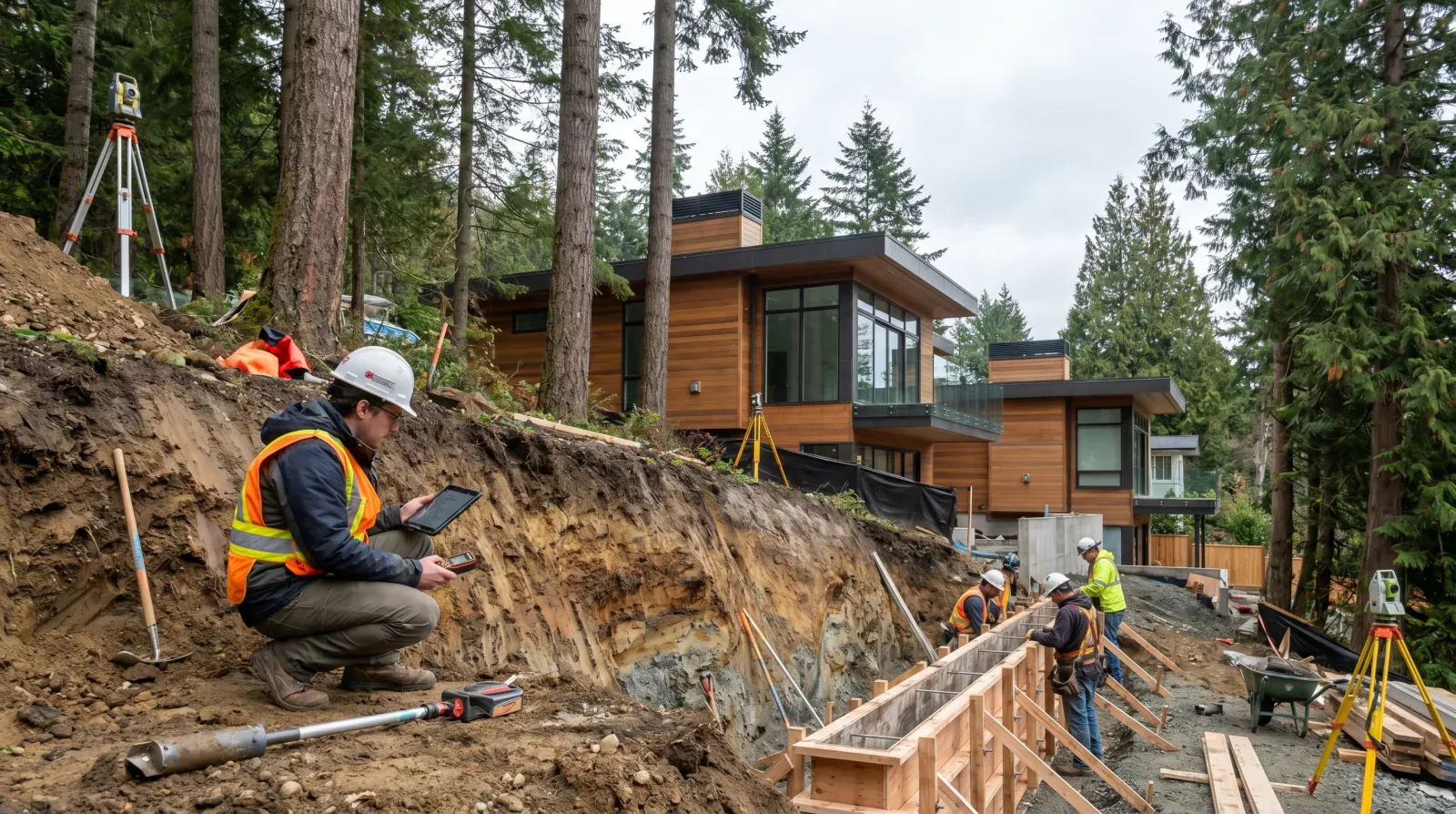
This is the question that catches the most owners by surprise. A flat lot in Big Bend builds nothing like a Capitol Hill view lot or a sloped Burnaby Heights site. Hillside work is its own discipline, geotechnical investigation, retaining wall design, drainage management, sequencing the excavator on a grade where one wrong cut puts the neighbour's yard in your foundation.
If your lot has any slope, the right question is: walk me through your three most recent hillside builds. Where were they? What did the geotech show? What did the retaining strategy end up being? A builder who can answer that in detail has done the work. A builder who waves at "yeah we've built on slopes" hasn't. Foundations on Burnaby hillside lots and geotechnical reports on Burnaby slope lots cover what good practice actually looks like.
Do they understand the Energy Step Code in practice, not just on paper?
Burnaby's permit floor for new Part 9 residential is Step 3 of the BC Energy Step Code plus EL-4 of the Zero Carbon Step Code. Step 3 is achievable with a competent envelope and decent windows; it's not achievable by accident. By 2032 the provincial target is Step 5, net-zero-ready, for all new homes.
The right question isn't "do you know the Step Code?" Every builder will say yes. The right question is "what's your pre-construction airtightness target on a Step 3 build, and what wall assembly do you usually run to hit it?" Real answers come back specific: ACH50 target, R-value of the wall, window spec, certified Energy Advisor they use. Marketing answers come back fuzzy.
Walk three of their finished homes, at year three or later
Photos are marketing. Walking a finished home is data. Pay attention to the things that take time to develop. How the doors close. How the trim joints have aged. Whether the cabinetry still looks crisp three years on. Year three is the honest test, much earlier and you're seeing the new-home shine; much later and the owner has probably remodelled.
A short list of what we'd specifically look at:
- Door closures across the home. A door that hangs out of plumb, sticks, or rattles is showing framing imprecision or settlement that wasn't accounted for.
- Trim joints. Mitred baseboard corners, casing returns, picture rails. Joints that have opened up mean the carpenter used wet stock or rushed the install.
- Window operation. Open and close every operable window. The seals should still feel firm and the hardware should still feel solid.
- Bathroom function. Look at where caulk lines meet stone, how the fan vents through the roof, whether the door clears the floor tile properly.
- Exterior water management. Walk the perimeter after a rainy week. Wet basement walls, pooling at downspouts, or stained siding tell you where the original detailing skipped a step.
If a builder is reluctant to put you in front of past clients at year three, that reluctance is itself the answer.
Trade relationships are the hidden quality signal
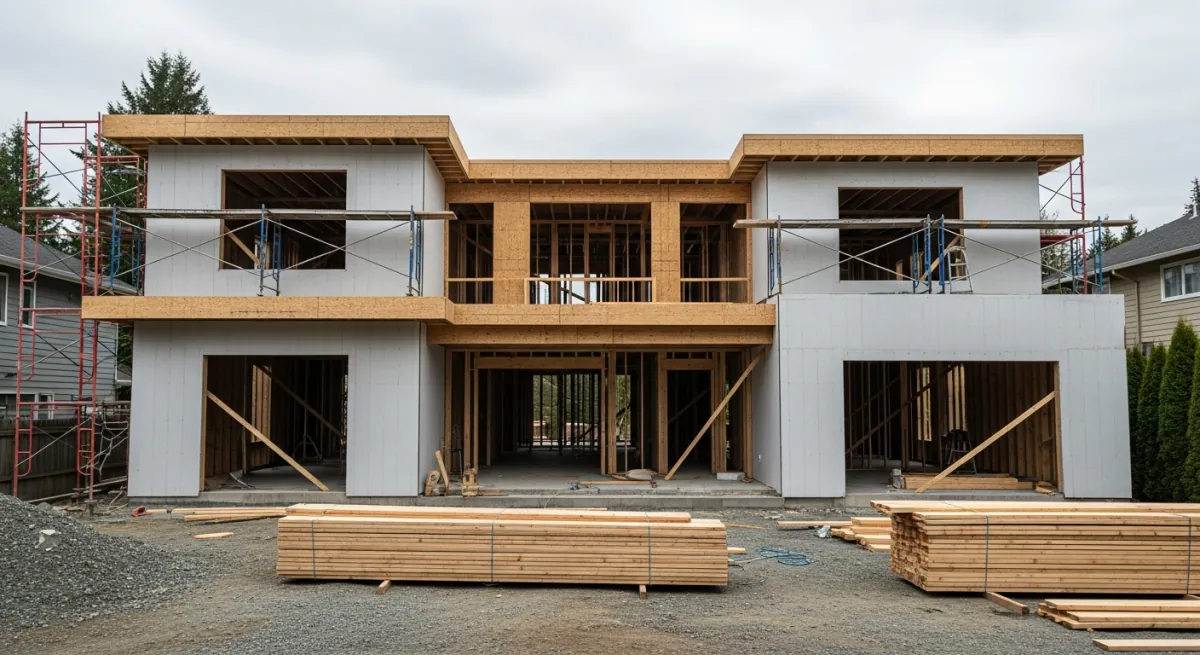
A custom home runs through nine major trade categories, excavation and foundation, framing, MEP, insulation and drywall, finish carpentry, cabinetry, stone and tile and flooring, painting, landscape, and a builder with stable long-term relationships across all of them is a meaningfully different operator than one tendering each project from scratch.
Ask: who is your framer? How long have you worked with them? What does your finish carpenter normally charge per linear foot of mitered baseboard, and how do they price returns? The questions sound oddly specific. They're meant to. A builder who knows their trades cold answers in seconds. A builder who tenders every job hesitates because the answer changes every project.
Talk about money the right way
I'm not going to write a primer on construction budgeting here, that's a private conversation and it belongs at the kitchen table on a specific project, not on a public blog. But there's one thing worth saying about how to listen.
The right builder treats the project as a constraint to design within, not as a number to figure out as the project evolves. They distinguish clearly between what's in the build contract and what falls under separate consultant scope (architectural fees, survey, geotechnical, energy advisor, arborist). They push back on a brief that doesn't fit. They tell you the truth about what an allowance covers and what it doesn't. The builder who agrees to everything in the first meeting and tells you "we'll work it out" is the builder who later sends change orders for things you assumed were included.
Three independent verifications, an hour total
Outside the interview itself, three pieces of due diligence I'd run on any builder you're seriously considering:
- Confirm BC Housing licence is active on the public registry. Status, warranty provider, history.
- Verify the CHBA BC Master Residential Builder claim on the public list of certified designation holders.
- Search the Better Business Bureau and provincial complaint history. Patterns matter more than single complaints.
This independent verification takes about sixty minutes. It's the cheapest insurance on the entire project.
Choose the builder you'd be comfortable telling "I changed my mind" to in month nine. That's the relationship you're actually buying.
Icon Projects Team
Warning signs worth taking seriously
A short list of behaviour I'd treat as a hard no:
- Can't or won't produce a BC Housing licence number on the first call.
- Quotes a confident timeline or a fixed construction number before reviewing the lot, the survey or the brief.
- Reluctant to put you in front of past clients or to let you walk a finished home at year three.
- Vague answers about who actually swings the hammer day to day.
- Pressure to sign before independent verification is complete.
None of those are subtle. Most owners ignore them anyway because the builder is friendly, the photos are clean, and the first meeting felt warm. The first meeting is the version of the builder you'll see least often over the next two years. Trust the boring signals.
Where we fit
We work primarily in Burnaby, with custom builds across Vancouver, Coquitlam and North Vancouver. The framework above is exactly how we'd want to be evaluated, and how we evaluate the builders we sub-contract to when a project requires specialised scope. If you're early in the conversation on a Burnaby lot, Capitol Hill, Brentwood, Big Bend, Heights, or anywhere, we keep a custom homes service page that lays out our process, and you can also run a Burnaby parcel through our lot eligibility tool for a quick read on what the zoning permits.
The right builder for your custom home in Burnaby is the one whose answers hold up to independent verification, whose finished homes still feel like considered pieces of work at year three, and who treats your lot specifically rather than generically. Take the hour. Walk the homes. Ask the hard questions.
Related on the Journal
- Building a Custom Home in Burnaby: What 2026 Actually Changes
- The Burnaby Custom Home Permit Timeline in 2026
- How the Burnaby Tree Bylaw reshapes design
Frequently asked questions
- What's the first thing to verify before hiring a Burnaby custom home builder?
- Their active BC Housing licence number and the warranty insurance provider that has accepted or will accept the project. Every residential builder in BC is required to be licensed under the Homeowner Protection Act and carry mandatory 2-5-10 home warranty insurance, and both are checkable on the public BC Housing Licence Registry within minutes.
- What does the CHBA Master Residential Builder designation actually require?
- Ten years in residential construction with five of those at management level, an 80% passing grade on ten required CHBA BC courses covering the BC Building Code, project management and building science, plus reference letters from the builder's warranty provider and three from clients, suppliers, or subtrades. It's granted annually and has to be renewed, and the list of certified holders is publicly searchable.
- Why does Burnaby's digital permit intake matter when choosing a builder?
- Burnaby moved to digital-only permit intake on January 1, 2026 and digital-only issuance on March 31, 2026. A builder who hasn't yet pushed a file through the My Permits Portal will learn the system on your project, which can cost real weeks. Ask specifically how many permits they've submitted through the portal in 2026 and what their average submission-to-issuance time has been.
- How does the Burnaby Tree Bylaw affect the choice of builder?
- The bylaw makes any tree 20 cm or larger in trunk diameter on a development-application property a Protected Tree, a lower threshold than most owners expect. A builder experienced with Burnaby will offer to review your survey and rough siting to identify which trees the design has to work around before a single line is drawn, rather than treating tree protection as a problem to solve later.
- What should I ask a builder about hillside or slope experience?
- Ask them to walk through their three most recent hillside builds specifically: where they were, what the geotechnical report showed, and what the retaining strategy ended up being. A builder who has genuinely done hillside work answers in detail; one who hasn't tends to give a vague, general answer about having built on slopes before.
- At what point in a home's life should I walk a builder's past projects?
- At year three or later, not year one. A new home still shows its new-home shine in year one; by year three, door closures, trim joint quality, window seal performance, and how the exterior sheds water after a rainy week reveal whether the underlying work was done well. If a builder is reluctant to put you in front of a year-three client, that reluctance is itself useful information.
- What Energy Step Code question actually separates builders?
- Not whether they know the Step Code, since every builder says yes. The useful question is what their pre-construction airtightness target is on a Step 3 build and which wall assembly they typically run to hit it. A builder with real experience answers with a specific ACH50 target, wall R-value, and window specification; a marketing answer stays vague.
- What are the clearest warning signs when interviewing a Burnaby custom home builder?
- A builder who can't or won't produce a BC Housing licence number on the first call, who quotes a confident timeline or fixed number before reviewing the lot and brief, who is reluctant to let you walk a finished home at year three, who gives vague answers about who actually runs the site day to day, or who pressures you to sign before independent verification is complete.
- How long does independent verification of a Burnaby builder actually take?
- About an hour, covering three checks: confirming the BC Housing licence is active on the public registry along with its status and warranty provider history, verifying any claimed CHBA BC Master Residential Builder designation on the public list of certified holders, and searching the Better Business Bureau and provincial complaint history for patterns. That hour is inexpensive compared to the cost of the project it protects.