After two decades of custom builds across Burnaby, Vancouver, and the Fraser Valley, the features that consistently deliver, in daily comfort, durability, and resale, and the ones that look good in a brochure but disappoint in practice.
Every custom home budget has a ceiling. The hard question isn't which features you want, it's which ones are genuinely worth the extra spend, and which ones will feel less important five years after you move in.
After twenty years of building custom homes across Burnaby, North Vancouver, Vancouver, and the Fraser Valley, we have a clear picture of which features clients are glad they included and which ones they quietly regret paying a premium for. This is that list.
Features that consistently deliver
A high-performance building envelope
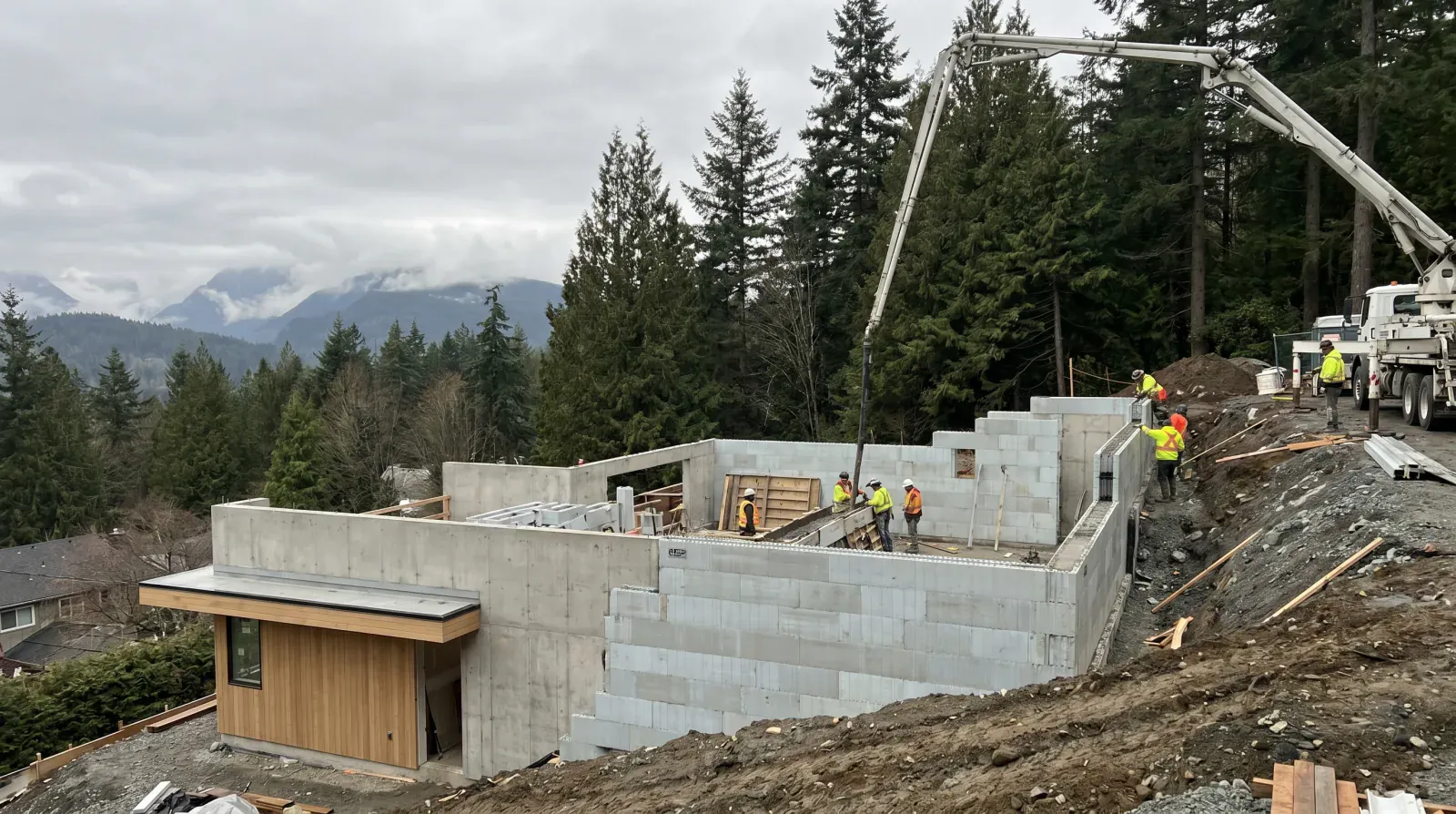
This is the one we push hardest, because it's the one you feel every single day. Better wall assemblies, continuous exterior insulation, a properly detailed air barrier, triple-glazed windows, don't photograph well. They don't come up at dinner parties. But they are the difference between a house that's quiet and even-tempered in every season versus one that drafts in January, overheats in August, and runs an HVAC system harder than it should.
In Burnaby, where BC Energy Step Code Step 5 is now required for most new single-family builds, a high-performance envelope is no longer optional, it's the regulatory floor. What varies is execution quality. The difference between a builder who barely hits Step 5 and one who designs to it from the start shows up in your energy bills and in the comfort of every room that faces north or gets afternoon sun.
This is the one place in a custom home budget where we actively push back when clients try to trim.
Heated primary bathroom floor
The return on this is entirely disproportionate to the cost. Radiant floor heat under the tile in a primary ensuite costs a fraction of the total bathroom budget and transforms a cold-floor morning routine into something you stop noticing, in the best way. Once you've had it, you won't build without it. Clients who have skipped it tell us within two winters.
Larger mudroom with serious storage
The mudroom is the most-used space in a BC household, and the most common regret when it's undersized. Boots, coats, backpacks, dog gear, ski equipment, in the Pacific Northwest this space is doing real work from October through April. Hooks at two heights, a bench with lift-up storage, dedicated shoe cubbies, and a utility sink if the program allows it. The square footage invested here pays off in daily function more reliably than a larger primary closet.
Quality kitchen layout with full-height cabinetry
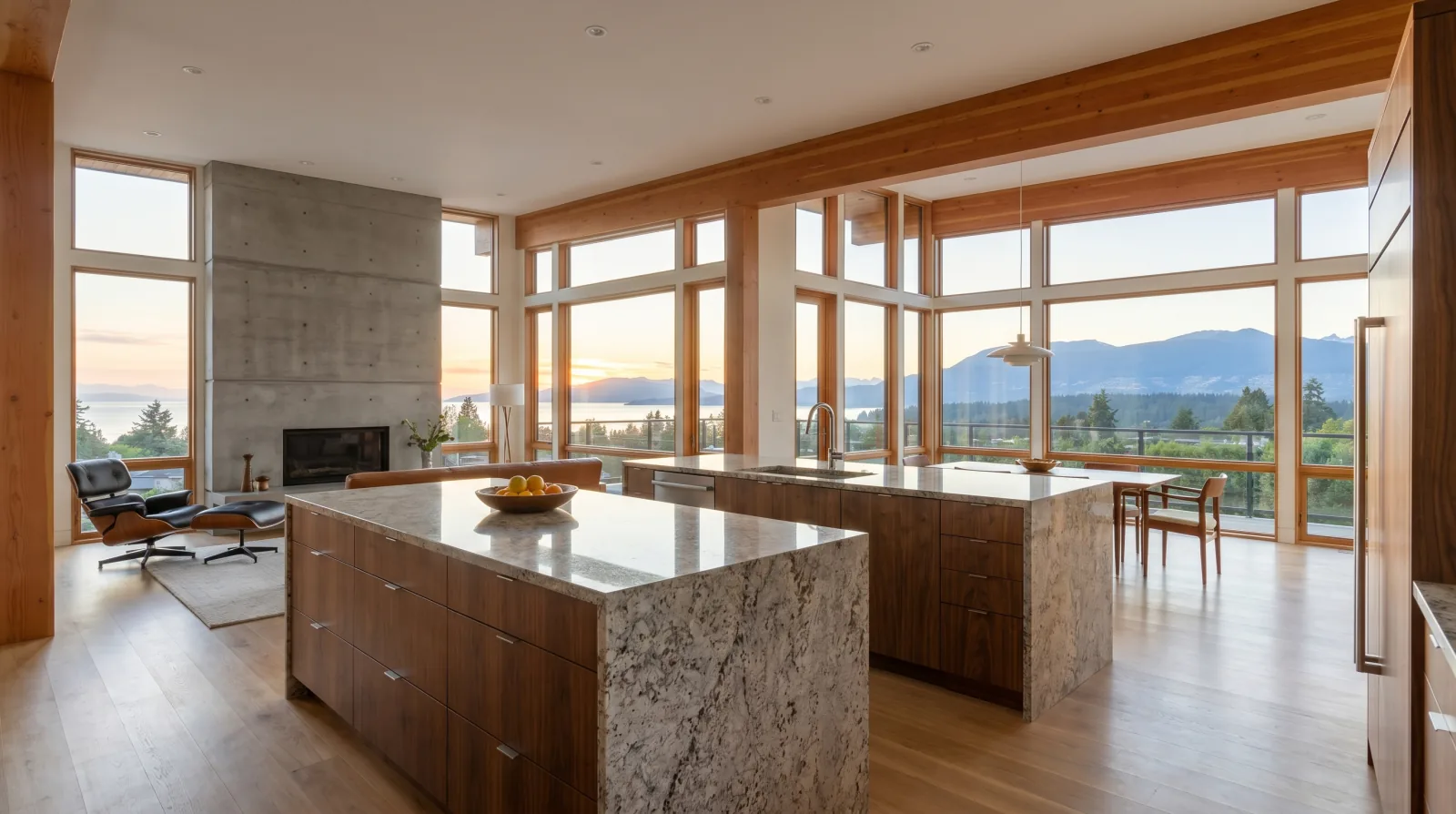
The kitchen is where the long-term value lives, but the value isn't in the appliance brand or the exotic stone, it's in the workflow. The triangle between sink, cooktop, and refrigerator. Whether the prep counter has room to actually work. Whether the pantry is genuinely accessible or requires crouching. Whether there's landing space beside the oven.
Full-height cabinetry to the ceiling is worth doing because it eliminates the dead zone above standard upper cabinets that collects dust and rarely gets used productively. Combined with drawers instead of lower cabinet doors (which most clients convert to anyway after five years), a well-thought-out kitchen keeps working well decades past the initial trend cycle.
In-ceiling speakers, rough-in only, install later
Run the wire. Terminate it properly. Leave the speaker locations blocked out in the ceiling framing. Installing in-ceiling audio after drywall means fishing wire through finished walls, patching, repainting, a frustration completely avoidable if the rough-in happens during construction. You don't have to commit to the speaker selection or the system at build time; that can happen later. The wire is cheap. The retrofit isn't.
The same principle applies to conduit for future solar panels, EV charging in the garage, and any data cabling. Run it during construction. The incremental cost is trivial; the alternative is expensive.
Covered outdoor space sized for actual use
A covered patio or deck is the feature most often regretted when undersized. The Pacific Northwest has a long shoulder season, March through May, September through November, where good outdoor space adds real weeks of use at both ends of summer. The rule we've seen hold: build the covered area at least 50% larger than what you think you need. You will use every square foot.
At the same time, the covering has to be properly engineered, adequate pitch to drain, proper flashing at the house connection, a ceiling treatment that doesn't trap moisture. A covered patio done poorly is an expensive maintenance problem.
Dedicated home office with a proper door
Post-pandemic demand made this obvious, but the feature holds regardless of work-from-home arrangements. A room with a closeable door, adequate natural light, and an electrical layout designed for a workstation, not a bedroom moonlighting as a study, changes the daily dynamic of working from home. Plan the placement so it's away from the main living noise, and budget for built-in shelving that actually accommodates how a working person uses a desk. The closeable door is non-negotiable.
Features that disappoint more than they deliver
Butler's pantry as a separate showroom
The butler's pantry has become a status item in certain market segments, and we've seen it executed as a gorgeous staged space that owners mostly use for overflow from the kitchen. If it works as a genuine second prep and storage area, with a second sink, counter space that gets used, and proximity to the kitchen workflow, it earns its footprint. If it exists primarily as a photographable feature, it doesn't.
Ask yourself: will you actually prep food in here, or will this become a staging area for items migrating from the main kitchen?
Feature walls that date
The design trends that look most compelling in a new home often look most dated in year seven. Shiplap, barn doors, dramatic wallpaper used as a focal feature, all of these have cycles, and the cycle turns faster than a home's lifespan. The materials and details that age well are, without exception, the quieter ones. White oak floors. Plaster walls. Simple panel moulding. Unlacquered brass hardware that patinas into itself.
We're not arguing against character, we're arguing for character that doesn't have a clear expiry date.
Wine cellars and home theatres without a real use case
These are the rooms that appear in custom home feature lists reliably, and the rooms that see the least use in the first decade. A wine cellar makes sense if you are already a serious wine collector, and even then, a temperature-controlled cabinet in the kitchen achieves the same function with far less construction complexity. A home theatre makes sense if your family genuinely watches films together as a regular activity, in a dedicated space, with the lights out.
Both rooms require meaningful mechanical attention to get right (the wine cellar especially, temperature and humidity control in a BC climate is an engineering problem, not a millwork problem). Both are hard to convert to another use later.
Pet wash stations in the mudroom
We include this one carefully, because some households genuinely benefit. But we've built these on request and watched them go unused in the majority of cases. The utility sink in the mudroom is more versatile and accomplishes the same function for most dogs and most owners. A dedicated tiled low-threshold dog shower, with a handheld wand and a proper drain, is worth building if you have multiple large dogs or long-haired dogs. For most households, it's a premium for an occasional use case.
Features worth upgrading from standard, even when the baseline is good
A few areas where the step up from standard-spec to a considered upgrade is genuinely worth it:
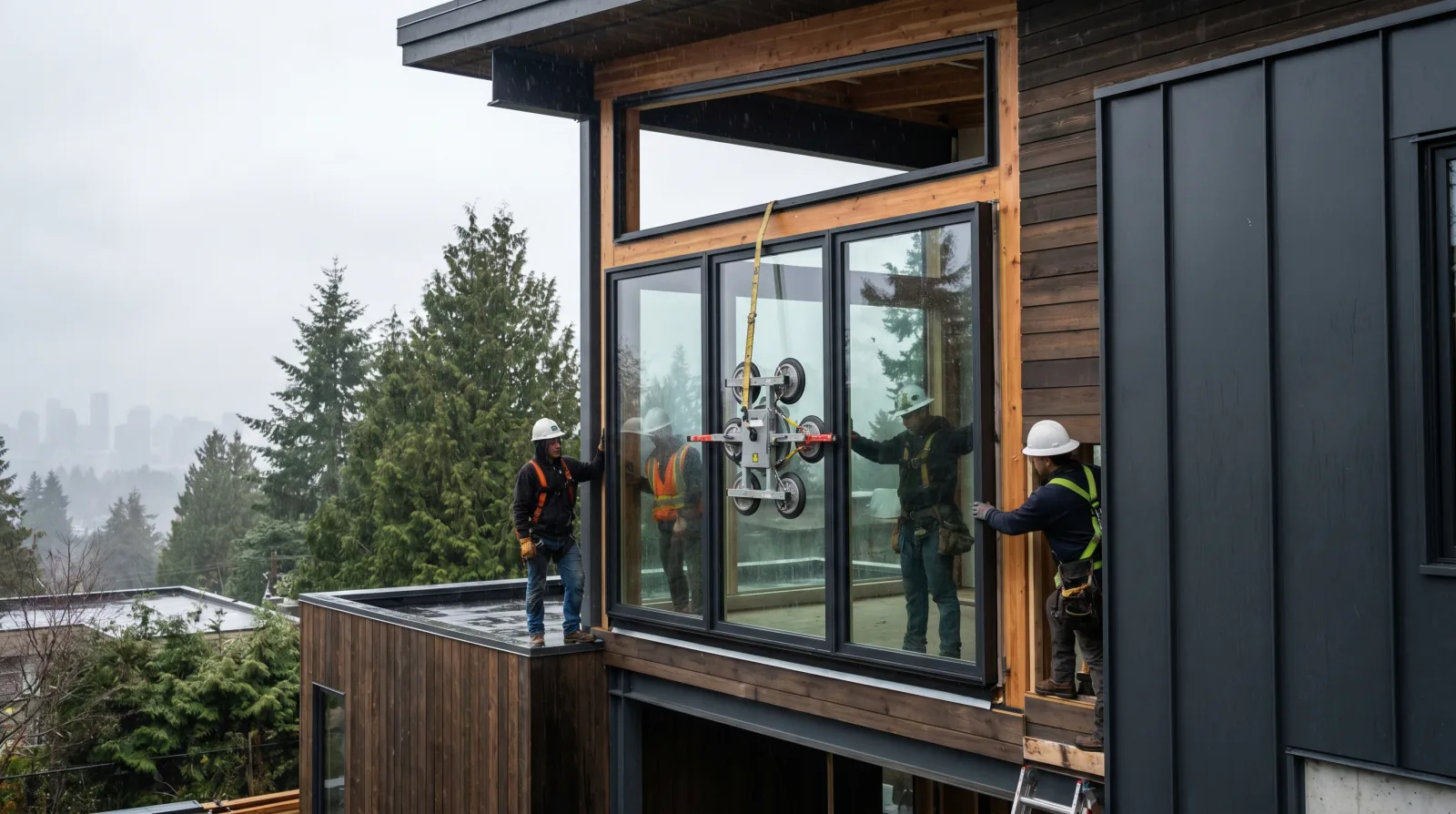
Windows and glazing. BC Energy Step Code Step 5 now requires high-performance glazing in most new Burnaby custom homes, so a baseline triple-glazed window is increasingly standard. But there's meaningful variation in quality within the triple-glazed category, spacer type, gas fill, coating quality, frame thermal performance, and installation detail all affect real-world performance. A window system installed with careful thermal break detailing and well-lapped to the air barrier outperforms an equivalent window unit installed carelessly. The specification and installation matter as much as the product. We write this into the scope at design, not after the windows are ordered.
Structural rough-in for future additions. If the program includes a future deck, a future roof terrace, or a future connection to an eventual coach house, the structural provision to support it costs little in framing and costs far more to add later. Blocking, a header sized for a future door, a joist span that accommodates a future load, these are the low-cost futures that disappear into the framing and sit there, available when needed.
Lighting control versus light fixtures. Owners often spend disproportionately on individual fixture selections and underinvest in the control system. A well-designed dimming and zoning system, even a simple one, not a full automation platform, changes how the house feels more than any fixture upgrade. Light quality in the morning, in the evening, and in transition between uses matters far more than the fixture style. Specify the control infrastructure during rough-in; the fixtures can be changed. The wiring can't.
The features that matter most don't photograph well
The pattern running through the list that delivers: envelope performance, spatial planning, the mudroom, the covered patio, the infrastructure rough-ins. None of these are features you show visitors. All of them change how you experience the house every day.
The pattern running through the list that disappoints: showroom features that exist primarily for the tour. The butler's pantry nobody preps in. The wine cellar that stores twelve bottles. The trend-driven wall treatment that reads as dated before the mortgage is halfway through.
A good custom home is designed for how you actually live, which means it requires an honest conversation about that, not just a features wish list. If you want to talk through what's worth spending on for your specific project, we're available for that conversation.
Related reading: Custom home process guide · Finishing & handover chapter · Materials that age beautifully
Frequently asked questions
- What custom home feature delivers the best return relative to its cost?
- A heated primary bathroom floor. Radiant floor heat under the tile in a primary ensuite costs a fraction of the total bathroom budget and changes a cold-floor morning routine into something an owner stops noticing entirely. Clients who skip it consistently mention it within two winters as something they wish they'd added.
- Why is a high-performance building envelope worth prioritizing over visible finishes?
- Because it's felt every day rather than seen occasionally. Continuous exterior insulation, a properly detailed air barrier, and triple-glazed windows are the difference between a home that's quiet and even-tempered in every season versus one that drafts in January and overheats in August. In Burnaby, where BC Energy Step Code Step 5 is now required for most new single-family builds, this performance is a regulatory floor, not an optional upgrade.
- Is a butler's pantry worth the added construction cost?
- It depends on whether it functions as genuine second prep space or becomes a photographable showroom that mostly holds overflow from the kitchen. A butler's pantry earns its footprint when it has a second sink, counter space that actually gets used, and proximity to the kitchen workflow. If it exists mainly for the tour, the square footage would usually work harder as something else.
- Why do wine cellars and home theatres often disappoint custom home owners?
- Because they appear reliably in feature lists but see the least use in the first decade of ownership. A wine cellar only makes sense for an owner who's already a serious collector, and even then a temperature-controlled cabinet achieves the same function without the humidity-control engineering a full cellar requires in a BC climate. Both rooms are also hard to convert to another use later.
- Should in-ceiling speaker wiring be run during construction even without a final system decision?
- Yes. Running the wire and terminating it properly during framing costs almost nothing, and the speaker or system selection can be made later. Installing in-ceiling audio after drywall is finished means fishing wire through closed walls, patching, and repainting, a cost and disruption entirely avoidable by planning the rough-in during construction. The same logic applies to conduit for future solar and EV charging.
- How large should a covered outdoor space be on a BC custom home?
- Larger than most owners initially plan for. A rule that consistently holds: build the covered area at least 50 percent larger than what feels necessary, because the Pacific Northwest's long shoulder seasons, March through May and September through November, mean that extra space gets used. The covering also has to be properly engineered with adequate pitch to drain and correct flashing at the house connection.
- Which design trends tend to look dated within a few years?
- Shiplap, barn doors, and dramatic wallpaper used as a focal feature all move through trend cycles faster than a home's actual lifespan. Materials and details that age well tend to be quieter: white oak floors, plaster walls, simple panel moulding, and unlacquered brass hardware that develops its own patina over time rather than needing to be replaced when the look falls out of favour.
- Is structural rough-in for future additions worth including at initial construction?
- Yes, when a future deck, roof terrace, or connection to a future coach house is a realistic possibility. Blocking, a header sized for a future door, or a joist span that accommodates a future load cost little to include in the original framing and cost far more to add after the fact, since they disappear into the structure and simply sit there available when needed.