Process
The BC 2-5-10 Home Warranty: What It Covers, What It Doesn't, and How to Use It
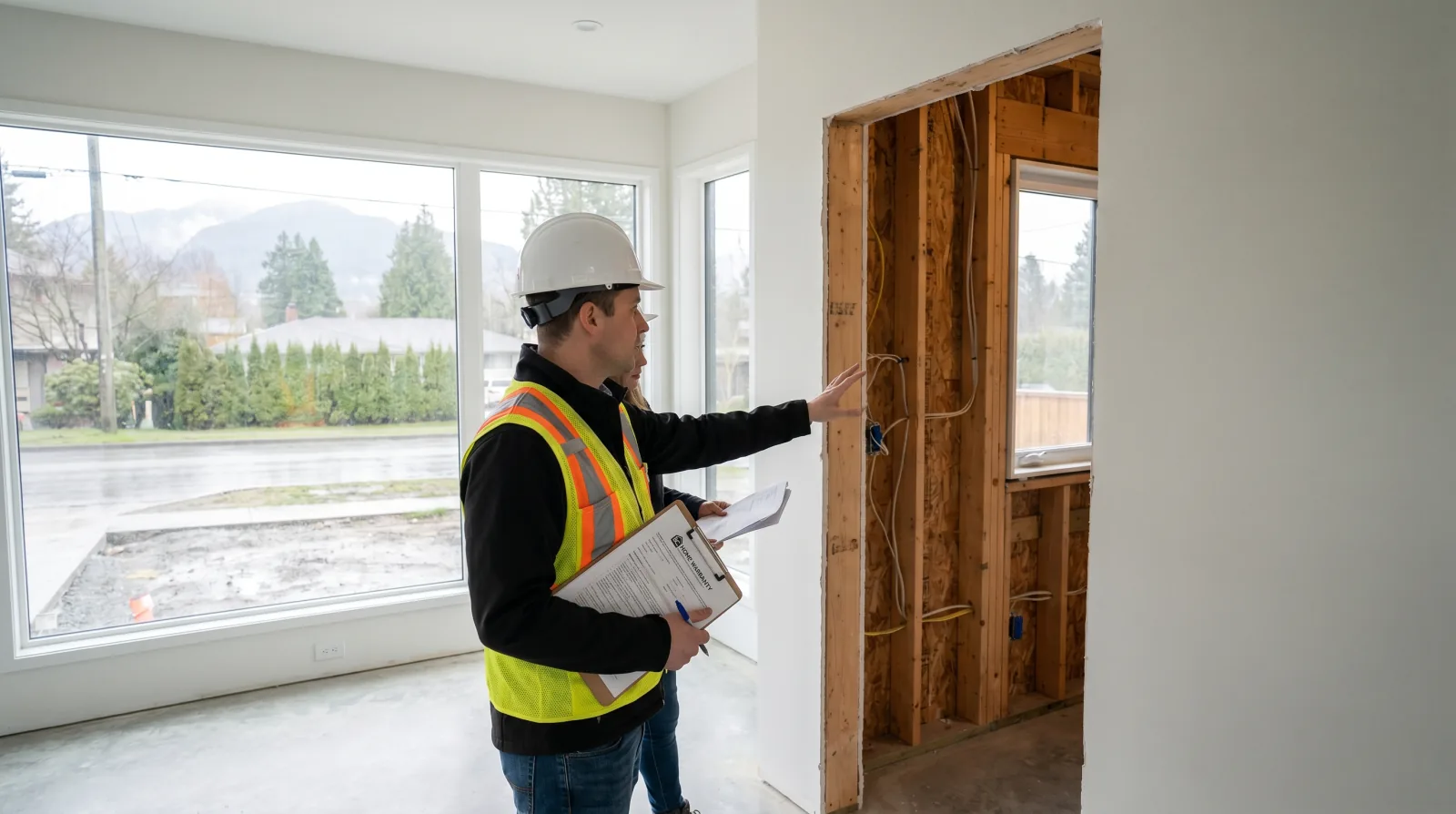
The BC 2-5-10 Home Warranty is mandatory for every new home built by a licensed builder in BC — but most buyers don't understand what it actually covers until something goes wrong. Here's the plain-language version, from a builder who carries it on every project.
Every new home built in British Columbia by a licensed residential builder must come with mandatory warranty coverage under the BC Homeowner Protection Act Regulation. This is the 2-5-10 warranty — so named for its three coverage periods. It is not optional, it is not negotiable, and any builder who can't immediately confirm their warranty provider is signalling something worth paying attention to.
Here's what it actually covers, what it doesn't, and how to work with it if you need to.
The three coverage periods
2 years: Materials and labour
The "2 years" coverage actually has two sub-tiers under section 4.01 of the Homeowner Protection Act Regulation. General defects in materials and labour — doors that don't hang right, trim that's pulling away, grout cracking at non-structural joints, tile that's lifting — are covered for the first 12 months. The full 24 months applies to defects in the electrical, plumbing, heating, ventilation, and air conditioning delivery and distribution systems; to defects in exterior cladding, caulking, windows, and doors that may lead to detachment or material damage; and to any defect that renders the home unfit to live in. Your warranty certificate spells out which items sit in which tier.
What doesn't fall under this layer: Normal wear, cosmetic damage from use, damage from owner modifications, and items excluded specifically in the warranty certificate. Read the exclusions.
5 years: Building envelope
The five-year envelope coverage is the provision that matters most in a coastal BC climate. Under the regulation, the building envelope is defined as "the assemblies, components and materials of a new home which are intended to separate and protect the interior space of the new home from the adverse effects of exterior climatic conditions" — exterior walls, the roof, windows, exterior doors, flashings, and the air and water barriers behind the cladding. The trigger for a claim is a defect that "permits unintended water penetration such that it causes, or is likely to cause, material damage."
Given the Lower Mainland's annual rainfall and the specific risks of rainscreen failures, window flashing defects, and roof membrane issues, this is the coverage period that protects against the most consequential and expensive building failures in this climate.
A practical note: Envelope failures often develop slowly. What presents as a stain on drywall in year three may trace back to a flashing detail that was wrong from day one. Document anything you notice promptly — waiting risks losing the coverage window and makes forensic investigation harder.
10 years: Structure
The ten-year structural coverage targets two specific scenarios under the regulation: a defect in materials and labour that results in the failure of a load-bearing part of the home, and a defect that causes structural damage that materially and adversely affects the use of the home for residential occupancy. In practice that means the foundation, the framing carrying the loads, and any assembly whose failure would compromise the building as a place to live.
Structural defects at this level are rare in competent construction — and when they occur, they tend to be obvious and severe rather than subtle. The ten-year window provides meaningful protection for the scenarios that matter most.
Coverage limits and start date
Two details that owners often miss until they need to file:
- Coverage limits. The 2-5-10 has dollar ceilings set by regulation: lesser of purchase price or $200,000 for a detached home; lesser of purchase price or $100,000 for a strata unit; lesser of $100,000 per unit or $2.5 million per building for common property. These are minimums every licensed provider must meet — some may offer more, so check your certificate.
- When the clock starts. Coverage begins at the first occupancy permit, or at first occupancy, whichever comes first. For most custom homes that's the day the City signs off the final occupancy inspection, not the day you move your furniture. Know the start date — it's what every coverage window counts from.
What the warranty doesn't cover
The warranty has specific exclusions that every owner should read at handover:
- Owner-initiated work: Modifications, alterations, or repairs done by the owner or by contractors hired by the owner after the home is occupied. If you modify a building system and a related defect emerges, the warranty may not apply.
- Cosmetic items post-year-two: Paint, finishes, minor cracks from normal settlement — these have a shorter coverage window or are excluded entirely depending on the warranty provider.
- Normal wear: No warranty covers items that wear through normal use over time.
- Non-residential components: A garage, workshop, or unconditioned space may have different coverage than the main dwelling.
- Consequential damages in some cases: What was damaged by a warranted defect versus the warranted defect itself can be a distinction in claims. Document everything.
The specific exclusions vary by warranty provider. At handover, Icon provides a clear summary of what's covered and what isn't — not because it's legally required but because owners who understand their coverage make better decisions about maintenance and early reporting.
Verifying your builder carries it
Under the BC Homeowner Protection Act, a licensed residential builder must carry 2-5-10 warranty coverage. There is no exception and no workaround. If a builder:
- Can't immediately name their warranty provider
- Claims their home doesn't require warranty (it does)
- Suggests you waive warranty coverage (you can't — it's statutory)
- Asks you to buy directly from a warranty provider yourself as the "owner-builder" on their project
…these are serious red flags. An owner-builder exemption exists under BC law but only for individuals who genuinely intend to use the home for personal use — explicitly not rental use — for at least one year from first occupancy, and only for detached, single-unit builds. It has been misused by unlicensed builders who structure projects to exploit the exemption. You lose mandatory warranty protection if you go this route.
You can verify a builder's licence on the BC Housing Licensed Residential Builder registry and confirm their warranty provider on the home warranty insurance providers list. Both registries are public. Do this before signing anything — a builder whose licence isn't current cannot legally build a new home for you in BC.
How to make a warranty claim
Step 1: Document in writing. When you identify a defect, document it in writing — photographs, written description of what you observed and when — and submit it to the warranty provider, not to the builder. The warranty provider manages the claim process.
Step 2: Submit before the coverage window closes. Don't wait. If you notice something in year four that appears to be an envelope issue, submit it. The clock is running on the five-year coverage period whether or not you've filed anything.
Step 3: Give the builder a reasonable opportunity to respond. Most warranty processes include a step where the builder is notified of the claim and given an opportunity to inspect and correct. A builder acting in good faith will engage with this process promptly.
Step 4: Escalate if needed. If the builder disputes the claim or the correction isn't adequate, the warranty provider has a formal dispute resolution process. This is what the warranty infrastructure exists to support.
What the warranty doesn't replace
The 2-5-10 warranty is a protection mechanism, not a substitute for building quality. A home that was built properly shouldn't generate significant warranty claims in the first five years.
The relationship between how a home is built and how the warranty functions is direct: a builder who documents construction carefully — as-built drawings for drainage and waterproofing systems, site inspection records, proper commissioning of mechanical systems — creates a house that's less likely to generate claims and more defensible when something does arise.
At Icon, every project is handed over with documentation of the building systems that matter most for long-term performance. The 2-5-10 coverage is there as a backstop. The goal is never to need it.
If you have questions about warranty coverage on a project you're considering with us, ask directly — we'll give you a straight answer.
Frequently asked questions
- Is the 2-5-10 home warranty mandatory in BC?
- Yes. Under the BC Homeowner Protection Act, any new home built by a licensed residential builder must come with 2-5-10 warranty coverage. The only legal exception is the owner-builder exemption, which applies to owner-occupiers genuinely building their own home — and that exemption removes warranty protection entirely. There is no way for a licensed builder to opt out, waive, or substitute the coverage.
- What happens if my builder goes out of business during the warranty period?
- The warranty travels with the home, not the builder. Coverage is issued by a third-party warranty provider — the five currently licensed in BC are National Home Warranty (Aviva), WBI Home Warranty (Intact), Canadian Home Warranty Protection Program, Travelers Canada, and Pacific Home Warranty (Trisura). That provider remains responsible for honouring claims even if the builder closes, becomes insolvent, or changes ownership. You file the claim with the warranty provider, not the builder, which is one of the reasons the warranty exists in the first place.
- Does the 2-5-10 warranty transfer to the next owner if I sell the home?
- Yes. The warranty is attached to the home, not the original purchaser. If you sell the home within the coverage period, the remaining warranty automatically transfers to the new owner with no fee and no paperwork required from you. Make sure the warranty certificate is included in the closing documents — buyers and their inspectors should review it before completion.
- What counts as a building envelope defect under the five-year coverage?
- The envelope covers any assembly that separates conditioned interior space from the exterior — exterior walls, the roof, windows, exterior doors, flashings, and the air and water barriers behind cladding. A defect qualifies when it allows unintended water penetration, condensation accumulation, or moisture damage. Common five-year claims in the Lower Mainland include window flashing failures, rainscreen gaps, deck-to-wall transitions, and roof membrane defects at penetrations.
- Are appliances, fixtures, and finishes covered by 2-5-10?
- Generally no. Appliances are covered by their own manufacturer warranties, which the builder will pass through at handover. Plumbing fixtures, light fixtures, and finish materials carry manufacturer warranties of varying lengths. The 2-5-10 covers defects in installation and labour for the first two years, so if a fixture fails because it was installed incorrectly, that is a warranty matter. If it fails on its own, the manufacturer is the right contact.
- How do I file a 2-5-10 warranty claim?
- Document the defect in writing with photographs and a description of when you first noticed it, then submit the claim directly to the warranty provider listed on your certificate — not to the builder. The provider will notify the builder, give them an opportunity to inspect and respond, and oversee any required correction. If the builder disputes the claim or the repair is inadequate, the provider has a formal dispute resolution process. Always file before the relevant coverage window expires, even if you're still in conversation with the builder.
- What is the owner-builder exemption and should I use it?
- The owner-builder exemption lets an individual build their own home without holding a builder's licence — and without carrying 2-5-10 warranty. It requires the owner-builder to intend to use the home for personal use, expressly not rental use, for at least one year from first occupancy, and it only applies to detached single-unit builds. The Homeowner Protection Act also imposes waiting periods between successive owner-builder authorizations (18 months after the first, longer after subsequent ones). It is regularly misused by unlicensed contractors who structure projects under a client's name to avoid licensing and warranty obligations. If anyone suggests you take this route on a project you're not personally building yourself, walk away. You lose all statutory warranty protection and assume liability for any future defects.
- How can I verify a builder's licence and warranty history before signing?
- BC Housing maintains a public Licensed Residential Builder registry at newhomesregistry.bchousing.org. Search by builder or company name to confirm the licence is current, see which warranty provider they use, and review any past warranty claims or disciplinary actions. Do this before signing any preliminary agreement. A builder who cannot be found on the registry, or whose licence has lapsed, cannot legally build a new home for you in BC.
- What does the warranty not cover that owners often assume it does?
- Normal wear, cosmetic damage from use, owner-initiated modifications, and consequential damage from owner neglect (for example, an envelope claim can be denied if gutters were never cleaned and water overflowed behind the cladding). Detached garages, workshops, and unconditioned outbuildings may have different or reduced coverage. Landscaping, driveways, and site work outside the building footprint are typically excluded. Read the specific exclusions on your warranty certificate at handover — they vary by provider.
Related reading: Custom home process guide · Finishing & handover chapter · 12 questions to ask before signing a builder contract