
A draw mortgage releases funds in stages tied to construction milestones, not on closing day. Here's how the process unfolds on a real custom home build, and what to ask your lender and builder before you sign anything.
Most homeowners in BC who build a custom home have one financing conversation: how much can we spend? The second conversation, how and when those funds actually reach the build, rarely happens until someone's already committed to a builder and a design.
That timing creates real risk. Construction financing in BC works differently from a standard home purchase mortgage, and the differences matter long before a shovel touches the ground. Understanding how draw mortgages work before you sign with a builder means you'll know what questions to ask the lender, what to look for in the builder, and how the two connect.
This isn't a pricing guide. Every project is different, every lot has its own complexity, and the real numbers belong in a conversation with your lender and your builder, not in a blog post. What we can give you is the process literacy to walk into those conversations ready.
What a draw mortgage is
A standard mortgage for an existing home is simple in one way: the full loan amount releases on closing day. The seller gets paid, the title transfers, you own the house.
A construction draw mortgage, also called a construction loan or builder's mortgage in BC, doesn't work like that. The funds stay with the lender and are released in stages as the build progresses. Each stage release is called a draw. Before the lender releases each draw, they verify that the corresponding milestone has been completed. Often that means sending an inspector to the site.
The practical effect: the builder never has a large sum sitting idle on your behalf. They receive payment when work is done. This protects you as the owner, aligns incentives on both sides, and gives the lender ongoing visibility into the project's progress.
During construction, you typically pay interest only on the portion of funds already drawn, not on the total approved amount. Once the build is complete and all draws have been released, the construction loan usually converts to a standard mortgage under whatever terms you arranged at the start.
How draw milestones work
Lender products vary, and the exact number of draws and the milestones that trigger them depend on the specific lender and the loan structure. But the general sequence of milestones follows the natural arc of a residential construction project.
Foundation and slab. The first draw typically releases after the foundation is excavated, formed, and poured, and the slab is in place. This is often the largest single draw, because this phase represents the bulk of the early structural cost.
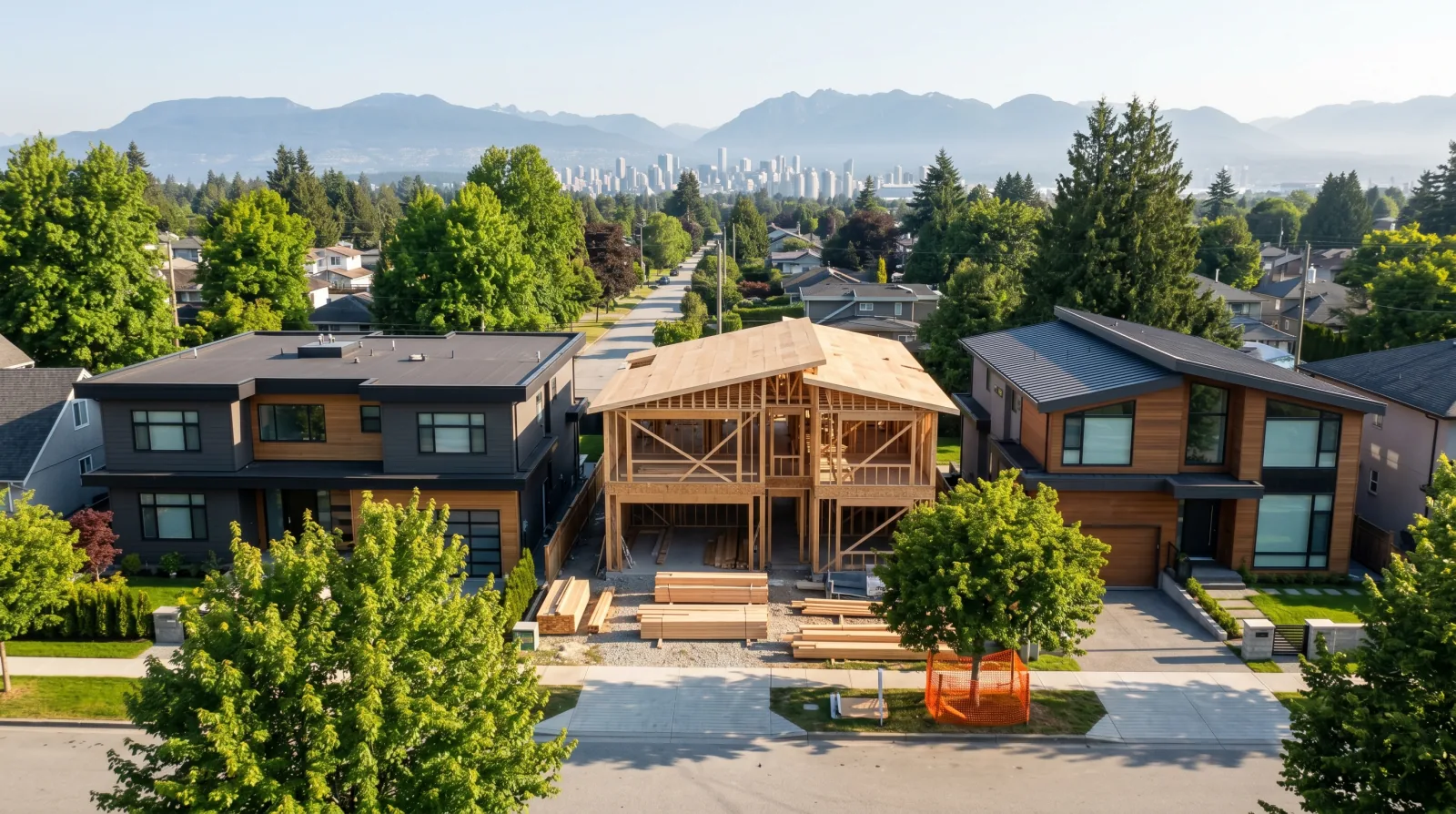
Framing and lock-up. Once the structure is framed, sheathed, roofed, and the exterior is closed against weather, windows in, doors in, building enclosed, the lender can see that the investment is physically protected. This milestone is often called lock-up for that reason.
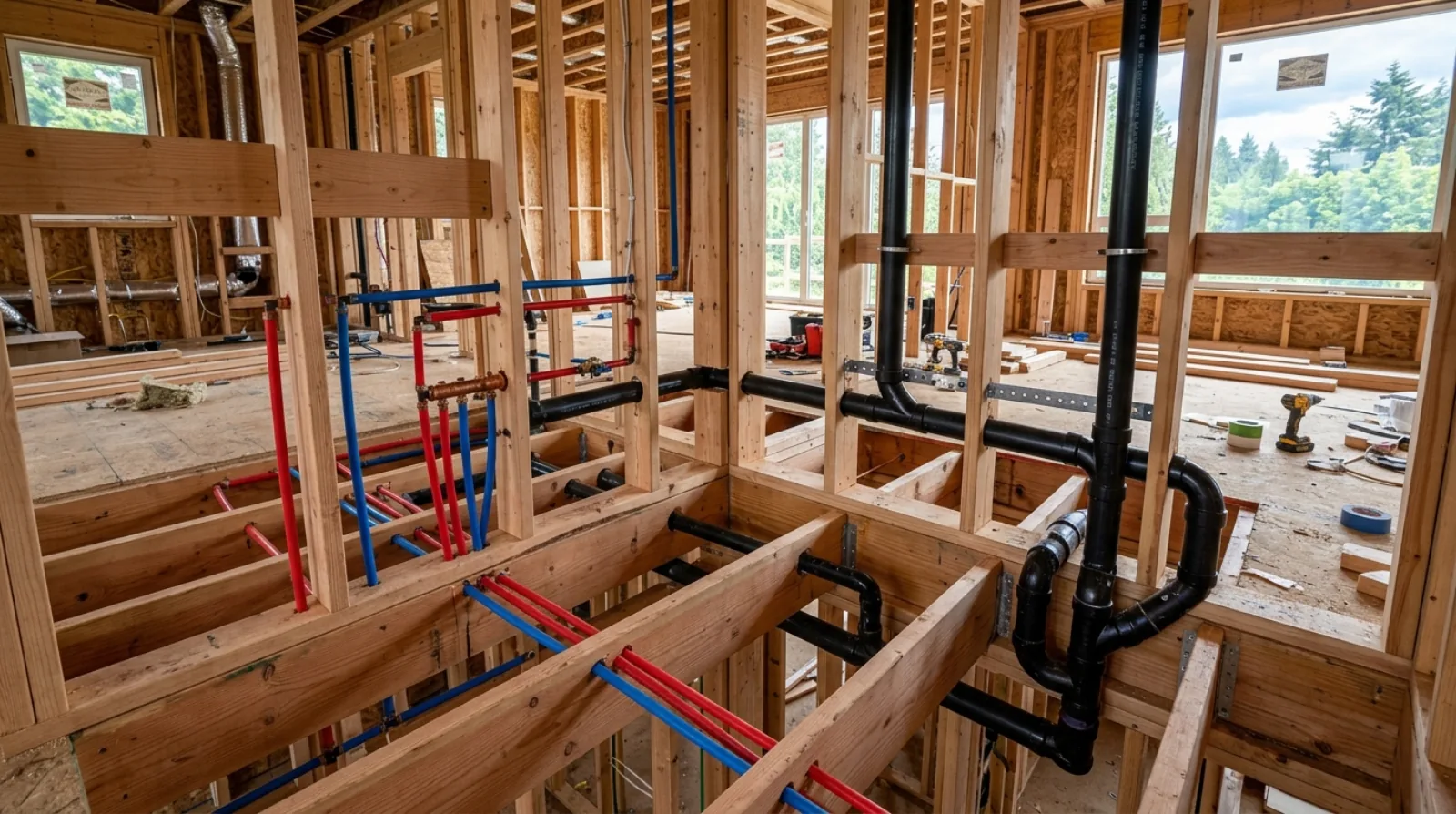
Mechanical and drywall. Rough-in for plumbing, electrical, HVAC, and ventilation happens inside the framed structure. Once that work is roughed in, inspected by the municipality, and the drywall is hung, the project has reached a stage the lender can meaningfully evaluate.
Substantial completion. The final draw releases when the house reaches substantial completion, the point at which it's safe to occupy, the municipal final inspection has passed, and the occupancy permit is in hand. "Substantial" leaves room for minor holdbacks while punch-list items get resolved.
Before each draw, the lender usually sends a qualified inspector, sometimes called a progress inspector or appraiser, to assess what has actually been completed versus what the draw claim says. They compare the stage of the build to the original cost breakdown, confirm the work is done to a standard consistent with the value claimed, and report back to the lender. The draw releases when the inspection is satisfactory.
What this means in practice: the builder has to have the work genuinely complete before the inspection, and the site has to be in a state the inspector can evaluate clearly. An experienced builder plans for inspection windows in the construction schedule. A builder who isn't familiar with draw mortgage timelines can find themselves holding completed work while a draw waits.
What the lender needs from your builder
Here is the part of construction financing that most homeowners don't know about until the lender asks for it: the lender doesn't just evaluate you. They evaluate your builder.
Before approving a construction draw mortgage, most lenders will want to see several things about the builder you've chosen.
An active BC Housing residential builder licence. In BC, any person or company building a new home for a homeowner must be licensed under the Homeowner Protection Act and enrolled in the 2-5-10 new home warranty program. The licence is registered with BC Housing and searchable in their public Licensed Builder Registry. Lenders confirm this because a builder without a licence can't legally deliver the project.
A well-structured contract. Construction lenders typically want a fixed-price or transparent cost-plus contract with clear scope, a milestone schedule, and a change order process. A vague or incomplete contract is a risk signal. Lenders know that fuzzy contracts are where cost overruns and disputes originate, and they need to be confident the project has enough financial structure to complete.
Builder's liability insurance and WCB coverage. Standard requirements. An uninsured builder creates liability that can attach to the property.
A realistic project timeline. Most construction loan products are structured around an expected completion date. If the build runs well past the loan's expiry, the borrower may face extension fees or forced conversion. Lenders want to see a timeline that is credible relative to the scope.
Evidence of builder track record. Some lenders ask for references, completed project lists, or other documentation that the builder has successfully delivered comparable projects. A builder who is experienced in working with construction lenders will often have a prepared package ready for this purpose.
As a homeowner, this list is a useful proxy for your own builder due diligence. If a lender would flag gaps in any of these areas, you should too.
Questions to ask a lender before you commit
Not all construction loan products are the same. Before you choose a financing structure, get clear answers on the following.
How many draws does your product allow, and what triggers each one? Some products offer three draws; others offer four or five. More draws can mean the builder needs less cash flow between payments, but it also means more inspection events. Understand the milestone definitions in advance so you can communicate them to your builder.
What does the inspection process look like, and how long does a draw take to release after inspection? Timeline matters here. A draw that takes two weeks to release after a satisfactory inspection is a two-week gap in the builder's cash flow. Know this before the build starts.
What happens if the build goes over the loan's term? Construction loans have expiry dates. If the build is delayed, by permit timing, weather, supply issues, or a slow trade, what are your options? Extension fees? Forced conversion? Renegotiation? Get this in writing.
Is there a holdback on the final draw, and if so, how is it released? BC has statutory holdback rules under the Builders Lien Act that affect how final payments are handled. Your lender's product should address this. A builder who is experienced with construction financing will already know how the holdback interacts with their own workflow.
When does the loan convert to a standard mortgage, and what rate lock applies? If rates shift between approval and conversion, you want to understand your exposure. Some products let you lock a rate at the outset; others convert at whatever rate applies at completion.
Questions to ask your builder about financing
The builder you choose will be a participant in your draw mortgage process whether they think of it that way or not. Their documentation, scheduling, and experience with construction lenders directly affects how smoothly the draws flow.
Do you work regularly with construction lenders, and do you provide a lender package? A builder who has navigated draw mortgages often will have a standard package ready, licence documents, insurance certificates, project schedule, cost breakdown in a format lenders recognize. A builder who hasn't will be assembling this from scratch, on your timeline.
Are milestone dates built into the contract? The milestones in your construction contract should align with the draw milestones in your loan. If they don't, the mismatch can create friction. Ask your builder to review the loan's milestone definitions before the contract is finalized.
How do you handle draw inspection windows in the schedule? The builder has to sequence work so that inspection milestones are clean and clear when the inspector arrives. Ask how they plan for this, whether inspection dates are included in the project schedule and how they communicate them to you.
How do you manage cash flow between draws? This is worth understanding because the answer tells you about the builder's financial health. A builder who is financially stable has the capacity to complete work between draws before receiving payment. A builder who is cash-flow dependent on each draw before starting the next phase is a different proposition.
Frequently asked questions
- What is a construction draw mortgage in BC?
- A construction draw mortgage is a loan product where the approved funds stay with the lender and release in stages, called draws, as the build reaches verified milestones. Unlike a standard mortgage, which releases the full amount on closing day, a draw mortgage pays out only after the lender's inspector confirms each construction stage is complete. It typically converts to a regular mortgage once the build is done and the occupancy permit is issued.
- When should a homeowner arrange construction financing?
- Before committing to a builder, not after. The lender's approval process asks questions about the chosen builder, their licence, their contract structure, and their timeline, the same due diligence a homeowner should already be doing. Talking to a lender early also clarifies the total project scope, which gives the builder accurate parameters for their estimate from the start.
- What milestones typically trigger a draw release on a BC construction mortgage?
- The general sequence follows the natural arc of construction: foundation and slab completion, framing and lock-up once the structure is enclosed against weather, mechanical and drywall once rough-in is inspected and drywall is hung, and substantial completion when the home passes final municipal inspection and the occupancy permit is issued. The exact number of draws and their triggers vary by lender and loan product.
- What does a construction lender check before releasing each draw?
- Before each draw, the lender typically sends a qualified inspector, sometimes called a progress inspector or appraiser, to assess what has actually been completed against the draw claim. The inspector compares the build's stage to the original cost breakdown and confirms the work meets the value claimed. The draw only releases once that inspection is satisfactory.
- What does a construction lender need to see about the builder?
- Most lenders want an active BC Housing residential builder licence, a well-structured fixed-price or cost-plus contract with a clear milestone schedule, builder's liability insurance and WCB coverage, a realistic project timeline, and evidence of the builder's track record on comparable projects. An experienced builder usually has this documentation prepared as a standard package.
- How many draws does a typical BC construction mortgage include?
- The number varies by lender and product. Three draws is common on simpler loan structures, while four or five draws are available on some products, tied to more granular construction milestones. More draws can ease the builder's cash flow between payments, but each draw requires its own inspection and takes time to process, so the structure is worth discussing with the lender before the contract is signed.
- Does interest accrue on the full construction loan amount right away?
- No. During construction, a borrower typically pays interest only on the portion of funds already drawn, not on the total approved loan amount. Once construction finishes and all draws have released, the construction loan usually converts to a standard mortgage under the terms arranged at the outset.
- What happens if a builder isn't experienced with construction draw mortgages?
- Delays tend to land on the homeowner. A builder who has navigated draw mortgages before typically has a lender package ready, understands the milestone definitions the lender uses, and knows what the inspector looks for at each stage. A builder without that experience may be assembling documentation from scratch on the homeowner's timeline, which can stall a draw and, in turn, stall the build.