An uncovered pool needs at least 3 metres from every property line in Burnaby, and the enclosure bylaw applies before anyone can swim a lap. Here's how a pool or spa actually fits into a custom home's site plan.
A pool sounds like a backyard decision until the setback rule and the enclosure bylaw show up on the same site plan as the house. At that point it's part of the same permit conversation as everything else on the lot.
The setback rule that sets the pool's actual footprint
An uncovered swimming pool in Burnaby cannot sit within the required front yard, and it must be at least 3.0 metres, about 9.84 feet, from any property line. A covered or roofed pool follows the same setback provisions as an uncovered one, plus the rules that apply to accessory buildings. That 3-metre number applies on every side of the lot, and it's measured before the enclosure fencing or the deck around the pool is added into the picture.
On a standard Burnaby lot, this setback combined with the space the enclosure and deck need can leave a smaller usable pool zone than an early sketch assumes. We run the setback math against the lot's actual dimensions before a pool location gets treated as settled, because moving a pool after other site elements, a driveway, a main entry sequence, a retaining wall, are already fixed is far more disruptive than sorting the location out at the design stage. On a sloped lot, the pool deck itself often needs a retaining wall of its own to create a level pad, which brings the same permit and engineering questions into the pool's design.
The enclosure bylaw is part of the permit
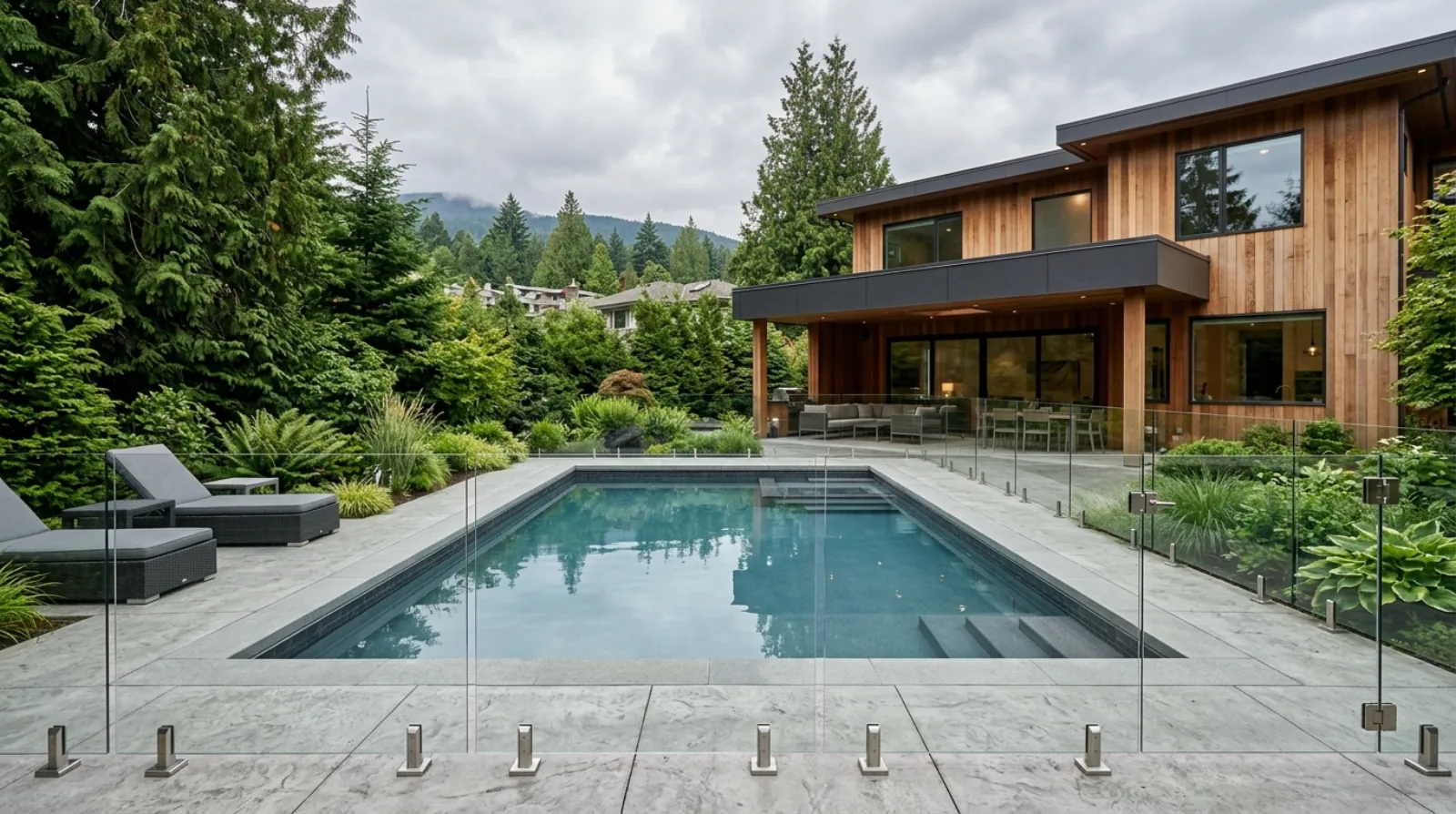
Burnaby has a Swimming Pool Enclosure Bylaw requiring private pools to be enclosed for safety. It is a permit requirement, so the enclosure, including the fencing and every gate, has to appear on the building permit site plan alongside the pool itself. A self-closing, self-latching gate is a standard expectation for this kind of enclosure, since the whole point is preventing unsupervised access, particularly for young children.
We plan the enclosure as part of the pool's design from the start, not as a fence added on afterward once the pool is already built and inspected. On a lot where the pool sits near a retaining wall or a sloped section of yard, the enclosure and the wall's own fence-height rules need to be coordinated together (see our companion piece on fence height and privacy design for how that combination gets measured). A pool near mature trees also needs to be checked against the Burnaby tree bylaw before excavation, since protected root zones can constrain where the pool and its equipment pad can sit.
What the permit package actually needs
Beyond the building permit itself, a pool typically needs environmental, electrical, gas, and plumbing permits, since it involves structural excavation, filtration and heating equipment, and utility connections. The City of Burnaby's Swimming Pools Informational Guide specifies that the application needs a site plan showing:
- The principal building and any existing accessory buildings
- The pool's size and location
- Fencing and gates around the pool
- Filter and heater equipment location
- Electrical service to the pool or related buildings
- True north orientation
These details let the City's reviewers confirm the pool, its surrounding paving, the equipment, and the enclosure all sit legally within the lot's setbacks before construction starts. Missing one of these elements on the initial submission is a common reason a pool permit gets sent back for revision, so we build the full site plan out completely before the first submission rather than iterating with the City after the fact.
Swim spas and hot tubs follow similar rules
A swim spa or hot tub is generally covered under the same category of regulation as a full inground pool for enclosure and safety purposes, since British Columbia's Pool Regulation applies broadly to outdoor pools and hot tubs across the province. The specific enclosure requirement can depend on the exact installation, a built-in swim spa reads differently than a portable hot tub on a deck, so we confirm the applicable requirement for the specific equipment before finalizing the design.
Winter maintenance is a real BC-specific consideration too. In this climate, a hot tub or swim spa should be insulated and covered against freezing, with the water drained and refilled every 3 to 4 months for water quality. A full inground pool has its own winterizing process, which your pool contractor sets up around the specific equipment installed.
Site the pool with the house, not after it
The cleanest results come from siting a pool during the same design pass as the main house, when setbacks, the enclosure fence, the driveway, and any grade-change structures like retaining walls can all be worked out against each other at once. Adding a pool as an afterthought once construction is underway usually means solving the same setback and enclosure questions under more pressure and with fewer options.
Confirm current setback distances, enclosure requirements, and permit specifics directly with the City of Burnaby for your lot, since bylaw provisions are updated periodically and site-specific conditions can affect what applies. A pool is one part of the wider outdoor living and landscape design we plan alongside every custom home.
Frequently asked questions
- How far does a pool need to be from the property line in Burnaby?
- An uncovered swimming pool cannot be built within the required front yard, and it must sit at least 3.0 metres (9.84 feet) from any property line in Burnaby. A covered or roofed pool follows the same setback provisions as an uncovered one, plus the regulations that apply to accessory buildings. Confirm the current setback with the City of Burnaby before finalizing a pool location.
- Does a swimming pool need a fence around it in Burnaby?
- Yes. Burnaby has a Swimming Pool Enclosure Bylaw requiring private swimming pools to be enclosed for the safety and protection of anyone on the property. The enclosure, including fencing and gates, has to be shown on the building permit site plan alongside the pool itself, at application stage rather than after the pool is built and inspected.
- What permits does a pool need in Burnaby, beyond a building permit?
- A pool typically requires a building permit plus environmental, electrical, gas, and plumbing permits, since a pool involves structural work, filtration equipment, and often heating. The permit application needs a site plan showing the principal building, any existing accessory buildings, the pool's size and location, fencing and gates, filter and heater equipment, and electrical service, oriented to true north.
- What does a pool permit site plan need to show?
- The site plan needs to show the location of the main house and any accessory buildings, the size and location of the pool, the fencing and gates around it, the filter and heater equipment location, electrical service to the pool equipment, and the north direction. These details let the City confirm the pool, paving, equipment, and enclosure all fit safely and legally within the lot's setbacks.
- Is a swim spa or hot tub regulated the same way as a full pool in BC?
- Swim spas and hot tubs are generally treated under the same category of provincial pool regulation as a full pool, since British Columbia's Pool Regulation (B.C. Reg. 296/2010) applies broadly to outdoor pools and hot tubs. Enclosure and safety barrier requirements can still apply depending on the specific installation. Confirm requirements for your exact equipment and setup with the City of Burnaby before installing.
- Can a pool be added to a custom home's design after the main permit is issued?
- It can, but planning the pool at the same time as the house's site plan avoids conflicts between the pool's required setback, the enclosure fencing, and features like the driveway, main entry, or a retaining wall that may already be planned for grade change. We prefer to site the pool during the same design pass as the house rather than treating it as an afterthought added once construction is underway.
- What maintenance does a pool or hot tub need through a BC winter?
- In colder parts of British Columbia, a hot tub or swim spa should be insulated and covered to protect it from freezing, and the water should be drained and refilled every 3 to 4 months to maintain water quality. A full inground pool typically needs winterizing procedures specific to its equipment, which your pool contractor can outline for the exact system installed.
- Why would a pool need to move during the design process?
- The required property-line setback combined with the enclosure fencing footprint often leaves a smaller usable area than an initial sketch assumes, especially on a standard Burnaby lot. Equipment pads also need a location that satisfies noise, access, and sightline considerations for neighbouring properties. Working through the setback and enclosure requirements early, before the pool location is treated as fixed, avoids relocating it later in the process.