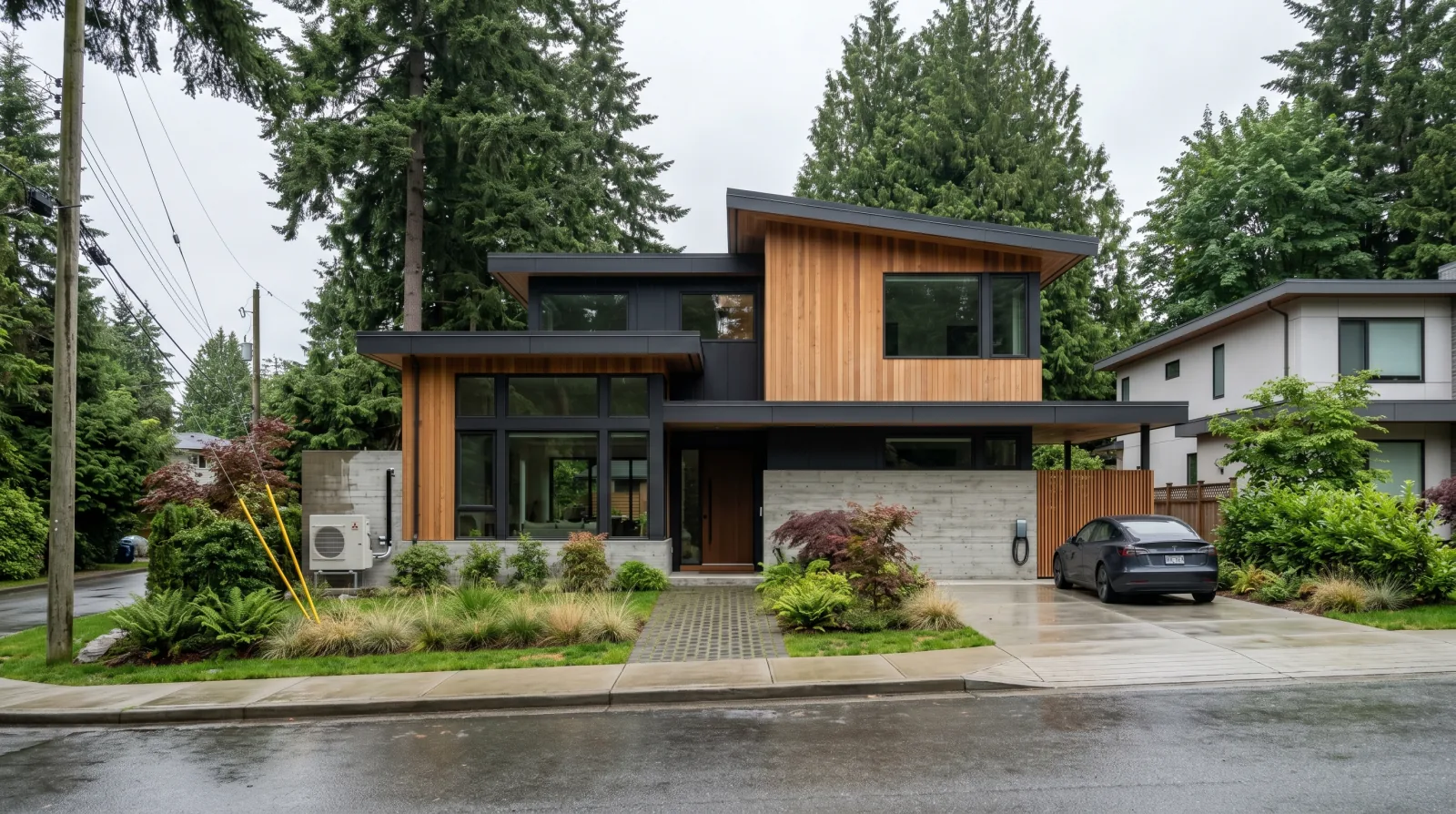
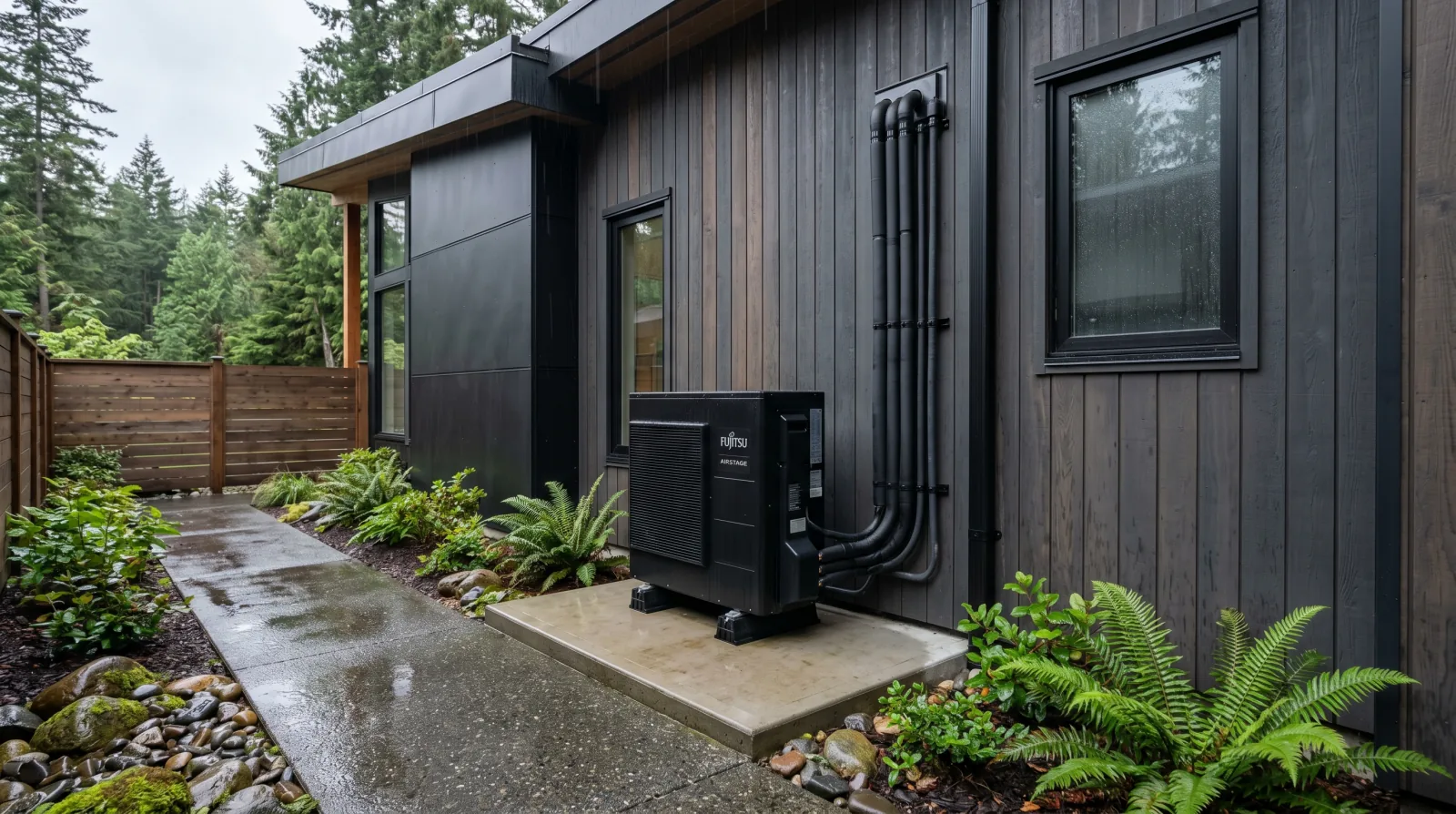
Burnaby requires EL-4, the strongest tier of the Zero Carbon Step Code, on every new home. Here's what that decides about your heating, hot water, and cooking equipment, and what it leaves open.
If you're permitting a new custom home in Burnaby right now, two codes apply to it, not one. The BC Energy Step Code measures how much energy the house uses. The Zero Carbon Step Code measures what its heating and hot water equipment emits. And Burnaby has adopted the strongest tier of the second one: every new Part 9 home permitted since January 1, 2025 must hit Emission Level 4, "Zero Carbon Performance."
Most owners have heard of the Energy Step Code by the time they talk to a builder. Almost none have heard of the Zero Carbon Step Code, even though it's the one that decides whether there's a gas line running to the furnace room. This post covers what it requires, how the EL-1 to EL-4 ladder works, the two ways to comply, and what it means for the equipment going into your house.
Two codes stacked on one permit
The two step codes answer different questions about the same house.
The Energy Step Code is about consumption. It sets performance targets for the envelope and the mechanical systems, verified by energy modelling and a blower-door test. We wrote a full primer on it in our homeowner's guide to the BC Energy Step Code, and a Burnaby-specific piece on where Step 3 stands today and where Step 5 fits by 2032.
The Zero Carbon Step Code is about emissions. A house can be efficient and still burn gas for heat; efficiency and carbon are separate measurements. The province added the Zero Carbon Step Code to the 2024 BC Building Code as its own ladder, alongside the energy steps, so the carbon side of a new home is regulated directly rather than implied by efficiency targets.
So a Burnaby building permit today carries a combined requirement: Step 3 of the Energy Step Code plus EL-4 of the Zero Carbon Step Code. One number for energy, one for carbon. Your energy advisor documents both in the same compliance package.
The four emission levels, EL-1 to EL-4
The Zero Carbon Step Code has four tiers:
- EL-1, Measure-only. The home's operational carbon emissions from space heating and hot water are calculated and reported. Nothing has to change in the design; the province just wants the number on record.
- EL-2, Moderate Carbon Performance. A first real reduction tier. Typically met by decarbonizing one major system.
- EL-3, Strong Carbon Performance. Most of the big combustion equipment is gone. This was Burnaby's requirement during 2024.
- EL-4, Zero Carbon Performance. The top of the ladder. Space heating, hot water, and (on the prescriptive path) cooking all run on zero-emission energy.
Since March 10, 2025, the province requires at least EL-1 on most new buildings everywhere in BC. That's the floor: measure and disclose. Municipalities choose how far above the floor to go, the same way they do with the energy steps. Burnaby went straight to the top.
This matters if you're comparing lots in different cities. A new build in Burnaby must hit EL-4. The same design across the boundary in Coquitlam, New Westminster, or out in Abbotsford might face EL-1, EL-3, or EL-4 depending on what that council has adopted, and adopted levels keep moving. We confirm the current requirement with the local building department before schematic design starts, every time. It's a ten-minute check that prevents a redesign.
What Burnaby requires right now
To put the full Burnaby picture in one place: for building permits submitted on or after January 1, 2025, a new Part 9 home, which covers nearly every custom home, duplex, and rowhome, must meet Step 3 of the Energy Step Code and EL-4 of the Zero Carbon Step Code. Permits submitted during 2024 were held to Step 3 plus EL-3, so EL-4 is the newer half of the requirement, and it's the half that changed the equipment conversation.
The Energy Step Code shapes your walls. The Zero Carbon Step Code shapes your mechanical room. By the time you see either one on a drawing, the decisions are mostly made.
Icon Projects Team
What does EL-4 mean in plain terms? The energy serving the home's biggest loads has to be zero-emission at the point of use. In the Lower Mainland that means electricity, and BC's grid makes that a practical answer rather than a theoretical one. A gas furnace can't get there. A gas tank water heater can't get there. Heat pumps, for both jobs, can.
Prescriptive or performance: two ways to show compliance
Like most of the BC Building Code, the Zero Carbon Step Code gives Part 9 builders two compliance paths.
The prescriptive path is an equipment checklist. At each level, specific combustion equipment has to go zero-emission, and the list grows as the levels climb. At EL-4 the list includes space heating, water heating, and cooking equipment. Follow the checklist, document the installed equipment, done. It's simple, and for most straightforward custom homes it's the path we use.
The performance path instead sets a greenhouse-gas target for the whole house. Your energy advisor models the design, and as long as the modelled emissions land under the cap, there's flexibility in how you get there.
Here's the nuance that surprises people. Under Burnaby's prescriptive path, a fossil-fuel cooktop is allowed at EL-3 but not at EL-4. Under the performance path, the City notes the modelling tool doesn't specifically disallow a gas cooktop or gas fireplace, so an owner who genuinely wants to cook on gas may still have a route, if the rest of the house carries the emissions math. We don't push owners either way on the range. We do tell them the decision has a code dimension now, and which compliance path we file under determines whether it's even on the table.
Worth saying plainly: induction has won most of our clients over once they've cooked on it. The ones who hold out for gas usually care about wok cooking or have decades of muscle memory, and those are legitimate reasons to look hard at the performance path.
What EL-4 puts in your mechanical room
For the homeowner, the Zero Carbon Step Code mostly shows up as three equipment decisions.
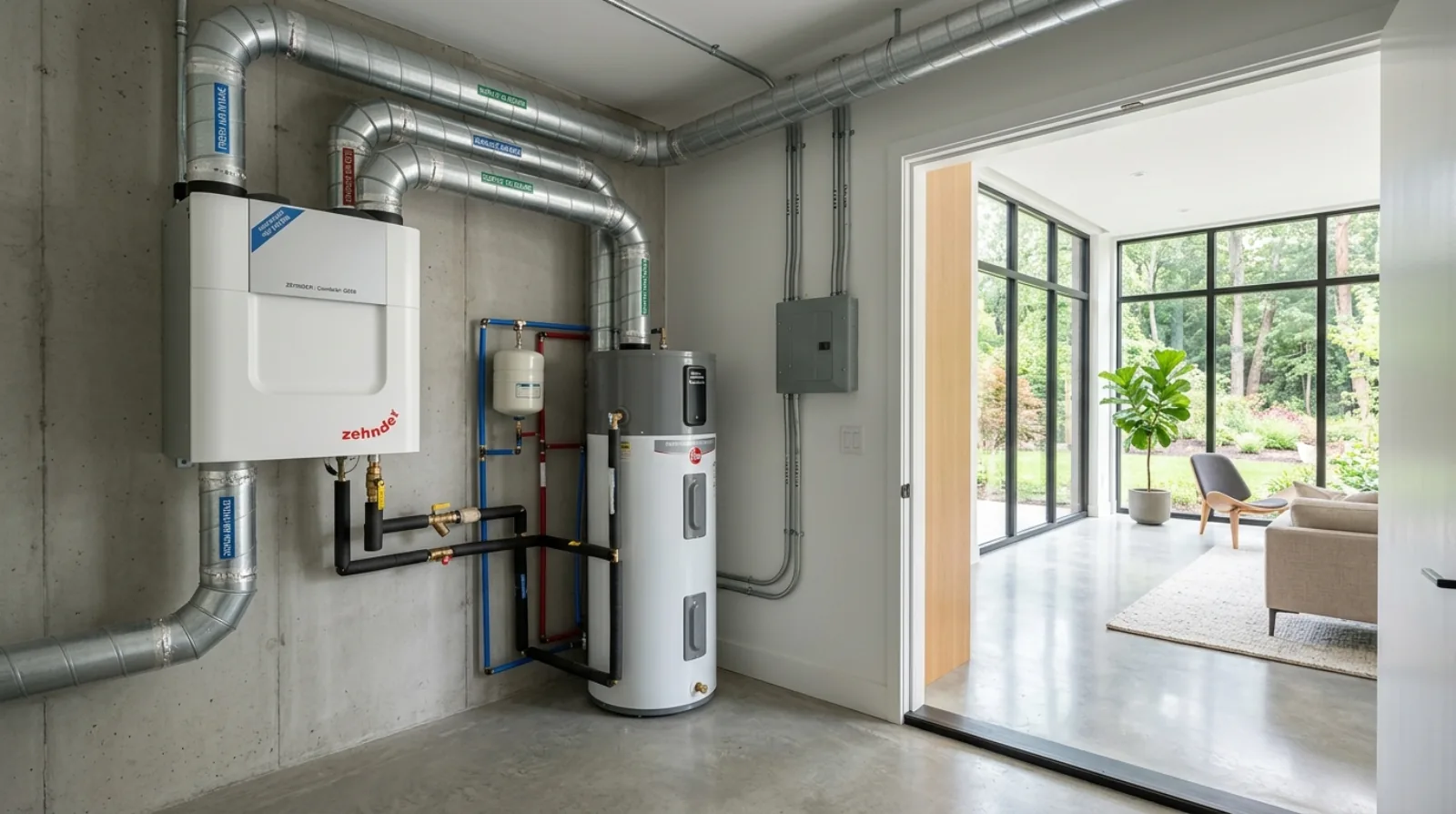
Space heating is the big one. A cold-climate air-source heat pump is the default answer in a Burnaby EL-4 build, and it's a good one, it also gives you cooling, which the 2024 BC Building Code's overheating provisions have made part of the design conversation anyway. We covered sizing, ducted versus ductless, and what to ask the mechanical designer in our heat pump and HRV guide.
Hot water comes second. A heat pump water heater replaces the gas tank. It wants a bit of room around it, it prefers a space where its cool exhaust air isn't a nuisance, and it needs a condensate drain, so the mechanical room gets laid out around it rather than squeezed in after.
Then there's cooking and fire: an induction range and an electric fireplace on the prescriptive path, with the possible performance-path exceptions described above.
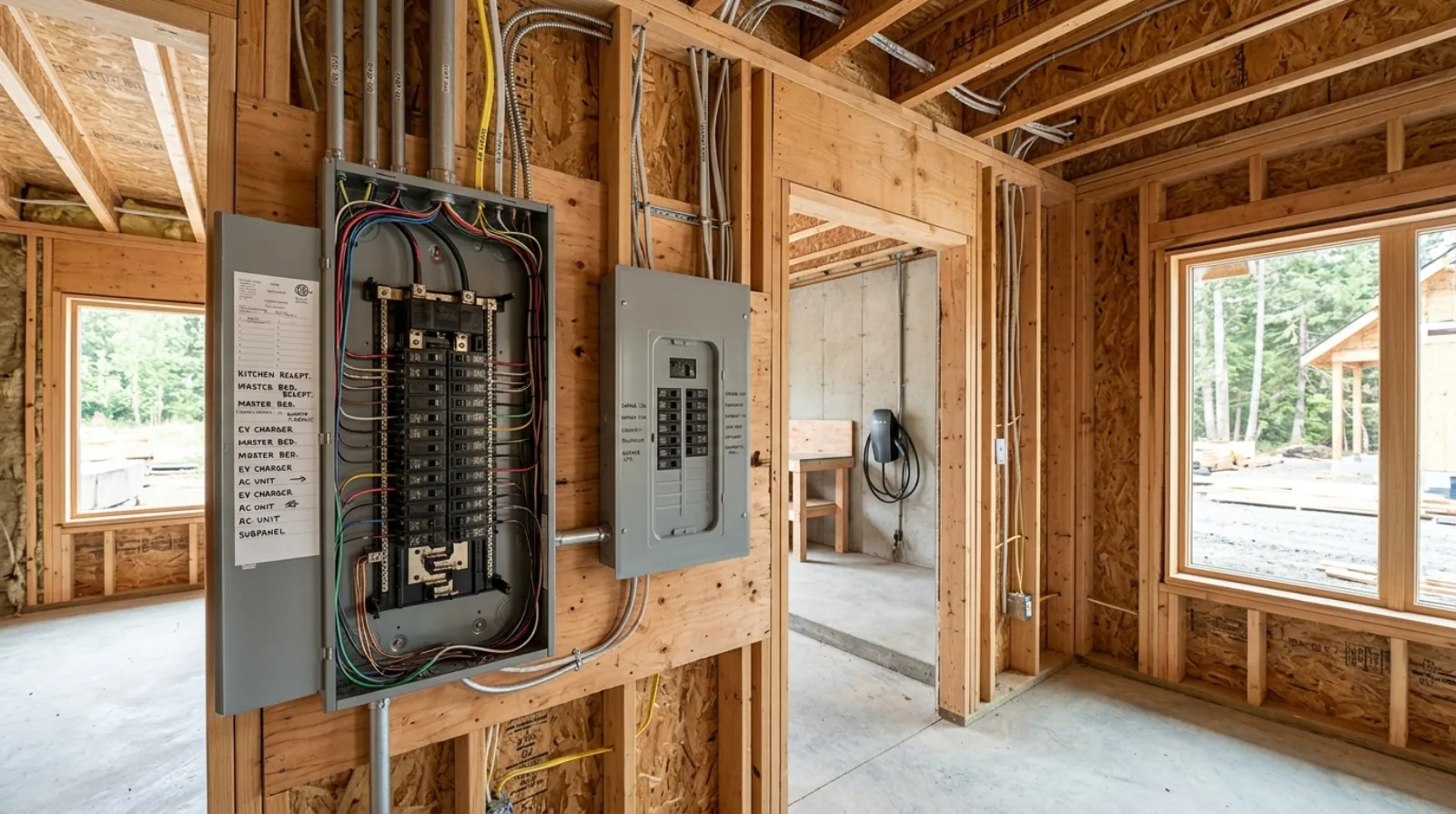
There's a fourth decision hiding under those three: the electrical service. All-electric heating, hot water, and cooking, plus the EV charger almost every client asks for now, add up at the panel. Service size, panel layout, and load management have to be designed early, not discovered at rough-in. We wrote about exactly this in our electrical planning guide for Burnaby custom homes, and it's the single most common thing we see under-scoped in drawings that come to us from elsewhere.
What the Zero Carbon Step Code does not regulate is your envelope. Insulation, windows, airtightness, that's the Energy Step Code's territory, Step 3 in Burnaby today with Step 5 as the provincial direction for 2032. The two codes meet in one happy place, though: the better the envelope performs, the smaller and cheaper-to-run the heat pump that satisfies EL-4.
The money question, answered the honest way
We don't publish cost figures, every lot, every design, and every year's trade pricing is different, and a number in a blog post would be a guess dressed up as a fact. But we can tell you where EL-4 moves the budget conversation, and where it doesn't.
Where it doesn't: a heat pump replacing a furnace plus air conditioner is one system doing two jobs. On a new build designed for it from day one, this is an equipment substitution, not a premium add-on the way a mid-build change would be.
Where it does: the electrical service and the mechanical room layout. Both are cheap to get right on paper and expensive to get right in drywall. That's the real cost story of the Zero Carbon Step Code, it punishes late decisions, not electric equipment. It's also why we fold code strategy into pre-construction planning rather than treating it as a permit-stage formality, and why our custom home process puts the energy advisor and the electrical load calculation in the room during schematic design.
What to ask before you start design
Three questions sort out quickly whether a builder is fluent in the carbon side of the code:
Which emission level applies to my lot, and when did it change? (For Burnaby: EL-4, since January 1, 2025.) Will my house file under the prescriptive or the performance path, and why? And what service size does the electrical load calculation say I need once the heat pumps, induction range, and EV charging are on it?
A builder who answers all three without reaching for the phone has done this recently. One who treats the Zero Carbon Step Code as a surprise will be treating your permit timeline as a surprise too.
If you're planning a custom home in Burnaby, or anywhere in Metro Vancouver or the Fraser Valley where the adopted level needs checking first, talk to us early. The carbon conversation belongs at the first design meeting, while every option is still cheap.
Related on the Journal
- The BC Energy Step Code, explained for homeowners
- Step Code in Burnaby: Step 3 + EL-4 today, Step 5 by 2032
- Heat pumps and HRV in a Burnaby custom home
- Electrical planning for a Burnaby custom home
Frequently asked questions
- What is the Zero Carbon Step Code, and how is it different from the Energy Step Code?
- The Energy Step Code measures how much energy a new home uses, verified through energy modelling and a blower-door test. The Zero Carbon Step Code measures what a home's heating and hot water equipment emits, in four tiers from EL-1 to EL-4. A house can be energy efficient and still burn gas for heat, which is why BC regulates emissions directly through this separate ladder rather than assuming efficiency implies low carbon.
- What Zero Carbon Step Code level does Burnaby require?
- Burnaby requires EL-4, Zero Carbon Performance, the strongest of the four tiers, on every new Part 9 home permitted since January 1, 2025. Permits submitted during 2024 were held to the lower EL-3 tier, so EL-4 is the newer half of the requirement and the part that changed the mechanical equipment conversation for Burnaby homeowners.
- Can a new Burnaby custom home still have a gas range under EL-4?
- It depends on the compliance path. Under Burnaby's prescriptive path, a fossil-fuel cooktop is allowed at EL-3 but not at EL-4. Under the performance path, where the whole house is modelled against an emissions cap, the City's modelling tool does not specifically disallow a gas cooktop or gas fireplace, so an owner who wants gas cooking may still have a route if the rest of the house's emissions math supports it.
- What equipment does EL-4 require in a Burnaby home's mechanical room?
- EL-4 effectively requires a cold-climate air-source heat pump for space heating, a heat pump water heater in place of a gas tank, and, on the prescriptive path, an induction range and electric fireplace instead of gas equivalents. All of these run on zero-emission electricity, which BC's grid makes a practical answer rather than a theoretical one.
- What is the difference between the prescriptive and performance compliance paths for the Zero Carbon Step Code?
- The prescriptive path is an equipment checklist: specific combustion equipment has to go zero-emission at each level, and following the list and documenting the installed equipment satisfies compliance. The performance path instead sets a greenhouse-gas emissions target for the whole house, modelled by an energy advisor, which gives more flexibility in how a design reaches the target.
- How does the Zero Carbon Step Code affect a home's electrical panel?
- All-electric heating, hot water, and cooking, combined with an EV charger that most clients now request, add up significant load at the electrical panel. Service size, panel layout, and load management need to be designed early in the process rather than discovered at rough-in, which Icon Projects addresses by involving the electrical load calculation during schematic design.
- Does the Zero Carbon Step Code regulate a home's insulation or windows?
- No. Insulation, windows, and airtightness fall under the Energy Step Code, which sets Step 3 as Burnaby's current requirement with Step 5 as the provincial direction for 2032. The two codes intersect in one place: a better-performing envelope allows a smaller, cheaper-to-run heat pump to satisfy the Zero Carbon Step Code's EL-4 requirement.
- Does the Zero Carbon Step Code apply the same way in every BC municipality?
- No. The provincial floor since March 10, 2025 is EL-1, measure and report only, but municipalities choose how far above that floor to go, the same way they do with the Energy Step Code. Burnaby went straight to EL-4, while a comparable lot in Coquitlam, New Westminster, or Abbotsford could face a different tier depending on what that municipality has adopted.