It doesn't meet current electrical code, and most BC insurers won't renew a policy on it indefinitely. Here's what actually needs to happen, and when a renovation is the right time to do it.
We opened a wall on a Burnaby Heights renovation and found knob-and-tube wiring the owner had no idea was still active, run behind drywall from a renovation decades earlier that never touched the electrical system underneath it.
That's not an unusual find on a pre-1960s Greater Vancouver house. It's close to the norm.
What knob-and-tube wiring actually is, and why it doesn't meet today's standards
Knob-and-tube was the standard residential wiring method through the early-to-mid twentieth century, running individual insulated conductors through ceramic knobs and tubes fastened to framing, rather than the sheathed, grounded cable used in modern construction. It was appropriate for its era, and a system that hasn't been damaged or improperly modified can continue functioning without immediate incident.
The problem is that it doesn't meet the Canadian Electrical Code as adopted in BC for new circuit work, and it lacks the grounding that modern wiring provides as standard. Risk increases meaningfully when the original wiring gets covered by modern insulation, since the system was designed to dissipate heat into open air around the conductors, and when connections have deteriorated over decades without inspection, both of which raise fire risk above what the wiring presented when it was first installed.
The insurance problem, which is often what actually forces the issue
Most owners don't discover knob-and-tube wiring because of a safety concern. They discover it because their insurer flags it. Many BC insurers won't write a new policy on a home with active knob-and-tube wiring at all, and insurers that do often require replacement within a defined window, commonly a period of twelve to twenty-four months, or they decline to renew coverage when that window closes. Specialty or high-risk insurers may still offer coverage at a cost, but standard renewal isn't something an owner should count on indefinitely.
That insurance pressure is frequently what actually triggers a rewire decision, more than the wiring's condition on its own. An owner renewing a policy, refinancing, or selling a pre-1960s property is likely to run into this at some point regardless of whether the wiring has ever caused a problem.
Full rewire versus partial, and how to decide
A full rewire replaces every active knob-and-tube circuit with modern cable, giving a completely grounded, fully code-compliant electrical system throughout the house. It's the most thorough option and the one that removes the issue entirely rather than managing it in stages.
A partial rewire targets the circuits that matter most, kitchens, bedrooms, and anything carrying high-draw appliances, and decommissions the remaining knob-and-tube circuits rather than actively using them. It addresses the highest-risk areas with a smaller scope than a full rewire, though it leaves some of the original system in place, which some insurers still treat as a flag even when it's inactive.
Which approach makes sense depends on the specific house, how much of the original wiring is still load-bearing for daily use, and what an owner's insurer specifically requires. We work through that assessment with a licensed electrician before recommending either path.
Why a renovation is the right moment to deal with it
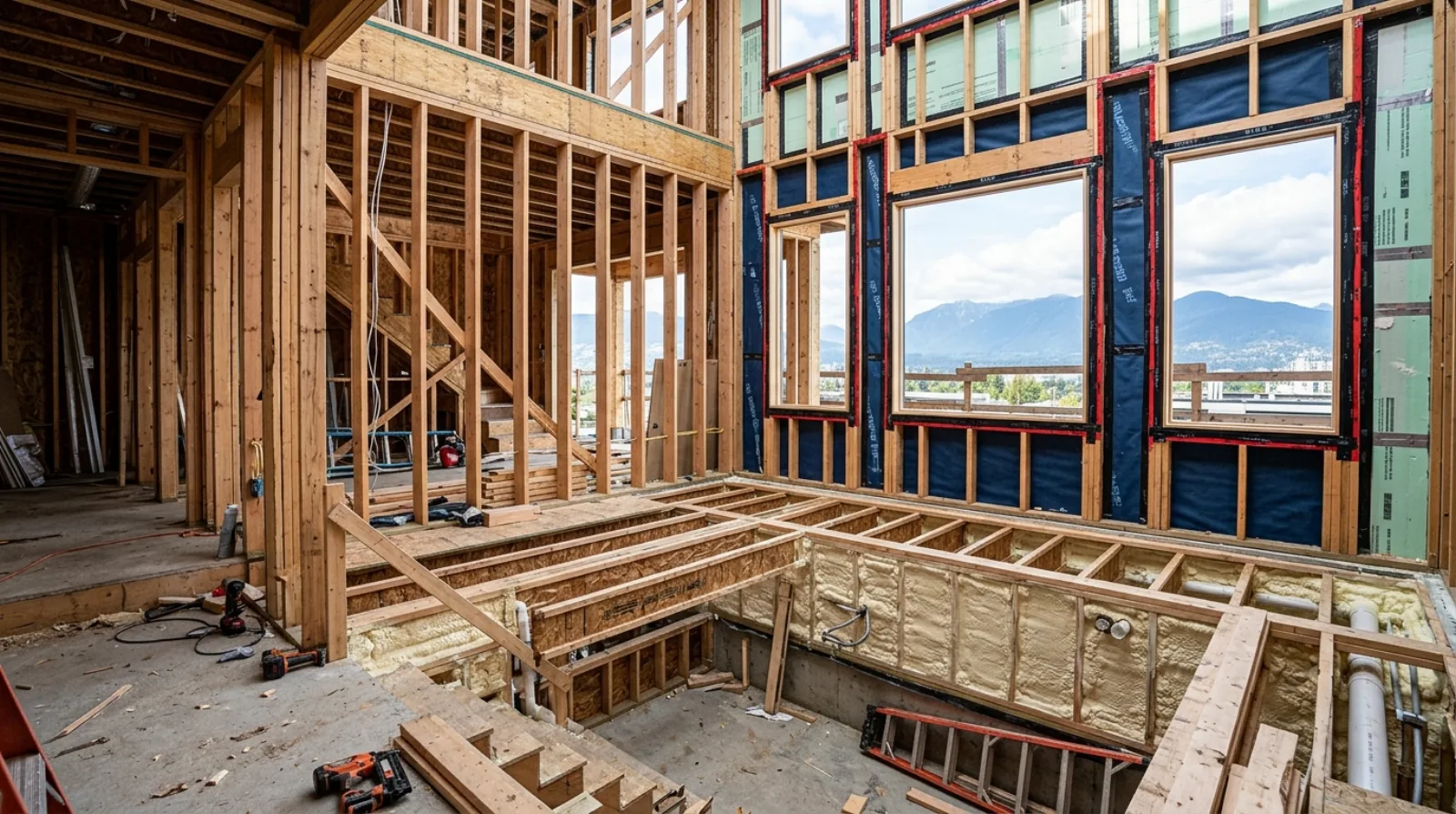
Walls and ceilings are already open during a renovation, which makes running new wiring far less invasive than treating it as a standalone project that requires opening finished surfaces specifically to reach old wiring. That's the practical case for tackling a rewire, full or partial, as part of a larger renovation scope rather than deferring it.
What has to happen correctly is the sequencing. The rewire scope needs to be planned with a licensed electrician before demolition starts, not discovered mid-project when a wall comes down and wiring nobody accounted for turns up behind it, which is exactly the situation on that Burnaby Heights job. All electrical work in BC has to be performed by a licensed electrical contractor and is subject to inspection by Technical Safety BC, the province's electrical safety regulator, so this isn't work to sequence loosely or leave until a project is already underway.
Signs the wiring might still be active without anyone confirming it
Some of the more common indicators worth checking for, before a wall ever comes down, include two-prong outlets throughout the house rather than modern three-prong grounded receptacles, a fuse box rather than a modern circuit breaker panel, visible ceramic knobs or tubes in an unfinished attic or basement running along exposed framing, and a general sense that the electrical system hasn't been meaningfully updated since a previous renovation decades earlier. None of these alone confirms active knob-and-tube wiring, and a house can have some updated circuits alongside original ones from a partial rewire done at some point in its history, but each is a reasonable signal to prompt an actual inspection rather than an assumption either way.
A licensed electrician can typically confirm what's actually present through a visual inspection of accessible areas, an attic, a basement, an electrical panel, without needing to open finished walls. Getting a full, precise picture of exactly which circuits in the house are affected usually does require opening at least some finished surfaces, which is part of why a renovation, when walls are already coming down for other reasons, is such a practical point to get that complete picture rather than working from an inspection that only covers what's visible without demolition.
What the rewire process actually involves, once a plan is set
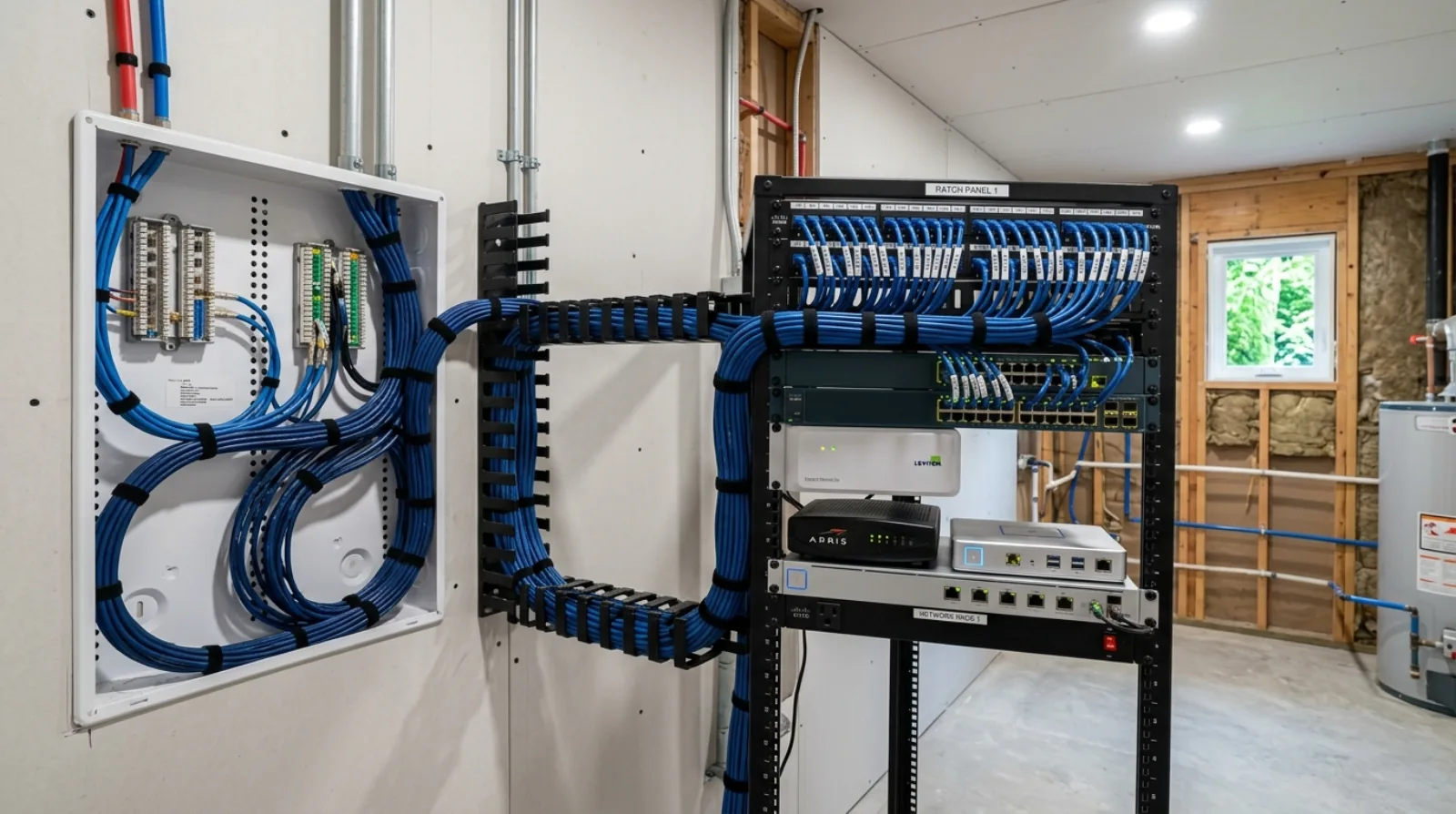
Once an electrician has assessed the scope, whether a full or partial rewire makes sense for that specific house, the physical work generally follows a consistent sequence. New circuits get run using modern sheathed cable, routed through the same framing cavities where possible to minimize disruption to finished surfaces that aren't already open for other renovation work. Each new circuit gets properly grounded and terminated at a modern panel, which itself sometimes needs upgrading or replacing if the existing panel is original or undersized for a modern electrical load.
Old knob-and-tube circuits being replaced get fully decommissioned, disconnected at both ends rather than simply abandoned in place with power still capable of reaching them, since a partially disconnected circuit can be more dangerous than one still in active, maintained use. Once new wiring is complete, the work gets inspected by Technical Safety BC before walls are closed up, confirming the installation meets current code requirements before it's permanently concealed behind drywall or plaster.
Coordinating this sequence with the rest of a renovation's schedule matters. Running new electrical after drywall is already up means cutting into finished surfaces specifically to reach framing cavities, which is exactly the inefficiency a renovation's open-wall window is meant to avoid. Getting the electrician's scope defined early, before demolition even starts, keeps the rewire genuinely efficient rather than turning into its own disruptive sub-project layered on top of the main renovation.
Why insurers treat this differently than other older-home issues
Knob-and-tube wiring gets singled out by insurers in a way that other older-home characteristics, original plaster walls, a dated kitchen, single-pane windows, generally don't, because it's specifically a fire-risk issue rather than a cosmetic or performance one. Insurance underwriting for older homes typically distinguishes between features that affect a home's value or livability and features that directly affect the statistical likelihood of a claim, and knob-and-tube wiring falls firmly into the second category from an insurer's perspective, regardless of how well-maintained a specific installation happens to be.
That's also why the insurance requirement tends to be rigid, a defined replacement window rather than a case-by-case negotiation, in a way that other older-home characteristics usually aren't. An owner who's used to negotiating flexibility with other parts of a renovation scope sometimes assumes the same flexibility applies here, and it generally doesn't. Confirming a specific insurer's actual policy and timeline directly, rather than assuming based on general industry patterns, is worth doing early if insurance renewal is a factor in the renovation's timing, since terms and enforcement windows vary meaningfully between individual providers even within the same general BC market.
If you own a pre-1960s house anywhere in Burnaby or Greater Vancouver and you're planning a renovation, it's worth finding out what's actually behind your walls before your insurer finds out for you. It's a conversation that costs an afternoon and saves months of scrambling if a renewal notice arrives with a wiring requirement attached and no plan already in place to address it.
Our heritage and character home renovation guide covers where systems work like this fits into a broader older-home renovation, alongside related topics like insulating without trapping moisture and foundation underpinning, and our heritage restoration service page has more on how we approach these projects.
Frequently asked questions
- What is knob-and-tube wiring and why does it matter in an old house?
- Knob-and-tube wiring is an early electrical system that ran individual conductors through ceramic knobs and tubes rather than the sheathed cable used in modern construction. It was standard for its era, common in BC homes built before the 1960s, but it does not meet current Canadian Electrical Code requirements for new circuits and lacks the grounding that modern wiring provides.
- Will my BC home insurance company cover a house with knob-and-tube wiring?
- Many BC insurers will not write a new policy on a home with active knob-and-tube wiring, and insurers that do often require replacement within a set window, commonly 12 to 24 months, or they decline to renew coverage. Specialty or high-risk insurers may cover it at a cost, but standard renewal is not guaranteed.
- Do I need to rewire the whole house, or can I do a partial replacement?
- Both approaches are used. A full rewire replaces every active knob-and-tube circuit with modern cable and gives the most complete, fully grounded result. A partial rewire targets the highest-use circuits, kitchens, bedrooms, high-draw appliances, and decommissions the rest, which addresses the highest-risk areas without the scope of a complete rewire.
- Is a renovation the right time to deal with knob-and-tube wiring?
- Yes, generally. Since walls and ceilings are already open during a renovation, running new wiring is far less invasive than treating it as a standalone later project that requires opening finished surfaces specifically for that purpose. The sequencing needs to be planned with a licensed electrician before demolition starts so the rewire scope is set ahead of time.
- Who is qualified to inspect and replace knob-and-tube wiring in BC?
- Electrical work in BC must be performed by a licensed electrical contractor and is subject to inspection by Technical Safety BC, the provincial regulator for electrical safety. An unlicensed rewire is both a safety risk and a problem for insurance, since insurers typically require documentation that the work was done by a licensed contractor.
- Does knob-and-tube wiring automatically mean a house is unsafe?
- Not automatically, a system that hasn't been damaged or improperly modified can function without immediate incident. The risk increases when the wiring is covered by modern insulation, since the original design assumed open air around the conductors, and when connections have deteriorated with age, both of which raise fire risk.
- How do I find out if my house still has knob-and-tube wiring?
- An electrician can typically identify it through a visual inspection of an accessible panel, attic, or basement, where the distinctive ceramic knobs and tubes are visible along framing members. A full assessment of which circuits are affected usually requires opening some finished surfaces, which is why a renovation is a practical time to get a complete picture.
- What are common signs a house might still have active knob-and-tube wiring?
- Two-prong outlets throughout the house instead of grounded three-prong receptacles, a fuse box rather than a modern circuit breaker panel, and visible ceramic knobs or tubes along exposed framing in an unfinished attic or basement are all reasonable indicators worth prompting a proper electrical inspection, though none of them alone confirms the wiring is still active without an electrician's direct assessment.