Two owners on the same Burnaby Heights block both call their pre-1940 house a heritage home. Only one of them is right, and the difference decides how the whole renovation gets reviewed.
Two owners on the same Burnaby Heights block called us in the same month. Both had 1920s craftsman homes. Both used the word "heritage" to describe them. One was right.
That mix-up isn't unusual, and it isn't really the owners' fault. "Heritage" gets used loosely for almost any older house with good bones and original details. In BC's actual planning framework, it's a specific legal status, and it's a different thing entirely from a character home, which is the category most pre-1940 houses without formal designation actually fall into.
What makes a home formally heritage
A heritage-designated property is listed, usually on a municipal register like Burnaby's Community Heritage Register, and that listing typically comes with a designation bylaw or a covenant registered directly against the land title. Burnaby's heritage program runs on a combination of tools: heritage designation bylaws, Heritage Revitalization Agreements, and covenants, all monitored by the city's Planning and Building Department. Protected properties also get cross-listed on the Canadian Register of Historic Places through the province's participation in that national program.
The practical effect of designation is a review layer that sits alongside the standard building permit process. Proposed exterior changes, windows, siding, rooflines, additions, generally go to the city's heritage planner before or alongside permit review, and depending on the specific designation instrument, that can include a Community Heritage Commission review. That extra step is what most owners actually mean when they say a heritage renovation "takes longer."
What makes a home a character home instead
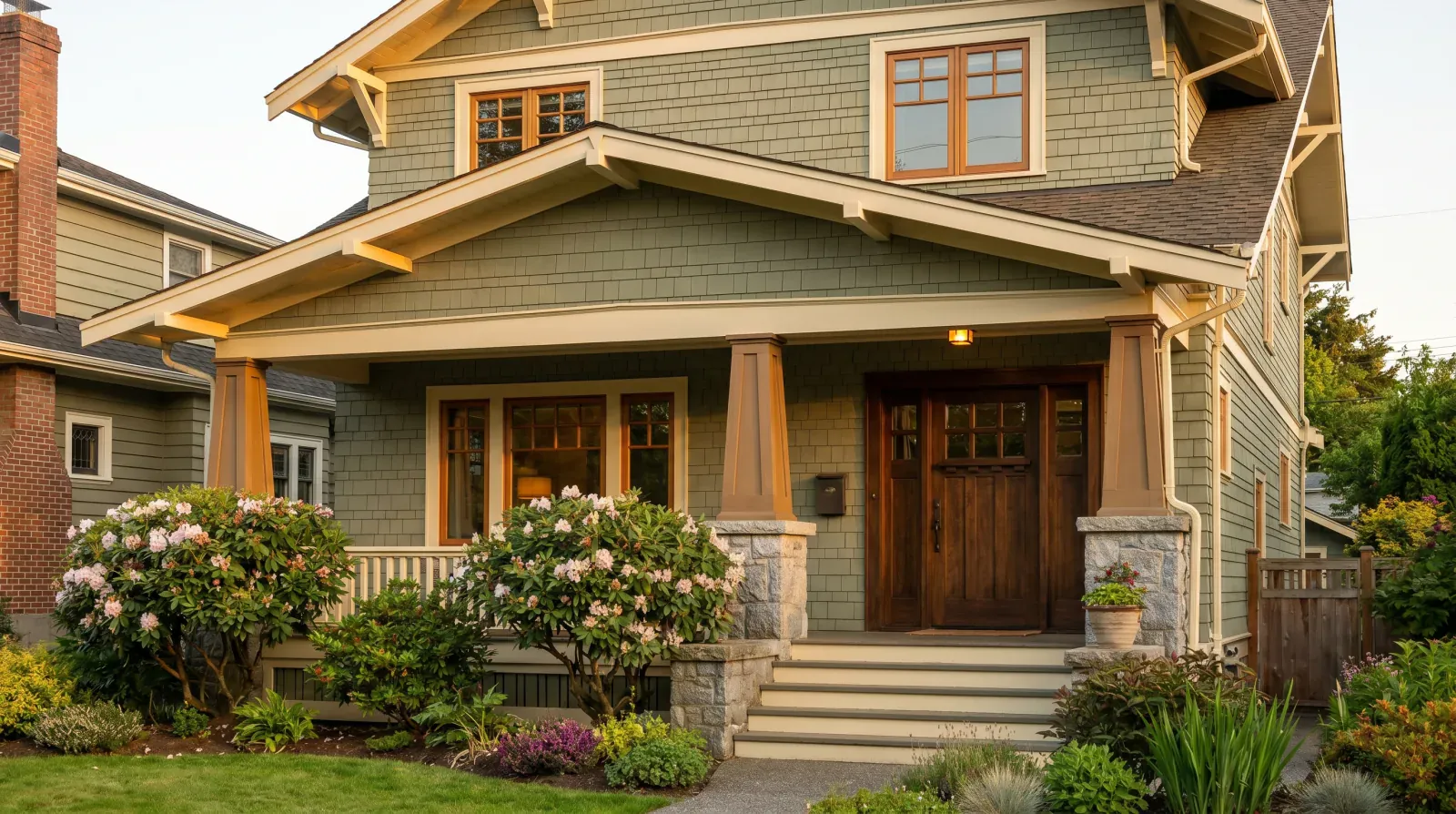
A character home is a much lighter classification. Most BC municipalities describe it as a single detached house built before 1940 that retains original massing, roofline, and defining features, a front porch or verandah, decorative shingle work, original window trim, a masonry chimney. Vancouver runs a formal Character Merit Assessment against specific criteria to determine eligibility for its retention program, but there is no citywide register of character homes the way there is for designated heritage properties.
That absence of a formal register is the key practical difference. A character home renovation follows the standard building permit process. Where it gets more interesting is retention incentives: several municipalities offer extra floor area or relaxed setbacks specifically to encourage owners to keep a pre-1940 structure rather than demolish it, and using that incentive can bring an added design review step, but that review is tied to the incentive program itself, not to a mandatory heritage process.
Why the distinction changes how a renovation actually runs
Confusing the two costs time in either direction. Assume heritage status on a property that's actually just a character home, and a project gets over-planned for review cycles that were never going to happen, adding unnecessary schedule padding and, sometimes, unnecessary design compromises made in anticipation of a heritage review that isn't coming. Assume character status on a property that's actually formally designated, and a project can stall hard the first time drawings reach the permit desk, when the file comes back flagged for a heritage review nobody scheduled for.
The fix is a single phone call. Burnaby's planning department, or the equivalent department in Vancouver, New Westminster, or wherever the property sits, can confirm designation status directly. We make that call as a first step on every older property we assess, before layout, before budget, before a single drawing gets made, because it determines the shape of everything that follows.
The paperwork trail that tells you which one you have
Beyond a direct call to the planning department, there are a few places the answer usually shows up before anyone confirms it verbally. A property title search will show a registered covenant if one exists, which is a strong signal of formal heritage designation rather than character status alone. A Heritage Revitalization Agreement, where a municipality has traded zoning flexibility for heritage protection, is also registered against title and shows up the same way. Municipal heritage registers themselves are usually public documents, Burnaby's Community Heritage Register is published by the city's Planning and Building Department, and a specific address can be checked against it directly.
Real estate listings sometimes describe a house as "heritage character" as a single blended phrase, which is part of why the confusion is so common. That phrase tells you almost nothing about actual legal status. It's marketing language borrowed from both categories at once, and it shouldn't be treated as confirmation of either.
What this looks like across a few real scenarios
A Capitol Hill craftsman with no covenant on title, not listed on the municipal register, but built in 1924 with its original porch, window trim, and roofline intact: almost certainly a character home. Standard permitting applies, and the owner has the option, not the obligation, to pursue a retention incentive if one is available for that property type and zone.
A Deer Lake estate property adjacent to a designated heritage precinct, where the surrounding parkland buildings are protected but the private residential lot itself carries no covenant: the private lot generally isn't bound by the same designation, though the heritage context nearby often still shapes what design review expects stylistically, even without a formal legal requirement.
A property with a Heritage Revitalization Agreement already in place from a previous owner, registered against the title, offering extra density in exchange for retaining the original structure: this is heritage-designated in every practical sense, and a new owner inherits both the protection and the obligations that came with that agreement, whether or not they were involved in negotiating it.
Three different starting points, three different renovation processes, three different timelines and design constraints. None of them obvious just from looking at the house, and none of them safe to assume based on the neighbourhood, the era, or how the property looked in an online listing photo.
Why the confusion is so common in the first place
Part of the reason "heritage" gets used so loosely comes down to how real estate marketing treats older houses. A listing for a character home will often lean on words like "heritage charm" or "heritage character" because they read well and signal the same general appeal, original details, established neighbourhood, a sense of history, that a genuinely designated property has. None of that marketing language reflects the property's actual legal status, and it isn't meant to. It's describing an aesthetic, not a designation.
The two categories also overlap in age and appearance more often than they diverge. A heritage-designated 1915 foursquare and an undesignated 1915 foursquare three doors down can look nearly identical from the street, similar massing, similar trim, similar porch. Nothing about walking past either house tells you which one carries formal protection. That similarity is exactly why so many owners assume status based on how old and how detailed a house looks, rather than on what's actually recorded against the property.
Municipal terminology adds another layer. Some cities use "heritage" informally to describe a broader inventory of older buildings worth tracking, even ones that haven't gone through formal designation, which is different from the legally binding sense of the word tied to a register or covenant. Burnaby, for example, has used a heritage resource inventory since 1989 to track significant buildings that aren't necessarily protected by a designation bylaw or listed on the formal Community Heritage Register. That inventory use of "heritage" is informational, not protective, and it's a further reason the same word ends up describing meaningfully different levels of actual legal status depending on context.
Getting it wrong costs more than getting it right takes
We've seen design work redone after a heritage review flagged a proposal nobody had scheduled for, because an owner assumed character status when the property was actually designated. We've also seen owners over-budget for heritage architect fees and review cycles on a property that turned out to have no formal designation at all, character status only, meaning standard permitting the whole way through.
Both mistakes are avoidable with the same single step: confirming status directly with the municipality before design work starts, not after. It's the cheapest, fastest thing to get right on an older-home renovation, and it's the one piece of information that shapes almost every decision that follows, from which professionals need to be involved, to how much lead time to build into a permit schedule, to whether windows and siding are a design choice or a condition someone else signs off on.
We treat this confirmation as step one on every older Burnaby or Vancouver-area property we assess, before a design conversation goes any further, precisely because getting it wrong in either direction wastes time an owner didn't need to spend.
If your Burnaby or Greater Vancouver property turns out to carry formal heritage status, or you're weighing whether to pursue character retention incentives on a pre-1940 house, our full heritage and character home renovation guide walks through what changes at every stage after that first call, and our heritage restoration service page covers how we approach the work itself.
Frequently asked questions
- What makes a house a heritage home instead of just an old house?
- A heritage home is formally listed, usually on a municipal heritage register, and often protected by a designation bylaw or a covenant registered against the property's land title. Age alone doesn't create heritage status. A house can be a century old and carry no formal designation, while a newer building with strong architectural merit can occasionally be listed.
- What is a character home in BC?
- Most BC municipalities define a character home as a house built before 1940 that retains original massing, roofline, and features like a front porch, decorative shingles, or original window trim. Unlike a heritage designation, there is generally no formal citywide register of character homes, so the classification is descriptive rather than legally binding on its own.
- Does a character home have any legal protection?
- Not automatically. A character home follows standard building permitting unless a municipality's specific retention program applies, in which case an owner can access incentives like extra floor area in exchange for keeping the original structure. That's a voluntary planning tool, not a mandatory protection the way heritage designation is.
- Can a character home become a heritage home?
- Yes, through a formal designation process. A municipality can add a character home to its heritage register, sometimes at the owner's request and sometimes through a Heritage Revitalization Agreement that trades zoning flexibility for a covenant protecting the structure. Once designated, the property moves from the lighter character category into the heritage review process.
- How do I check whether my Burnaby property is heritage-designated?
- Burnaby's Planning and Building Department maintains the city's Community Heritage Register and can confirm a specific address's status directly. Protected properties are also cross-listed on the Canadian Register of Historic Places through the province's participation in that national program, so a municipal check is the fastest way to get a definitive answer.
- Does heritage designation apply to the whole house or just the exterior?
- Heritage review generally focuses on what's visible and character-defining, primarily the exterior, roofline, and street-facing details, rather than governing every interior change. Interior renovations that don't touch protected exterior elements typically move through the standard building permit process without triggering the additional heritage review layer.
- Why does the difference matter for renovation planning?
- A heritage-designated property adds a review step with a municipal heritage planner, and sometimes a Community Heritage Commission, before a building permit application proceeds, which extends the schedule. A character home without designation follows the standard permit timeline. Knowing which category applies before design work starts keeps the project schedule realistic from the outset.
- Does a character home ever require heritage-style materials?
- Only where a specific municipal retention program ties an incentive to material or design choices. Outside of that, a non-designated character home is not bound to heritage material requirements, though many owners choose to match original materials anyway because that's what gives the house its character in the first place.
- Where can I check whether a title has a heritage covenant registered against it?
- A property title search, available through BC's land title system, will show a registered heritage covenant or a Heritage Revitalization Agreement if one exists on that specific property. This is one of the most reliable ways to confirm formal heritage status independently of a municipal planning department call, since a covenant runs with the land and binds any future owner.