Vancouver's Character Home Retention program trades zoning flexibility for keeping a pre-1940 house standing. Here's what the incentive actually offers and where it changes a renovation's math.
Before any of this applies, it's worth confirming which category a property actually falls into, see our heritage home vs character home breakdown if that's still an open question.
An owner came to us convinced their choices on an aging pre-1940 Vancouver house were a full teardown or living with a layout that no longer worked. Neither was actually true. The City runs a Character Home Retention program built for exactly this situation, and it can change the entire financial and design logic of a project once an owner understands what it offers.
That misunderstanding is common, and it isn't the owner's fault. Most public conversation about older housing stock in Greater Vancouver focuses on the loss side of the story, character homes coming down for new construction, rather than on the specific tools a municipality has actually built to make retention a genuinely competitive option. The incentive exists precisely because that demolition trend was accelerating, and the City wanted a real, usable alternative on the table rather than relying on owners to preserve older housing purely out of goodwill.
Vancouver isn't the only municipality with a program built along these lines, though its Character Home Retention program is one of the more established and clearly documented examples in this region. It's worth checking with any Greater Vancouver municipality specifically, since the terms, eligible zones, and the scale of incentive offered vary by city, and assuming Vancouver's rules apply somewhere else is a common and avoidable mistake.
What the retention incentive actually trades
The program's structure is straightforward: an owner who keeps a qualifying pre-1940 character house standing, rather than demolishing it, gets access to added zoning flexibility, typically additional allowable floor area or relaxed setbacks, that wouldn't otherwise be available on that lot. It's a voluntary planning tool, introduced in response to the steady loss of Vancouver's older housing stock to teardown-rebuild projects, and it works by making retention financially competitive with demolition rather than mandating preservation outright.
This is different from formal heritage designation, which is closer to mandatory protection once it's in place. Character retention is opt-in. An owner who qualifies isn't required to use the incentive, and plenty of qualifying properties are renovated or even rebuilt without ever engaging the retention pathway.
Qualifying comes first, and it isn't automatic
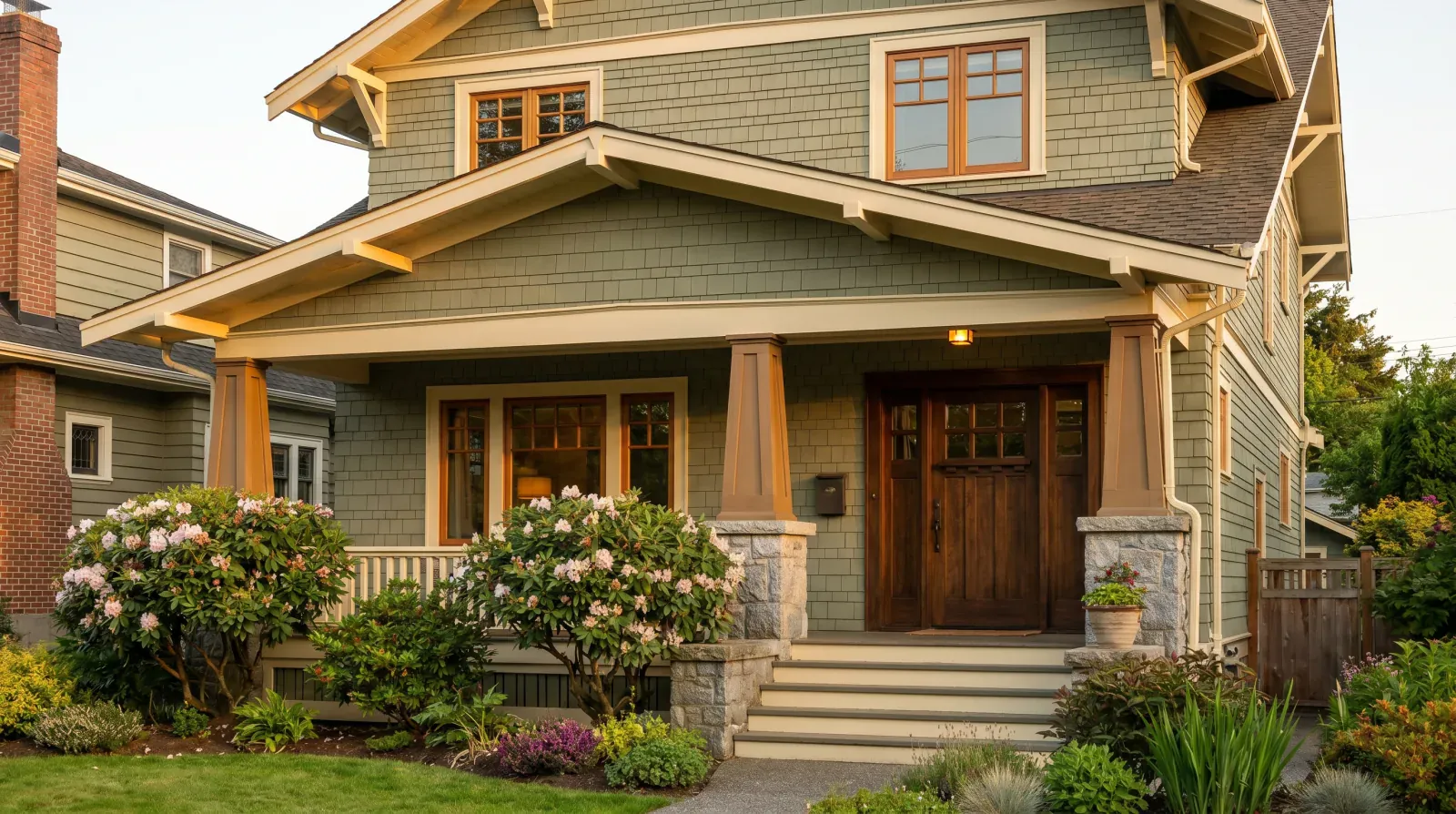
Before any incentive applies, a property has to clear the City's Character Merit Assessment. That assessment looks at specific, defined criteria rather than a general impression of age: original massing and primary roof form, combined with a meaningful combination of features like an original front porch or verandah, cladding, window openings and trim, eave brackets, decorative shingle work, porch columns, or a masonry chimney.
The pre-1940 construction date is the general starting threshold most municipal programs use, though a house built in or shortly after 1940 that retains strong architectural merit can occasionally be assessed on a case-by-case basis. Not every older house passes. We've walked properties that looked the part from the street but had lost enough original detail through prior renovations that they didn't clear the merit bar, and running that assessment early avoids designing a project around an incentive that was never going to apply.
Where this actually changes a renovation decision
The clearest case for retention incentives is a lot where the added floor area or setback relief meaningfully closes the gap between what a renovation can deliver and what a full rebuild would have offered. On some lots, that gap closes enough that keeping and expanding the original character structure outperforms demolition on livable space, once the incentive is factored into the design brief from the start rather than treated as an afterthought.
That calculation is specific to each property, its zoning, its lot dimensions, and how much of the original structure genuinely qualifies for retention. We don't assume either direction, renovate or rebuild, is automatically correct on an older lot. We run the merit assessment, confirm what incentive is actually available, and then have the renovate-versus-rebuild conversation with real numbers on the table instead of a generic assumption about what an old house is worth saving.
What the assessment actually looks for, in more detail
The Character Merit Assessment isn't a single yes-or-no checkbox, it's a weighing of multiple original features against each other. Original massing and the primary roof form carry the most weight, since those two elements define the silhouette that reads as "character" from the street before anyone notices a single trim detail. Beyond that, the City looks at whether a meaningful combination of original elements survives intact, a front porch or verandah, original window openings and their trim, decorative eave brackets or shingle work in the gables, porch columns, and a masonry chimney where one exists.
A house doesn't need every one of these features intact to qualify, but a property that's lost most of them to prior renovations, replacement windows throughout, an enclosed or removed porch, a re-roofed profile that no longer matches the original pitch, is far less likely to clear the assessment than one where the bones and details have mostly survived. This is worth knowing before assuming a pre-1940 house automatically qualifies just because of its age. We've assessed properties from the same construction era, sometimes on the same block, where one cleared the merit bar comfortably and the other didn't, because of what had already been changed over the decades in between.
How the incentive actually gets used in a design
Qualifying for the program and using it well are two different things. The added floor area or setback relief a retention incentive unlocks has to be incorporated into a design that still satisfies the program's underlying goal, keeping the original character structure genuinely intact and legible, not just nominally present while the real living space gets built somewhere else on the lot in a way that overwhelms it.
In practice, that usually means the additional square footage lands in a rear addition designed to sit clearly secondary to the retained original house, rather than as a wholesale expansion that dwarfs what's being kept. A retention project that technically preserves the front facade while building an oversized addition behind it can undermine the spirit of what the incentive was meant to encourage, and design review tends to catch that mismatch. Getting genuine value from the incentive means designing toward its intent from the first sketch, not treating retention as a box to check on the way to a much larger project.
What this looks like for a Burnaby property
Burnaby's heritage framework leans more heavily on formal designation tools than on a broad retention-incentive program, heritage designation bylaws, Heritage Revitalization Agreements, and covenants, administered through the city's Community Heritage Register. An owner of an older Burnaby Heights or Capitol Hill property should confirm directly with the city's Planning and Building Department which specific mechanisms and any available incentives apply to that address, since the tools and their terms differ from what Vancouver offers under its Character Home Retention program.
Wherever the property sits, the sequence is the same: confirm designation or character-merit status first, understand what incentive, if any, is actually on the table, and only then decide between renovation and rebuild.
Why running this assessment early changes the whole project
The biggest mistake we see isn't choosing the wrong path between retention and rebuild, it's choosing before the actual options are known. An owner who assumes their pre-1940 house automatically qualifies for retention incentives may design around floor area that was never actually available, and one who assumes it doesn't qualify may walk away from a rebuild decision that a proper assessment would have changed entirely.
Running the Character Merit Assessment, or confirming heritage designation status where that applies instead, takes a phone call and a site review, not weeks of design work. That's a small time investment against a decision that shapes the entire scope, budget, and design direction of a renovation or rebuild, and it's the step that's easy to skip when an owner is eager to get straight to floor plans. We treat it as the first real step on any older Burnaby or Vancouver property, ahead of layout sketches, ahead of a construction budget conversation, because everything downstream depends on knowing what's genuinely on the table before committing to a direction.
That includes a candid conversation about condition, not just eligibility. A house can clear the Character Merit Assessment on paper and still carry structural or systems issues significant enough to change the renovation-versus-rebuild calculation independently of any incentive. We look at both sides together, what the retention program actually offers on that specific property, and what the house itself genuinely needs structurally, before recommending a direction to any owner, so the decision holds up once construction is actually underway on the real site, not just on paper during an early planning stage conversation held months before anyone breaks ground. If you're weighing that decision on an older Burnaby or Vancouver property, our heritage and character home renovation guide covers the full picture, and our heritage restoration service page has more on how we approach this project.
Frequently asked questions
- What is Vancouver's Character Home Retention program?
- It is a City of Vancouver planning incentive that offers zoning flexibility, such as additional floor area or relaxed setbacks, to owners who keep a qualifying pre-1940 character house standing rather than demolishing it. The program is voluntary and applies specifically within eligible zones, primarily single-family RS zoning.
- How does the City decide if a house qualifies as a character home?
- Vancouver runs a formal Character Merit Assessment against specific criteria, including original massing and primary roof form combined with features like a front porch or verandah, original cladding, window openings and trim, eave brackets, decorative shingles, porch columns, or a masonry chimney. A house generally needs to have been built before 1940 to be assessed.
- Can a house built after 1940 ever qualify for retention incentives?
- It's possible but not automatic. A house built in or after 1940 that retains strong architectural merit and distinctive original character features may be considered on a case-by-case basis, but pre-1940 construction is the standard threshold most municipal character programs use as a starting point for assessment.
- Do I have to use the retention incentive if my house qualifies?
- No. Qualifying for the Character Merit Assessment doesn't obligate an owner to pursue the retention pathway. It's an optional planning tool. An owner who qualifies can still choose a standard renovation or, where zoning allows, a different development approach without using the incentive at all.
- Does keeping a character home for the incentive limit what I can build?
- Yes, in the sense that the added floor area or setback relief is tied to retaining and restoring the original structure's character-defining elements, not to building an entirely new house from scratch on the lot. Design decisions on additions and renovations need to work within that retention framework to keep the incentive intact.
- How does character retention compare to a full teardown financially?
- It depends on the specific lot, zoning, and the amount of additional floor area the incentive unlocks, which varies by property and municipality. We assess each case individually against the retention program's specific rules rather than assuming either direction is automatically the stronger choice.
- Does Burnaby have a similar character retention incentive to Vancouver's?
- Burnaby's heritage program is structured primarily around formal designation tools, heritage designation bylaws, Heritage Revitalization Agreements, and covenants, administered through the Community Heritage Register. Owners of older Burnaby properties should confirm directly with the city's Planning and Building Department which specific tools and incentives apply to a given address.
- What happens if I start a retention-incentive project and later want to demolish the house anyway?
- Once a project is designed and permitted around a retention incentive, changing course to demolition would generally require a new application evaluated outside the retention program's terms, and could affect the zoning relief the project was relying on. Confirming the long-term intent before applying for the incentive avoids that complication.
- Does a retention incentive project take longer to permit than a standard renovation?
- It typically adds a design review step specific to the retention program, evaluating the proposal against the program's own criteria in addition to standard building permit review. That added review generally extends the timeline compared with a straightforward renovation that isn't using any incentive, though it's a smaller addition than the full heritage review a formally designated property requires.