A central vacuum is one of those systems you can only get cheaply while the walls are open. It is worth roughing in on a lot of homes, but not all. Here is how it works, and an honest look at when it earns its place.
Some home systems you have to decide on early because the walls will close on them. A central vacuum is one of the clearest examples. The tubing that makes it work lives inside the walls and floors, so the choice has a real deadline: framing. After that, adding it turns from a simple job into opening finished walls.
That deadline makes people nervous, so they either add it without thinking about whether they will use it, or skip it and wonder later if they should have. Neither is a good way to decide. A central vacuum is worth roughing in on a lot of homes and pointless on others, and the difference comes down to the house and how you actually clean.
Here is how it works, an honest look at the pros and cons, and how we help owners decide.
How a central vacuum actually works
A central vacuum is a whole-house cleaning system built into the structure. It has three parts.
The power unit is a canister that sits somewhere out of the way, usually the garage, the mechanical room, or a utility area. It is the motor and the dirt collection, and because it lives away from your living space, it can be more powerful and much quieter in the room you are cleaning than a portable machine.
The tubing runs from that power unit through the walls and floors of the house, out to a set of inlet points. This is the part that has to be built in during construction.
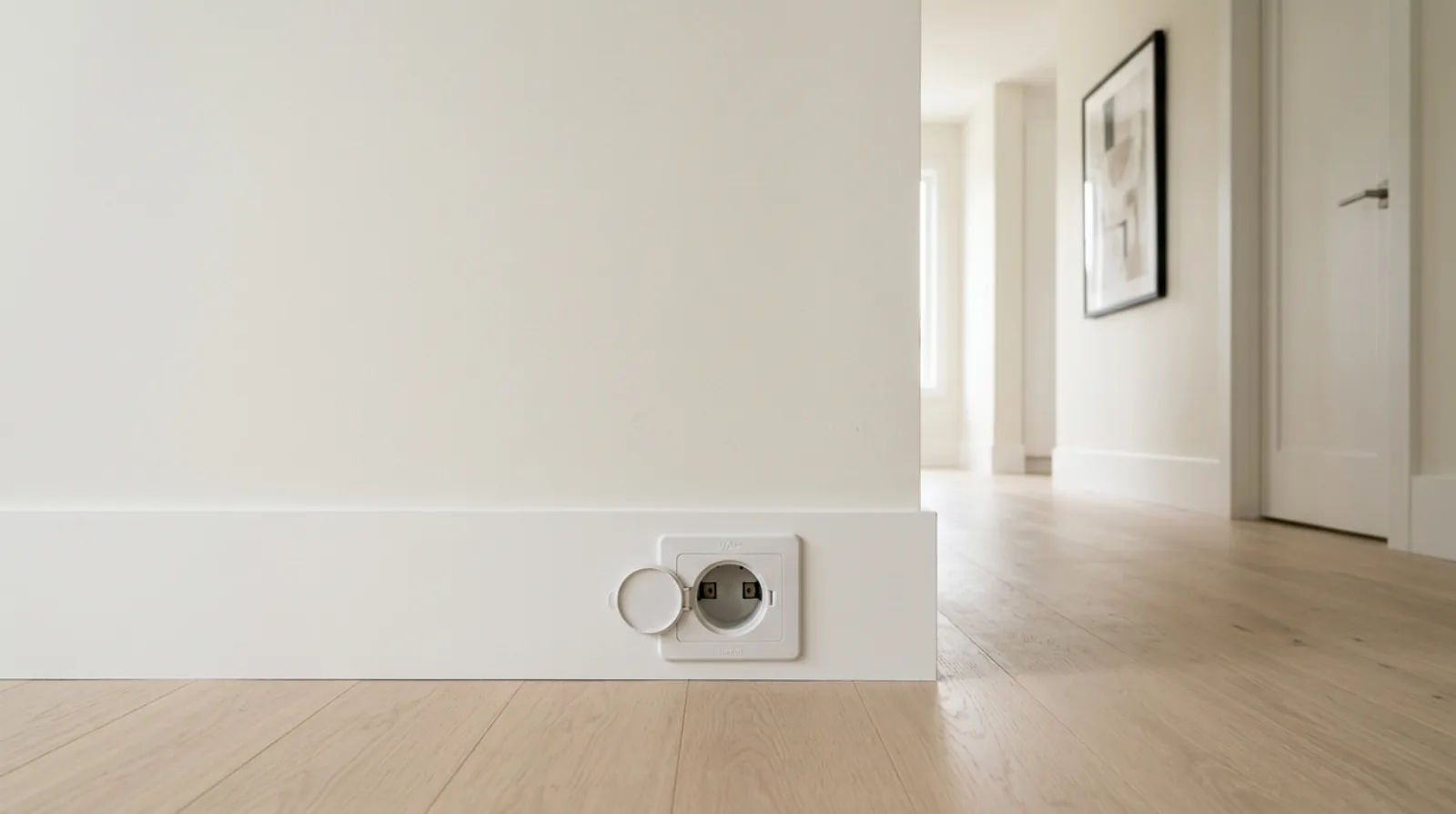
The inlets are the wall ports you plug into. To clean, you connect a lightweight hose to the nearest inlet, and the suction pulls the dirt all the way back through the tubing to the canister in the garage. When the canister fills, you empty it, far less often than a portable vacuum's small bin.
The everyday experience is the selling point. You carry a hose, not a machine. On a multi-level home, that means no lugging a heavy vacuum up and down stairs. And because the dirt and fine dust travel out to a canister away from where you live, less of it gets stirred back into the air of the room, which people with dust sensitivities often notice.
Why the tubing is a framing-stage decision
The reason this system belongs in a build-planning conversation is entirely about the tubing. It has to be installed while the walls are open, before drywall goes up. The installer routes the pipe through the framing to each inlet location and back to where the power unit will sit, and coordinates those runs with the plumbing and electrical so nothing conflicts.
Do it at framing and it is a modest, clean addition. Try to add it to a finished home and you are opening walls to route pipe through them, which is why central vacuum is rarely retrofitted well. This is the same lesson that runs through every in-wall system we plan, the electrical, the plumbing, the low-voltage wiring: the cheap moment is while the walls are open, and it never comes back.
The tubing is cheap while the framing is open and nearly impossible once the drywall is up. If there is any real chance you will want a central vacuum, rough the tubing in and decide on the machine later.
Icon Projects Team
The honest case for it
A central vacuum genuinely earns its place on the right home:
- Multi-level houses. This is where it shines. No carrying a heavy machine up and down stairs. You just move the hose to the nearest inlet on each floor.
- Large homes with a lot of hard flooring. More area to cover makes the convenience add up, and the stronger suction of a well-placed power unit handles it comfortably.
- Households sensitive to dust. Sending the fine dust out to a canister away from living space, rather than recirculating some of it the way a portable can, is a real benefit for people who react to it.
- Owners who want quiet. With the motor out in the garage, the room you are cleaning is quieter than it is with a portable machine running right beside you.
The honest case against it
It is not for every home, and we say so:
- Smaller, single-level homes get less out of it. If there are no stairs and not much floor to cover, a good cordless or robot vacuum may serve just as well for far less.
- You still handle a hose. The hose is long and, to some people, bulky to drag around and coil up. It solves the "carry the machine" problem, not the "handle a hose" one.
- Portable technology has caught up. Modern robot vacuums and strong cordless sticks have closed a lot of the convenience gap that made central vacuum feel essential a couple of decades ago.
- A half-decision wastes money. If you rough in the tubing and never install the power unit, you have spent a little for nothing. The rough-in only pays off if the system actually gets finished and used.
What we usually recommend
Because the decision has a deadline but the equipment does not, our advice is practical.
If there is any real chance you will want a central vacuum, rough in the tubing at framing. It is a low-cost move while the walls are open, and it keeps the door open. You can choose and install the actual power unit later, even after move-in, once you have lived in the house and know how you clean it. The expensive, hard part, the in-wall tubing, is already done.
If you have thought about it honestly and know you will lean on a robot vacuum and a cordless stick, skip it cleanly. There is no point roughing in a system you are sure you will not finish. A clean "no" is better than a half-installed "maybe."
The point is to make it a real decision, tied to your house and your habits, and to make it before the framing closes. We walk every owner through this the same way we walk them through the other systems that hide in the walls, so nothing gets decided by accident.
Ongoing maintenance and what it actually costs
A central vacuum needs less day-to-day attention than a portable machine, but it is not maintenance-free. The canister needs emptying periodically, less often than a portable's small bin since it holds far more, and the filter or bag, depending on the model, needs replacing on a schedule the manufacturer specifies. The motor itself is built for a longer service life than a portable vacuum's motor because it runs less often per session and lives in a stable environment rather than getting knocked around a house.
The rough-in tubing itself has effectively no maintenance cost once it is installed correctly, it is sealed inside the wall and, barring a puncture during a future renovation, should outlast the house's other mechanical systems. The part that ages is the power unit and the hose, both of which are straightforward to replace or upgrade independently of the tubing whenever they wear out.
Frequently asked questions
- Is a central vacuum worth it in a new custom home?
- It depends on the home and how you clean. On a large or multi-level house with a lot of hard flooring, a central vacuum is genuinely nice to live with, because there is no heavy machine to carry up stairs and the fine dust is sent out to a canister away from your living space. On a smaller single-level home, a good portable or robot vacuum may serve just as well. Icon Projects talks through your specific layout so the decision fits your house, not a trend.
- Does the central vacuum tubing have to go in during construction?
- The tubing does, yes. It runs inside the walls and floors, so it has to be installed while the framing is open, before drywall. That is the whole reason this is a build-stage decision. The power unit and the hoses can be chosen or even added later, but the in-wall tubing and the inlet locations are close to impossible to add cleanly once the walls are finished. Icon Projects roughs in the tubing at framing whenever a central vacuum is a real possibility.
- Can I add a central vacuum after my home is built?
- It is difficult and much more disruptive. Because the tubing lives inside the walls and floors, retrofitting it means opening finished surfaces to route the pipe, which is why it is rarely done well after the fact. The practical answer is to rough in the tubing during construction if there is any chance you will want it. Icon Projects treats it as a low-cost insurance move: rough the tubing in at framing, and the finished system is easy to complete whenever you decide.
- What are the downsides of a central vacuum?
- It is not for everyone. You still handle a long hose, which some people find bulky, and the inlets take up wall spots. Modern robot and cordless vacuums have closed a lot of the convenience gap for smaller homes. And if you rough it in but never install the power unit, you have spent a little for nothing. Icon Projects gives you the honest version so you only build it in where it will actually get used, not because it sounds like a premium feature.
- How much maintenance does a central vacuum need?
- Less than a portable, but not none. The canister needs emptying periodically, far less often than a portable's small bin, and the filter or bag needs replacing on the schedule the manufacturer sets out. The motor tends to last longer than a portable vacuum's because it runs in a stable location and is not being carried and bumped around the house.
- Does the in-wall tubing ever need to be replaced?
- Essentially no, once it is installed correctly at framing it should outlast most of the home's other mechanical systems, since it is sealed inside the wall with nothing moving through it under stress. The parts that eventually wear out and get replaced are the power unit and the hose, both of which are independent of the tubing and straightforward to swap.
- Can I choose a central vacuum's power unit and hose after move-in?
- Yes, and this is one of the reasons the rough-in-now, decide-later approach works well. Once the tubing and inlets are built in, the power unit and hose are a self-contained purchase that connects to the existing system whenever you are ready, months or years after occupancy, without opening any walls.
- Is central vacuum tubing compatible with any home layout?
- It works in nearly any layout, but the routing and number of inlets are planned around the home's specific floor plan during framing, since each inlet only reaches so far with a hose. A multi-level home needs inlets on each floor for the system to deliver its main benefit, which is why the plan gets mapped out with the electrical and plumbing rough-in rather than added as an afterthought.