
Abbotsford
Custom Home & Multiplex Builder in Abbotsford
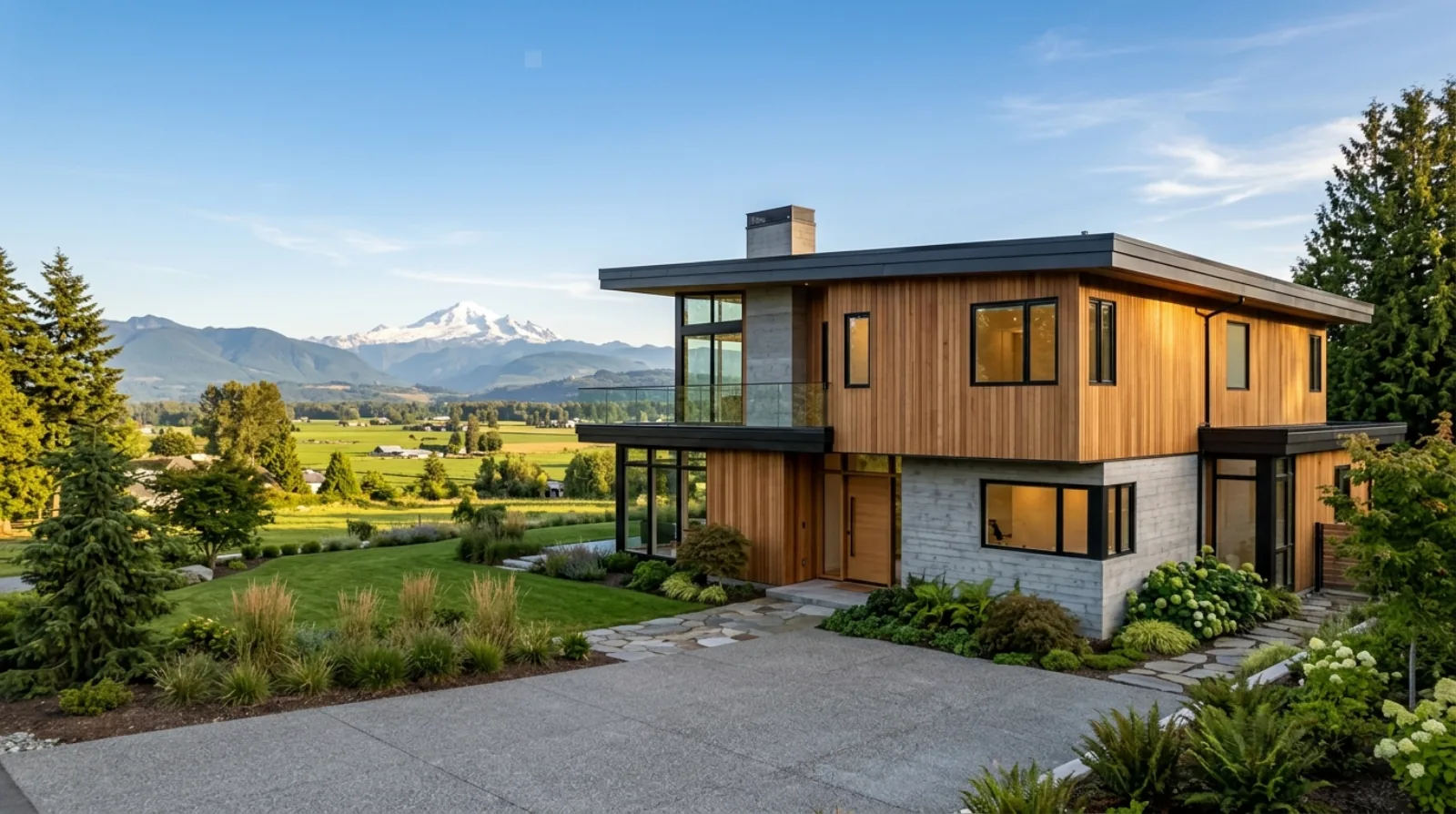
Abbotsford is Icon's Fraser Valley home base, and it builds nothing like Burnaby. The lots are larger, the soils change from one block to the next, and the regulatory weight lives in riparian setbacks, the Agricultural Land Reserve and the Sumas Prairie floodplain rather than a strict urban tree bylaw. It's also a city in the middle of a real housing shift, Abbotsford adopted a new Official Community Plan and rewrote its zoning on December 16, 2025, opening most single-family lots to up to four homes. We build custom homes, multiplexes and fee-simple rowhomes here, and we treat the lot, its grade, its water, its soils, as the first decision on every project.
Last reviewed July 2026
At a glance
What we do here.
- Custom homes, multiplexes and fee-simple rowhomes across every Abbotsford neighbourhood
- Now building Trio on McCallum, three fee-simple rowhomes on McCallum Road, completing August 2026
- Up-to-date on Abbotsford's December 2025 zoning and OCP rewrite, including the four-unit SSMUH rules
- Led by a CHBA Master Residential Builder and licensed under BC Housing's 2-5-10 warranty
Our approach
Building in Abbotsford.
Custom homes built for Abbotsford lots
An Abbotsford custom home rewards a different kind of planning than a Burnaby infill. When a lot grows from 6,000 square feet to half an acre or several acres, a lot of the design work moves outside the building footprint, orientation across all four seasons, driveway turning for trailers and service vehicles, where a future workshop or secondary dwelling sits, where the water drains. We start every Abbotsford build with a survey, a geotechnical read and a drainage assessment before an architect draws a line, because the soils here vary more than almost anywhere in the Lower Mainland.
Most of our Abbotsford custom-home work falls into one of three patterns. There's the hillside build on Sumas Mountain or the Eastern Hillsides, where the view is the brief and the foundation and drainage are half the job. There's the established-neighbourhood rebuild in McMillan or Sandy Hill, where an aging rancher gives way to a full-sized new home on a generous lot. And there's the acreage build out toward Bradner and Mt. Lehman, where the home is one of several structures the site plan has to resolve. None of those are interchangeable, and pretending otherwise is the fastest way to a budget surprise.
We build above the code rather than to it, a properly detailed envelope, a right-sized heat pump and HRV, real air-sealing, because the Fraser Valley climate asks for it. Summers run hotter and drier than on the coast; winters are more decisive. A home designed for that, rather than in spite of it, is the one that ages well.
Multiplexes and fee-simple rowhomes under Abbotsford's new zoning
Abbotsford rewrote the rules at the end of 2025. On December 16, 2025, Council adopted a new Official Community Plan and updated zoning bylaw that brings the city into line with the province's Small-Scale Multi-Unit Housing legislation. In practice, most single-family lots under 4,050 square metres now allow up to four homes, duplexes, triplexes, fourplexes and rowhome configurations, across the city's residential zones (RS3 through RS7 and RSH among them).
One honest caveat owners should hear up front: the provincial rules allow up to six units on lots within 400 metres of a frequent-transit stop, but Abbotsford does not currently have any bus stops that meet the province's frequent-service standard. So in Abbotsford today, four units is the practical ceiling on a standard lot, not six. We re-check that against the city's current maps at feasibility, because transit service can change.
We've already built this product here. Trio on McCallum is three brand-new fee-simple rowhomes on McCallum Road, no strata, no monthly fees, each home owned outright from the soil to the ridge, finished to a custom-home standard and completing in August 2026. Fee-simple title is rare in new Abbotsford multi-family housing, and it's exactly the kind of build the new zoning makes possible. When a multiplex pencils, we build it the way we'd build a single custom home: acoustic separation engineered in, mechanical sized per unit, every home finished to a standard the next owner respects.
Soils, drainage and the conditions that shape an Abbotsford build
Abbotsford sits on a genuinely mixed geology, alluvial deposits along the Fraser, glacial till on the higher ground, peat in the low-lying areas and bedrock outcrops on the slopes. The variability within a single neighbourhood can be substantial, which is why a geotechnical assessment is the cheapest insurance you'll buy on the whole project. It matters more on a Fraser Valley lot than on a flat Burnaby infill, simply because there's more that can surprise you.
Water is the other first-class design problem. Many Abbotsford and Fraser Valley lots back onto creeks, ditches or seasonal watercourses, and a lot of those are fish-bearing. BC's Riparian Areas Protection Regulation applies within 30 metres of a fish-bearing stream and triggers an assessment by a Qualified Environmental Professional, a Streamside Protection and Enhancement Area between 10 and 30 metres wide, and setback conditions baked into the permit. A creek you'd barely notice can reshape your buildable footprint. We check riparian applicability at the lot tour, not after the offer is in.
- Geotechnical and drainage reads done before commitment, not after
- Riparian (RAPR) applicability checked early, it's in the brief far more often here than in Burnaby
- Lot grading and perimeter drainage designed with a clear discharge route from day one
- Septic and well siting planned on acreage lots that aren't on municipal services
The Agricultural Land Reserve and the Sumas Prairie floodplain
A meaningful share of Abbotsford touches the Agricultural Land Reserve, administered by the Agricultural Land Commission. For residential builds on ALR land, the rules generally limit non-farm development to a single dwelling per parcel, with additional dwellings subject to ALC approval, a different world from the permissive urban density Burnaby owners are used to. We check ALR status with the Commission directly, not just the municipal counter, before a site is committed.
Then there's Sumas Prairie. In November 2021, the Nooksack River breached and flooded the prairie in one of Canada's largest flood events. Abbotsford has since raised its floodproofing construction elevations across the affected areas, to 10.9 metres in the Sumas Lake bottom, Sumas Prairie West and the Sumas River floodplain, and to 9.8 metres in Matsqui Prairie. Where an owner builds at a reduced elevation, the bylaw requires a habitable second storey at or above the full floodproofing level, so there's an area of refuge. If a lot is anywhere near the prairie, the flood construction level is the first number we pull, it drives the whole design.
Permits and energy code in Abbotsford
Abbotsford runs its own permit review, on its own calendar, it doesn't move on Burnaby's clock. Every permit application in BC submitted on or after March 8, 2024 falls under the 2024 BC Building Code, and the province's Building Permit Hub is rolling out across the Fraser Valley, adding automatic completeness and code-compliance checks before a file reaches a human reviewer. Local relationships matter more here than in a big-city planning department, because the same coordinator may be your contact across the whole project.
On energy, Abbotsford applies Step 3 of the BC Energy Step Code to new Part 9 homes, detached and semi-detached houses, garden suites, townhouses and low-rise, and added the Zero Carbon Step Code at level EL-1 as of March 10, 2025. That's a lighter carbon requirement than Burnaby's EL-4, but Step 3 still locks the envelope detailing, mechanical sizing and air-sealing approach in at design. You can't value-engineer those back at framing. Every design needs a registered energy professional's model, stamped, before the city will issue.
Why work with Icon in Abbotsford
Abbotsford is our Fraser Valley base, not a city we visit. We've built custom homes, a contemporary new build, and now fee-simple rowhomes here, and we know the trades, the framers and finishers out here tend to be loyal and repeat-engaged, while the most specialised millwork and stone often travels out from Vancouver. We plan that hybrid trade stack into the schedule honestly.
Sanj Aggarwal is a CHBA Master Residential Builder, CHBA's most rigorous residential builder designation, and Icon is licensed under BC Housing's mandatory 2-5-10 home warranty, two years on labour and materials, five on the building envelope, ten on structure. We're a small, deliberate team running a small number of projects at a time, with senior people on every job from feasibility through hand-over. If you're weighing a custom home, a multiplex or a rebuild anywhere in Abbotsford, the right next step is a conversation about your lot. The honest answer is the part that matters.
Common Questions
Before we begin in Abbotsford.
Do you build custom homes and multiplexes across all of Abbotsford?+
Yes. We work across Auguston, Sandy Hill, Sumas Mountain and the Eastern Hillsides, McMillan, West Abbotsford and Clearbrook, and the acreage areas toward Bradner and Mt. Lehman. Each part of the city has different lot conditions, soils and zoning posture, and we tailor the approach, hillside builds, established-neighbourhood rebuilds, fee-simple rowhomes and acreage homes are all live work for us here.
How many homes can I build on an Abbotsford lot under the new SSMUH rules?+
Abbotsford adopted updated zoning on December 16, 2025 that allows up to four homes on most single-family lots under 4,050 square metres, across residential zones like RS3 through RS7 and RSH. The province's six-unit transit bonus exists on paper, but Abbotsford currently has no bus stops that meet the frequent-service standard, so four units is the realistic ceiling on a standard lot today. We run a parcel-specific feasibility against the current bylaw before any design.
What's a fee-simple rowhome, and why does it matter in Abbotsford?+
A fee-simple rowhome is a multi-family home you own outright, no strata corporation, no monthly fees, no committee weighing in on your front-door colour. It's rare in new Abbotsford housing, where buyers have usually had to choose between a condo, a strata townhome or an aging house. Our Trio on McCallum project is three fee-simple rowhomes on McCallum Road, completing August 2026, full-sized homes with custom-home finish and none of the strata compromises.
What BC Energy Step Code level applies to an Abbotsford home in 2026?+
Abbotsford applies Step 3 of the BC Energy Step Code to new Part 9 residential, detached and semi-detached homes, garden suites, townhouses and low-rise, and added the Zero Carbon Step Code at EL-1 as of March 10, 2025. That carbon requirement is lighter than Burnaby's EL-4, but Step 3 still locks the envelope, mechanical and air-sealing decisions in at design. Every build needs a stamped energy model from a registered professional before the city issues.
Is my Abbotsford lot affected by the Sumas Prairie floodplain?+
It depends where you are. After the November 2021 Nooksack flood, Abbotsford raised its floodproofing construction elevations, to 10.9 metres in the Sumas Lake bottom, Sumas Prairie West and the Sumas River floodplain, and to 9.8 metres in Matsqui Prairie. If a lot is near the prairie, the flood construction level is the first number we pull, because it drives the design and can require a habitable second-storey area of refuge. We confirm a property's flood designation before feasibility.
How does building in Abbotsford differ from Burnaby?+
The lots are bigger, so more of the design moves outside the footprint, orientation, driveways, future buildings, drainage. Burnaby's strict tree bylaw is largely replaced by riparian setbacks, the Agricultural Land Reserve and floodplain rules. The soils vary more lot-to-lot, the energy carbon requirement is lighter (EL-1 versus Burnaby's EL-4), and Abbotsford runs its own permit calendar. The builder principles hold across both, design for the lot, respect the soils, plan the drainage, specify the envelope properly, but the conditions are genuinely different.
Do you build acreage and rural homes around Bradner and Mt. Lehman?+
Yes, acreage builds are a real part of our Abbotsford work. The brief changes on a larger rural lot: orientation across all four seasons, driveway turning for trailers and service vehicles, septic and well siting where the property isn't on municipal services, and a site plan that thinks about future buildings, a workshop, a garden structure, not just the principal home. Many of these lots also touch the Agricultural Land Reserve, which we check with the Agricultural Land Commission directly before committing to a site.
Can I build a secondary suite or coach house in Abbotsford?+
On most standard residential lots, yes, secondary suites and coach houses are part of how Abbotsford's housing options have opened up, and they fit naturally into the four-home allowance under the December 2025 zoning. On Agricultural Land Reserve parcels it's different: the ALR generally limits a lot to a single dwelling, with additional units subject to Agricultural Land Commission approval. We confirm what a specific lot allows at feasibility rather than assuming.
Do I need my own architect, or do you handle the design?+
Either works. Some owners come to us with an architect and a concept; others want us to coordinate the whole team, architect, structural and geotechnical engineers, the energy professional, the surveyor, from the first feasibility study. On a Fraser Valley lot, where soils, drainage and riparian questions all feed the design, having the builder involved early tends to produce fewer surprises. We're comfortable either way and tell you honestly which consultants your lot actually needs.
How long does a custom home in Abbotsford take?+
It depends on the lot, the scope and the season, and we won't hand you a number we can't stand behind, the real variable is usually the front-end work (survey, geotechnical, drainage, riparian, the stamped energy model) and Abbotsford's own permit review, not the construction itself. What we do is map every phase into your schedule from week one, sequence the consultant work so nothing waits on a missing document, and give you a milestone-by-milestone plan once design is locked.
Do you build in Mission, Chilliwack and the rest of the Fraser Valley?+
Yes. Abbotsford is our Fraser Valley base, but a meaningful share of our work runs east through Mission, Chilliwack and the Fraser Valley Regional District. Each municipality runs its own permit process on its own calendar, and the rural and acreage rules, riparian, ALR, floodplain, show up more often the further east you go. The building principles travel; the local regulatory detail is what we re-check on every project.
Continue exploring
Other areas we serve.
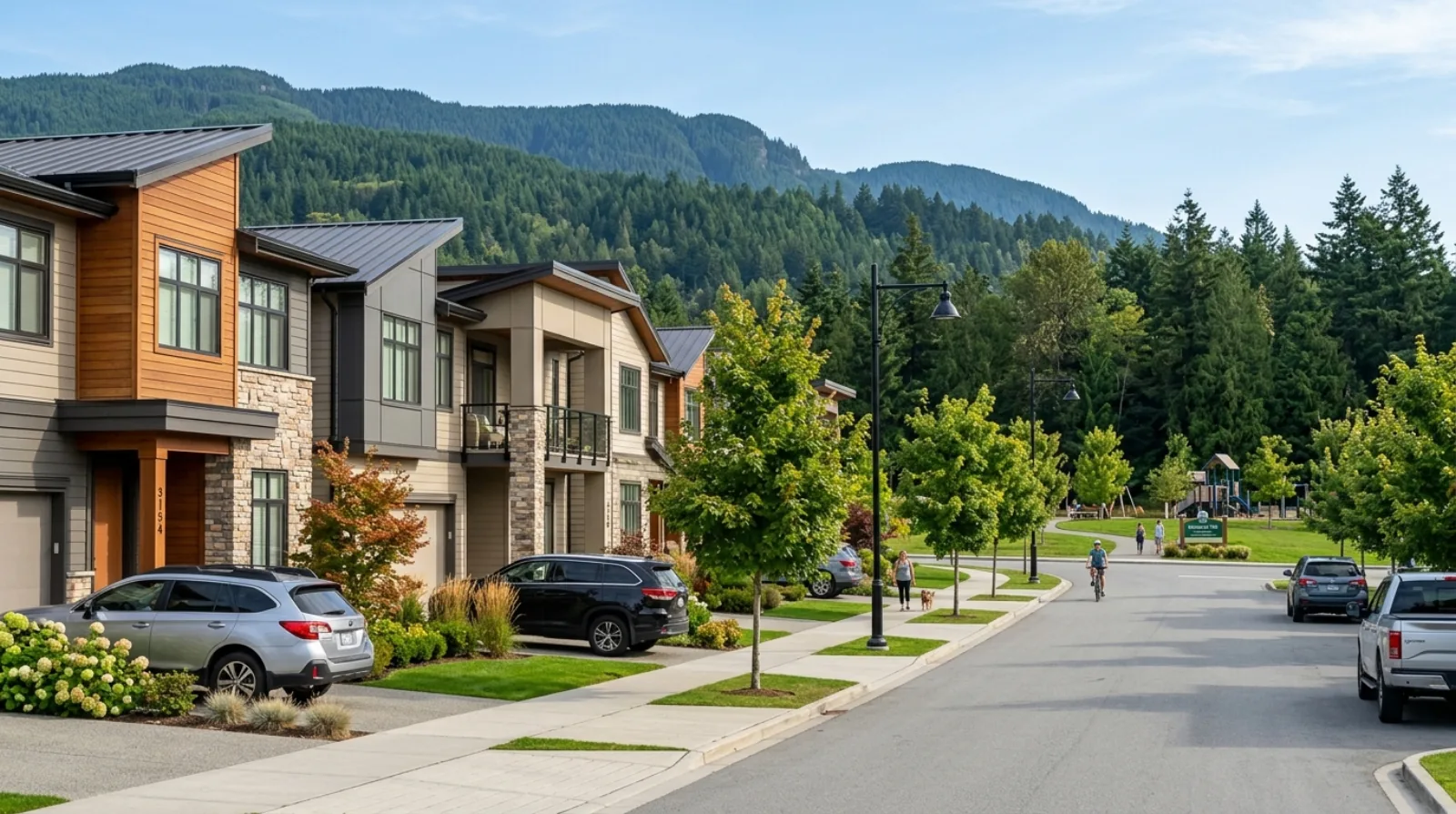
Auguston
Custom Home Builder in Auguston, Abbotsford
Learn more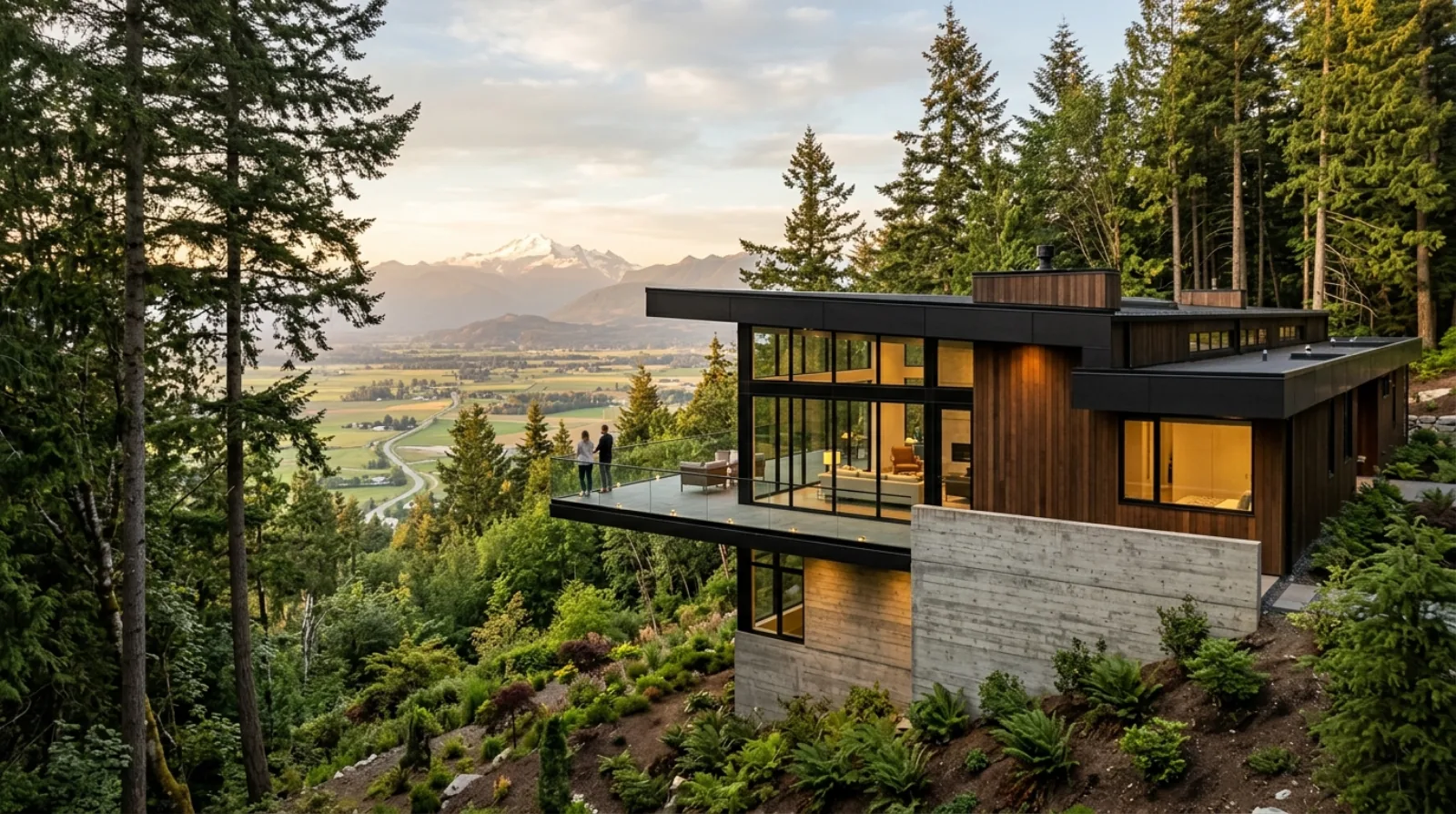
Sumas Mountain
Custom Home Builder on Sumas Mountain, Abbotsford
Learn more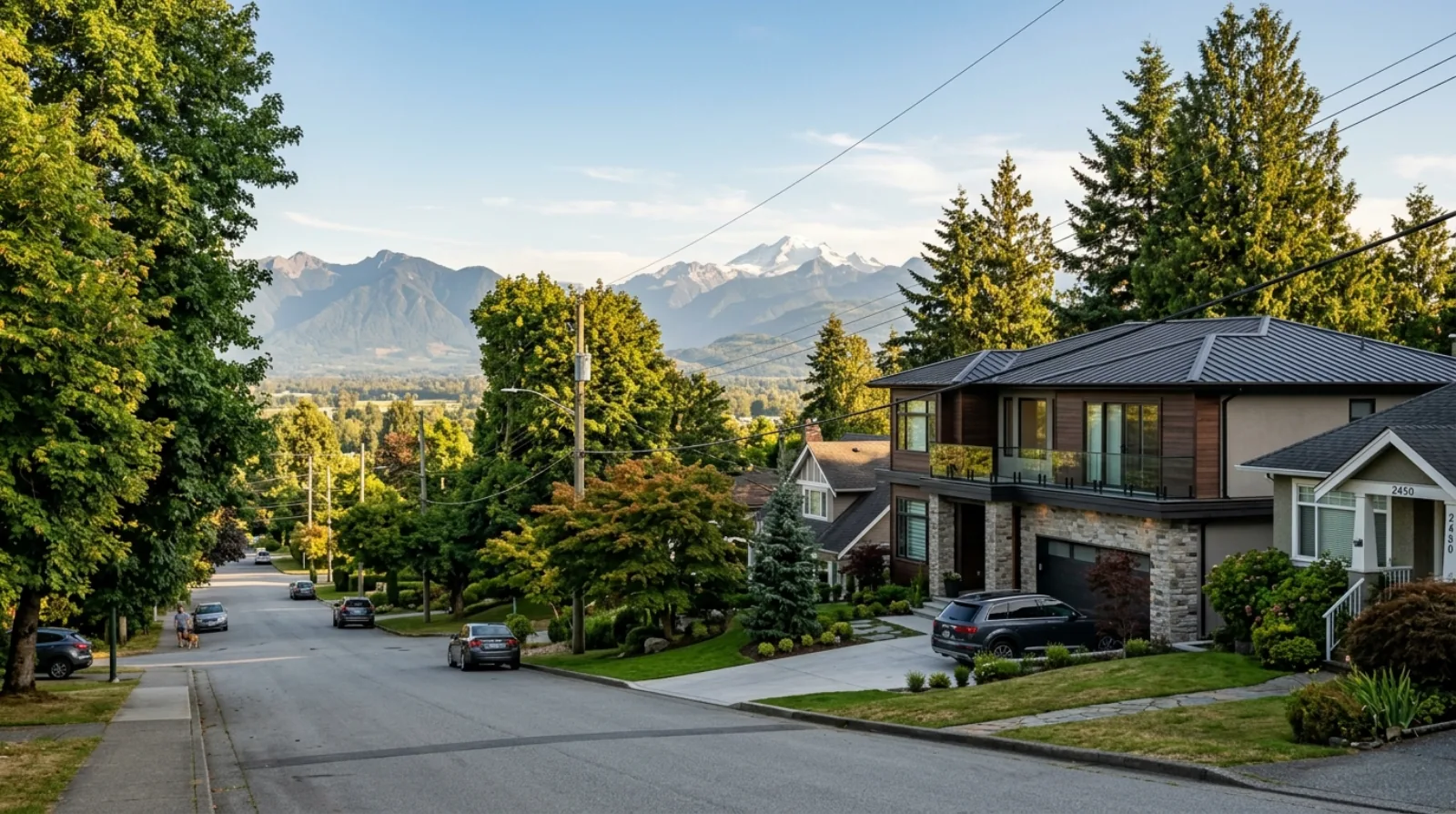
Sandy Hill
Custom Home Builder in Sandy Hill, Abbotsford
Learn more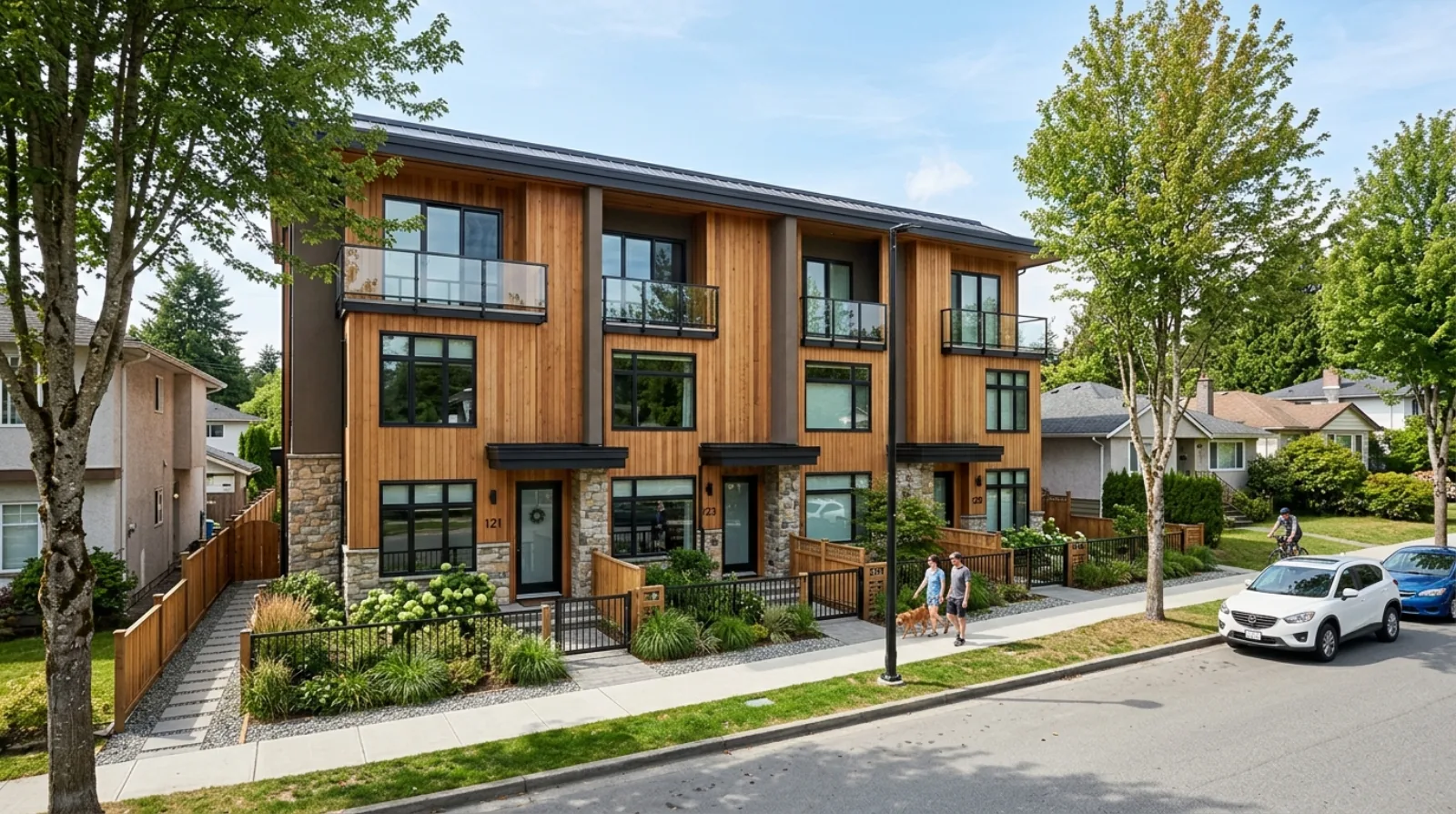
West Abbotsford
Custom Home & Multiplex Builder in West Abbotsford
Learn more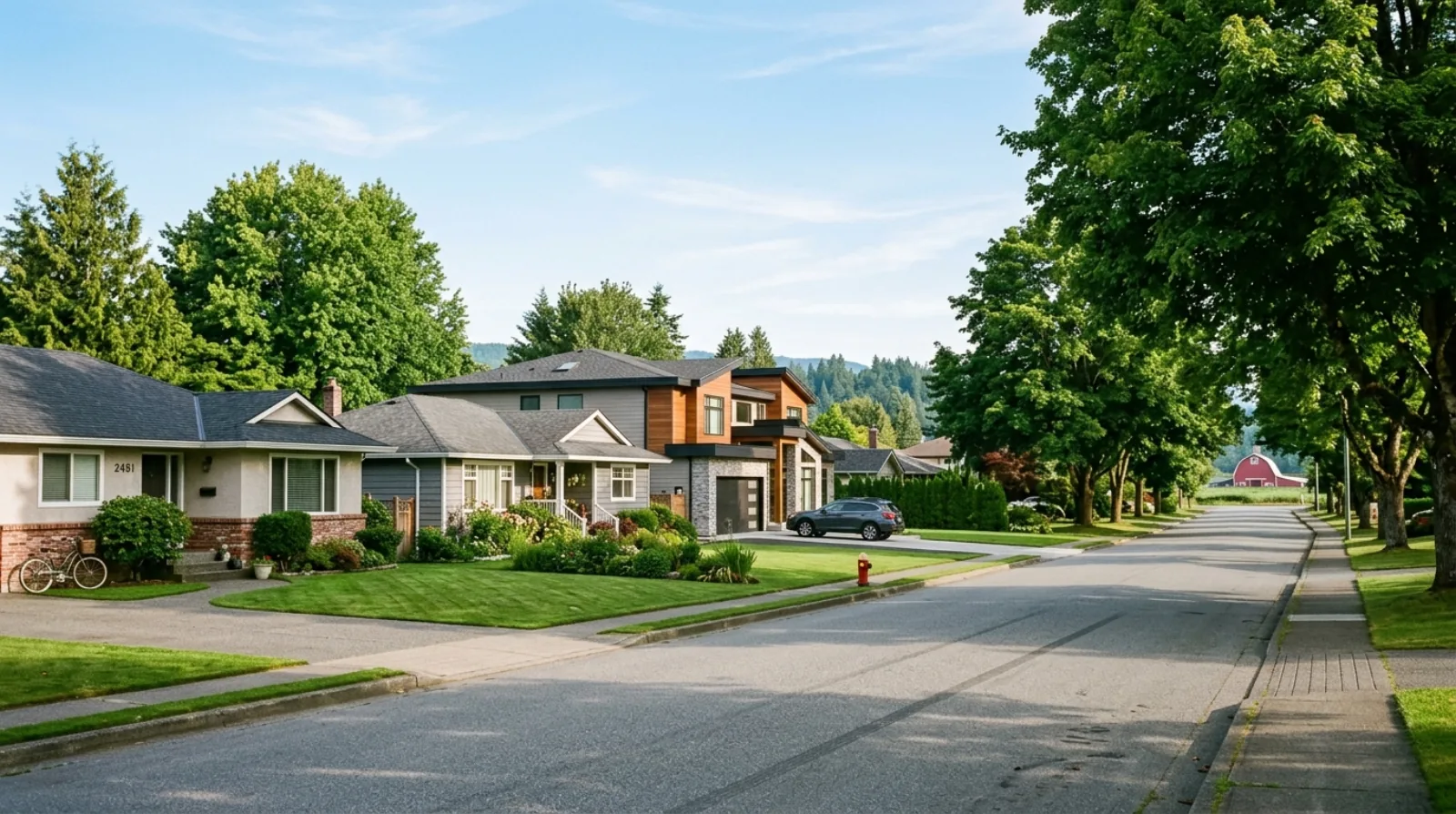
McMillan
Custom Home Builder in McMillan, Abbotsford
Learn moreFrom the Journal
Further reading on Abbotsford.
Begin
Plan your project in Abbotsford.
A short conversation is the fastest way to understand what's possible on your lot, feasibility, schedule, scope, the lot conditions you should be thinking about.