
Sumas Mountain · Abbotsford
Custom Home Builder on Sumas Mountain, Abbotsford
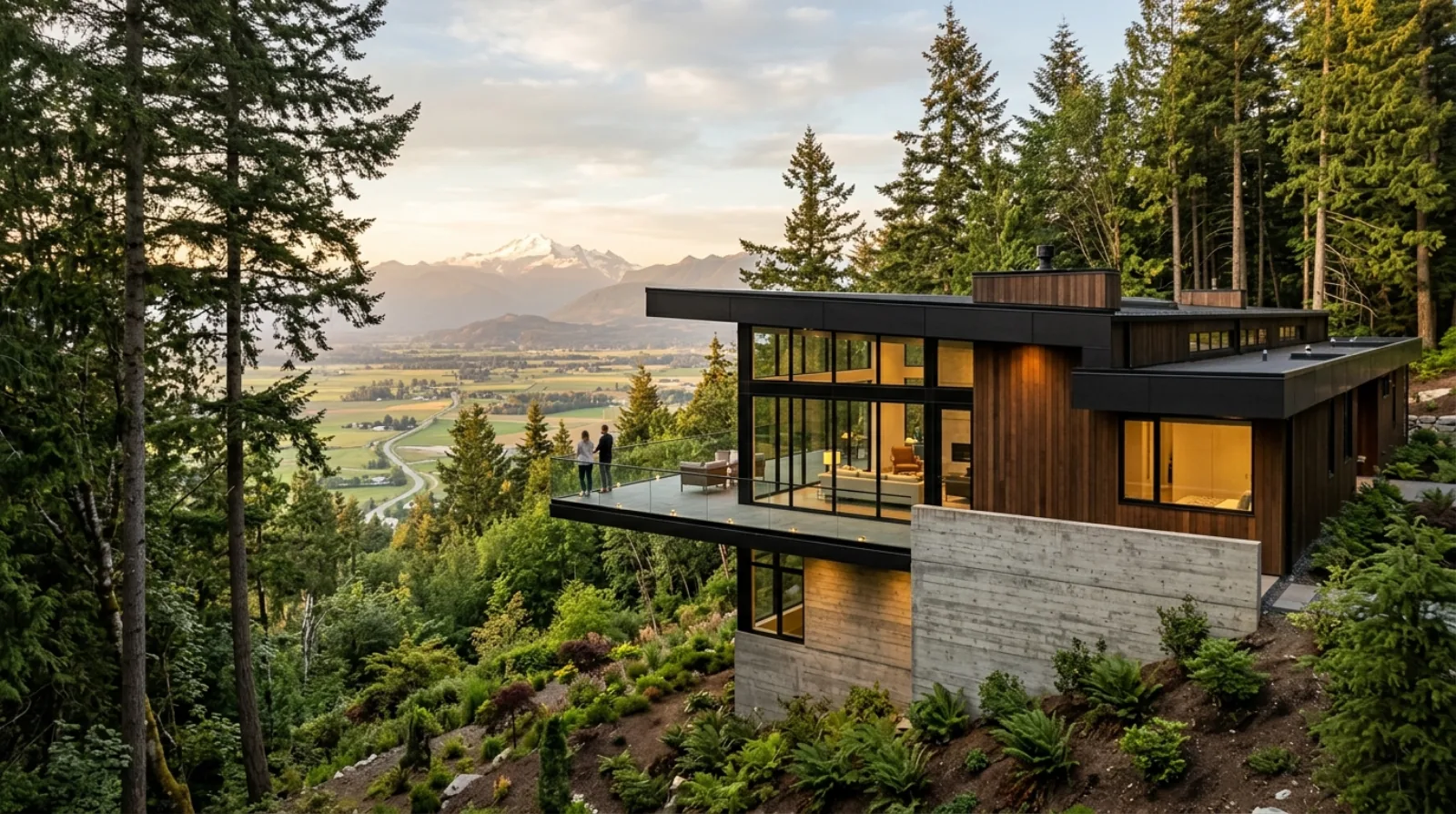
Sumas Mountain and the Eastern Hillsides are where Abbotsford's most ambitious view homes get built, spacious lots set into the slope, panoramic outlooks across the valley to Mount Baker, and the quiet of being surrounded by trees and trails. It's hillside building, and it rewards a builder who actually knows slope. The view is the reason most owners buy here. The foundation and drainage are half of what makes the home stand for fifty years.
Last reviewed July 2026
At a glance
What we do here.
- Hillside custom builds with engineered foundations and structured drainage
- View-protective design that captures the valley and Mount Baker outlook
- Large lots set into the slope, surrounded by trees and trails
- Geotechnical-led scope on the steeper Eastern Hillsides parcels
Our approach
Building in Sumas Mountain.
Hillside building done properly
Sumas Mountain is unforgiving to builders who don't take slope seriously. Foundations need engineering. Drainage has to be designed before architecture is finalised. The homes that turn out beautifully here are the ones whose teams treated the lot as the lead architect from week one. Our process starts with a survey, a preliminary slope assessment and a soils review, and on the steeper Eastern Hillsides parcels, a geotechnical report is baseline scope, not a premium upgrade.
The mountain's geology runs to glacial till and bedrock outcrops on the higher ground, with pockets of variability that a desktop assessment won't catch. Shoring, retention and structured drainage are part of the conversation on most steep lots here. We're direct about which side of that line a specific parcel falls on, because it determines whether a project is a shorter build or a longer one before anything is drawn.
Designing for the view without sacrificing privacy
The view is the brief on Sumas Mountain. Looking south and west, the outlook reaches across the valley toward Mount Baker and the farmland of the prairie below. The harder problem is opening the home to that view while keeping privacy from neighbours up and down the slope, lots stack vertically here more than they do on flat ground, and what you can see, the neighbour above can often see of your roof deck.
That's won or lost in the detailing, glazing layouts, terrace siting, fenestration on the side elevations. We design it carefully, because every hillside owner who's been through one build understands why it matters.
Large lots, restrained homes
Sumas Mountain lots tend to be generous, and the natural setting is part of their value. The best homes here don't shout, the materials are real (stained cedar, board-formed concrete, blackened metal) and they age into the landscape rather than against it. The slope and the trees ask for restraint, and restraint reads better than excess on a wooded mountain lot.
The housing stock and the build pipeline
Sumas Mountain and the Eastern Hillsides are a newer part of Abbotsford's residential story than McMillan or Sandy Hill, much of the development here has happened in the last couple of decades as the slopes opened up for view-driven homes. That means most of the active pipeline is new custom builds and infill on remaining lots, rather than the teardown rotation you see in the older flats. Where an earlier hillside home does come up for reworking, the foundation and the slope conditions are the first things we assess, because retrofitting performance and stability into a half-detailed hillside envelope is brutally expensive.
The lots that come to market here are bought for the outlook and the setting, and the owners building on them are typically making a long-term decision. That tends to mean more deliberate design timelines and a higher finish standard, which suits how we work.
Multiplexes and SSMUH on the mountain
Abbotsford's December 2025 zoning allows up to four homes on most single-family lots under 4,050 square metres, and Sumas Mountain is included in principle. In practice the slope is the constraint: parking, drainage and foundation engineering all get more demanding as the grade increases, and a steep parcel sometimes pencils better for a duplex with a coach house than a full fourplex. The neighbourhood's character is firmly oriented toward larger single-family view homes, so multiplex here is the exception rather than the rule.
When an owner does want to explore density, we run a parcel-specific feasibility against the current bylaw and the actual grade before any design, the math on a hillside lot is genuinely different from the flats in West Abbotsford.
Water, drainage and the envelope
Drainage is what quietly ruins hillside homes, and it does it slowly. Water moving through a slope finds the path of least resistance, and if that path runs under or against the foundation, you get settlement, cracking and a wet basement years later. A proper hillside design captures roof water to a managed discharge, runs perimeter foundation drainage with a clear outlet, and intercepts subsurface water moving downhill before it reaches the building. On some lots that means interceptor drains uphill of the home.
The envelope works harder on an open mountain face, too. Wind exposure on the upper slopes is real, and every new home falls under Step 3 of the BC Energy Step Code plus the Zero Carbon EL-1 requirement, continuous exterior insulation, careful air-sealing and properly specified glazing have to be designed in from the start. The big south-facing glass that makes the view possible is also the hardest part of the envelope to get right.
Why work with Icon on Sumas Mountain
Hillside building is unforgiving to teams that don't take the slope seriously, and it's the work we know best, we've built it on both sides of the Lower Mainland. Icon Projects is a CHBA Master Residential Builder company, and Icon is licensed under BC Housing's 2-5-10 home warranty: two years on labour and materials, five on the envelope, ten on structure. We treat the lot as the lead architect, sequence the geotechnical and drainage reads ahead of the architecture, and stay senior on the job from the first slope assessment through hand-over.
Common Questions
Before we begin in Sumas Mountain.
Are Sumas Mountain builds more expensive because of the slope?+
The slope adds real scope, engineering, retention, structured drainage, sometimes shoring on the steeper Eastern Hillsides parcels. The view usually justifies it. We're direct about what those cost drivers look like during feasibility so the decision is informed, and we never quote a number we can't stand behind, the line items depend on the specific lot's grade and soils.
Do I need a geotechnical report to build on Sumas Mountain?+
On most sloped parcels, yes. The mountain's mix of glacial till and bedrock, combined with real grade, makes a geotechnical assessment baseline scope rather than optional. It's the cheapest insurance on the whole project. We bring the geotechnical and drainage reads forward to the feasibility stage so the foundation strategy is set before architecture, not discovered at permitting.
How is Sumas Mountain different from Auguston for a custom home?+
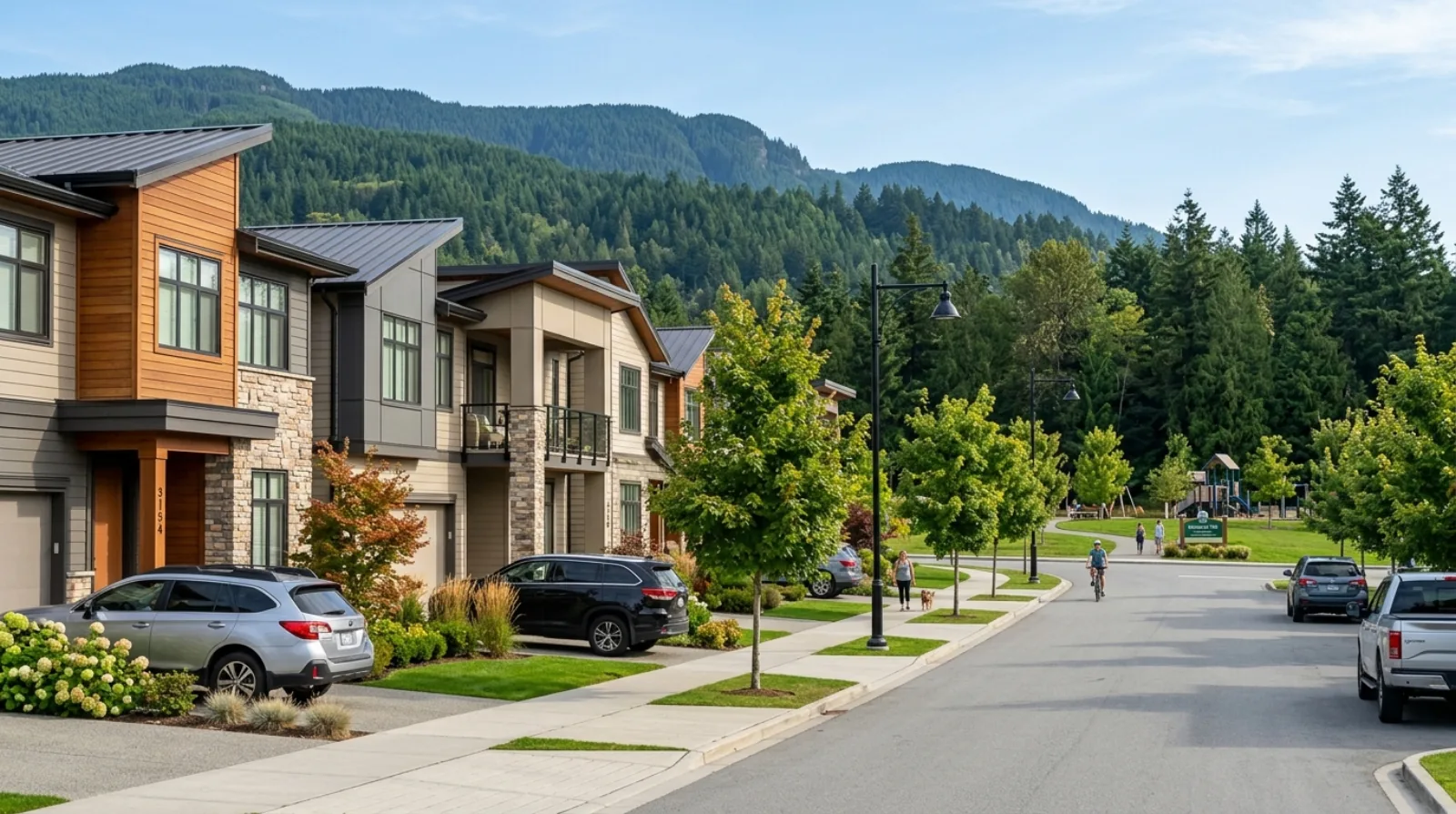
They share the same mountain, but they read differently. Auguston is a master-planned community with a consistent streetscape and walkable, family-oriented blocks on the lower slopes. Sumas Mountain proper and the Eastern Hillsides are more about large lots, steeper grade, panoramic views and a natural setting. For a view-driven hillside home with room and privacy, the mountain. For a planned community feel with parks and sidewalks, Auguston.
Can you capture the Mount Baker view from a Sumas Mountain lot?+
On the right parcel and orientation, yes, the south and west outlook across the valley to Mount Baker is exactly why owners build here. The work is in resolving the view against privacy from neighbours up and down the slope, which is a detailing problem: glazing layout, terrace siting, side-elevation fenestration. We do a careful sightline and orientation study before the design is locked.
Should I renovate or rebuild an older hillside home here?+
On the mountain the foundation and the slope conditions decide it more than anywhere. If the existing foundation is sound, at the right elevation, and the slope is stable beneath it, a renovation can work. If there's any sign of settlement, drainage failure or grading issues, a rebuild is usually the more disciplined long-term call, retrofitting stability and performance into a half-detailed hillside envelope is brutally expensive. We assess the foundation and the grade first, before anything else.
How is drainage handled on a Sumas Mountain lot?+
As a first-class design problem, not an afterthought. A hillside lot collects water from everything uphill of it, so the design captures roof water to a managed discharge, runs perimeter foundation drainage with a clear outlet, and intercepts subsurface water moving downhill before it reaches the building. On some lots that means interceptor drains uphill of the home. Get it right at design and you never think about it again; get it wrong and you think about it every November.
What BC Energy Step Code level applies on Sumas Mountain?+
Step 3 of the BC Energy Step Code applies to new Part 9 homes, plus the Zero Carbon EL-1 requirement since March 10, 2025. The exposure on an open mountain face makes the envelope work harder, not easier, wind on the upper slopes is real, so continuous exterior insulation, careful air-sealing and properly specified glazing have to be designed in from the start. A stamped energy model is required before the city issues.
Are there riparian or creek setbacks on the mountain?+
Some hillside lots have creeks or seasonal watercourses running through or below them, and where there's fish-bearing water within 30 metres, BC's Riparian Areas Protection Regulation can apply, a Qualified Environmental Professional assessment and a protected setback that may reshape the buildable footprint. It's more common on the mountain's flanks than people expect. We check it at the lot tour.
Can I build a multiplex on a Sumas Mountain lot?+
Abbotsford's December 2025 zoning allows up to four homes on most single-family lots under 4,050 square metres, the mountain included in principle. The slope is the constraint, parking, drainage and foundation engineering all get more demanding with grade, and a steep parcel sometimes pencils better for a duplex with a coach house than a full fourplex. The neighbourhood leans firmly toward larger single-family view homes, so multiplex is the exception. We run feasibility against the actual grade before any design.
How long does a hillside build on Sumas Mountain take?+
Longer than a flat-lot build, because the foundation, retention and drainage work is more involved and the geotechnical and permit review layers add detail to the file. We won't quote a week count we can't stand behind, the variable is the lot's grade and soils. What we do is map every phase into the schedule from the first slope assessment and give you a milestone-by-milestone plan once design is locked.
Are you a 2-5-10 licensed builder?+
Yes. Icon is licensed under BC Housing's mandatory home warranty, two years on labour and materials, five years on the building envelope, ten years on structural defects. Every home we hand over on Sumas Mountain is warranty-backed and registered, built to the CHBA Master Residential Builder standard.
Continue exploring
Other areas we serve.
From the Journal
Further reading on Sumas Mountain.
Begin
Plan your project in Sumas Mountain.
A short conversation is the fastest way to understand what's possible on your lot, feasibility, schedule, scope, the lot conditions you should be thinking about.