Planning
Homeowner Participation Deals in Multiplexing: How the Partnerships Actually Work
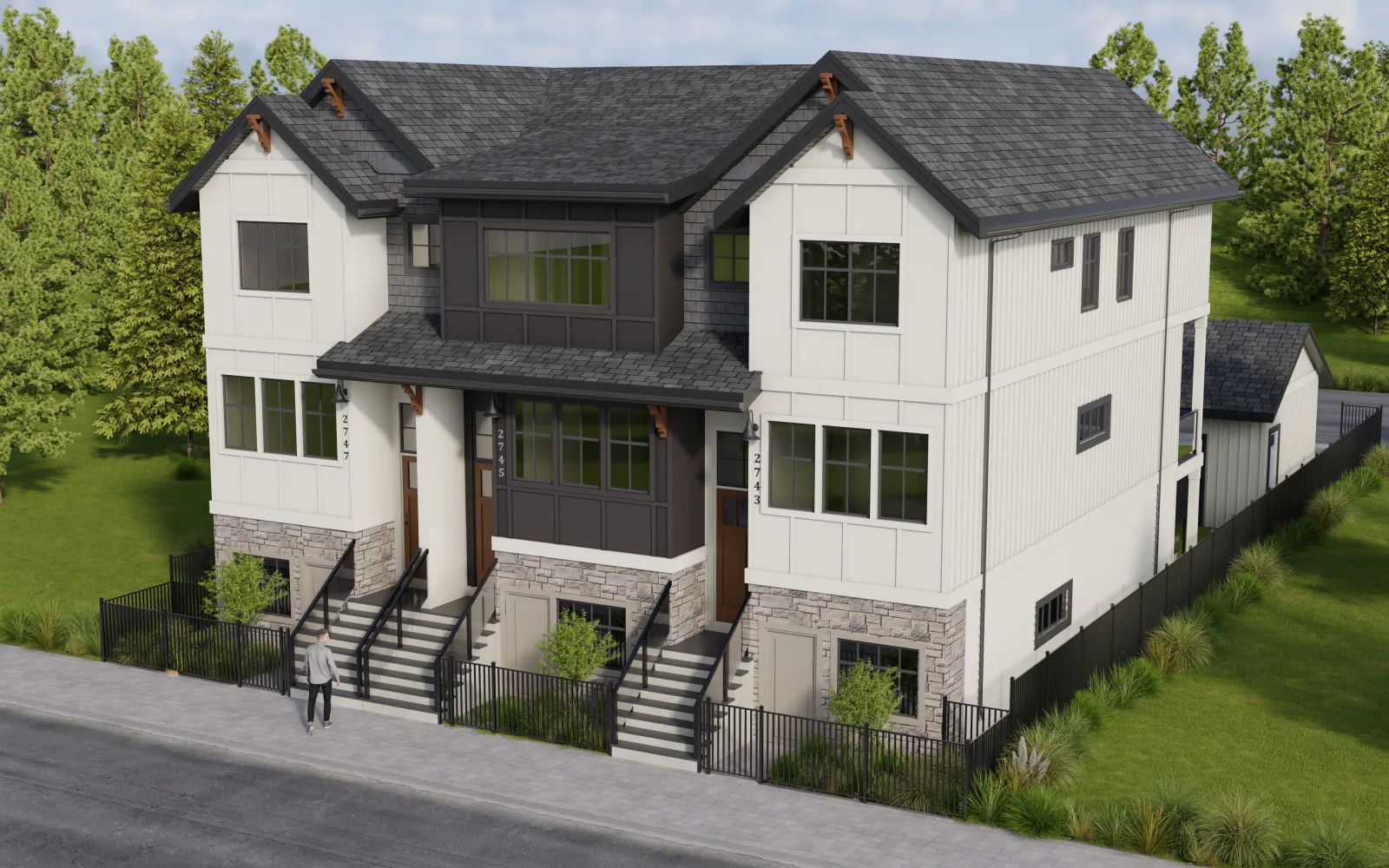
You own the lot but not the construction financing. A homeowner participation deal lets you partner with people who bring the money and the building expertise. Here's a builder's read on how these partnerships work, where the value really sits, and what to protect before you sign.
You own the lot. You've read that it can now hold four or six homes instead of one. But you don't have a couple of million dollars in construction financing sitting in an account, and you've never run a build in your life. So the obvious question is the one we hear constantly: is there a way to develop my property without funding and managing the whole thing myself?
There is. It's usually called a homeowner participation deal, or in the language of the people who structure them, a joint venture. The idea is simple even if the paperwork isn't: you contribute the most valuable thing in the deal — the land — and partner with people who bring the money and the construction expertise. Everyone shares in what the finished project is worth.
That's the appealing version. Here's the honest version, because these deals can be excellent or they can quietly transfer most of the value away from the person who owned the dirt in the first place. The difference is entirely in how the deal is built. This is a builder's read on how these partnerships work, where the value actually sits, and what a homeowner needs to protect before signing anything.
The three roles in every deal
Nearly every multiplex participation deal, however it's dressed up, comes down to three roles. There's the landowner — you — who contributes the property. There's a capital partner, who brings the cash the project needs beyond what a construction loan will cover. And there's the builder or sponsor, who actually designs, permits, and constructs the homes and runs the project day to day.
Sometimes those roles are three separate parties. Sometimes the builder also brings capital, or the capital partner and builder are the same firm. But the functions don't disappear just because they're combined, and understanding which party is playing which role is the first step to understanding whether a deal is fair. When one party wears two hats, you want to know it, because it changes who has leverage and where the conflicts of interest live.
What your land is actually worth in the deal
This is the number that decides everything, and it's the one most homeowners get wrong.
Your land does not enter a multiplex deal at its old assessed value, and it should never enter at what you paid for it. It enters at its appraised development value — what the lot is worth now that it can hold several homes. A standard lot that used to be worth its single-family assessment can be worth substantially more the moment SSMUH zoning lets it carry a fourplex or sixplex. That uplift is the value you created simply by owning the right piece of land at the right time, and it belongs to you, not to the partner who shows up with a chequebook.
So the single most important line in any participation deal is how your land is valued going in. It should be contributed at an independent, professionally appraised value, documented in a written valuation memo — not a number the developer proposes over coffee, and not last year's tax assessment. If a prospective partner resists an independent appraisal, that tells you most of what you need to know about the deal.
How the value gets split
Once the land is valued, the project's total value is divided among the three roles. In BC multiplex deals, land typically ends up holding something like 35 to 45 percent of the equity, the capital partner 30 to 40 percent, and the builder or sponsor 15 to 25 percent. Those are ranges, not rules, and they move with the specifics of the lot and the deal.
But equity percentage alone does not tell you what you'll take home, and this is the trap. Two deals can have identical equity splits and pay out wildly different amounts, because the order in which money comes back out of the project — the waterfall — is where the real economics live.
A typical waterfall runs in tiers. First, everyone gets their capital back, pro-rata. Then the capital partner earns a preferred return — often in the range of an eight to ten percent annualized return — before anyone else sees profit. Then there's a catch-up, where the sponsor's share is brought back toward parity. And finally the remaining profit is split, often something like 70/30 or 80/20. A homeowner who focuses only on the headline equity percentage and ignores the waterfall can be genuinely surprised at the end. You have to read both.
The capital stack, in plain terms
It helps to see how a deal actually funds itself. Picture a lot worth two million dollars with construction costs around 2.4 million. A senior construction loan might cover roughly 75 percent of costs — and can go higher with CMHC financing programs designed for this kind of housing. Your land contribution counts as equity in the stack. A capital partner tops up the remaining equity with cash, and the builder typically puts in a smaller slice plus their fees and management.
You don't need to memorize the arithmetic. The point is this: your land is doing real financial work in that stack. It's not a nice-to-have contribution — it's often the largest single piece of equity in the whole project. Deals should be structured to reflect that, and when they're not, it's usually because no one on the other side of the table volunteered to.
The legal shapes these deals take
In BC, participation deals are typically wrapped in one of a few structures, and the choice has real consequences for your liability and your taxes.
A bare trust arrangement, where a trustee holds legal title while beneficial ownership sits underneath, is common because it can allow interests to move without immediately triggering property transfer tax. A general partnership is simple but exposes every partner to unlimited shared liability — generally the structure to be most cautious about. A limited partnership lets a general partner run the project while limited partners' exposure is capped at what they put in, which is often the more protective shape for a homeowner. And straightforward co-ownership, where each party holds a fractional interest, exists too, though lenders are sometimes wary of it.
The right vehicle depends on your situation, and it's genuinely a question for a lawyer and an accountant who do development work — not a decision to take on the builder's word. The tax layer alone is enough to warrant advice: property transfer tax, GST and the New Housing Rebate on newly built homes, and how any gain is treated all turn on how the deal is structured and can meaningfully change what you net.
Where these deals go wrong
We've watched enough of these to know the failure points, and they're consistent. Construction runs over budget and someone has to absorb it. Scope creeps without the owner's consent. A capital call comes due and a partner can't fund it. Related-party contracts — where the builder hires its own affiliated trades — get marked up above market. Partners disagree about whether to sell or refinance at the end. Or a partner dies or is incapacitated mid-project and there's no plan for what happens next.
None of these is exotic. Every one is foreseeable, and every one can be addressed in the agreement before it happens. That's the entire point of doing the paperwork carefully at the start: not because you expect the deal to go badly, but because the protections cost nothing to negotiate up front and are nearly impossible to add once the money is committed and the shovels are in the ground.
What a homeowner should insist on
If you take nothing else from this, take the short list of protections worth holding firm on.
Your land goes in at an independent appraised value with a written valuation memo — never an assessment, never a proposed number. You get an ownership floor that survives dilution if later capital is raised, so your share can't be quietly watered down. You get a right of first refusal if another partner tries to sell their interest. You get major-decision approval — a veto — over selling, refinancing, or changing the project's scope. You get a cap on related-party contracts and independent oversight of the construction draws, so the money leaving the project is checked by someone who doesn't work for the builder. And you get clear, written rules for what happens on cost overruns, capital-call defaults, and the death or incapacity of any partner.
That's not an adversarial list. A good partner will agree to most of it without much argument, because a good partner is planning to run the project the way those clauses describe anyway. The clauses simply make it enforceable. The moment a prospective partner pushes hard against independent valuation or independent oversight is the moment to slow down.
When a participation deal is the right move
Here's the plain read. A participation deal makes sense when you can't do the project alone — you have valuable land but not the capital or the construction capacity — and the project is strong enough to be worth bringing partners into. In that situation, a well-structured deal can let you develop your property, keep a meaningful share of the upside, and hand the financing and construction risk to people equipped to carry it. That's a genuinely good outcome, and for a lot of Burnaby and Fraser Valley homeowners it's the only realistic path from single-family lot to finished multiplex.
But "well-structured" is carrying all the weight in that sentence. The same lot, the same partners, and the same finished building can leave you with a fair share of the value or a disappointing one, depending entirely on the appraisal, the waterfall, and the protections in the agreement. This is one of those decisions where an afternoon with the right lawyer and an honest builder is the cheapest money you'll spend on the whole project.
How we approach it
We're a builder, not your capital partner and not your lawyer, and we think that separation is a feature. Our job is to tell you what your lot will actually carry, what it will genuinely cost to build, and whether the numbers a prospective partner is showing you reflect reality on the ground. We'd rather you walk into a participation deal with clear eyes and independent advice than sign something because the pitch was polished. Small mistakes compound fast in multi-unit development, and the most expensive ones are made before construction ever starts.
Frequently asked questions
What is a homeowner participation deal in a multiplex project?
A homeowner participation deal — often called a joint venture — is an arrangement where the landowner contributes their property instead of cash, and partners bring the money and the construction expertise. Everyone shares in the finished project's value. It's how a homeowner with a lot that can now hold a fourplex or sixplex, but without construction financing or building experience, can still develop the property. At Icon Projects we act as the builder in these arrangements, not the capital partner and not the lawyer, so our advice on what a lot can carry stays independent of who is funding it.
How is my land valued when I contribute it to the deal?
Your land should enter at its independent, appraised development value — what the lot is worth now that zoning lets it hold several homes — not last year's tax assessment and not what you paid for it. That value should be documented in a written valuation memo by a qualified appraiser. If a prospective partner resists an independent appraisal, treat that as a warning sign. The going-in land value is the single most important number in the whole deal, because everything else is calculated from it.
What should a homeowner insist on before signing a participation deal?
Hold firm on a short list: your land contributed at an independent appraised value with a written memo; an ownership floor that survives dilution if more capital is raised; a right of first refusal if a partner sells; major-decision approval (a veto) over selling, refinancing, or scope changes; a cap on related-party contracts plus independent oversight of construction draws; and written rules for cost overruns, capital-call defaults, and the death or incapacity of a partner. A good partner agrees to most of this without much argument. This is general guidance, not legal advice — have your own lawyer and accountant review any agreement.
Considering a partnership to develop your property? Start by understanding what your lot can actually build and what it will cost — that's the foundation every fair deal is negotiated from. When you want a straight, builder's read on a specific opportunity or a deal that's already on the table, book a conversation with our team.
The same lot, the same partners, and the same finished building can leave you with a fair share of the value or a disappointing one. The difference is the appraisal, the waterfall, and the protections in the agreement.
— Sanj Aggarwal, Icon Projects
Icon Projects is a CHBA Master Residential Builder building above code across Burnaby, Greater Vancouver, and the Fraser Valley since 2004, backed by the BC Housing 2-5-10 warranty. Follow along on Instagram for projects in progress.
This article is general information for BC homeowners and is not legal, tax, financial, or investment advice. Joint-venture and partnership structures carry significant financial and legal risk and vary with each property and deal. Before entering any participation arrangement, get independent advice from a lawyer and an accountant experienced in BC real estate development.
Related on the Journal