Between sketch and keys, plan on 18 to 24 months. Anyone promising a Burnaby custom home in 12 is skipping steps. Here's where the variance actually lives, phase by phase, with the 2026 regulatory context.
How long does it take to build a custom home in BC?
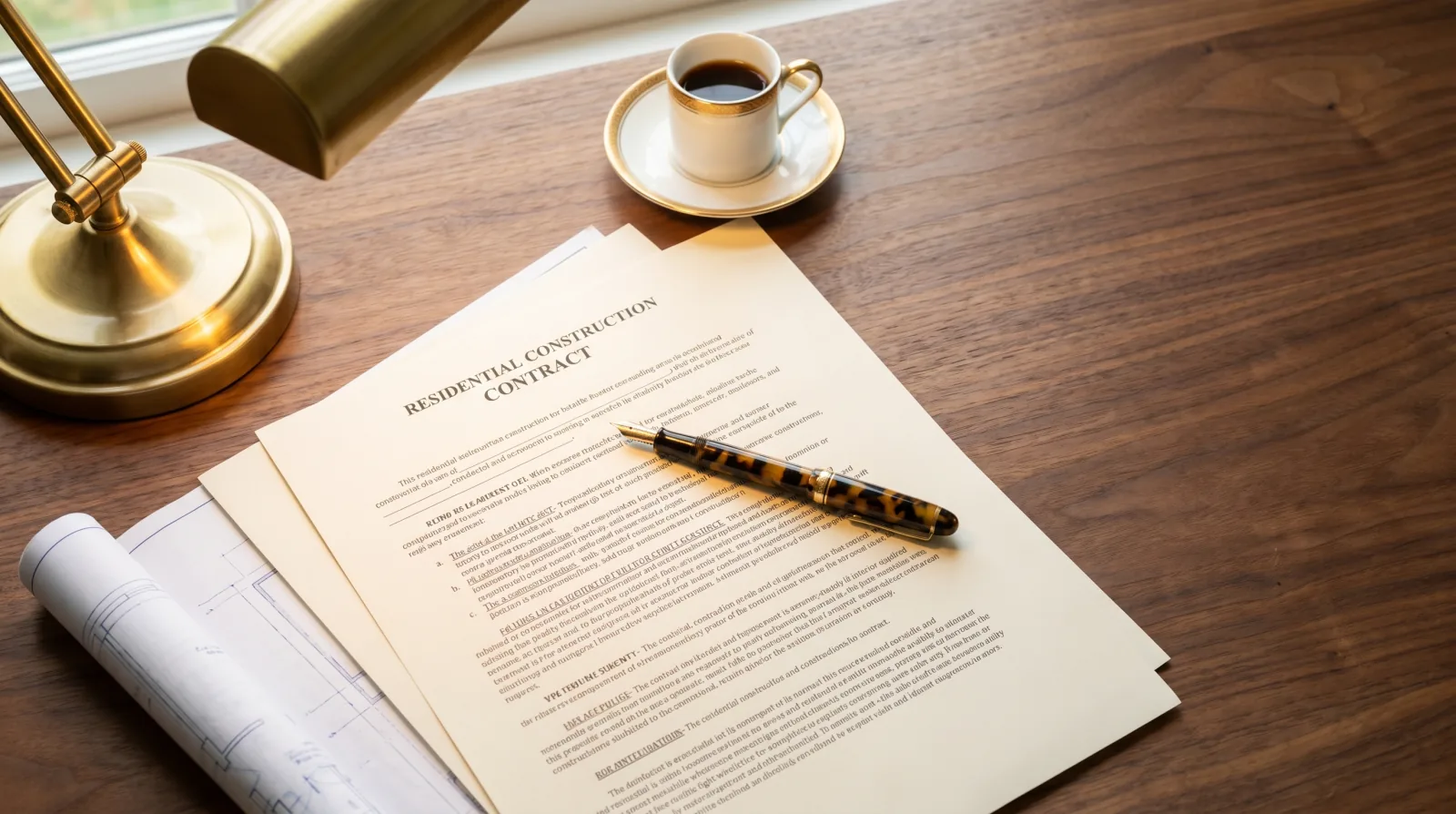
Building a custom home in BC takes 18 to 24 months from first consultation to occupancy. Design and permitting account for 8 to 16 months depending on the municipality. Construction runs 12 to 16 months. The timeline varies by lot complexity, permit jurisdiction, and how quickly decisions are made. At Icon Projects, our Burnaby builds land consistently in that 18 to 24 month range, and we tell you that on the first call, not after you've signed.
The honest answer is the one most builders won't give on a first call. Between sketch and keys for a Burnaby custom home, plan on 18 to 24 months. Some projects come in faster. A handful take longer. Anyone promising a custom home in 12 months is either skipping steps or hasn't started the clock yet.
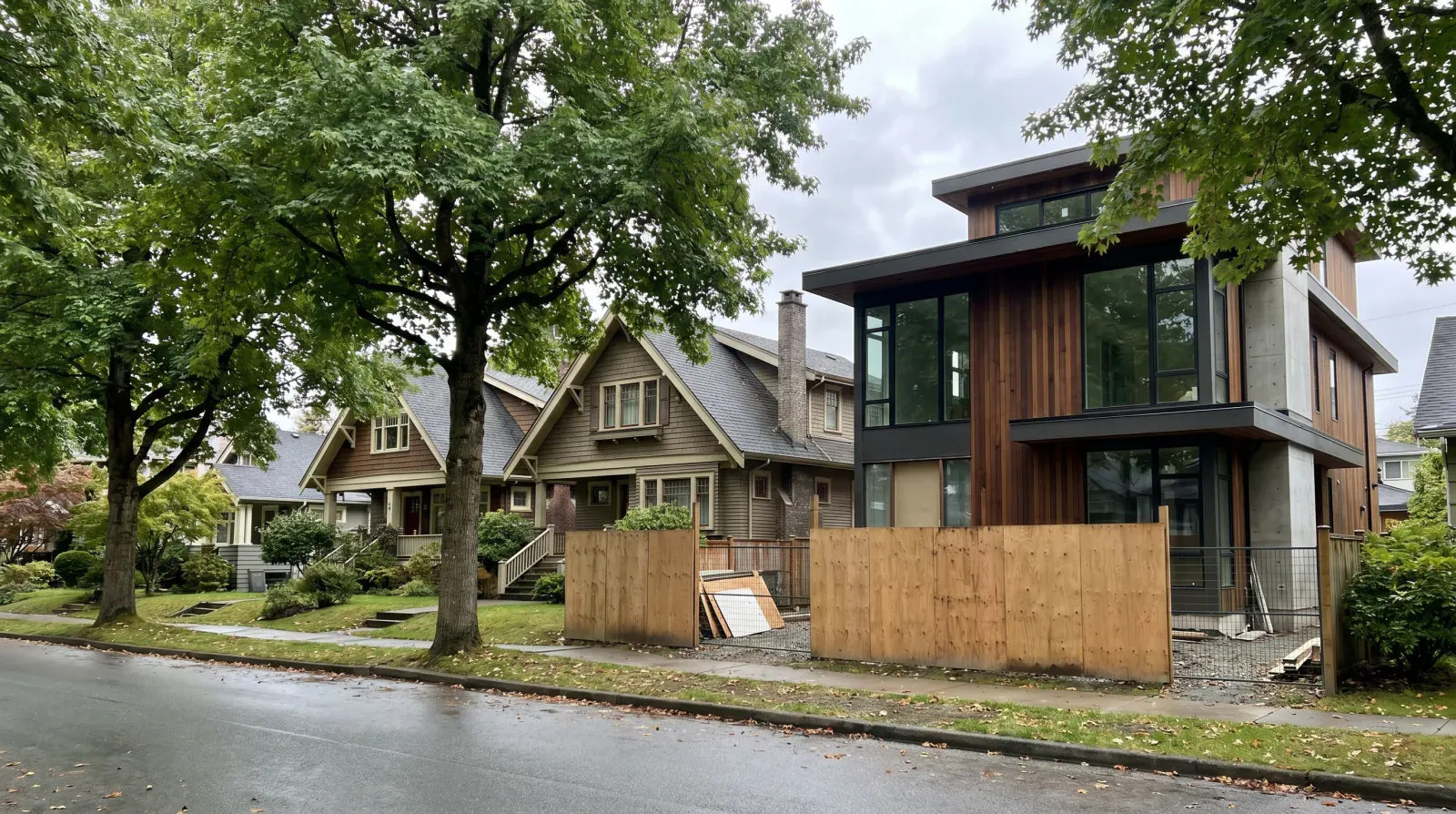
We work primarily in Burnaby with regular projects in Vancouver, Coquitlam, North Vancouver, Surrey, and across the Fraser Valley. The phase structure below is consistent across all of them; the variance comes from the municipality, the lot, and the brief.
Phase 1 · Design (4 to 7 months)
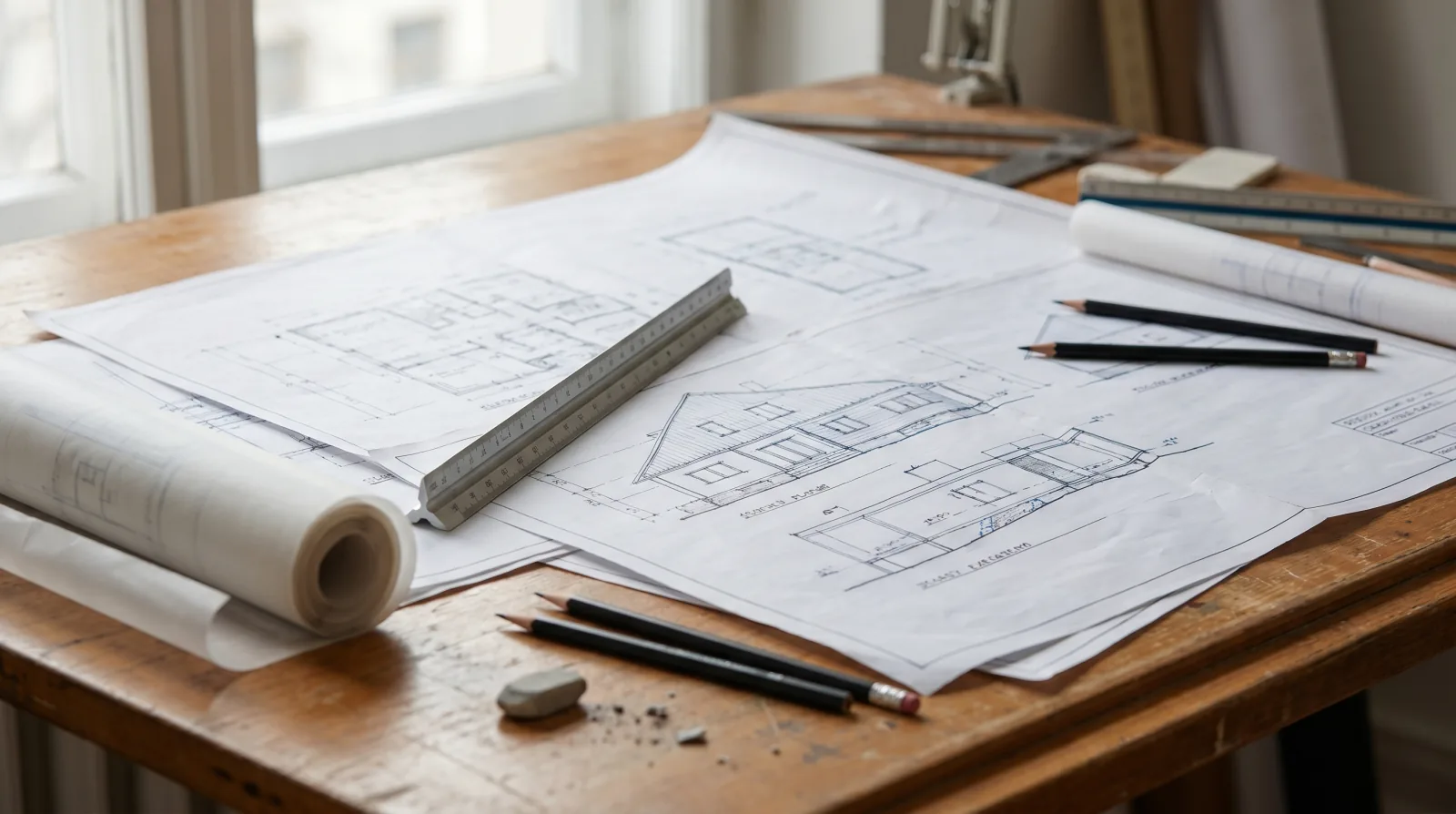
Schematic design first. Then design development. Then construction documents. Each phase is its own conversation between you, your architect, and us as the builder. The variance is almost entirely about decision speed. Clients who answer questions in days move roughly twice as fast as clients who answer in weeks.
What a properly resolved design phase produces:
- A coordinated architectural set with structural set and mechanical/electrical narratives
- An energy compliance package produced by a certified Energy Advisor that demonstrates Step 3 (or higher) of the BC Energy Step Code and EL-4 of the Zero Carbon Step Code, both required for new Part 9 homes since January 1, 2025
- A tree plan if the lot is in Burnaby (or any municipality with a tree bylaw) showing protected trees, retention plan, and replacement plan
- A geotechnical report if the lot has slope, fill, or soil concerns
When all four converge before permit submission, the next phase moves cleanly. When any one of them is incomplete, the permit phase stretches.
Phase 2 · Permits (4 to 9 months)
This is the longest single source of timeline variance. A flat infill lot in a friendly municipality might come back in four months. A rezoning, a riparian setback, or a heritage overlay can push you toward nine. The municipality matters more than the design.
Burnaby specifically
Burnaby has been digital-only for permit submissions on or after January 1, 2026, with all permits issued on or after March 31, 2026 in digital format only, per the City of Burnaby New Home Construction page. Single-family permits in Burnaby typically take 12 to 20 weeks for a clean application; complex infill or steep-slope sites can take longer. Burnaby is also a partner in the provincial Building Permit Hub, launched on May 27, 2024.
July 2026 update: Burnaby's full Zoning Bylaw Rewrite (Phase 4) took effect July 1, 2026. Applications submitted after that date should confirm setback, unit-count, and lot-coverage rules against the new bylaw before submitting. See our R1 SSMUH guide for what changed, or run your address through our Burnaby lot eligibility tool for your specific unit count.
The Building Permit Hub is reshaping the permit timeline province-wide
The BC Building Permit Hub is a one-stop digital intake for residential permits, designed to standardize submissions across municipalities and automatically check for completeness and code compliance before the file reaches a human reviewer. The Hub started with twelve local governments and two First Nations as pilot partners and has been expanding through 2025 and into 2026. For low-density housing up to four units, the Hub is intended to compress the early review cycle.
Three regulatory items that add weeks if you find out late
- Any residential project within 30 metres of a fish-bearing stream falls under BC's Riparian Areas Protection Regulation, requiring an assessment by a Qualified Environmental Professional and a Streamside Protection and Enhancement Area between 10 and 30 metres wide.
- Every new Part 9 home in Burnaby and across BC has to meet Step 3 of the Energy Step Code at minimum, which requires a certified Energy Advisor's modeling with the building permit application.
- Tree bylaws in Burnaby, Vancouver, North Vancouver, West Vancouver, and Coquitlam each have their own protected-tree thresholds and replacement requirements. The Burnaby threshold is the lowest at 20 cm trunk diameter on a development-application property, per the Burnaby Tree Bylaw.
Phase 3 · Pre-construction (4 to 6 weeks)
Permits in hand, we run subtrade tendering, finalize material lead times, lock the schedule, and stage the lot. This is the phase most owners forget exists. Skipping it is the single most common reason a project starts late or runs over.
What pre-construction actually does:
- Tenders the trade stack against the final permit-issued drawings, which are usually not identical to the drawings tendered earlier
- Confirms long-lead material delivery dates against the construction schedule
- Locks the construction schedule with the structural sequence, the inspection windows, and the move-in target
- Prepares the lot: fencing, tree protection, erosion-and-sediment-control measures, site office or trailer, utilities to the site
- Confirms the site safety plan and the construction access plan with neighbours and the City as needed
A four-to-six-week pre-construction phase that's done properly saves four to eight weeks of friction during construction.
Phase 4 · Construction (12 to 16 months)
Excavation through final walkthrough. Custom homes sit at the upper end of the range because of finish complexity: the millwork, the stone, the integrated mechanical systems. A simpler build, with a forgiving climate window and no scope changes, can land at twelve. A complex build with imports and a winter site can stretch toward eighteen.
The construction phase isn't a single block of even effort. Three sub-phases each have their own pace:
- Foundation and framing (3 to 5 months). Excavation, foundation pour, framing the structural shell. Weather-sensitive at the start; less so once the roof is on.
- Mechanical, electrical, and rough-in (3 to 4 months). All the systems that go inside the walls. Inspections cluster here; sequencing matters.
- Finishes and trade-out (5 to 7 months). Drywall, millwork, flooring, stone, fixtures, paint, landscape. The longest sub-phase by calendar, the one that's most sensitive to material lead times and decision lag.
What actually slows things down
- Design changes after permit submission. Each one resets a chunk of the schedule and can require a permit revision.
- Material lead times for imports, specialty windows, and certain stone slabs. Triple-glazed Step Code-grade windows can run 14 to 20 weeks. Order early.
- Inspection scheduling. Every municipality has weeks where the calendar tightens. Burnaby, Vancouver, and Coquitlam each have their own inspection booking protocols.
- Weather at three or four critical points: foundation pour in deep cold, framing in heavy rain, exterior cladding through a wet stretch, exterior paint in a hot dry summer.
- Subtrade availability during peak summer. The Lower Mainland trade stack tightens noticeably from May through September.
What doesn't slow things down
- The size of the home, within reason. A 4,500 sq ft and a 6,500 sq ft home build on roughly the same calendar.
- Engaging multiple trades. The right builder sequences trades so they overlap rather than block each other.
- Asking too many questions. Asking early is faster, every time, than catching up later.
- Specifying high-end finishes, as long as they're specified at the right time. The lead times are real but predictable.
How the BC home warranty interacts with timeline
Under BC's Homeowner Protection Act, every licensed residential builder carries 2-5-10 home warranty insurance: two years on materials and labour, five years on the building envelope, ten years on structural defects in load-bearing elements. The warranty kicks in at substantial completion, not at any earlier milestone. A few practical implications:
- The substantial completion date is the date the warranty clock starts. Owners sometimes push for an early occupancy permit before substantial completion, which can complicate warranty coverage if defects emerge between occupancy and substantial completion.
- Warranty inspections at year one and year five become predictable touchpoints. Building those into the long-term ownership plan from day one makes them less disruptive.
- The 10-year structural warranty changes the math on cutting corners during construction. A structural issue that emerges in year eight on a load-bearing assembly is the builder's problem, not the owner's.
A realistic timeline for a Burnaby custom-home owner
If you're walking a Burnaby Heights or Capitol Hill lot today and considering a custom build, the realistic schedule against your real-life calendar looks roughly like this:
- Months 1 to 6: lot due diligence, tree inventory, geotechnical report, design brief, schematic design
- Months 6 to 12: design development, construction documents, energy modeling, permit submission package complete
- Months 12 to 18: permit review (with potential resubmissions), pre-construction
- Months 18 to 34: construction
- Months 34 to 37: substantial completion, occupancy, final walkthrough, warranty handover
That's a three-year arc from initial lot conversation to the family living comfortably in the finished home. Compressing it past 24 months from sketch to keys takes either a simple brief, a forgiving lot, or both.
Build three months of buffer into your move-in date. Not because we expect to need it. Because the families who build it in are the ones who actually enjoy the last eight weeks instead of camping out among unfinished trim.
Icon Projects Team
Aligning the schedule with real life
The single most useful thing a client can do is align the real-life calendar with the realistic schedule, not the optimistic one. Leases. Schools. Work moves. Anything that touches the people moving in. The optimistic schedule never wins.
A few specific patterns we recommend:
- Don't list your existing home for sale until permits are issued and pre-construction is locked. Permit timelines are the variable; your sale date should follow them, not lead them.
- If kids are in the schools you want to stay in, time the move for summer rather than mid-school-year, even if it means a few extra weeks of overlap on the existing home.
- Plan major personal events (weddings, work travel, in-law visits) around the construction phases, not against them. Framing is easier to live with than finishes.
- Build the move-in buffer into the contract dates from the start. Three months at the back end is a small price for a calm move.
The same advice holds across Burnaby, Vancouver, Coquitlam, North Vancouver, and the Fraser Valley. The municipalities differ. The principles don't.
Frequently asked questions
- How long does it take to build a custom home in Burnaby?
- A custom home in Burnaby takes 18 to 24 months from first consultation to occupancy. Design runs 4 to 7 months. Permits in Burnaby currently take 12 to 20 weeks for a clean single-family application under the 2026 digital-only process. Pre-construction runs 4 to 6 weeks. Construction runs 12 to 16 months depending on scope and finish specification. Icon Projects works primarily in Burnaby, where the permit environment is more sequenced than in neighbouring municipalities, skip a step and the file goes to the back of a queue.
- What is the slowest part of building a custom home in BC?
- Permitting is the single largest source of schedule variance on a BC custom home. A clean application on a flat Burnaby infill lot might come back in 12 weeks. A rezoning, heritage overlay, riparian setback, or complex slope can push that toward 9 months. The design phase is controllable, fast clients move roughly twice as fast as slow ones. Permitting is largely outside the owner's control once the package is submitted to the City.
- Can a custom home in BC be built faster than 18 months?
- Yes, but only under specific conditions: a simple brief, a forgiving lot (flat, no tree retention, no geotechnical triggers), fast owner decision-making, and a municipal permit context that moves quickly. In practice, most Burnaby projects at any meaningful specification land between 20 and 26 months from first design conversation to occupancy. Anyone promising much less without a specific phase-by-phase explanation is not accounting for something.
- When should I list my existing home for sale if I'm building a custom home?
- Do not list until permits are issued and pre-construction is locked. Permit timelines are the variable you cannot control. List too early and you face a gap between sale and occupancy with no confirmed move-in date. The practical approach: get a realistic permit estimate from your builder, add a buffer, and use that as the earliest possible sale date. Permit-in-hand means the major schedule variable is resolved.
- How does the BC Building Permit Hub affect custom home timelines?
- The BC Building Permit Hub provides automated completeness and code-compliance checking before a file reaches a human reviewer, which compresses early permit review cycles for low-density housing up to four units. Burnaby is a participating municipality. Well-prepared submissions benefit; incomplete submissions get flagged faster. The Hub does not shorten permit timelines in absolute terms, but it removes weeks of back-and-forth on fixable submission issues early in the process.
- Does building through the winter or BC's wet season slow a custom home down?
- Less than most owners expect, if the crew plans for it. Interior work, which makes up most of a build, runs steadily once the shell is closed regardless of season. Some outdoor phases move differently in winter: excavation on a saturated site and exterior finishes that need dry conditions can slow or wait for a break in the weather. Weather protection, temporary roofing, tarping, and site drainage, is built into the schedule from the start rather than added after a wet week causes a problem.
- How does a custom home timeline compare to a major renovation timeline?
- A major renovation that displaces the owner runs roughly eighteen months of disruption on a comparable scope, close to a custom home's 18 to 24 month arc, because both involve permits, structural work, and a full trade sequence. The gap opens on smaller-scope work: a renovation that keeps the existing footprint and doesn't touch the structure skips the lot-feasibility phase and often faces a lighter permit review than a full new build. The decision between renovating and rebuilding usually comes down to what the existing structure can support, not just which option is faster.
- Does the BC Housing 2-5-10 warranty affect the construction timeline?
- The 2-5-10 Home Warranty is mandatory third-party insurance on every home built by a licensed residential builder in BC, two years on labour and materials, five years on the building envelope, ten years on structure. It does not add time to the build itself, coverage is a condition of the licensed-builder process, not a separate approval step. Icon Projects is registered with BC Housing for every custom home it builds, so the warranty is already in place when construction starts.