Two delivery models, the same end result, different risk profiles. Here's when design-build genuinely reduces friction and when the traditional architect-then-builder path still makes more sense, with Burnaby-specific context on permit complexity and site conditions.
What is the difference between design-build and hiring an architect and builder separately?
Design-build puts design and construction under one contract and one firm, the builder owns both the drawings and the outcome. The traditional path hires an architect independently, then takes those drawings to tender with a separate builder. Design-build reduces coordination risk and keeps budget constraints visible during design; the separate model preserves independent design authority and allows competitive tendering. The right choice depends on whether your priority is design ambition or accountability.
The two models cover the same end result, a completed custom home, through fundamentally different risk and accountability structures. Here's what actually distinguishes them.
What design-build means in practice
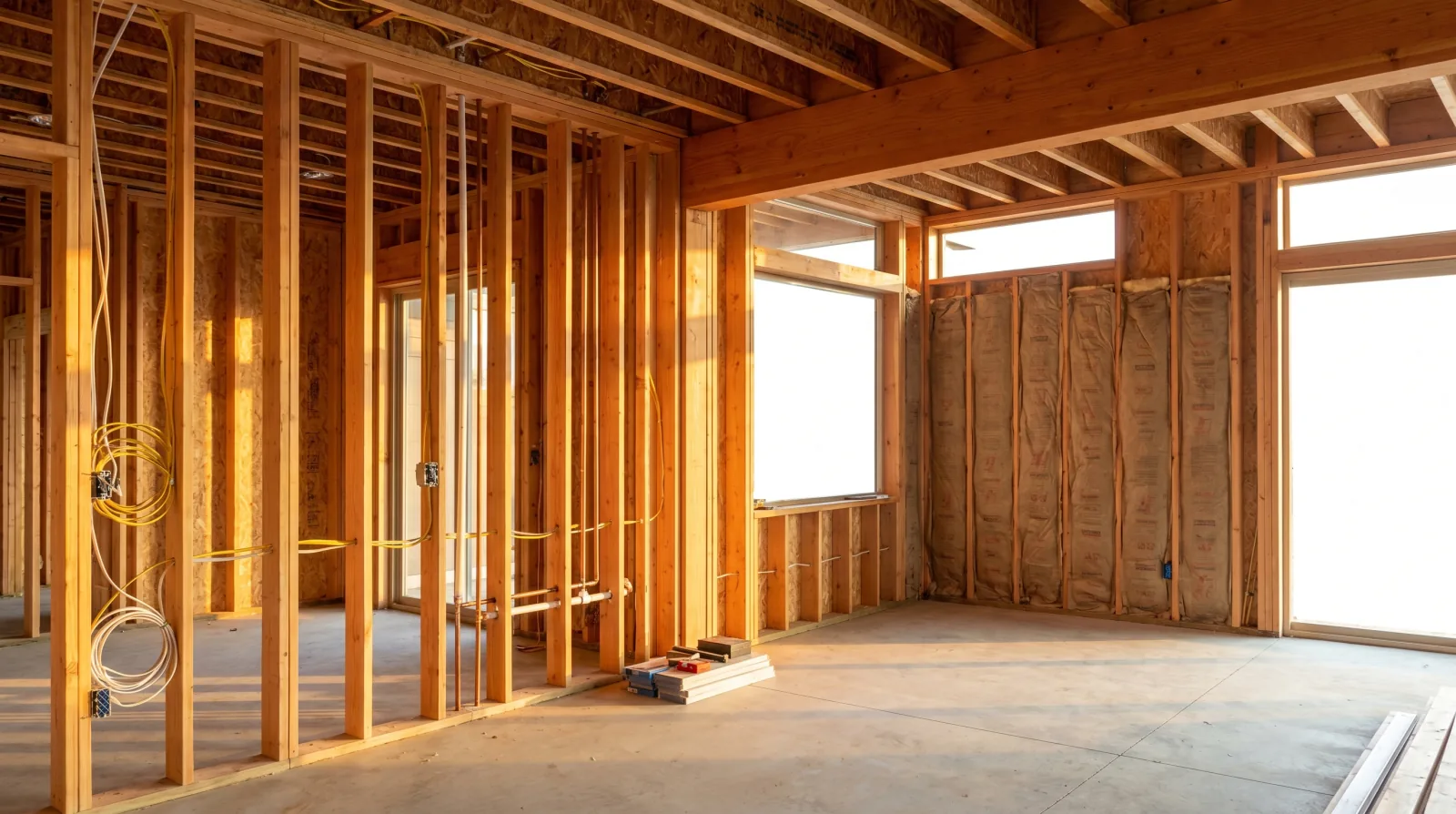
Design-build puts design and construction under one contract and one firm. The builder carries responsibility for the drawings, the permit package, the subcontractors, the schedule, and the outcome. There is one party accountable for all of it, instead of two firms each pointing at the other.
In practice, the design work is often done by an in-house designer or a preferred architect the builder works with regularly. The key difference from the traditional model isn't who draws the plans, it's who owns the outcome. In design-build, the builder does. If the drawings don't match the lot, if the permit gets rejected for a detail the architect missed, if the energy compliance targets aren't hit at blower door, those problems stay inside the firm and don't become a dispute between two parties.
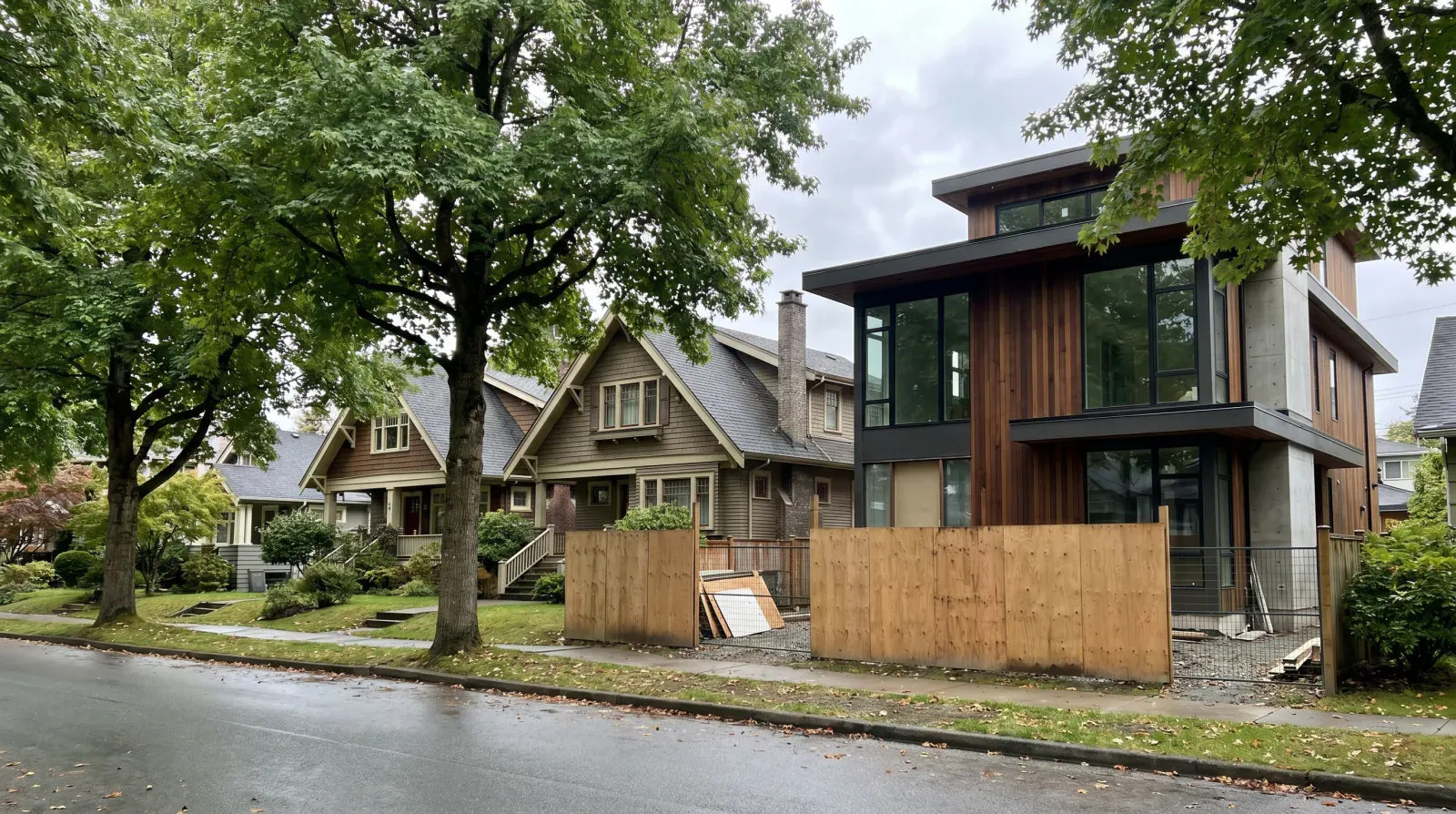
For a straightforward Burnaby infill lot, rectangular, flat, no major geotechnical complexity, standard RS1 zoning, design-build is often the cleaner choice. The budget reality of the project feeds directly into the drawings as they develop. You don't spend three months on design development only to learn the scheme is $400,000 over what your site can support.
What the traditional architect-then-builder model means in practice
In the traditional path, you hire an architect for design and permit documents, then take those drawings to tender with builders. The architect and builder are separate contracts, separate relationships, and, when something goes wrong, separate parties with separate interests.
The advantages are real. A good architect will advocate for your design intent independent of what's convenient for the builder. The competitive tender process can surface pricing from multiple builders. And for projects where the design is the primary driver, an architecturally ambitious home, a sensitive heritage area, a site with unusual view corridors or complex massing, a licensed architect's independent design authority is genuinely valuable.
The friction is also real. When the builder's site conditions reveal a detail the drawings didn't account for, or when the mechanical engineer specifies equipment the HVAC trade can't source in the current market, the resolution process runs between two firms. Each has its own liability position. The owner often ends up as the communication layer between them.
The two models line up like this:
| Factor | Design-build | Architect plus builder |
|---|---|---|
| Contracts you sign | One contract covering both design and construction | Two contracts, one with the architect for design, one with the builder for construction |
| Who owns the outcome | The builder carries the drawings, the permit package, the subcontractors, the schedule, and the result | Two separate parties, each with its own liability position |
| Design authority | Design is usually done by an in-house designer or a preferred architect the builder works with | A licensed architect advocates for design intent independently of what suits the builder |
| Budget feedback during design | Budget reality feeds straight into the drawings as they develop | Pricing arrives after the drawings are complete |
| Competitive pricing | Design and construction fees are packaged together | Completed drawings can go to several builders at tender |
| Resolving a surprise on site | Stays inside one firm | Runs between two firms, with the owner often acting as the go-between |
| Who owns the drawings | The builder often retains ownership of the design documents | The architect's contract documents the design separately |
| Fits best when | Coordination risk is the worry, on straightforward Burnaby infill or Step 5 energy targets | Design is the point, or an arms-length paper trail is needed |
Where design-build performs better in Greater Vancouver
Burnaby's 2026 building environment favours tighter coordination between design and construction than the traditional model typically delivers, and three specific changes to the regulatory landscape make the integrated approach more valuable than it was even two years ago. Each one pushes in the same direction: decisions that were previously made in isolation now have to be made together, by people working off the same drawings at the same time.
Digital permit submission tightens drawing quality gates. Burnaby's fully digital permit intake process means deficiencies are flagged earlier and more precisely than they were in paper-based submission. A builder who's produced dozens of Burnaby permits knows exactly what the plan checkers scrutinise. That knowledge gets embedded into the drawings before submission rather than discovered at resubmission.
Energy Step Code Step 5 is a design-and-construction problem. Hitting Step 5 requires envelope, mechanical, and airtightness decisions that are inseparable from the construction sequencing. A designer who isn't in daily communication with the builder can produce a scheme that hits the modelled energy performance but fails the blower door test. In a design-build model, the mechanical and envelope detailing conversations happen in real time.
Site complexity rewards unified accountability. Hillside lots in Capitol Hill or Buckingham Heights, lots with protected tree canopies, lots requiring geotechnical reports, these sites generate late-breaking design inputs. When your architect and your builder are the same firm, those inputs get resolved once. When they're separate parties, each revision cycle requires a coordination effort.
Where the traditional model still makes sense
Not every Burnaby custom home is a straightforward infill on a rectangular lot. There are real cases where independent architectural design and arms-length construction oversight are the better choice, and choosing the wrong model for those projects creates as much friction as using the wrong model for the ones that suit design-build.
Design is the primary driver of the project's value. If you're pursuing an architecturally distinctive home, a home you'd enter in a design award, or one where the massing and material story are as important as the livability, a licensed architect's independence is worth the coordination overhead. The best residential architects in Greater Vancouver produce work that a builder-employed designer typically doesn't.
You want competitive pricing at tender. Design-build packages the design and construction fee together. If you want to take completed drawings to three builders and see who prices the work most competitively, you need to separate the two contracts. The savings from competitive tender can be real, though they have to be weighed against the coordination risk discussed above.
The builder relationship needs to be arms-length. If you have reason to want independent documentation of what was specified versus what was built, a complex dispute situation, a development with multiple stakeholders, a project with heritage review, independent architect oversight of construction provides a paper trail the design-build model doesn't.
The hybrid approach most Burnaby owners don't know about
A meaningful number of Burnaby custom homes are built through a model that's neither pure design-build nor pure traditional: the builder is engaged at pre-design, before an architect is formally hired, to provide budget feedback and site feasibility analysis while the design is still in schematic form.
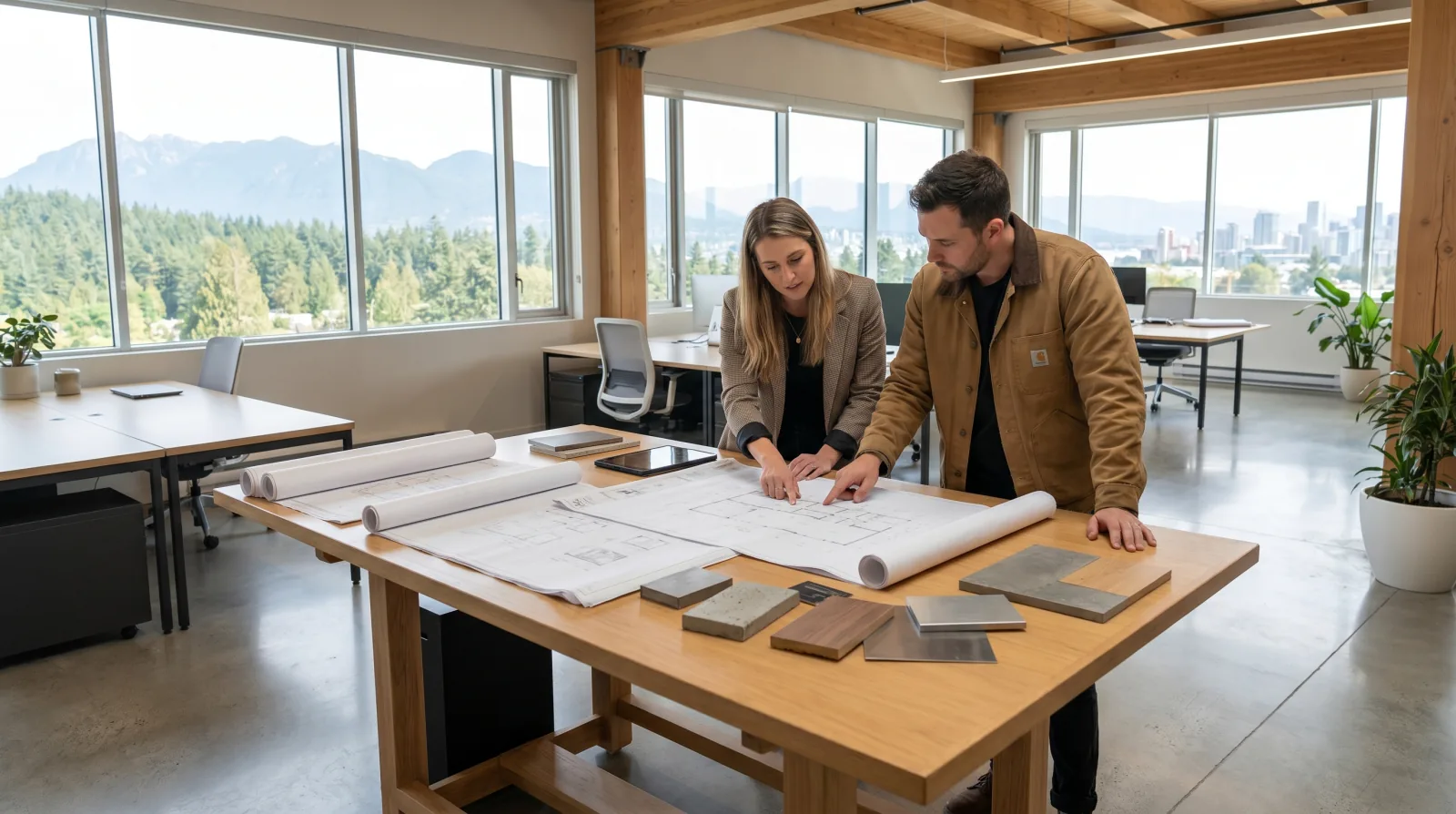
This is exactly what a pre-construction services agreement is for. The owner contracts separately with an architect for design and with a builder for pre-construction consulting. The builder's cost and sequencing knowledge feeds into the architect's drawings. The architect's design intent shapes what the builder prices. At the end of the pre-construction phase, the owner can either enter a fixed construction contract with that builder or take the completed drawings to tender.
It's the coordination benefit of design-build with the design independence of the traditional model. The main cost is time, it requires managing two firms earlier in the process rather than one.
Contract structure, what you're signing with each model
In a design-build engagement, the homeowner signs one contract for both design and construction. This simplifies the legal structure. But it also means the builder controls the design documentation, you need to be confident the firm's design capability matches the project's ambition.
In the traditional model, the homeowner signs two contracts: one with the architect for design services, one with the builder for construction. The architect's contract is usually fee-based (a percentage of construction cost, or a fixed fee). The builder's contract is entered after drawings are complete. This two-contract structure is the primary reason the model creates coordination friction, but it also means each party's obligations are independently documented.
The pre-construction structure falls between the two. You sign a paid pre-construction agreement with the builder, and separately retain the architect. The PCSA typically includes a clause that the builder and architect will share design-stage information in structured coordination meetings. The construction contract is negotiated at the end of pre-construction, after the drawings are complete and the scope is real.
One question worth asking any design-build firm: what happens to the design if we don't proceed with construction? Can you take the drawings and give them to another builder? In many design-build contracts, the builder retains ownership of the design documents. That's not always a problem, but it's worth knowing going in.
Questions to ask before choosing a path
Regardless of which model you lean toward, these are the right questions to ask early:
- If design-build: Has this firm delivered a home at this price point and complexity in Burnaby or Vancouver in the last two years? Can we speak with those clients?
- If traditional: Has this architect worked with builders in the Burnaby market, specifically? Are there existing relationships between the design team and local trades?
- In any model: Who owns the drawings? What happens to the design fee if the project doesn't proceed to construction?
- In any model: How does the firm handle the energy compliance package? Who names the energy advisor, and when do they come in?
The question that actually decides it
When owners ask us whether to go design-build or architect-plus-builder, we ask them one question back: What are you most worried about, design quality or coordination risk?
If the answer is design quality, if the architectural outcome is the point and you'd sacrifice some schedule risk to protect it, hire an independent architect first. Find a builder who's worked with that architect before.
If the answer is coordination risk, if getting to the right outcome efficiently matters more than maximum design independence, a design-build model or a pre-construction services structure is the cleaner path.
For most Burnaby infill custom homes, coordination risk is the more common pain point. Execution quality is usually what separates a good result from a disappointing one. That's the case that tends to push the conversation toward integrated delivery.
Frequently asked questions
- What is the difference between design-build and hiring an architect and builder separately?
- Design-build puts design and construction under one contract and one firm, the builder owns both the drawings and the outcome. The traditional model hires an architect independently, then takes those completed drawings to tender with a separate builder. Design-build reduces coordination risk and keeps budget constraints visible during design. The separate model gives the architect independent authority and allows competitive tendering. Icon Projects offers both paths, and a hybrid pre-construction structure that combines coordination benefits with design independence.
- Which is better for a Burnaby custom home, design-build or architect plus builder?
- For most Burnaby infill custom homes, design-build or a pre-construction services structure is the more efficient path because coordination risk, not design ambition, is the common pain point. Burnaby's digital-only permit intake and Step Code requirements tie envelope, mechanical, and airtightness decisions together so tightly that a designer not in daily contact with the builder can produce drawings that fail the blower-door test. If architectural ambition is the primary driver, independent architectural authority earns its keep.
- What is a pre-construction services agreement?
- A pre-construction services agreement (PCSA) is a paid contract engaging a builder before construction documents are finished, typically covering feasibility, budget development, drawing review, and structured coordination meetings with the architect. It gives the owner the coordination benefit of design-build with the design independence of the traditional model. At the end of the pre-construction phase, the owner can enter a fixed construction contract with the same builder or take the completed drawings to competitive tender.
- Why would an owner still choose an independent architect instead of design-build?
- Independent architectural authority is worth the coordination overhead when design is the primary driver of a project's value, an architecturally distinctive home, one entered in a design award, or a project where massing and material story matter as much as livability. A licensed architect advocates for design intent independent of what is convenient for the builder, which a builder-employed designer inside a design-build firm does not do in the same way.
- Can I get competitive pricing on a custom home with design-build?
- Not in the same way as the traditional model. Design-build packages the design and construction fee together under one contract, so if you want to take completed drawings to three builders and compare pricing, you need the design and construction contracts kept separate. The traditional architect-then-builder path is what allows a genuine competitive tender across multiple builders.
- Who owns the drawings in a design-build contract?
- In many design-build contracts, the builder retains ownership of the design documents, so if the project does not proceed to construction with that firm, the owner may not be able to take the drawings to another builder. This is one of the specific questions worth asking any design-build firm before signing: what happens to the design if we do not proceed with construction, and can we take the drawings elsewhere?
- How does Burnaby's digital permit process affect the design-build versus architect-plus-builder decision?
- Burnaby's fully digital permit intake flags drawing deficiencies earlier and more precisely than paper-based submission did. A design-build firm that has produced dozens of Burnaby permits already knows what the plan checkers scrutinize and can embed that knowledge into the drawings before submission. In the traditional model, that same knowledge has to be communicated between two separate firms, which adds a coordination step at each resubmission cycle.
- Why does Energy Step Code Step 5 push owners toward design-build?
- Hitting Step 5 requires envelope, mechanical, and airtightness decisions that are inseparable from construction sequencing, so a designer who is not in daily communication with the builder can produce a scheme that models well on paper but fails the blower-door test in the field. In design-build, the mechanical and envelope detailing conversations happen in real time between the same team, which is one reason Icon Projects sees design-build perform better on Step 5 projects in the current Burnaby regulatory environment.