
Port Moody
Custom Home Builder in Port Moody
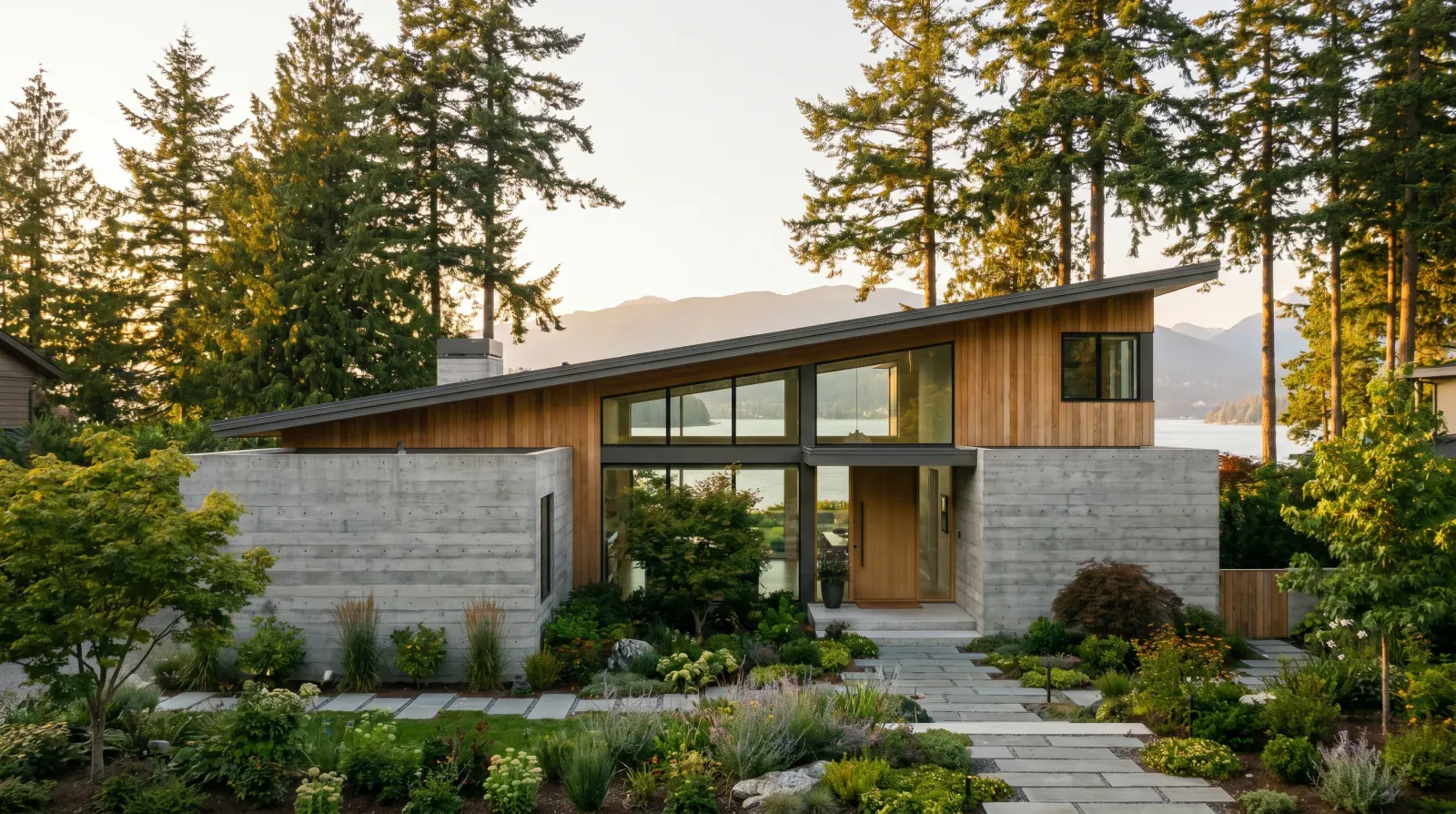
Port Moody sits at the eastern end of Burrard Inlet, hemmed between the water and the mountains, and it has resisted the homogenization that has hit a lot of the Tri-Cities. The lots climb from the inlet up through established neighbourhoods that have aged gracefully. The clients who build with us here want a home that belongs to the landscape, not a production plan imposed on a forested hillside lot.
Last reviewed July 2026
At a glance
What we do here.
- Custom homes across Port Moody, Glenayre, College Park, Heritage Mountain, Inlet Centre, and the inlet waterfront streets
- Hillside view-lot builds with engineered foundations and drainage for Port Moody's varied terrain
- Renovations on Port Moody's well-maintained but aging housing stock, 1960s through 1990s
- SkyTrain Evergreen Line access; CHBA Master Residential Builder with Burnaby-adjacent knowledge
Our approach
Building in Port Moody.
What building in Port Moody involves
Port Moody wraps around the head of Burrard Inlet from the Barnet Highway on the south to Burnaby Mountain and Anmore on the north. The city is small, about 35,000 residents, but its geography is varied. The inlet waterfront, Moody Centre, and the SkyTrain corridor along St. Johns Street are relatively flat. College Park, Glenayre, and Heritage Mountain rise steeply above, forested hillside neighbourhoods with the kind of lots that reward serious investment.
Port Moody has been slower to densify than Coquitlam and Burnaby, which means its established residential streets retain their character and tree coverage. The City of Port Moody has a tree protection bylaw with teeth; regulated tree removal requires a permit and arborist report. On forested hillside lots in Heritage Mountain or Glenayre, the tree situation is a real constraint that shapes the design envelope, we assess it at feasibility, not after design is committed.
The Inlet SkyTrain station (Evergreen Line) at Moody Centre and the Inlet Centre area have made Port Moody a transit-oriented development target. Lots within walking distance of the stations are increasingly viable for SSMUH density. Further up the hill in Heritage Mountain and College Park, the transit access is less direct and the single-family character is more stable.
City of Port Moody permitting
Port Moody processes development through its Development Services department. Single-family and duplex projects follow the Building Permit path; projects in development permit areas, which include steep slopes, foreshore, and environmentally sensitive areas near Burrard Inlet, require a Development Permit before building permit issuance.
The provincial SSMUH legislation applies in Port Moody. The City has updated its zoning to implement the provincial four-unit framework, consistent with the Tri-Cities regional approach. Lots near the SkyTrain corridor and Moody Centre may also qualify for Transit-Oriented Area (TOA) density permissions that allow higher FSR and unit counts. The practical constraints on any specific lot, setbacks, site coverage, tree protection, servicing capacity, require a lot-by-lot feasibility assessment.
Permit timelines for standard single-family custom homes in Port Moody run 8 to 14 months from design submission to issuance. Hillside sites with DPA triggers, environmental sensitivity, or geotechnical complexity will take longer. We map the probable permitting path, including DPA status and environmental review requirements, into the schedule at the start of the project.
Custom homes on Port Moody's hillside lots
Heritage Mountain and Glenayre are Port Moody's premium custom-home territories. Heritage Mountain sits at elevation above College Park, with forested lots, mountain views, and the kind of privacy that is increasingly hard to find in the Lower Mainland. Glenayre is older and more established, 1970s and 1980s stock on treed lots that are often compelling teardown-rebuild candidates as the structures age past their useful life.
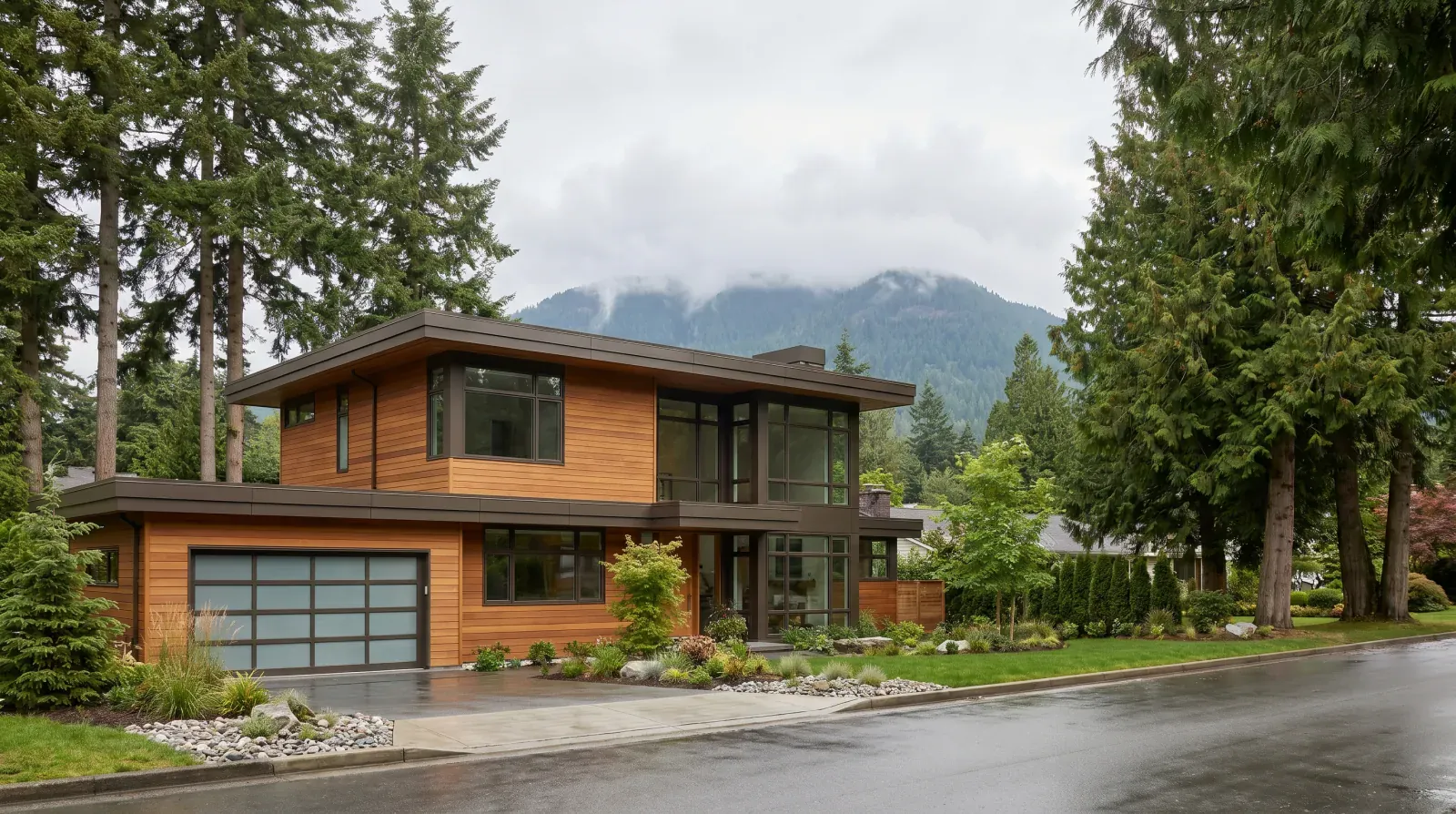
The hillside sites in these neighbourhoods share characteristics with upper Burnaby, steep grades, significant tree coverage, and drainage patterns that need to be understood before the foundation strategy is set. We apply the same site-first discipline here that we use on Capitol Hill and Cariboo builds in Burnaby: geotechnical assessment, arborist report, drainage survey, all done at feasibility before design begins.
The inlet views from the upper Heritage Mountain and Glenayre streets are genuine and oriented toward the south and west. We design for those views deliberately: glazing systems, deck positioning, and interior planning that makes the view a functional part of how the home is used, not just a feature listed in a real estate description.
Renovations on Port Moody's established housing stock
Port Moody's established neighbourhoods, Glenayre, College Park, the older waterfront streets, have a large cohort of 1970s through early 1990s homes that are well-maintained but increasingly functionally obsolete. Layouts designed around single-income families with formal living and dining rooms no longer match how most households live; envelope performance from that era is far below current Step Code expectations.
The renovation-versus-rebuild decision on a Port Moody lot follows the standard test: foundation condition, structure quality, envelope salvageability, and layout reconfigurability. Port Moody's hillside lots often have strong locational value, inlet views, mature trees, privacy, that makes serious renovation investment rational when the structure supports it. We are direct about cases where the math does not work.
For renovations that proceed, we apply the same envelope performance standards, rainscreen cladding, high-performance windows, mechanical heat recovery ventilation, heat pump or hydronic heating, that we would specify on a new build. A renovation that leaves the envelope in its original state is a renovation that will need revisiting in fifteen years; we build the envelope upgrade into the scope from the start.
Common Questions
Before we begin in Port Moody.
Do you build in Heritage Mountain and Glenayre specifically?+
Yes. Heritage Mountain and Glenayre are Port Moody's most active custom-home territories and align closely with the hillside builds we do in Capitol Hill and Cariboo in Burnaby. The site conditions, slope, tree coverage, drainage, are consistent with what we work with on those projects. We assess each lot individually for geotechnical conditions, tree situation, and DPA status before committing to a design scope.
How does Port Moody's permitting process compare to Coquitlam?+
Both are Tri-Cities municipalities with comparable permit timelines for standard single-family projects, roughly 8 to 14 months from design submission. Port Moody is smaller and its planning department is correspondingly less resourced than Coquitlam's; complex projects can sometimes take longer for this reason alone. Both cities have active tree protection bylaws and DPA frameworks for sensitive or sloped sites. We know both processes and factor the realistic timeline into the project schedule from the start.
Is SSMUH available in Port Moody?+
Yes. The provincial four-unit SSMUH framework applies in Port Moody. Lots near the Evergreen Line SkyTrain stations may also fall within Transit-Oriented Area designations that allow additional density. What is achievable on a specific lot depends on setbacks, site coverage, tree protection constraints, and servicing, a feasibility assessment for the parcel is the only reliable way to know what it supports.
Does the Burrard Inlet proximity affect building near the waterfront?+
Yes. Properties close to Burrard Inlet may be in development permit areas for foreshore protection and riparian setbacks. The inlet also influences wind exposure and moisture conditions, which affects envelope specification. We flag foreshore DPA status at the feasibility stage and design the envelope accordingly, inlet-adjacent sites in Port Moody and Moody Centre get the same high-exposure cladding and window specifications we use on North Shore waterfront projects.
What's the difference between Heritage Mountain and Glenayre as a build location?+
Heritage Mountain sits at a higher elevation above College Park, with forested lots, mountain views, and more privacy than most of the Lower Mainland offers. Glenayre is older and more established, mostly 1970s and 1980s housing stock on treed lots, and it's often a compelling teardown-rebuild market as those structures age past their useful life. Both share the slope, tree coverage, and drainage considerations we plan for from feasibility onward.
Is Port Moody's tree bylaw as strict as Burnaby's?+
Port Moody's tree protection bylaw is actively enforced, with a permit and arborist report required for regulated tree removal, similar in spirit to Burnaby's approach. On forested hillside lots in Heritage Mountain or Glenayre in particular, the tree situation is a real design constraint. We assess tree coverage at feasibility so it shapes the design from the outset rather than surfacing as a permit-stage surprise.
How does Port Moody's small size affect permit review timelines?+
Port Moody's planning department is smaller and less resourced than Coquitlam's or Burnaby's, which can occasionally extend review time on complex projects even though the standard timeline is broadly comparable, roughly 8 to 14 months from design submission. We factor this into the realistic schedule we set for Port Moody projects rather than assuming municipal review speed matches a larger city.
Can older Port Moody homes meet current Step Code performance through renovation?+
Yes, when the renovation scope includes a genuine envelope upgrade. Many 1970s-90s Port Moody homes have layouts and envelope performance well below current expectations. We apply the same rainscreen cladding, high-performance window, and mechanical heat-recovery ventilation standards to a renovation that we'd specify on a new build, since leaving the original envelope in place just means revisiting the same problem in fifteen years.
Continue exploring
Other areas we serve.
From the Journal
Further reading on Port Moody.
Begin
Plan your project in Port Moody.
A short conversation is the fastest way to understand what's possible on your lot, feasibility, schedule, scope, the lot conditions you should be thinking about.