
New Westminster
Custom Home Builder in New Westminster
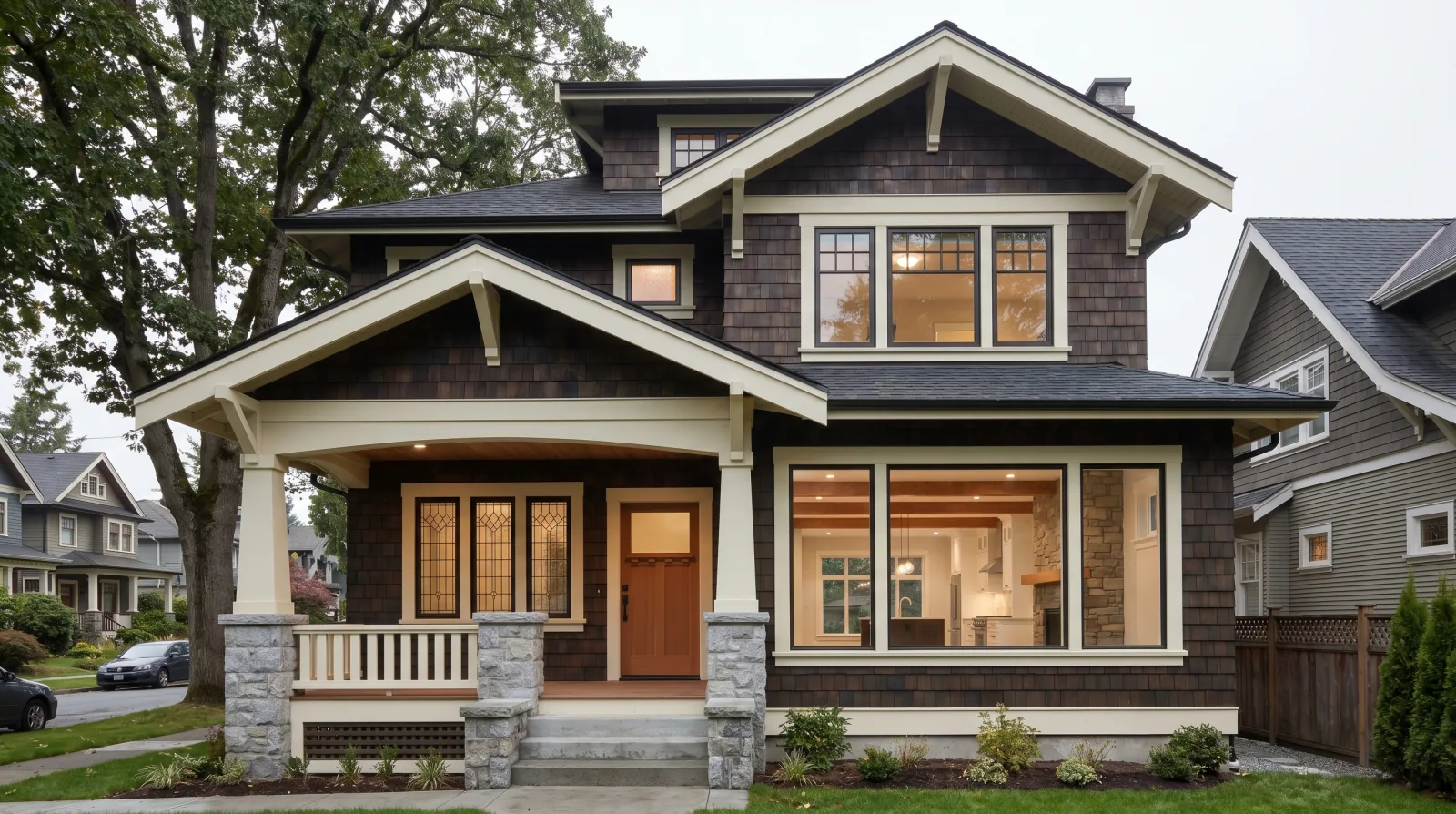
New Westminster is BC's oldest city, and that history shows in the housing stock. The Queen's Park neighbourhood has some of the finest heritage residential architecture in the province; the uptown ridge and Sapperton have a century of working-class housing that has aged into a renovation and infill market. Building here means understanding character, heritage process, and what genuine long-term investment looks like on a lot that has held its value through every real estate cycle Greater Vancouver has thrown at it.
Last reviewed July 2026
At a glance
What we do here.
- Custom homes and heritage renovations in Queen's Park, Sapperton, Uptown, and Queensborough
- Heritage character home renovations that preserve what matters structurally and architecturally
- Infill and SSMUH feasibility on New Westminster's well-located, transit-adjacent lots
- CHBA Master Residential Builder with direct knowledge of New Westminster's permitting and heritage process
Our approach
Building in New Westminster.
Building in BC's oldest city
New Westminster occupies a compact ridge above the Fraser River, bounded by Burnaby to the north and east, the Fraser to the south, and Coquitlam and Surrey across the river. The city is small by area but dense by history: its residential streets were platted in the 1860s and 1870s, and the housing stock spans every decade from Victorian through post-war to contemporary infill.
Queen's Park, on the east side of the uptown ridge, is New Westminster's heritage showpiece, large Victorian and Edwardian homes on generous lots, many on the BC Heritage Register and a significant number with city-level heritage designation. Heritage-designated properties face strict controls on exterior alteration and demolition; renovation is often the only viable path, and it requires navigating the City's heritage process with care.
Sapperton, the Fraser River waterfront, and the western uptown slopes have a more mixed vintage, predominantly post-war through 1960s with some earlier stock. These areas present renovation and teardown-rebuild opportunities on lots that are well-located relative to transit (SkyTrain's Expo Line runs through New Westminster) and the broader Burnaby-Coquitlam employment corridor.
City of New Westminster permitting and heritage process
New Westminster processes development through its Development Services department. Standard single-family and duplex projects follow a Building Permit path; heritage-designated or character-contributing properties require heritage alteration permits before work affecting the exterior. The City maintains a Heritage Register listing both legally designated properties and non-designated character-contributing buildings, a character-contributing designation does not carry the same legal restrictions as heritage designation, but it shapes what the City will approve on redevelopment.
The provincial SSMUH legislation applies in New Westminster, consistent with the broader Lower Mainland framework. Given New Westminster's transit access, multiple SkyTrain stations, frequent bus service on Columbia Street, the city is a strong candidate for gentle density. The interaction of SSMUH with heritage designation, character-contributing status, and the city's specific setback and lot coverage rules requires lot-by-lot feasibility work.
Permit timelines for standard single-family projects in New Westminster are generally 8 to 12 months from design submission to issuance. Heritage alteration permits add review time; projects that involve lot consolidation, rezoning, or development permit area triggers will run longer. We assess the probable permitting path, including heritage status, at the feasibility stage before design costs are committed.
Heritage renovation in Queen's Park and Sapperton
Queen's Park has some of the best-preserved large-lot Victorian and Edwardian residential architecture in British Columbia. A renovation brief here is not a standard renovation brief, it involves the City's heritage process, a heritage professional's assessment of significance, and a design approach that distinguishes between character-defining elements that must be retained and non-original additions that can be replaced.
We approach heritage renovation the same way we approach a complex new build: with a rigorous feasibility assessment first, a clear understanding of what the City will and will not approve, and a design process that is honest about what preservation costs and what it delivers. The result, when it works, is a home that cannot be replicated on a new site, because it was built to standards and with craftsmanship that modern construction rarely matches, and the neighbourhood it sits in has been established for over a century.
In Sapperton and the uptown streets west of Sixth Street, the heritage stock is less formally protected but the neighbourhood character is part of the location's value. Many of these homes on the Sapperton slope and near the Royal Columbian Hospital area have been under-maintained for decades; the bones are often good. The test is always the same: foundation, structure, envelope salvageability, and whether the layout can support contemporary living.
Infill and new construction in New Westminster
New Westminster's lot sizes are modest by suburban standards, many central blocks have 33 to 50-foot frontages that reflect the original Victorian platting. That makes teardown-and-rebuild feasibility a different calculation than on Burnaby's larger lots: the envelope the City allows on a standard New Westminster lot is tighter, and the design has to work harder to deliver livability within it.
The city's SkyTrain access, Scott Road, 22nd Street, New Westminster Station, and Sapperton Station on the Expo Line, makes New Westminster one of the strongest transit-oriented infill markets in Greater Vancouver. For SSMUH projects, the walkability and transit access support duplex and small multiplex economics that are harder to justify on car-dependent suburban lots.
Queensborough, on Lulu Island across the Fraser River, is New Westminster's newest residential area. The lots are larger and the housing stock newer, but the soils in Queensborough are Fraser River floodplain delta, foundations here require specific engineering for soft soil conditions. We assess Queensborough sites with that in mind from the start.
Common Questions
Before we begin in New Westminster.
Can I renovate a heritage house in Queen's Park without losing livability?+
Yes, but it requires a design process that distinguishes clearly between what must be preserved and what can change. Designated heritage properties in Queen's Park are subject to the City's heritage alteration permit process; the exterior character-defining elements, massing, roofline, front facade, original windows, typically cannot be altered without heritage approval. Interior layouts, mechanical systems, kitchens, and bathrooms are generally not regulated and can be substantially modernised. We work with a heritage professional to assess significance and design within those constraints from the start.
Is SSMUH available in New Westminster?+
Yes. The provincial SSMUH framework applies in New Westminster, allowing up to four units on most single-family lots. New Westminster's SkyTrain access and walkability make it a strong market for gentle density. Heritage-designated properties may face restrictions that limit SSMUH viability; character-contributing properties are assessed case by case. A feasibility study for the specific parcel, including heritage status check, is essential before committing to a design.
What are the soil conditions like in Queensborough?+
Queensborough sits on Fraser River floodplain delta soils, soft, compressible, and susceptible to settlement. Foundation engineering for Queensborough projects requires a geotechnical assessment to determine the appropriate foundation system (deep piles are common); standard spread footings used on upland sites are typically not appropriate. We commission the geotechnical report at the feasibility stage so the foundation strategy is known before design begins.
How long does permitting take in New Westminster?+
Standard single-family Building Permit applications in New Westminster typically take 8 to 12 months from design submission to issuance. Heritage alteration permits, development permit area applications, and projects requiring rezoning or variance add review time. We assess the probable permitting path at the feasibility stage and build the realistic timeline into the project schedule from week one.
What is the difference between heritage designation and character-contributing status?+
Heritage designation is a legal status that restricts exterior alteration and demolition and requires a heritage alteration permit for affected work. Character-contributing status, which the City's Heritage Register also tracks, does not carry the same legal restrictions, but it shapes what the City will approve on redevelopment of that property. We check which status, if either, applies to a specific New Westminster property before recommending a renovation-versus-rebuild path.
Are New Westminster's lots as large as Burnaby's?+
Generally, no. Many central New Westminster blocks reflect the original Victorian-era platting, with 33- to 50-foot frontages that are tighter than typical Burnaby lots. This changes the design calculation for a teardown rebuild: the buildable envelope is smaller, so the design has to work harder to deliver livability within a more constrained footprint.
Is New Westminster a good candidate for SSMUH duplex or multiplex projects?+
New Westminster's transit access is a real advantage for this. The city has multiple SkyTrain Expo Line stations and frequent bus service, and that walkability supports duplex and small multiplex economics that are harder to justify on car-dependent suburban lots. Whether a specific lot supports SSMUH density depends on heritage status, character-contributing designation, and local setback and lot coverage rules, which we assess case by case.
What foundation type is used for a new build in Queensborough?+
Queensborough sits on Fraser River floodplain delta soils, which are soft and compressible, so standard spread footings used on upland sites typically aren't appropriate. Deep piles are the common foundation solution, determined by a geotechnical assessment. We commission that report at the feasibility stage so the foundation strategy and its cost are known before design work goes far.
Continue exploring
Other areas we serve.
From the Journal
Further reading on New Westminster.
Begin
Plan your project in New Westminster.
A short conversation is the fastest way to understand what's possible on your lot, feasibility, schedule, scope, the lot conditions you should be thinking about.