
Lake City · Burnaby
Custom Home Builder in Lake City, Burnaby
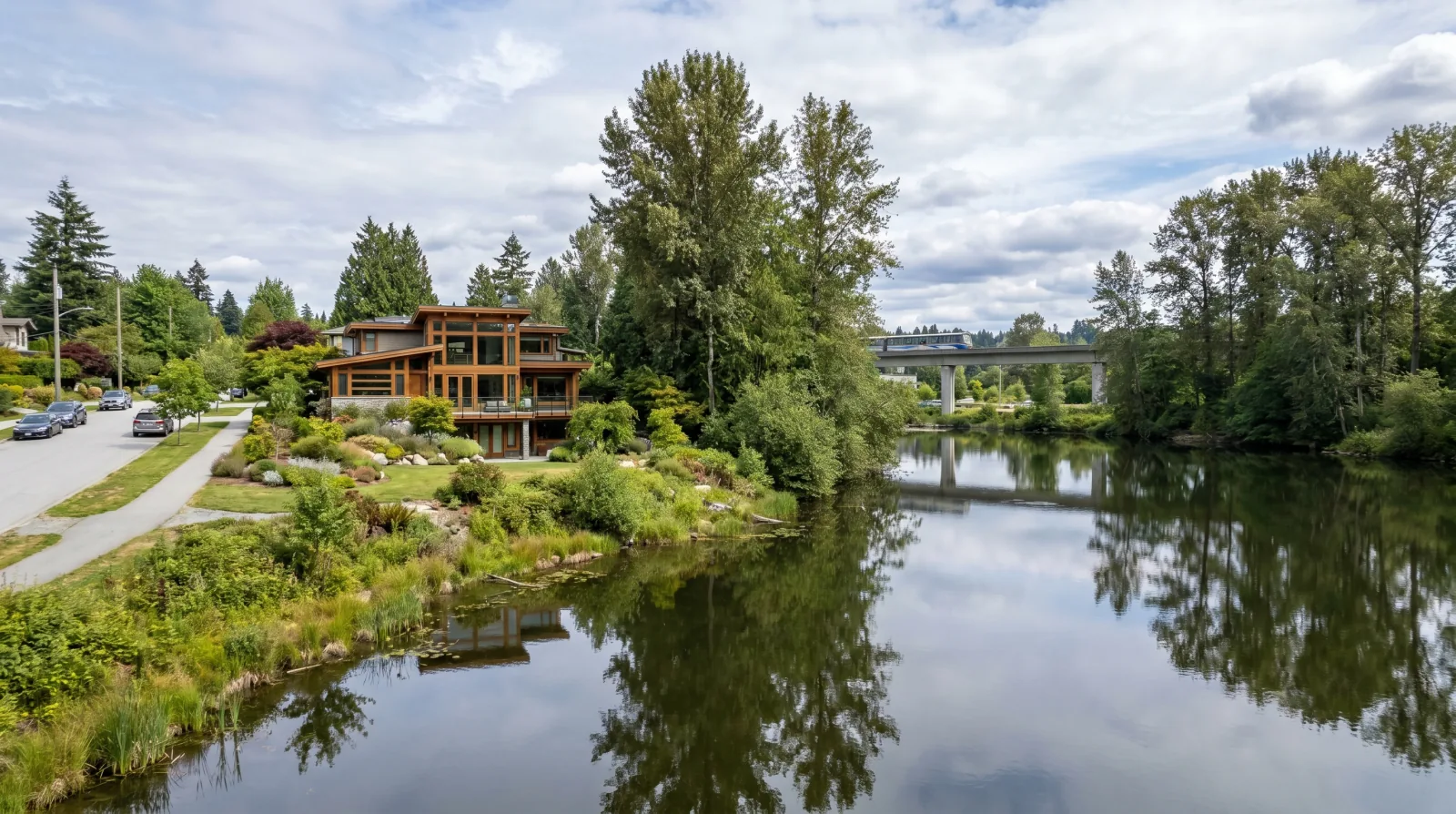
The Lake City area sits along the north shore of Burnaby Lake, anchored by the Lake City Way SkyTrain station on the Millennium Line. The neighbourhood combines genuinely larger lots, direct interface with the Burnaby Lake Regional Park trail network, and a transit-oriented effect from the station that has reshaped the area's value proposition over the last decade.
Last reviewed July 2026
At a glance
What we do here.
- North-shore Burnaby Lake lots with park and trail interface
- Lake City Way SkyTrain station anchors a transit-oriented submarket
- Larger lots than the surrounding central-Burnaby grid
- Riparian and Streamside Protection setbacks on lake-adjacent parcels
Our approach
Building in Lake City.
The Burnaby Lake interface
Lake City's defining feature is the lake itself. Burnaby Lake Regional Park wraps the south side of the neighbourhood, and the trail network, including the Burnaby Lake Trail loop, runs directly along the property lines of the south-facing residential streets. For lots on or near the park edge, the relationship to the trail and the wetland is the design brief: views across the lake, mature riparian trees, and a permanent green outlook that doesn't depend on neighbouring lot decisions.
It also imposes constraints. Lake-adjacent parcels typically fall within the riparian assessment area for Burnaby Lake and its inflows, and any project on these lots requires a Qualified Environmental Professional report under the provincial Riparian Areas Protection Regulation. We commission the QEP work at feasibility so the buildable envelope is established before design starts, setback distances are determined parcel-by-parcel based on the watercourse classification.
The Lake City Way SkyTrain effect
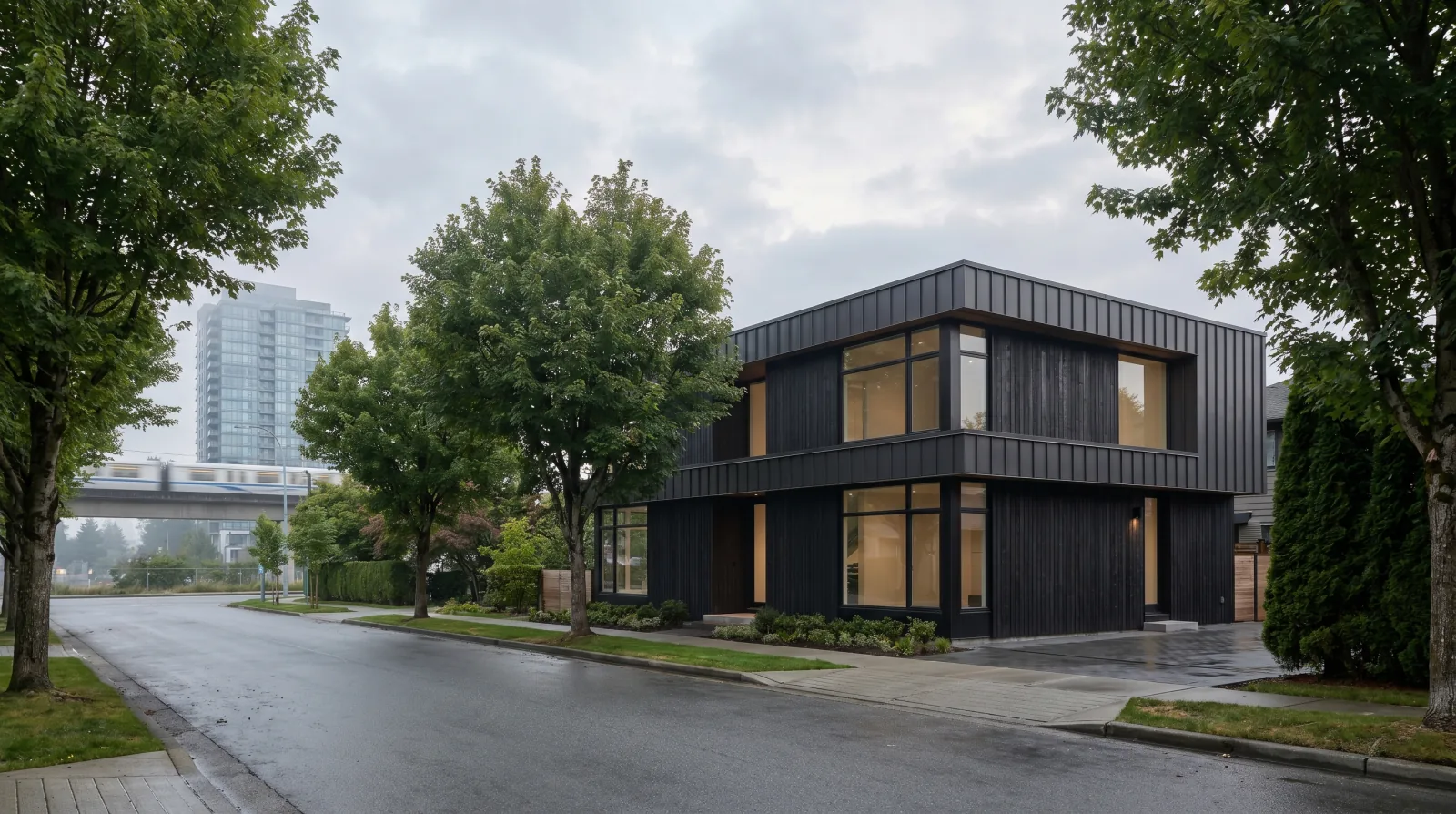
Lake City Way station, on the Millennium Line, anchors the western edge of the neighbourhood and has substantially reshaped the area's residential market over the past decade. The walking-distance lots have benefited from the City of Burnaby's transit-oriented density framework, and the broader neighbourhood has seen sustained interest from owners who want larger-lot residential within walking distance of rapid transit, a combination that's increasingly hard to find in the central Lower Mainland.
For custom-home owners, the transit proximity is a livability feature rather than a density question. The lot stock is firmly single-family, and the projects we work on here are full-scope custom homes and serious renovations rather than density plays.
The lot stock
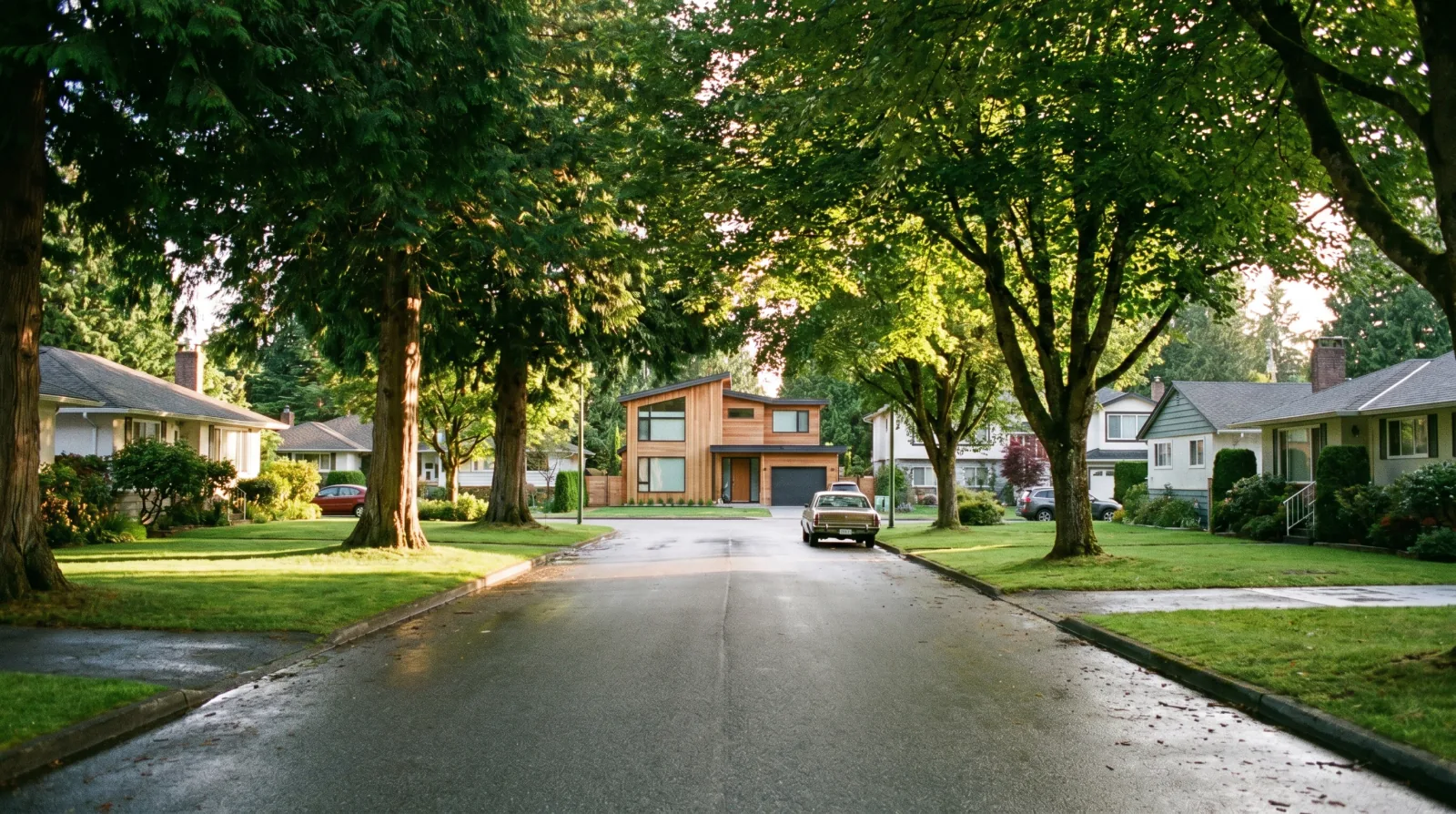
Lake City's lots are generally larger than the surrounding central-Burnaby grid. Frontages are often 60 to 70 feet with good depth, and a number of the lake-facing parcels are larger still. Mature trees are common, both on the lots themselves and as part of the park-edge canopy, and Burnaby's tree bylaw applies with the same rigour it does elsewhere. The arborist inventory is a primary design input on every Lake City project we work on.
The housing stock varies by street. The original development is a mix of 1960s and 1970s single-family with a smaller cohort of 1980s and 1990s homes, and the renovation-versus-rebuild question genuinely depends on the specific parcel.
Architecture for a park-edge lot
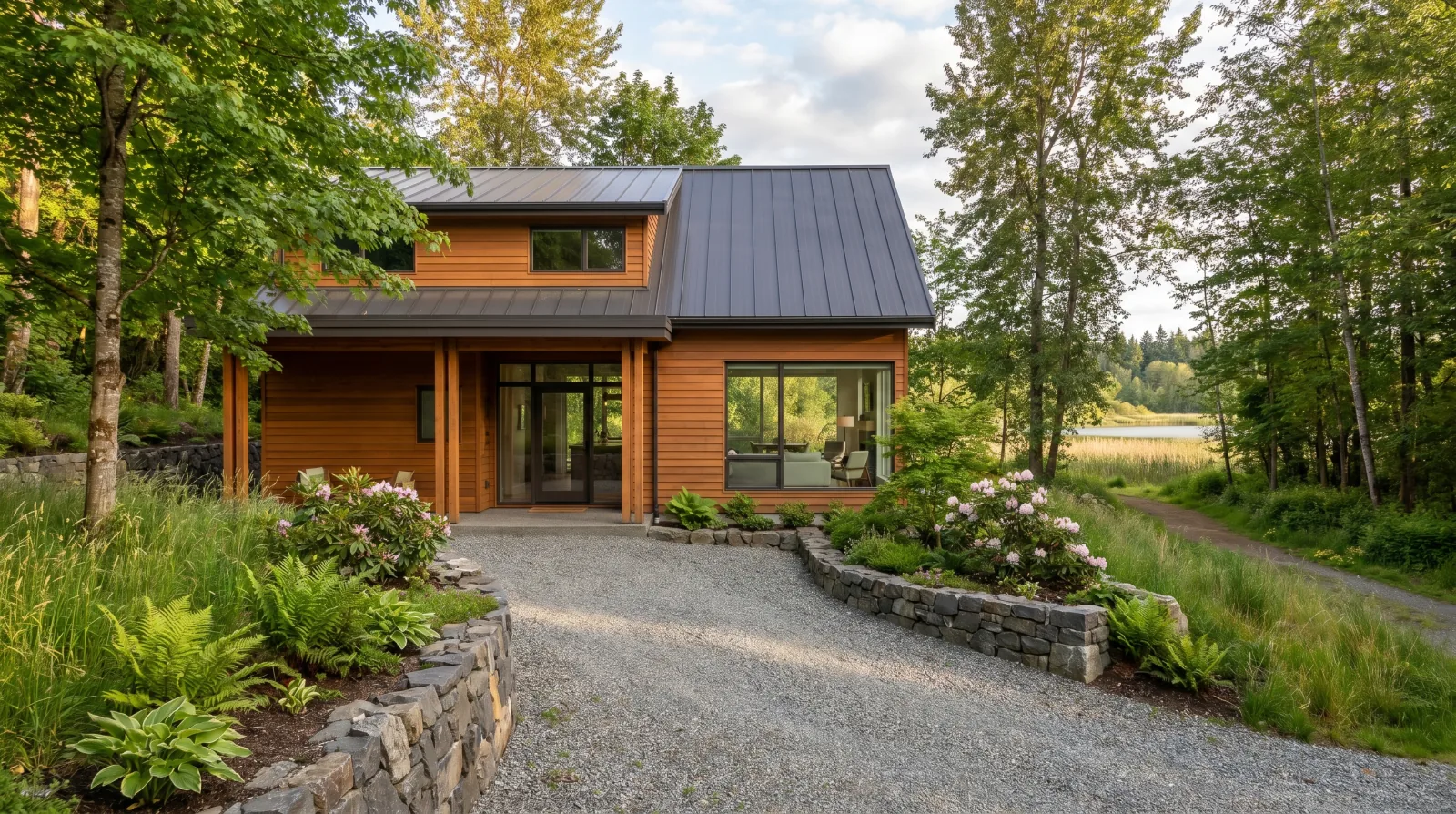
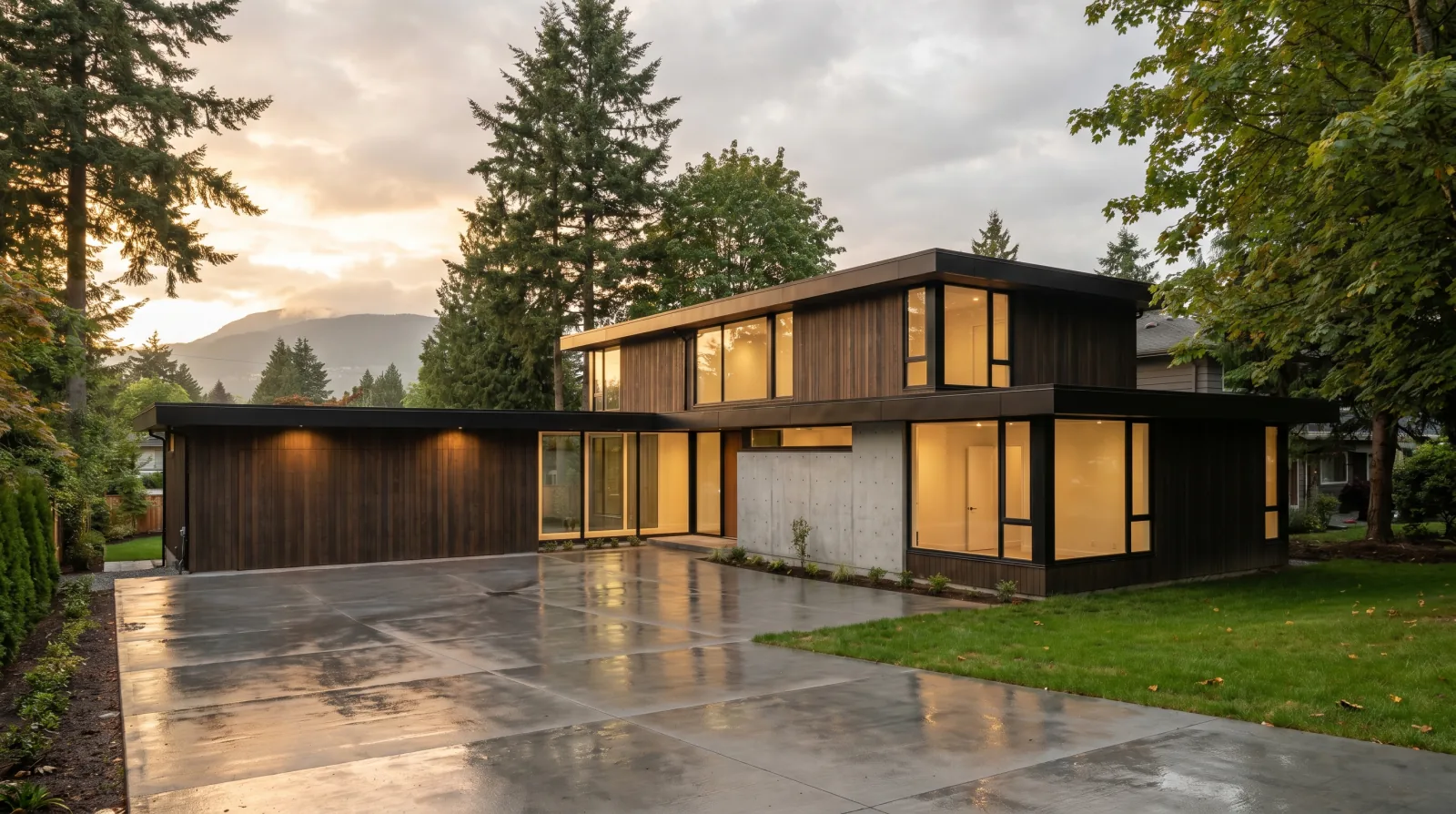
The homes that work on Lake City's south-facing park-edge streets tend to take the lake and the trail seriously as the design's lead orientation. South-facing primary living spaces, generous covered outdoor areas oriented toward the wetland, glazing layouts that admit the south sun and the lake light. Material palettes that age into the riparian setting, wood, dark metal, stone, rather than against it. We design and build to that standard.
Common Questions
Before we begin in Lake City.
Are most Lake City lots subject to riparian setbacks?+
Lots on or near the lake edge typically are. The riparian assessment area extends a meaningful distance from the lake and its inflows, and any project within the assessment range requires a Qualified Environmental Professional report at permit submission. We commission the QEP work at feasibility so the setback is known before architectural commitment.
Does the Lake City Way SkyTrain station affect zoning on adjacent lots?+
The City of Burnaby's transit-oriented density framework applies to lots within 400 metres of SkyTrain stations. The Lake City Way Millennium Line station anchors the western edge of the neighbourhood, so the walking-distance lots in the western reach qualify for up-to-six-unit SSMUH density rather than the standard four-unit threshold. Whether a specific parcel qualifies depends on a precise distance measurement, which we confirm against the City's current transit-oriented area maps at feasibility.
How does Lake City compare to Sperling-Burnaby Lake?+
The two neighbourhoods sit on opposite sides of Burnaby Lake. Sperling-Burnaby Lake is on the lake's north-east side; Lake City is along the north shore further west. Lot stock and character are similar, generous parcels, mature canopy, established residential, but Lake City benefits from the SkyTrain station while Sperling-Burnaby Lake is more car-dependent.
How many units can I build on a Lake City lot under R1 SSMUH?+
Lake City's typical 60- to 70-foot frontages comfortably accommodate up to four units under provincial SSMUH legislation, and lots within 400 metres of the Lake City Way SkyTrain station qualify for up to six. The walking-distance area captures a meaningful share of the western reach of the neighbourhood. Riparian setbacks on lake-adjacent parcels reduce the effective buildable envelope and can shift the multiplex math, so we measure to the parcel and run feasibility against both the SSMUH thresholds and the QEP-determined setback before assuming either configuration is achievable.
What's the typical permit timeline for a custom home in Lake City?+
Most Lake City custom-home permits run roughly 10 to 14 months from design submission to issuance. The flat-to-gentle grade across most of the area keeps the foundation review predictable, but lake-adjacent parcels add a Qualified Environmental Professional review layer that can stretch the file. Tree-bylaw review on these heavily canopied lots also adds detail. Construction typically runs another 14 to 18 months. Multiplex projects on transit-adjacent lots run longer because the density and parking review adds layers.
Are tear-downs common in Lake City, or are people renovating?+
Both, with the renovation share slightly higher than in central Burnaby because the underlying housing tends to be larger and more solidly built than the typical mid-century rancher stock further west. The 1960s-80s homes on these generous lots often have foundations and structure that justify a deep envelope and mechanical replacement. Where the existing siting respects the riparian setback on lake-adjacent parcels, renovation can pencil. Where it doesn't, a rebuild is the more disciplined path.
What does the trail-edge interface mean for a Lake City build?+
The Burnaby Lake Trail loop runs directly along the property lines of several south-facing Lake City streets, which gives those lots a permanent green outlook that doesn't depend on what neighbours do with their properties. Homes designed for this interface typically orient primary living space and glazing toward the trail and lake, treating the park edge as the design's lead orientation rather than an afterthought behind the street-facing facade.
How large are typical Lake City lots compared to central Burnaby?+
Lake City frontages typically run 60 to 70 feet with good depth, larger than the 40- to 50-foot lots common on the central-Burnaby grid, and a number of the lake-facing parcels are larger still. That extra size supports more generous outdoor living space and better tree retention outcomes, which matters given the meaningful canopy present on most Lake City lots.
From the Journal
Further reading on Lake City.
Begin
Plan your project in Lake City.
A short conversation is the fastest way to understand what's possible on your lot, feasibility, schedule, scope, the lot conditions you should be thinking about.