
Process
Architect's Drawings vs Builder's Drawings: What Burnaby Custom Home Owners Need to Know
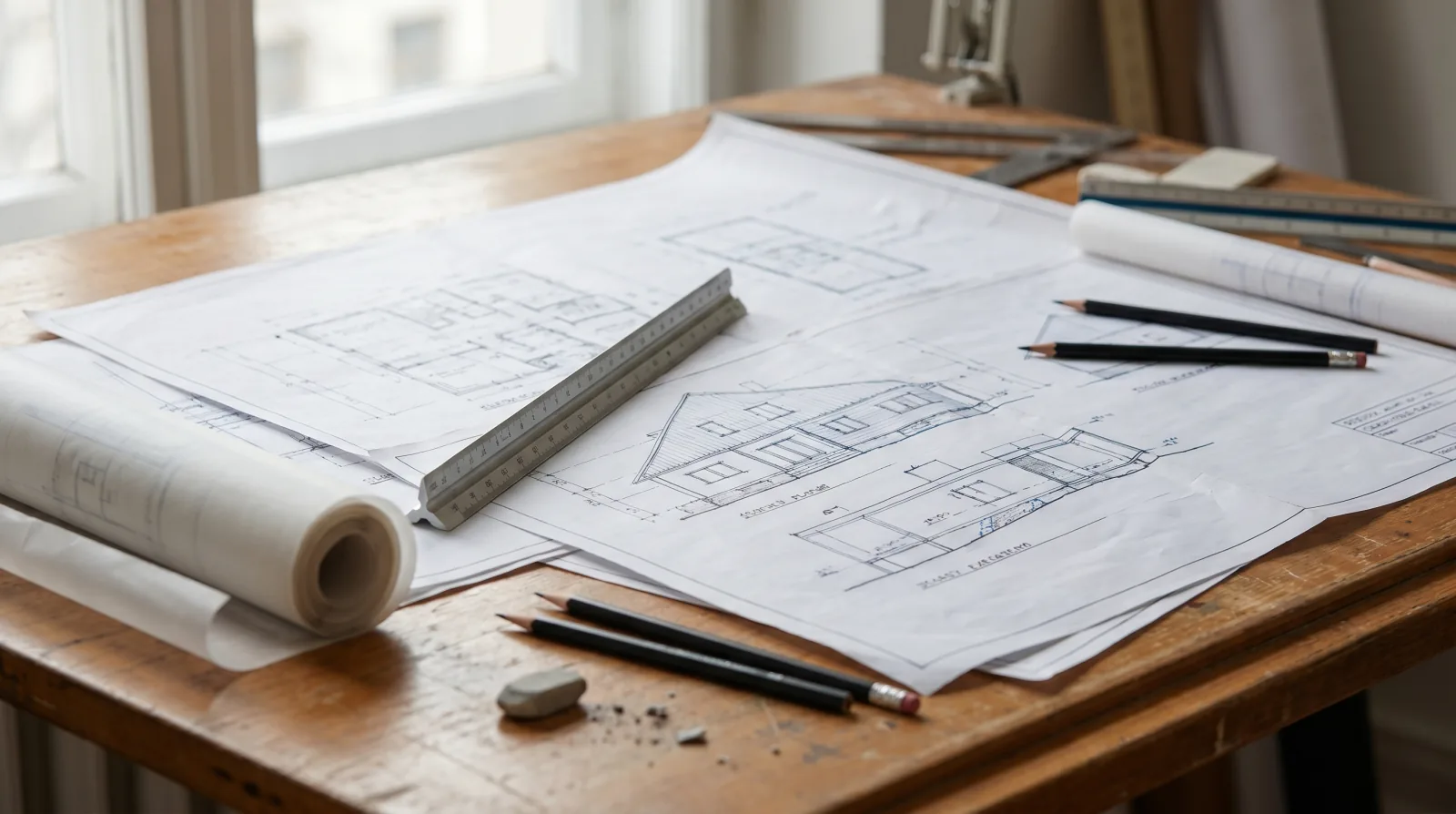
When Burnaby owners hand us a stack of drawings and say 'we have construction documents,' they almost always have something else. Here's what each scope actually contains, where the friction shows up, and why a digital-first permit world makes integrated practices more valuable than ever.
When clients hand us a stack of drawings and say "we have construction documents," they almost always have something else. A beautifully resolved set of architectural intent. Real construction documents are a different artifact, and the gap between the two is where most build-stage friction lives.
This is one of the most common misunderstandings we encounter on Burnaby custom-home projects, and it's worth unpacking carefully. We work primarily in Burnaby, with regular projects in Vancouver, Coquitlam, North Vancouver, and the Fraser Valley, and the same drawing-quality issues show up across all of them.
What architectural drawings actually give you
A great architect produces drawings that resolve the building in space. Massing. Proportion. Sight lines. Room relationships. The way light moves through the plan over the course of a day. The architectural set tells us what the building is, and it's irreplaceable.
A typical architectural set delivered at design-development includes:
- Site plan with the building footprint, setbacks, and grading
- Floor plans with room dimensions and wall types indicated at a high level
- Elevations showing exterior cladding, fenestration patterns, and overall massing
- Sections through critical interior moments
- Roof plan
- Outline specifications for primary materials and finishes
- A schematic indication of major structural moves (open spans, cantilevers, multi-storey volumes)
What this set typically does not resolve, by itself, is exactly how every joint is built, exactly where every duct runs, exactly which steel plate connects which beam to which post. That isn't a deficiency. It's a different scope of work.
What construction drawings add
Construction documents pick up where the architect's set leaves off. They specify framing layouts, mechanical routing, structural connections, waterproofing details, finish dimensions, hardware schedules, electrical layouts, plumbing rough-ins, and dozens of other layers the architect's intent depends on. They translate intent into instruction.
On a well-resolved project, the construction documents include:
- A structural set produced by a registered structural engineer (mandatory for permit in BC)
- Mechanical and electrical drawings (or detailed narratives) coordinated with the structural set
- Energy compliance documentation produced by a certified Energy Advisor demonstrating Step 3 (or higher) compliance with the BC Energy Step Code
- Detailed wall sections at all key conditions (foundation, floor-to-floor, parapet, eave, window head and sill, door threshold)
- Finish schedules calling out specific products by manufacturer and model number
- Hardware schedules specifying every door's lockset, hinge, and stop
- Waterproofing details at every horizontal-to-vertical transition
- Tree protection plan for any property under a Burnaby development application (the Burnaby Tree Bylaw makes any tree 20 cm or larger in trunk diameter a Protected Tree on a development site)
- A geotechnical report when soils, slope, or fill warrant one
On a properly resolved project, the architect's set and the builder's translation are produced collaboratively, in dialogue, with the builder catching constructability issues before they become field problems.
Side by side, the two scopes divide up the work like this:
| Factor | Architectural set | Construction documents |
|---|---|---|
| Main job | Resolves the building in space: massing, proportion, sight lines, room relationships | Translates that intent into buildable instruction |
| Typical drawings | Site plan, floor plans, elevations, sections, roof plan | Framing layouts, wall sections, mechanical routing, structural connections, electrical and plumbing layouts |
| Specifications | Outline specifications for primary materials and finishes | Finish schedules by manufacturer and model, hardware schedules for every door |
| Structure | Schematic indication of major moves such as open spans and cantilevers | Structural set sealed by a registered structural engineer, mandatory for permit in BC |
| Energy compliance | Not part of this scope | Energy modeling by a certified Energy Advisor showing Step 3 or higher |
| Waterproofing | Not resolved joint by joint | Details at every horizontal to vertical transition |
| Site reports | Building footprint and grading shown | Tree protection plan and geotechnical report where they apply |
Where the friction actually shows up
When the two scopes are produced in isolation, the friction shows up at framing. The plans show a wall. The builder discovers it can't be built without sacrificing a duct route or a structural element. Now everyone is in a room arguing about whose drawing was wrong, when really the issue is that the two drawings were never reconciled.
Five specific failure modes we've seen repeatedly:
- Mechanical can't fit in the soffit. Architect designs a clean ceiling line. Mechanical engineer specifies trunk ducts that are bigger than the soffit allows. Field improvisation drops the ceiling, breaks a sight line.
- Plumbing stack lands in a feature wall. Architect orients the bathrooms for plan elegance. Plumber discovers the stack has to drop through a feature wall in the room below. Either the plan changes or the wall changes.
- Window rough opening doesn't align with structural beam. Architect specifies a long horizontal window. Structural engineer specifies a beam under it. The two dimensions don't match. Now there's a header issue at framing.
- Stair geometry doesn't comply. Architect renders an elegant stair. Structural and code review catches that the rise-run doesn't comply with the BC Building Code stair geometry requirements. Stair has to be reworked, often impacting adjacent rooms.
- Foundation bears on incompatible soils. Architect places the building footprint without geotechnical input. Geotech report comes back showing soil variability under the footprint. Foundation type changes, footprint shifts, design has to update.
Every one of these is solvable. They're solvable cheaply if caught at design development; they're expensive if caught at framing.
Why integrated practices matter more in 2026
Builders who participate in design, even just as a constructability reviewer, catch most of these conflicts before permit submission. That saves time, money, and a lot of meetings nobody wanted to have.
It isn't that architects can't do construction documents, or that builders can't read architectural drawings. The most efficient projects simply involve both teams reading each other's work before the work goes in the field.
Three specific reasons integration matters more in 2026 than it did even five years ago:
1. Burnaby's permit intake is digital-only
As of January 1, 2026, all building permit applications in Burnaby are submitted digitally, and any permit issued on or after March 31, 2026 is provided digitally only, per the City of Burnaby New Home Construction page. A digital intake means the City can hold an application at the door if the document set is incomplete or internally inconsistent. Architectural and structural sets that don't reconcile to the same dimensions, the same wall types, the same opening sizes, will get flagged. The integration that used to be discovered by a coordinator at the counter now has to happen before submission.
2. The provincial Building Permit Hub adds automated code checks
The BC Building Permit Hub, launched on May 27, 2024, automatically reviews building permit applications for completeness and screens parts of the BC Building Code before the file even reaches a human reviewer. Inconsistencies between the architectural set and the structural set surface immediately. So do gaps in the energy compliance package. Documentation that used to be reconciled during human review is now reconciled at submission, and gets bounced back if it isn't.
3. The Energy Step Code requires real coordination
Step 3 of the BC Energy Step Code, the minimum for new Part 9 homes in BC since January 1, 2025, requires energy modeling produced by a certified Energy Advisor as part of the permit submission. The modeling depends on:
- Wall assemblies (architectural + structural)
- Window specifications and rough opening sizes (architectural + structural)
- Airtightness strategy (architectural + mechanical)
- Mechanical system sizing (mechanical + envelope-derived heat loads)
If any of those four categories changes between modeling and final drawings, the energy compliance package has to be re-run. A lack of integration between disciplines makes this scenario routine; with proper integration, it almost never happens.
What "integrated practice" actually looks like in a Burnaby project
Concretely, on a Burnaby custom-home project we run with the architect's office, integration looks like:
- Joint kickoff meeting. Architect, builder, structural engineer, mechanical narrator, energy advisor all in one room (or on one call) at the start of design development. Everyone hears the brief at the same time.
- Constructability review at design development. Builder reads the developing architectural set with structural-and-mechanical lens, flags issues before they're frozen.
- Coordinated permit set. Architectural set, structural set, energy compliance, tree plan, geotech (when applicable), all produced as a coordinated package, all referencing consistent datums and dimensions.
- Pre-submission internal review. A dry run of what the digital intake or Permit Hub will check, done internally, before submission.
- Field-stage continuity. Builder calls the architect when something does come up in the field that needs design input, rather than improvising. The relationship persists through construction, not just through permit.
We don't ask Burnaby clients to choose between an architect's vision and a builder's pragmatism. We ask both teams to read each other's drawings before we pour a foundation. That single discipline saves more time and money than any other process choice on the project.
Icon Projects Team
What this means for the homeowner
Three practical implications for a Burnaby custom-home owner:
Hire the team, not just the architect. The right architect-builder pairing produces a meaningfully better project than either professional working in isolation. Some architects bring a builder in early as a matter of practice. Others don't. Both can work, but constructability review has to actually happen before permit, the owner has to confirm that it will.
Ask both professionals what their integration process looks like. A builder who doesn't engage with design until permit is issued is signalling a different working model. So is an architect who treats the builder as a downstream contractor rather than a design partner. Neither is wrong; you just need to know which model you're in.
Don't pay twice for reconciliation. A common pattern we see is owners paying the architect for design, then paying the builder to re-do dimensional work that should have been resolved in the architectural set. Integration moves that work upstream where it's cheaper.
The same principles apply across Vancouver, Coquitlam, North Vancouver, and the Fraser Valley. The municipalities differ, the permit pipelines differ, the Energy Step Code applies the same. The drawings don't reconcile themselves. Someone has to do that work, and the projects where it gets done early are the ones that come in clean.
Frequently asked questions
- What's the difference between architectural drawings and construction documents?
- Architectural drawings resolve the building in space, massing, proportion, sight lines, room relationships, but typically don't specify exactly how every joint is built or where every duct runs. Construction documents pick up from there: framing layouts, mechanical routing, structural connections, waterproofing details, and finish schedules that translate the architect's intent into buildable instruction. Both are necessary; they're different scopes of work.
- Why does Burnaby's digital-only permit intake make drawing coordination more important?
- As of January 1, 2026, all Burnaby building permit applications are submitted digitally, and the City can hold an application at the door if the architectural and structural sets don't reconcile to the same dimensions and wall types. The coordination that used to be caught by a counter reviewer now has to happen before submission, or the file gets flagged immediately.
- What does the provincial Building Permit Hub check for?
- Launched May 27, 2024, the BC Building Permit Hub automatically reviews permit applications for completeness and screens parts of the BC Building Code before a human reviewer sees the file. Inconsistencies between the architectural and structural sets, and gaps in the energy compliance package, surface immediately rather than during a later human review.
- What are the most common conflicts between architectural and construction drawings?
- Five recurring failure modes: mechanical ducts that don't fit the soffit the architect designed, a plumbing stack landing in a feature wall, a window rough opening that doesn't align with the structural beam above it, stair geometry that fails BC Building Code rise-run requirements, and a foundation placed before geotechnical input comes back. Every one is cheap to fix at design development and expensive to fix at framing.
- Does the BC Energy Step Code require coordination between disciplines?
- Yes. Step 3 energy modeling, the minimum for new homes since January 1, 2025, depends on wall assemblies, window specifications, airtightness strategy, and mechanical system sizing, all of which span architectural, structural, and mechanical drawings. If any of those four categories changes after modeling, the energy compliance package has to be re-run, which is why coordination has to happen before the model is built, not after.
- What does an integrated architect-builder process actually look like?
- A joint kickoff meeting with architect, builder, structural engineer, and energy advisor at the start of design development, a constructability review of the developing architectural set, a coordinated permit package where every drawing set references consistent dimensions, an internal pre-submission review that mimics what the digital intake will check, and continued builder-architect contact through construction rather than just through permit.
- Should I hire an architect and builder who already work together?
- It's worth asking both professionals directly what their integration process looks like. A builder who doesn't engage with design until permit is issued signals a different working model than one who joins at design development, and neither is automatically wrong, but the owner needs to confirm constructability review will actually happen before permit, not assume it.
- How does poor drawing coordination end up costing homeowners money twice?
- A common pattern is paying the architect for design, then paying the builder to redo dimensional work that should have been resolved in the architectural set in the first place. Integration moves that reconciliation work upstream to design development, where it's far cheaper to fix than after the walls are framed.
Related on the Journal


